From the fragrance of history and the depth of its roots, the Nubian language emerged as one of the oldest tongues of the great Kushite civilization. For humankind, language is not merely a means of communication, it is an extension of one’s history, an embodiment of one’s identity, and an imprint on the very self.
And if the Nubian child today still repeats the word “Yo”, meaning “mother”, then that very word was present in the time of our ancestors, passed down, carried across generations, and preserved until it reached us. Likewise, the Nubian word for the Nile bears a profound sense of sanctity and deep-rooted meaning, especially when we remember how closely the lives of the Nubians were tied to farming, soil, and the land itself. This profound connection is what unites their various dialects, and the echoes of Nubian words can still be heard on the tongues of its people today.
Living Roots
Over time, the language changed slightly, branching into multiple dialects, each one ultimately a shoot that sprang from the same mother tongue. Yet these roots remain alive to this day, as many simple, essential words are still used in the villages, such as: “Isi” meaning water, “Nuq” meaning house and “Donqi” meaning money.
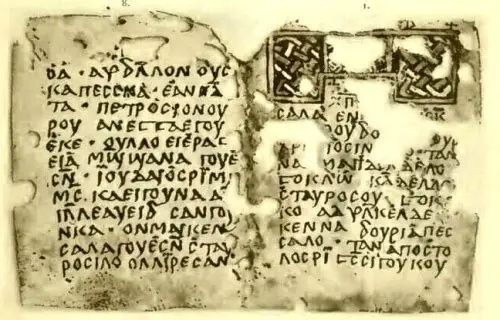
Ancient Nubian language. Source: Art of Nubia.
The Nubian language remains vibrantly alive, present in the daily lives of Nubians, sung in weddings and celebrations, harmonizing with its melodies and rhythms. Nubian songs are known for their distinctive musical character, often played on traditional instruments such as the tanbur and the oud, with lyrics that express deep belonging and genuine emotion.
These songs have transcended the boundaries of native Nubian speakers, resonating widely throughout Sudanese society with their beauty and rich heritage.
The significance of the Nubian song “Asleen Min Minna” is reflected in vivid, heartfelt moments, like when a mother sings to her son as he gathers his wedding dowry, repeating:
“Heeey, Asleen Minna ‘Arees, Oni Asleen Minna.”
Her spontaneous words transform into one of Sudan’s most popular wedding songs, pulsing with a mother’s affection and preserved in popular memory as part of a unique cultural legacy.
In another scene, we see a group of young people celebrating Eid, chanting together:
“Kuriq anj nalawi salam,”
Sending greetings across all Nubian lands, more than a simple holiday wish, it is a living expression of deep social unity and a steadfast connection to their roots.
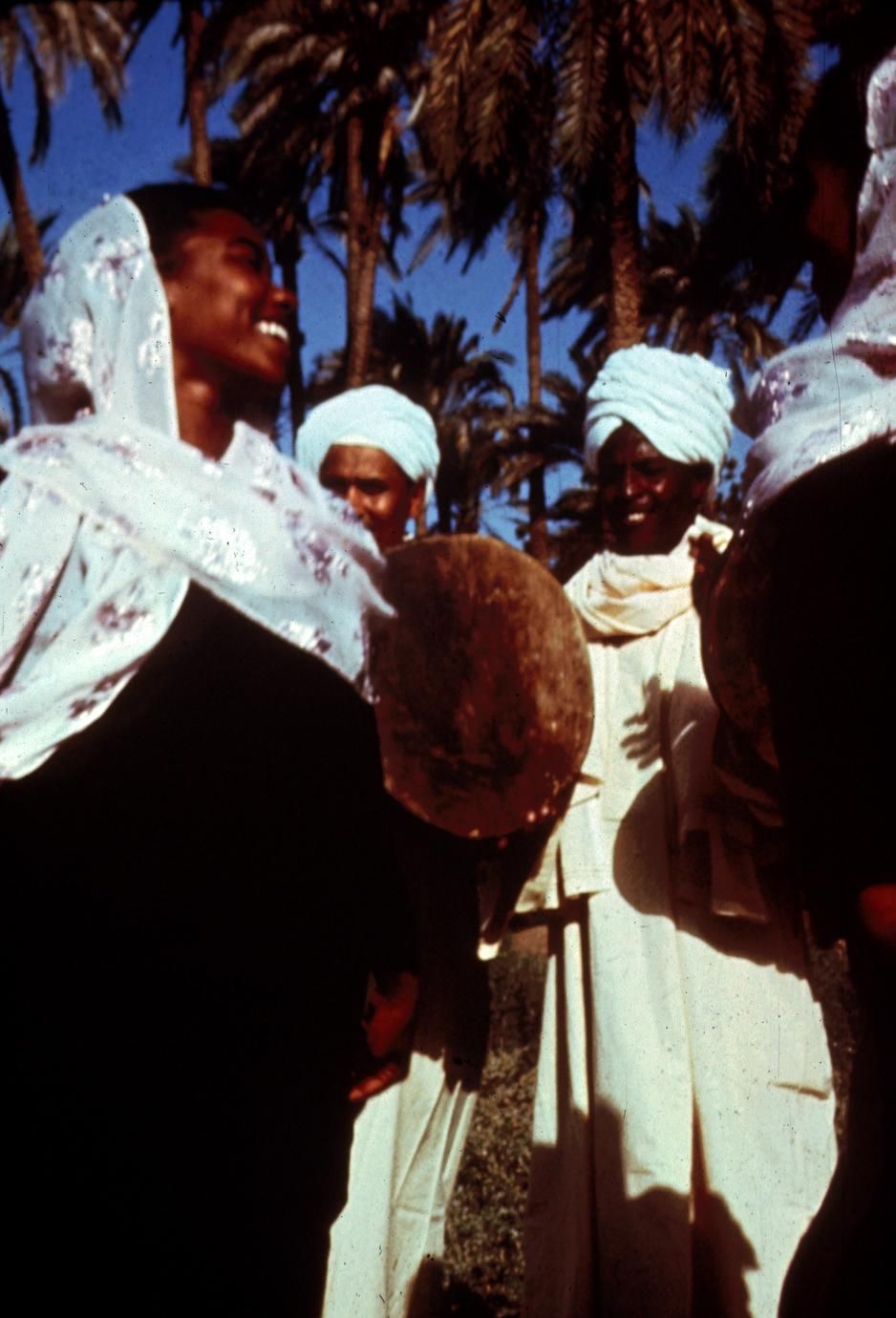
Nubian Dance of Northern Sudan. Source: UWDC Search Libraries
The Modern Renaissance
The Nubian language is no longer confined to villages or limited in reach. Young people now use it proudly and actively work to promote Nubian culture and celebrate it.
One of the most notable figures in this movement is Sudanese-American poet and singer Ramey Dawoud, who authored the first children’s book for teaching numbers in the Nubian language. Using sound cues and illustrations, he created a unique and engaging book for children.
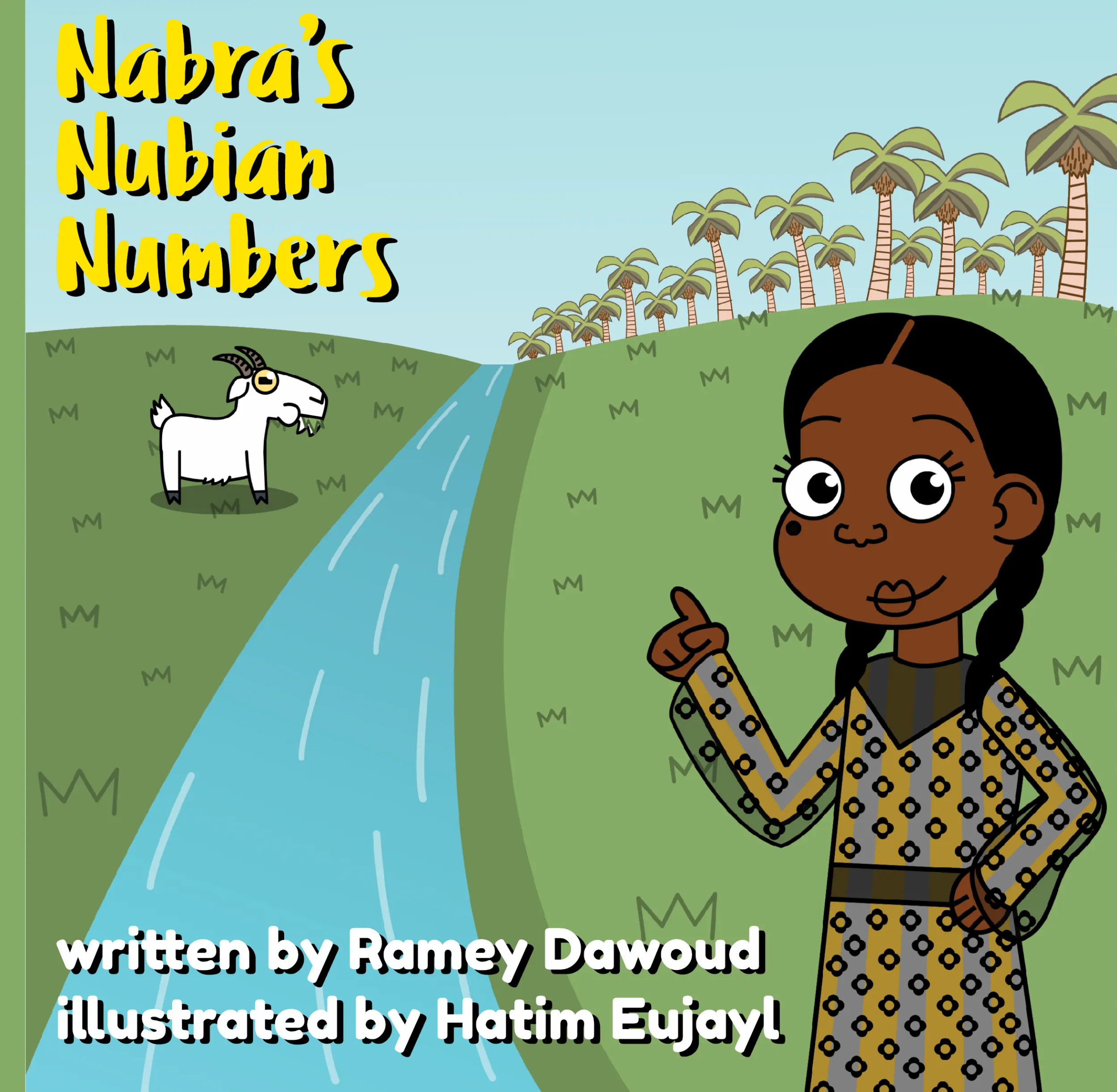
Children's book for teaching Nubian numbers made by Ramey Dawood. Source: World Kid Lit
The new generation has not only revived the language but also worked on integrating cultural identity into fashion, adding historical details and narratives through designs that reflect the style and culture of Nubian women. This was achieved by designer Awatef Dahab, who launched the “Anya” collection, a fashion line that tells a Kushite story, proudly reflecting Nubian heritage.
Digital Renaissance
Social media has also started playing an increasingly important role in supporting the language. Among the most notable educational channels on YouTube are Learn Nubian Language and Nuba Tube Channel.
There are also accounts focused on Nubian civilization and translating its songs, along with efforts to offer free language-learning courses via TikTok, targeting youth and new generations. The most prominent of these is: Nubian Heritage and Turjoman.
The Uniqueness of the Language
One of the most distinctive features of the Nubian language is its reliance on sound and vocal expression more than the literal meaning of words. The music of pronunciation, the rhythm of speech, and the tone of voice all play a crucial role in shaping meaning within a sentence. The difficulty of translating certain words directly into Arabic or English stems from this lack of linguistic equivalence, as the sentence often requires a special structure to convey the intended meaning. Examples include: “Arbiti”, which means “good morning,” and “Undi”, which means “come.”
Certain popular sayings also reflect Nubian life and the deep connection between meaning and the lived experience of Nubians. For instance: “A net made of rope or palm leaves cannot block the wind.”

This proverb expresses that weak or superficial measures cannot effectively confront major problems or strong influences.
Another example is: “Two oxen cannot share the same saqiya circuit.”

This proverb originates from the traditional Nubian agricultural environment. It is used to highlight the importance of balance in roles and the impossibility of dual leadership. In traditional farming, the saqiya (water wheel) was used to lift water from the Nile to irrigate fields, and it was operated by a single ox walking in a narrow circular path. Two oxen in the same path would disrupt the system and halt the movement.
The Nubian language is a cultural and civilizational symbol. Learning it and exploring its depth helps preserve Nubian identity and affirms its presence within the history of one of the world’s greatest civilizations.
In this article, I hoped, at least by shedding a little light, to contribute to a deeper understanding of the essence and structure of the language, after my own attempts to learn it and my growing awareness of its linguistic richness and the great responsibility we bear in passing it on to future generations.