In war, it is not only geography that is reshaped; daily life as a whole is reorganized, including women’s relationships with their own bodies. Displacement does not simply mean losing one’s home, but losing a system of privacy, choice, and control over the small details that make life livable. Inside camps, life is managed according to an emergency logic: food, tents, water, and numbers, while questions related to the body, dignity, and women’s intimate lives are pushed aside as secondary or postponed concerns. Yet what is labeled a “detail” in humanitarian policy becomes, in reality, a complex daily struggle, measured in pain, silence, and withdrawal from public life.
Menstrual management is one of the most revealing of these “details” when it comes to understanding the structure of aid in times of conflict. It is not only about hygiene, but about the right to privacy, mobility, staying in school or work, and not having one’s body turned into a burden. When women are forced to adapt within overcrowded tents, distant bathrooms, and policies that place the entire burden of management on them alone, the body itself becomes an unspoken site of conflict. Here, violence appears not only in its direct forms, but also in the neglect of needs, the imposed silence, and the reduction of women’s lives to mere biological survival without daily dignity.
From this perspective, initiatives like "Red Card" are not isolated service efforts, but feminist political responses grounded in a key question: how are women’s bodies managed in contexts of war? How do pads, language, and safe space become tools of resistance that redefine the meaning of aid? Tracing women’s experiences in camps reveals that the issue is not simply a health product, but a redistribution of the right to daily life, and a challenge to a humanitarian system that often saves the body while leaving dignity out of the equation.
The Body Under the Tent: Loss of Privacy as a Daily Reality for Women in Camps
In displacement camps, where the boundaries between public and private dissolve, menstruation becomes a harsh daily challenge for women and girls. Overcrowded tents leave no room for privacy, and distant bathrooms turn even the simplest health needs into small battles fought in silence. A displaced young woman from Nyala says she lost her room, her bed, and her right to solitude, finding herself sharing a single tent with a large family- an environment that offers the body no safe space. This is not an isolated story, but a recurring experience across most displacement camps in Sudan and beyond.
Menstruation in Conflict: Invisible Violence in Humanitarian Response
Choosing menstruation as a central issue in feminist initiatives is not a minor health detail or a marginal topic; it is a key entry point for understanding how women’s lives are managed in conflict settings. Menstrual management is directly tied to dignity, privacy, and the right to everyday life. It clearly exposes structural gaps in humanitarian responses that often ignore women’s bodies or reduce them to secondary needs. In wartime, the body becomes a silent battleground, and neglecting these needs becomes a form of gender-based violence.
In camps such as those in Sennar State or Kiryandongo in Uganda, the distance to bathrooms, poor infrastructure, and lack of water pose direct threats to women’s health. Many are forced to hold their urine or use pads for extended periods, increasing the risk of infections and psychological stress. Disposal policies, such as requiring pads to be buried, shift the entire burden of management onto women during moments of pain and exhaustion, reinforcing stigma rather than addressing it. This invisible violence is measured not only in physical pain, but in the silence and daily oppression it imposes.
“Red Card”: A Feminist Response Redefining Aid
In this context, Red Card emerges as a grassroots feminist response rooted in women’s lived realities, rather than in the assumptions of traditional humanitarian work. The initiative treats menstrual management as a fundamental right, linking health, dignity, and everyday justice. It views the marginalization of women’s bodies not as an accidental byproduct of war, but as a systematic practice of control.
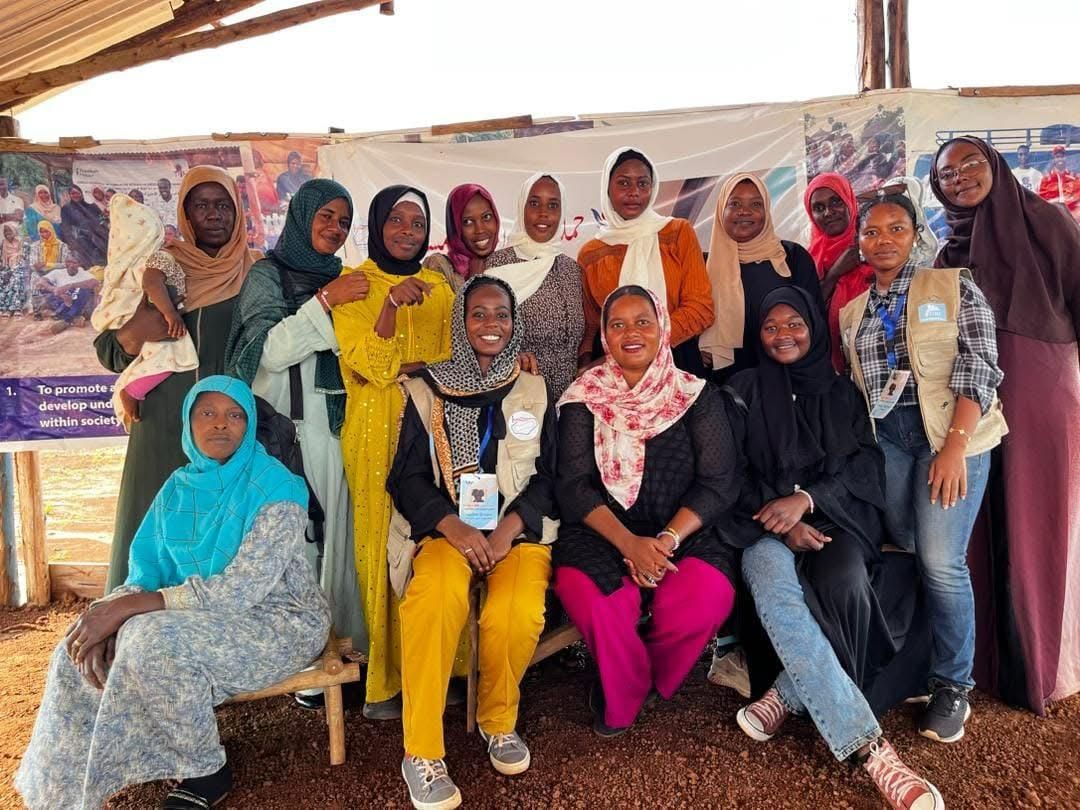
Image showing volunteers from the Red Card initiative. Source: Red Card
Breaking the Silence: Stigma, Language, and Reclaiming Bodily Knowledge
Social stigma surrounding menstruation is one of the most significant challenges in Sudanese communities. Language itself becomes a tool of suppression when women are unable to name their bodies or seek medical advice. Red Card works to break this silence through its booklets and workshops, using local languages and proposing solutions that respect social sensitivities, such as drying cloth pads in the sun while covering them with fabric. The goal is not merely to provide a product, but to reopen dialogue about the body as both knowledge and a right.
From Awareness to Politicization: The Body as a Site of Political Struggle
The initiative does not stop at education; it seeks to bring sexual and reproductive health issues into broader political and rights-based discussions. In political contexts, the body is often used as a tool for bullying and exclusion, especially against women activists. This is particularly visible in digital spaces, where women face moral and sexual defamation campaigns, threats of sexual violence, and challenges to their femininity or social legitimacy. These practices are not isolated incidents, but part of a broader exclusionary structure aimed at silencing women and pushing them out of public life.
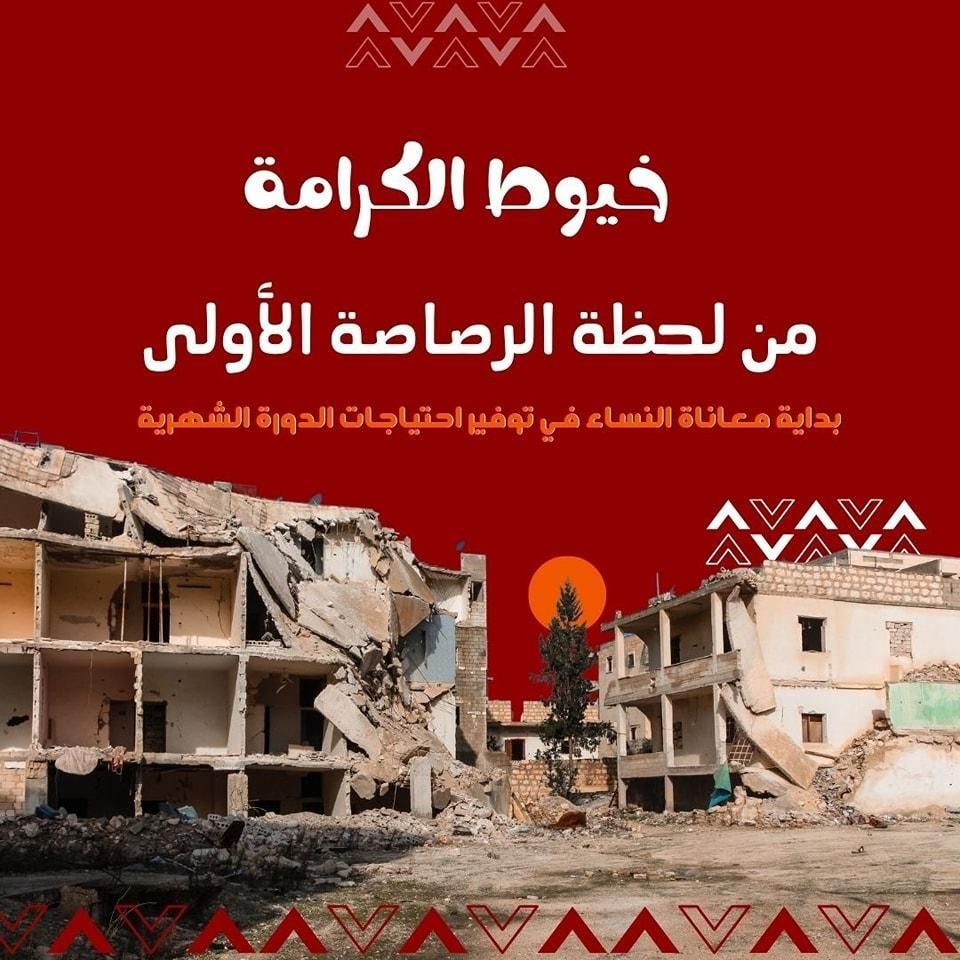
Image showing one of the initiative’s projects. Source: Red Card
Despite limited funding and a small number of volunteers, Red Card has developed its model into a mobile, intersectional feminist school, moving between regions to provide knowledge, support, and documentation. Sessions begin by inviting women to recall their first experiences with menstruation, opening the door to shared memories and breaking barriers. These gatherings become safe spaces for storytelling, learning, and redefining relationships with the body beyond imposed norms.
Within this framework, cloth pads are not distributed as mere commodities, but as a concept through which hygiene, sustainability, and the body itself are reimagined. Workshops challenge misconceptions about options like menstrual cups or tampons, giving women the opportunity to understand their choices and make informed decisions. In this way, the cloth pad becomes a tool of liberation, not just an economic alternative.
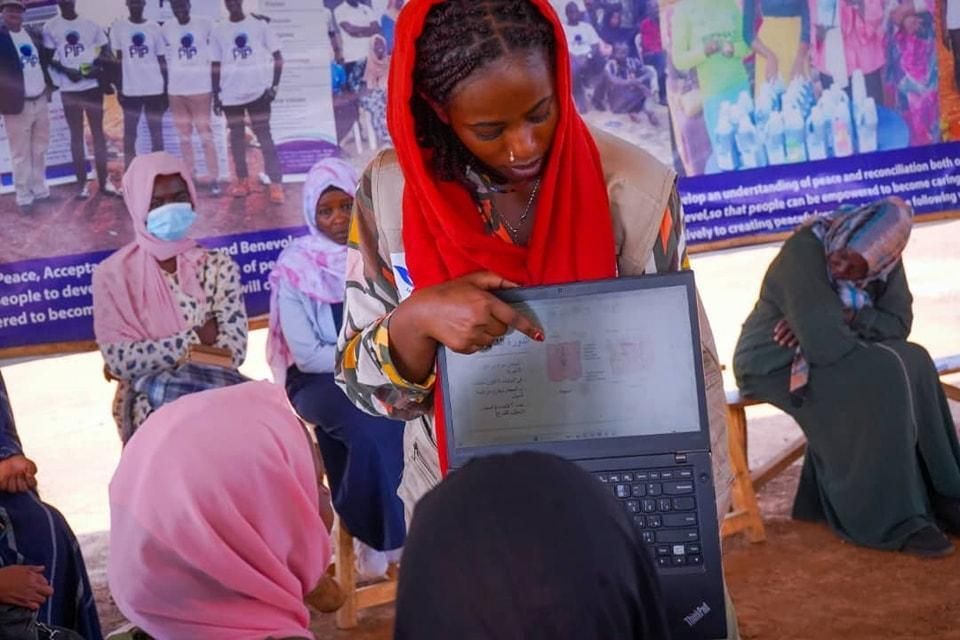
Image showing a training session in Kiryandongo camp, Biyale, Uganda. source: Red Card
Redefining Necessity: Feminist Networks as Acts of Resistance
The Red Card experience demonstrates that addressing menstrual issues in displacement contexts cannot be separated from building genuine partnerships with women within local communities. Working through women-led emergency groups and grassroots initiatives, and relying on local volunteers, is not just an intentional choice, but a political and ethical foundation that redistributes trust and power within the intervention process. This approach has helped deliver messages smoothly, reduce community resistance, and ensure that educational materials remain dynamic and responsive to women’s real experiences.

Image showing one of the initiative’s trainings among women. Source: Red Card
The tangible impact of this model is not limited to numbers, but it is reflected in them as well. Training workshops in Kiryandongo camp showed that 79% of participants began using cloth pads after learning about their benefits. This figure represents a shift in practice and a transformation in knowledge and attitude, demonstrating that awareness, when paired with trust and choice, can create real change even in the most fragile contexts.
In the absence of the state during conflicts, feminist networks like Red Card become a necessity, not a luxury. They fill service gaps and redefine the priorities of humanitarian work itself. Distributing menstrual supplies, with their health, educational, and initiative dimensions, shifts from a temporary charitable act to a conscious political practice that demands the right to dignity and connects food, the body, relief, and justice.
When humanitarian systems ignore women’s bodies as “secondary issues,” these networks intervene to assert that survival cannot be separated from dignity. In this sense, the pad is no longer just a hygiene tool, but a tool of accountability: who decides what constitutes a life of dignity, and who is excluded from the definition of “necessity” in times of war? The shift from aid to political resistance re-centers women in the conversation, moving the issue from a question of endurance to one of entitlement.