In 1936, Mogadishu witnessed the birth of “Cinema Banadir,” the historic theater that hosted Somalia’s golden age of cinema for decades before falling victim to destruction. Today, nearly ninety years later, the name has returned to the digital space, not as a physical cinema hall, but as an intellectual platform leading a new critical movement. A group of young people founded “Shineemo Banaadir,” the first Somali platform dedicated to reviewing and critiquing both international and local films.
Yet the true value of this initiative lies not simply in its historic name, but in the deeper questions it raises: Why does Somalia need a specialized film criticism platform? And what role can a film magazine play in building a genuine visual culture, preserving collective memory, and supporting an emerging local film industry?

The magazine's logo. Source: Their Facebook page.
Why Does Film Criticism Matter?
Cultural theorists generally agree that film criticism is not an academic luxury, but rather a cornerstone of a mature film industry. When films are read, analyzed, and discussed, a shared language develops between filmmakers and audiences, while aesthetic and ethical standards emerge that enable viewers to make informed distinctions and choices. Moreover, magazines and critical platforms contribute to archiving and documenting films, transforming them from fleeting events into an accumulated cultural memory.
Mohamed Daoud Issa, one of the magazine’s founders, says: “Our main goal is for films to be viewed from a deeper perspective, beyond mere entertainment. We want films to be seen as capable of changing society’s philosophy for the better, raising awareness, spreading knowledge, reflecting society’s problems, and perhaps even helping to find solutions to them.”
This vision is closely connected to the reality of a society undergoing a transitional phase. Somalia, which had an active film movement before the civil war, is now rebuilding its relationship with visual art almost from scratch. This is where the need for intermediary institutions such as critical magazines becomes apparent. They connect audiences with films and give creators a mirror through which they can see the impact of their work.
Global Trends: are Film Magazines Still Necessary?
At a time when digital media is expanding and readership of print journalism is declining, a legitimate question arises: Is there still a future for written film criticism?
The global landscape offers a two-sided answer. On the one hand, major magazines such as Sight & Sound have closed or reduced their print editions. On the other, specialized digital platforms have emerged and achieved wide reach, such as Letterboxd, which surpassed ten million users, and RogerEbert.com, which continued the legacy of the late critic Roger Ebert with considerable influence.
The conclusion shared by many analysts is that “the format has changed, but the need has not.” Some argue that the age of recommendation algorithms and an overwhelming volume of content has made the need for a trusted critical voice even greater, helping viewers navigate the vast choices available to them. This is precisely what Shineemo Banaadir is attempting to do within a Somali context that lacks an established critical infrastructure.
Lessons from Africa: Festivals and Magazines that Changed the Cultural Landscape
To understand the trajectory of Shineemo Banaadir, it is useful to look at similar experiences across Africa. In Nigeria, NollywoodWeek, launched in Paris in 2013 by Serge Noukoué and Nadira Shakir, helped transform Nigerian cinema from a popular local phenomenon into a cultural presence celebrated in cities around the world. The festival was a platform for screening films, but also a critical space that reshaped how African cinema is perceived internationally and, according to its founders, challenged “established perceptions that reduce the industry to low-budget productions.”
In Kenya, Kwani, founded in 2003 by the late writer Binyavanga Wainaina, established a different model. The literary and cultural magazine explores literature, art, and cinema from a distinctly African perspective and has grown into one of the continent’s broadest platforms for creative writing, demonstrating that a locally rooted cultural publication can reach audiences across borders. At the continental level, FESPACO in Burkina Faso remains Africa’s oldest film festival, surrounded by a tradition of critical writing and documentation that has accompanied the development of African cinema since the 1970s. These experiences reveal that successful African cultural platforms have not merely showcased creative works. They have also played a role in preserving artistic memory and shaping an independent cultural discourse. This is precisely what Shineemo Banaadir aspires to achieve within its Somali context.
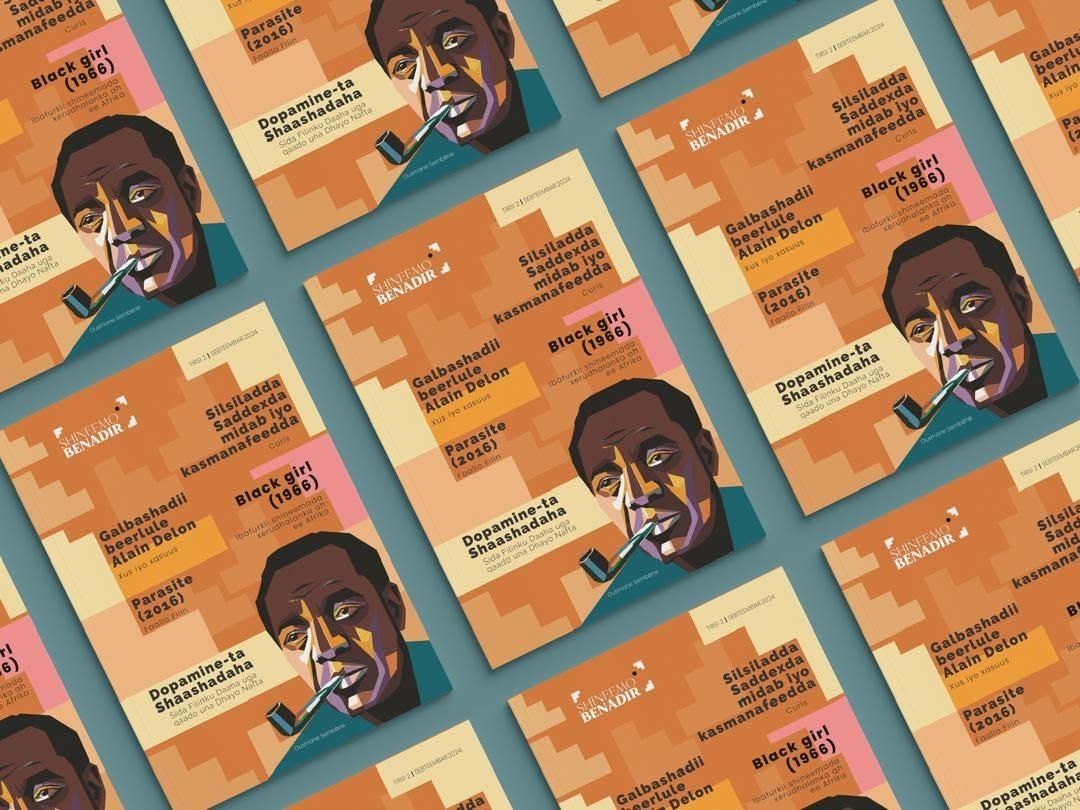
Cover of the magazine's second issue. Source: "Shineemo Banaadir" magazine's Facebook page.
Inside the Magazine: Content, Audience, and Reach
Shineemo Banaadir is published digitally through the Issuu platform. So far, it has released four issues in Somali, a choice that carries deep significance in a cultural context where writing and publishing in Somali have been declining noticeably. The magazine is a platform for film criticism, and a linguistic project that presents high-quality international film content to Somali readers in their mother tongue, strengthening their sense of identity and connection to their linguistic heritage.
The magazine’s audience is divided between Somalia and diaspora communities across Europe, the United States, Canada, and elsewhere, united by a shared language and cultural identity. This dual audience arguably makes the magazine a unique bridge connecting Somalis at home with their counterparts abroad through conversations about cinema.
In terms of content, the magazine takes a deliberate approach to selecting films. Its second issue explored works of global intellectual and aesthetic significance, including Black Girl (1966) by Ousmane Sembène, a landmark of postcolonial African cinema; Parasite (2019) by South Korean director Bong Joon Ho; Rashomon (1950) by Akira Kurosawa; and Past Lives (2023). This combination of classic and contemporary films, as well as African, Asian, and Western cinema, reflects a mature critical vision that moves beyond the local without losing its sense of identity.
However, Shineemo Banaadir’s activities extend beyond the written page. The magazine has moved from the digital sphere into cultural engagement on the ground. On December 11, 2025, it organized an open discussion at iRise Hub in Mogadishu under the title “Cinema and the Formation of Social Consciousness.” The discussion was moderated by critics Widsan Karshi and Abdel Nasser Shukri. Participants explored the impact of film on cultural and linguistic identity, as well as the social transformations driven by visual art within Somali society.
Notably, the Somali Fankeenna Film Festival was among the most prominent organizations to engage with the event announcement, suggesting that Shineemo Banaadir is becoming an active participant in Somalia’s emerging film ecosystem, rather than simply serving as a critical voice on its margins.
The Battle for Archives and Access to Local Cinema
The magazine’s challenges extend beyond social constraints and limited reading habits to include a scarcity of information and difficulties with documentation. Issa explains: “There are difficulties in gathering information about Somali films because most of them are screened at film festivals, which makes it difficult for us to access information. It is also sometimes difficult to contact directors and conduct interviews with them.”
This documentation gap is not unique to Somalia. Much of African cinema also suffers from limited representation in global databases such as IMDb, while entire films can disappear due to the absence of systematic archives. This gives Shineemo Banaadir a dual value: it serves both a critical and a documentation function.

Mohamed Abdulkadir Osman, one of the founders of *Shineemo Banaadir* magazine. Source: His personal Facebook account.
A Script Put to the Test: The Experience of “Ilaj”
This passion for film criticism and analysis is closely connected to the practice of filmmaking itself. Co-founder Abdulkadir Mohamed Osman wrote the recently released series “Ilaj”, which addresses the lack of awareness about mental health conditions in Somali society and the tendency to treat them as spiritual illnesses. Osman says: “When I wrote about this subject and considered how to communicate it to society, I faced social and intellectual obstacles, some of which I am still confronting today.”
Osman’s experience illustrates the difficult equation facing young Somali creatives: the desire to raise genuine questions while navigating the sensitivities of a society that has not yet become accustomed to cinema addressing its internal challenges. Here, the film magazine plays an additional role: preparing audiences and broadening the way they engage with and interpret challenging works before encountering them.
Who has the Right to Tell the Somali Story?
Somali characters in Hollywood and international cinema have long faced stereotyping and confinement to narrow representations. Mohamed Daoud Issa puts it firmly: “Of course, we are fully aware that these films do not represent our reality, do not reflect our culture, and cannot convey Somali literature. On the contrary, the new generation of young Somali filmmakers are the ones who can portray us in the fullest and most authentic way.”
This position does not necessarily mean turning inward. Rather, it reflects a claim to the right to tell one’s own story. This debate resonates across the African continent, particularly after films such as Black Panther and broader debates over representation in Hollywood demonstrated that there is a substantial audience seeking authentic images of itself rather than versions imagined from the outside. Somalia is part of this global conversation, and Shineemo Banaadir is one of its platforms.
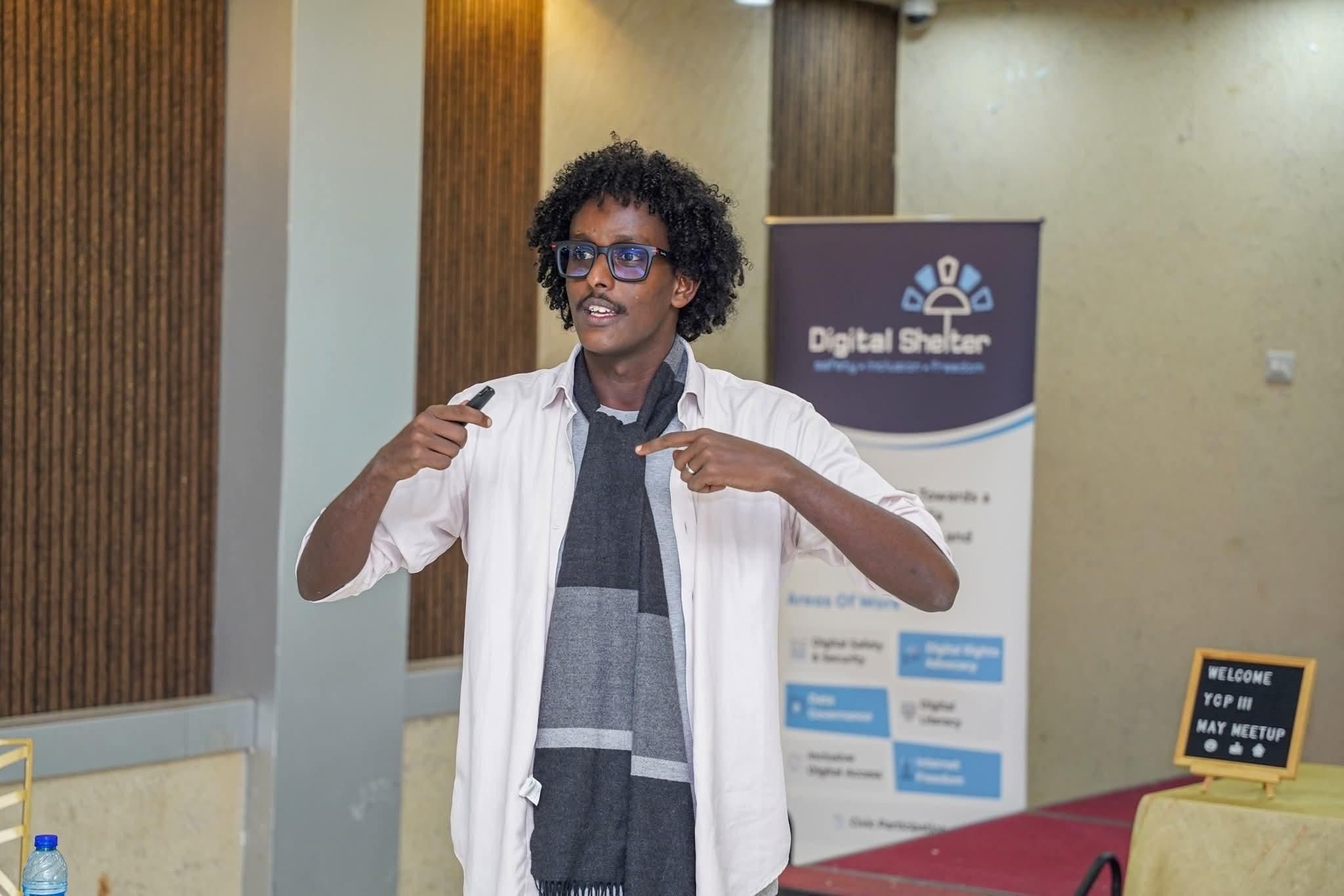
Mohamed Daoud Issa, one of the founders of *Shineemo Banaadir* magazine. Source: The magazine's Facebook page.
Beyond the Page: Filmmaking and Building a Legacy
The ambitions of Shineemo Banaadir extend beyond the boundaries of digital articles. Issa concludes: “We have many plans for the future because we do not want to keep the magazine to ourselves. We want to leave a legacy. Among our plans, beyond writing, is to produce short films, collaborate with young filmmakers on film projects, establish awards to support the next generation, and create spaces that bring them together.”
This transition from a magazine into an active film institution is a path followed by many successful initiatives. France’s Cahiers du Cinéma, for example, became a launching ground for filmmakers of the French New Wave, while many major African film festivals began as modest youth-led initiatives. The trajectory, then, is a familiar one, but pursuing it in a Somali context marked by fragile infrastructure remains a genuine challenge worth following.
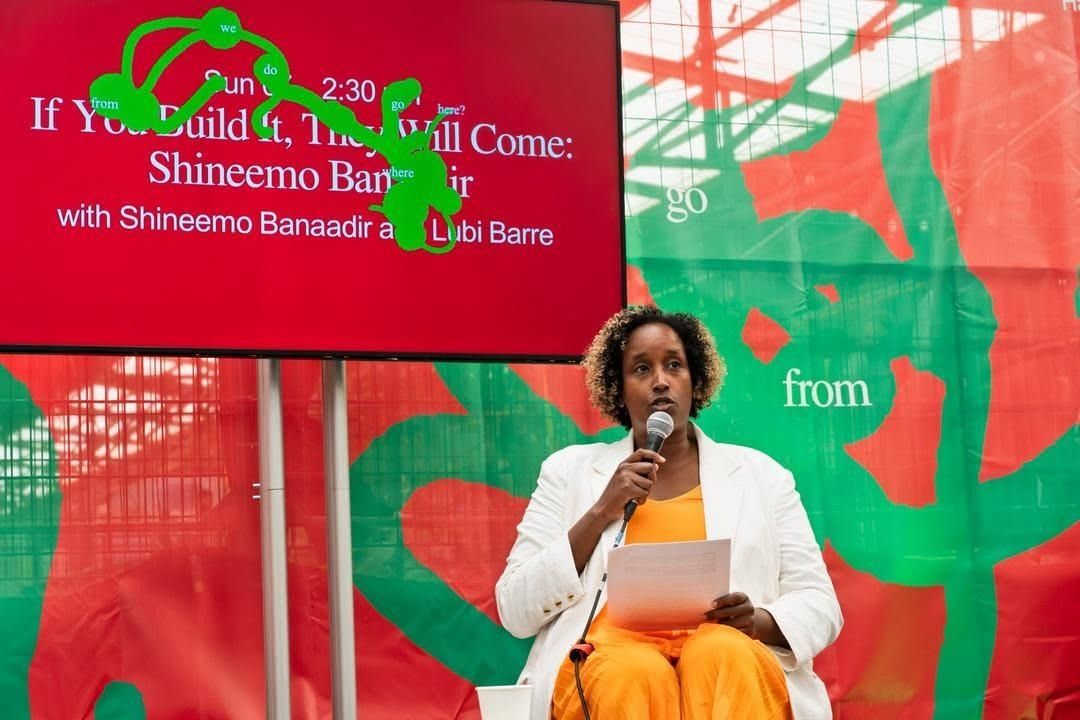
A glimpse of the Shineemo Banaadir team's participation in Germany. Source: The magazine's Facebook page.
From Mogadishu to Hamburg: Somali Creativity on the International Stage
On September 15, 2025, Shineemo Banaadir took a notable step by participating in the Indiecon international festival in Hamburg, Germany, one of the leading gatherings for independent magazines from around the world. The team presented a short documentary telling the story of the magazine and its approach to its work before an international audience of magazine makers and people interested in independent publishing culture.
They showcased what it means to be part of a community of young people working without pay in a country where cinema is not permitted and the arts are not valued, exploring what it means to believe in the importance of film culture when your own society does not support it.
More importantly, this was not their final appearance. The magazine was invited to return to Indiecon 2026, indicating that it has established a recurring presence on the global independent publishing scene. Independent magazines are no longer merely tools for local criticism; they have increasingly become informal cultural ambassadors, carrying stories from their communities to audiences beyond their borders.
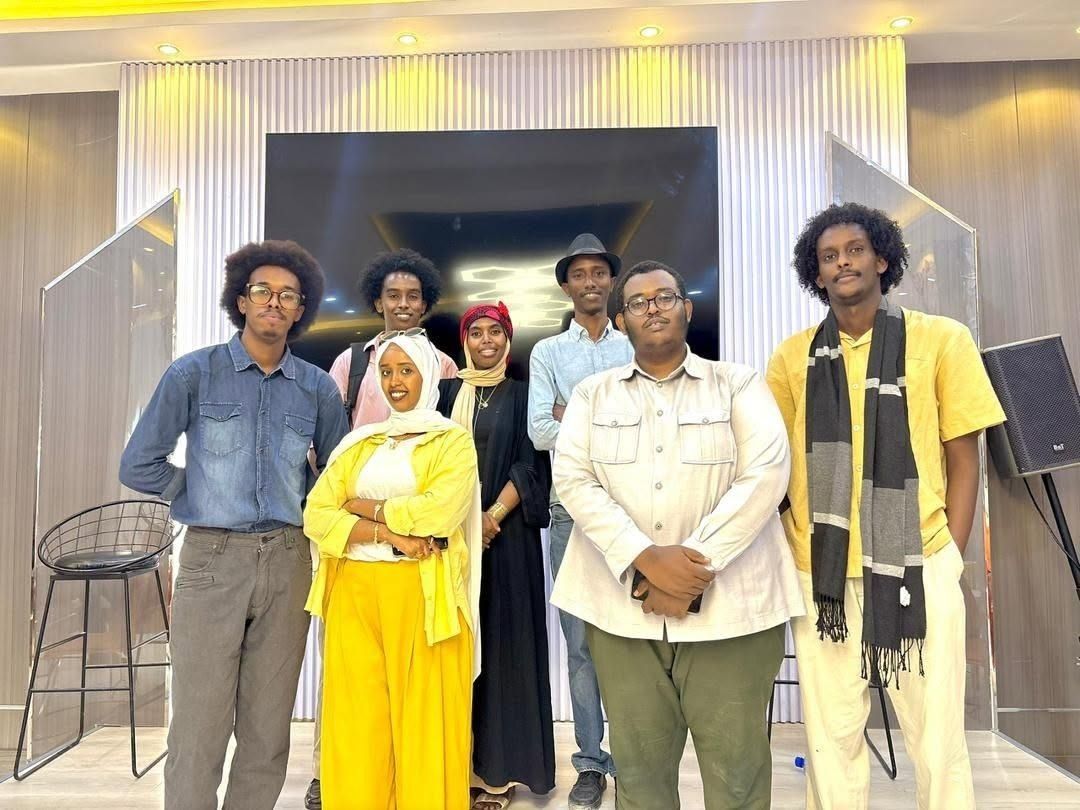
The Shineemo Banaadir team. Source: The magazine’s Facebook page.
Conclusion
Shineemo Banaadir is more than just a film magazine; it is a cultural project that raises fundamental questions about identity, documentation, and the right to tell one’s own story. In a world where content production is accelerating and cultural references are increasingly intertwined, the presence of a specialized, locally rooted critical voice remains a necessity rather than a luxury. What makes this initiative particularly compelling is that it is emerging at a pivotal moment for cultural documentation, as Somali cinema begins to reclaim itself from the margins of collective memory and the threat of being forgotten.