Trigger Warning and Disclaimer: the content that you are about to read contains graphic and sensitive experiences. The opinions and opinions expressed in this piece solely reflect the author's views and not Andariya's. Reader discretion is advised. Read our full editorial notice here.

This mural, by Ahmed Salah, was located on Ma’arad St., Buri, Khartoum at the height of the revolution, advocating for peace and solidarity against war. Credit: Ilham Ali for Andariya
The Sudan war will eventually stop, and the post-war period will be imposed on everyone. This general framework addresses the post-war fundamental issues and approaches them societally, recognizing that Sudan's development requires comprehensive change, which the streets have called for five years ago. This change is not about governance structures or achieving goals but rather includes changes in three fundamental concepts: changing the model, problem-solving approach, and inspiring leadership within a unified framework.

A man looks at a house hit during fighting in Khartoum. Source: AP/ Marwan Ali
Examining Old Failed Models
First we tackle the guiding paradigm for the Sudanese state, including its entire structure, principles, core ideas, and moral obligations. It has become evident that the old model for building the Sudanese state from the early stages of the graduates' conference, to the December Revolution 2018 and onwards, is weak and failed.
It has accumulated negative experiences resulting from the absence of democratic thought, dominance of organizational minds, Arabization mentality, lack of vision, oral culture, absence of statistically backed strategic thinking, tribal heritage, and mismanagement of diversity. This heavy legacy led to the collapse of the modern Sudanese state. The many post-revolutions agreements recognized this historical problem and embraced the concept of establishing the Sudanese state, meaning the collapse of the old foundational model and the necessity of seeking a new guiding model, or a paradigm shift.
Secondly, adopting a problem-solving approach. The old model relies on analyzing problems, setting priorities, and finding solutions. A small number of technocrats and politicians decide on major and minor issues and execute these decisions. The people should be able to listen to listen and understand them as decisions that affect their entire lives.
What we mean here is for these operations to be carried out from start to finish by technocrats, politicians, and stakeholders, with complete 'people's participation' in decision making. Possibly reaching the extent of monitoring public opinion through legal mechanisms, even conducting referendums on major issues like normalization with Israel, land, the rights of population groups within the concept of citizenship, and others.
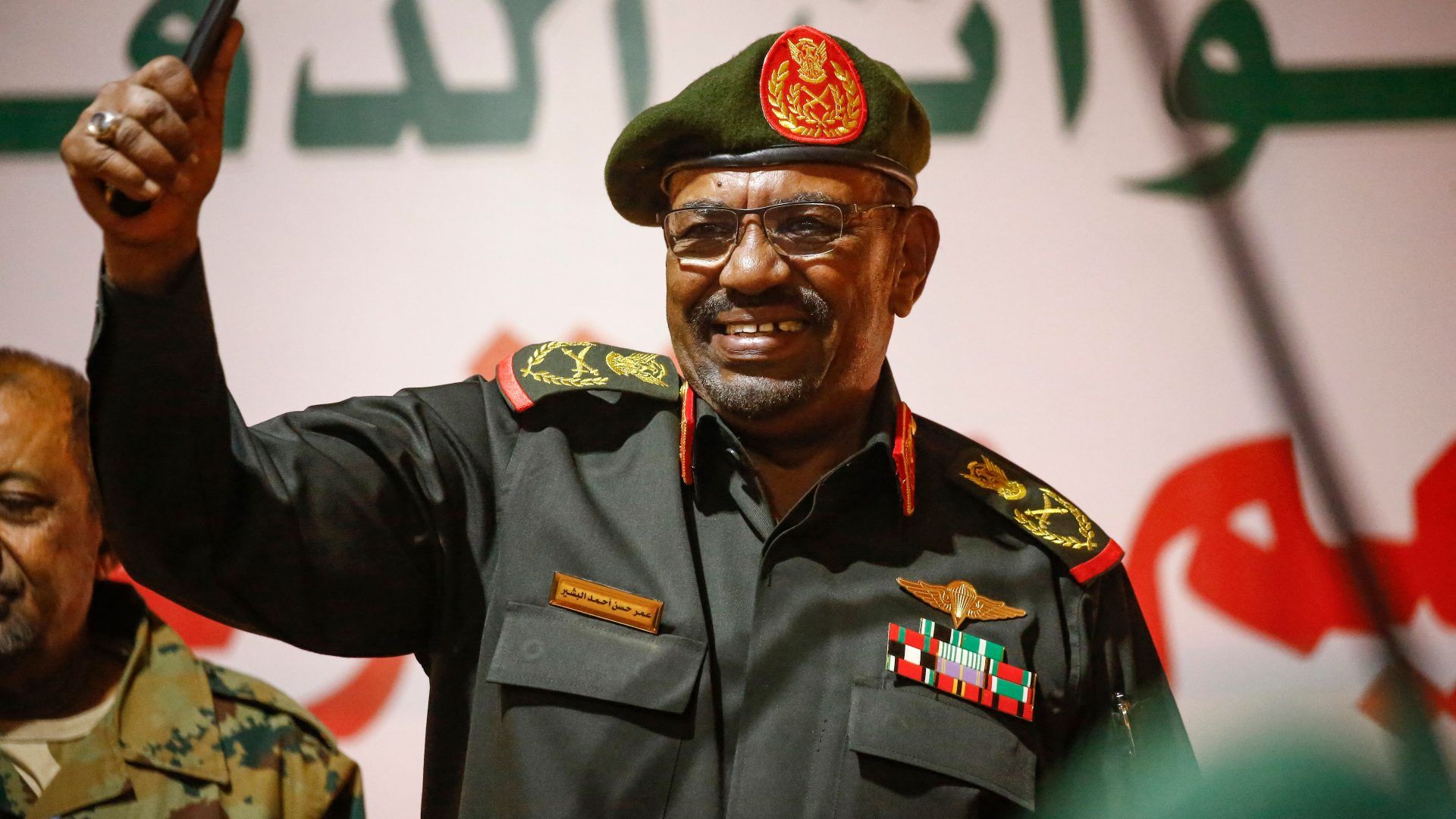
Former Sudan President Omar al-Bashir who is part of old leadership. Source: Channel 4
Thirdly, the inspirational leadership must change; where the old model depended on rhetoric and launching slogans that catered to the desire for inspiration. However, new leadership derives its inspiration from uplifting the morale of the people, transforming them from speeches of victimization, exclusion, and marginalization into actively engaging with their issues.
There are key pillars I find crucial in transforming leadership to become inspirational. The first of these pillars is involving the people in managing their affairs, creating a vision for their future, and positively contributing to nation building. The second of these pillars is accountability through a legal process linking leaders to regular reviews by national auditors and their publications. The last of these pillars is transparency in clarifying the decision-making process, sacrifices, and expected gains.
Time to Rethink our Future
To materialize visionary solutions for the issues discussed in the first article, beyond the programs and plans to be developed, our upcoming geopolitical position will be determined by the choices of issues we will focus on.
In the future, we must ask the three existential questions for the nation, answer them, and then come to an agreement. Where is the nation now? This involves intensive research studies conducted by local research centers and local formations. From the results of these in-depth studies, we will determine where we want to go. Following that, we engage our imagination, creativity, and innovative abilities to define how we want to reach what we have identified as our destination. This will constitute a comprehensive national vision that will earn us a respected place in the future.
Sudan could lead a comprehensive African change movement instead of floundering in a vicious cycle, which we experienced and it destroyed our nation. The stability of any state begins with creating natural, beneficial, and friendly relations with world countries, regardless of the degree of differences, by facing contradictions through dialogue and mutual concessions to reach an understanding that contributes to building mutual trust. If we can build a structure of understanding and common interests, we can lead our neighbors and contribute effectively and humanely to transforming them into a force of civil society and democracy, stopping the rampant corruption, facing and breaking its backbone, which is prevalent in our country and the surrounding countries.
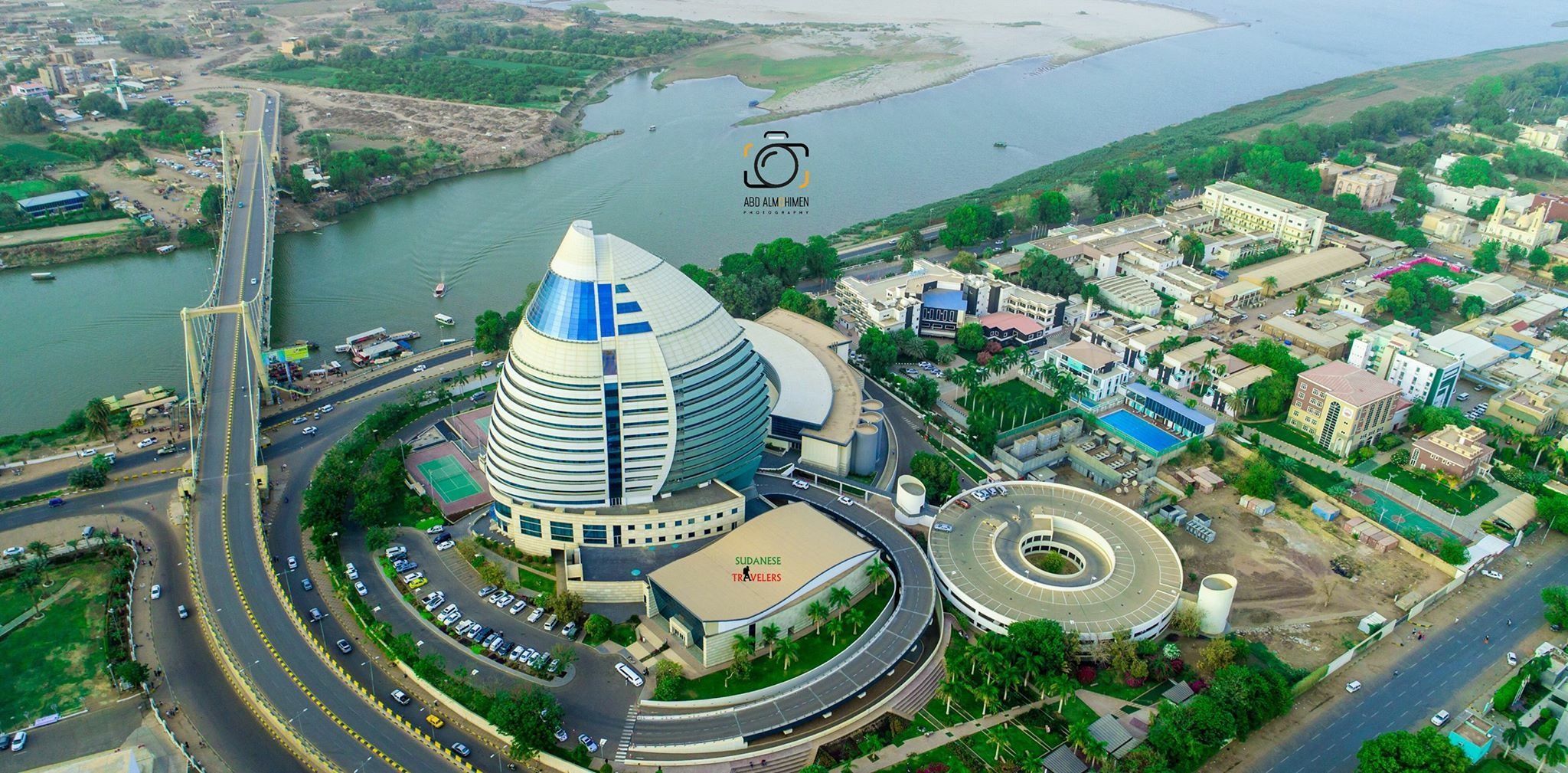
Some of the infrastructure in Khartoum before the war outbreak. Source: Africa Facts Zone
This will change our geopolitical position from a migration hub, easy access to land and water, and the exploitation of the generosity and kindness of people, into a motive for building all nations through fruitful cooperation, free of corruption and money laundering.
A part of this interaction is to create a transportation network that links West and Central Africa's closed countries (advanced roads, railways, electricity, perhaps natural gas, etc.) with Sudan's facilities. This project is part of many business projects worldwide, and requires extensive and intensive consultations and effective collaboration from numerous regional and international entities.
This will turn what was once a part of the problem and a cause of the RSF invasion into part of the solution. We will need a system of laws and procedures for transit trade, payment methods, commodity exchange, and more. Building the various structures in all different projects will necessitate the establishment of integrated coordination mechanisms and the introduction of team working methods in all state institutions.
We face neighboring countries like Egypt and Ethiopia with vast population densities experiencing increasing food needs under immense pressure from international centers of power and wealth, while our country enjoys ample land, water, a suitable environment, and industrial breakthroughs. Together, we must search for new foundations of political boldness, non-interference, and transition from security dealings to the language of shared interests to arrive at genuine partnerships regulated by agreements for everyone's good and the satisfaction of common interests.
Instead of theoretical talk, this could be an example and a practical model for developing African unity, opening the way to forming an assembly like the Association of Southern Asian Nations (ASEAN), European Union, and others.
Scientific Structure
Sudan is far behind in scientific advancement, contribution, and absorption to the extent that when we attempted to reform the education curricula, we began by replacing one curriculum with another- instead of starting with a broad dialogue among educational stakeholders about what they need.
We must immediately start establishing research and development institutions in all fields, benefiting from our scientists worldwide and entering the world of technologies, as India did through a clear vision it has committed itself. We will spend a long time on this process, but we will be starting on the right path. This includes religious and social sciences, building them on scientific foundations.
We start from where the world stands now and establish the Sudan Technology Centre from scrap, as Taiwan did in creating the Taiwan Semiconductor Manufacturing Company (TSMC), and as India did in transforming the country into a software development hub. Instead of wasting our scientists and minds in world science centers in political matters, governance, and disputes in initiatives, debates, and show matches, let them return home to transform it in the current quarter-century into a haven for science and progress, and to emerge from the geopolitics of Piye and the Blue Sultanate to new horizons.
Renewable Energy
The future of Sudan lies in its transformation into a green, agricultural, animal, and mineral state, founded on industrial development covering all these sectors. This necessitates the development of capabilities in all these areas. All these require energy as the most crucial factor, including means of telecommunications and transportation, which are determinants of the nation's progress, transforming it from an underdeveloped state living in the middle ages to a country thriving in the era of modern technology.

The Khartoum Refinery (SUNA) before the war. Source: Aawsat
The determinants of modern energy are renewable energy sources, which Sudan possesses inputs for from water, wind, solar energy, and gas. As previously indicated, this will depend on building the scientific infrastructure from the beginning, which is available in the multipolar world of today.
The African Green Belt
In my article, ‘Another Visit to History: The Emergence of the Arab-Islamic Empire (3-9) on Sudanile, I wrote: 'We must collectively think as Sahel countries, to change the environment that produced the Janjaweed ideology, and transform the Arab population groups, from a neglected, marginalized, and ignorant class to integrating them into their societies, and accepting them on the basis of diverse coexistence.'" The desert advances southwards at a rate of 5 to 6 kilometers per year, intensifying competition for natural resources, especially in the limited land and rich pastures in South Darfur, South Kordofan, and the Blue Nile. The intense competition for scarce natural resources was the first spark for the wars in Darfur and as well the most recent wars.
The African Green Belt Initiative is a 16 kilometers long wide or more wall of trees, starting from Senegal in the far west of the continent to Djibouti in the east. The local initiative aims to solve the problems of resources and related conflicts in the states of North Darfur, North Kordofan, Blue Nile, the Northern state, Eastern Sudan, and others, which were part of the causes of the many wars in Darfur.
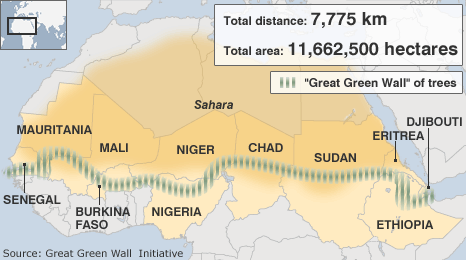
A map of the Africa Green Belt. Source: Great Green Wall Initiative
The possibilities grow in solving the major issues of this initiative - financing. The world has begun to sense the consequences of global warming and its impact on the planet. This is a challenge for Sudan's path towards progress in providing from its resources of water, labor force, and civil societies and engaging with the international community in replacing oxygen production with carbon dioxide waste, known as carbon trading.
The Sudanese genie will rise from the rubble, clutching his cause with his bare hands exhausted with sweat, blood, dust, and displacement, to build, on the following day, his stolen and destroyed homeland. Through mobilizing its local resources, we will establish a sovereign, civil democratic state, enjoying freedom, peace, and justice and we shall prevail, we shall prevail, and we shall prevail.
