Introduction
Amid the interconnected crises facing the world, from armed conflicts and climate change to economic collapse, the concept of food security has evolved beyond the mere availability of food. It now encompasses the sustainable ability to access, produce, and use food equitably and safely. At the heart of this complex system, women stand as key actors, often invisible in policy frameworks despite their substantial presence on the ground. International reports indicate that women produce more than 50% of the world’s food and play a central role in agricultural production, food processing, and household nutrition management. Yet, this role rarely translates into institutional power or equitable representation in decision-making, creating a structural paradox.
Women are the backbone of food security, yet they are also among those most vulnerable to food insecurity. This article seeks to unpack this paradox and examine women’s roles in food security across the dimensions of production, access, nutrition, and resilience, with a particular focus on Sudan as a critical and intensified case study.
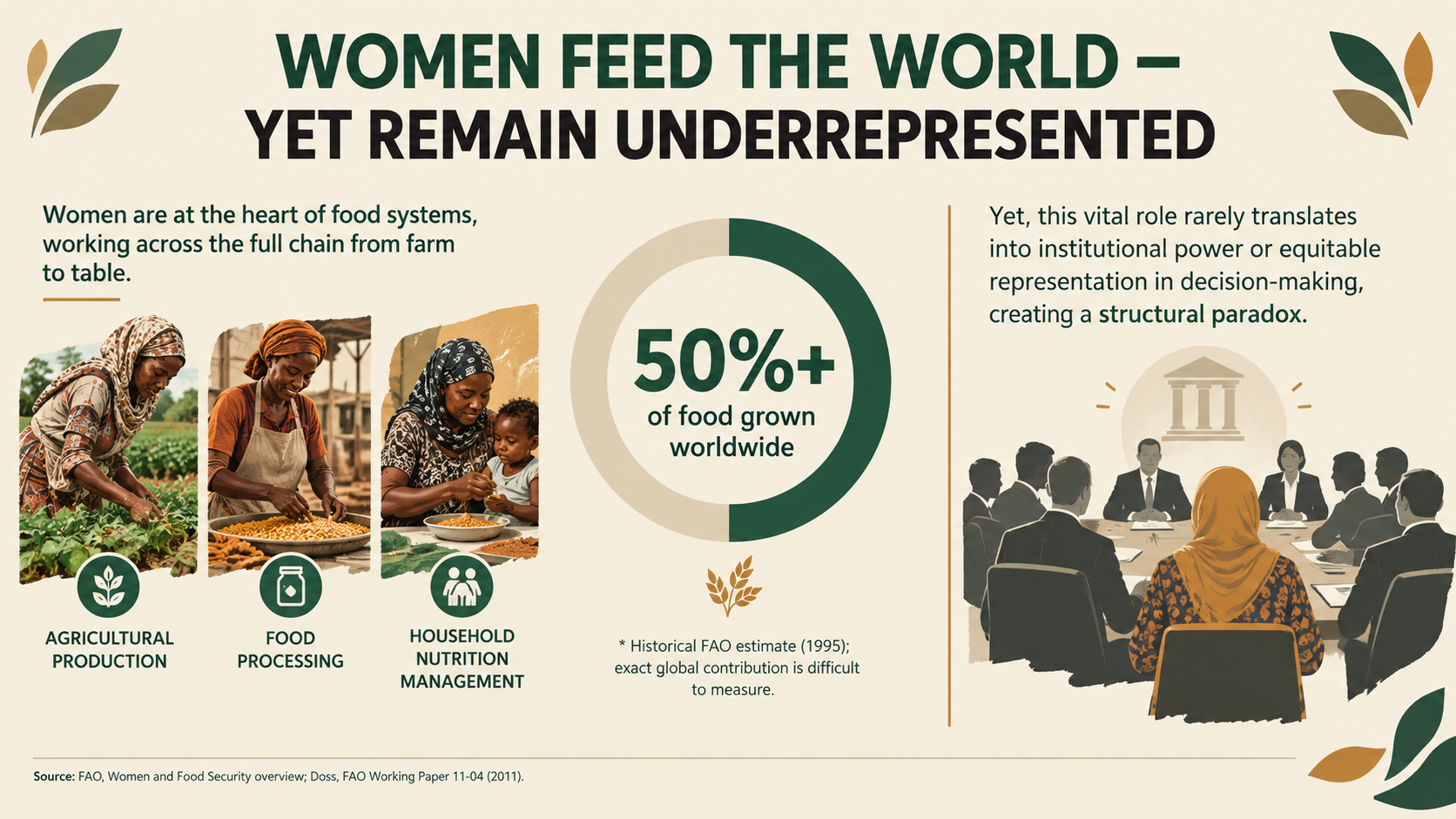
AI generated photo shows that women produce more than 50% of the world’s food.
First: Women as major food producers: The invisible economy
Women constitute a substantial proportion of the agricultural workforce, particularly in Africa, where they contribute between 60% and 80% of food production. In Sudan specifically, women account for approximately 49% of workers in irrigated agriculture and 57% in traditional rain-fed agriculture.
However, the fundamental problem lies not in the extent of women’s participation, but in how that participation is recognized. Much of women’s work remains unpaid, including family farming, animal care, and food processing. Official statistics often exclude non-monetary work, resulting in an underestimation of women’s contributions.
Women also tend to work in less profitable and more vulnerable sectors. This can be described as the feminization of the subsistence economy, in which women bear responsibility for producing food for household consumption, while market-oriented production, largely dominated by men, is counted as a key economic indicator.
Second: Women as guardians of nutrition: Beyond production
Women’s roles extend far beyond food production to include food processing and preparation, household consumption management, the transmission of traditional nutritional knowledge, and the preservation of agricultural biodiversity.
Women bear much of the responsibility for the quality of household diets, directly linking women’s empowerment through education to nutritional and health outcomes. Data indicate that women’s education is directly associated with improved child health and lower rates of malnutrition. Women are therefore not merely food producers; they are also the architects of household food systems, a role that cannot be replaced by technological interventions alone.
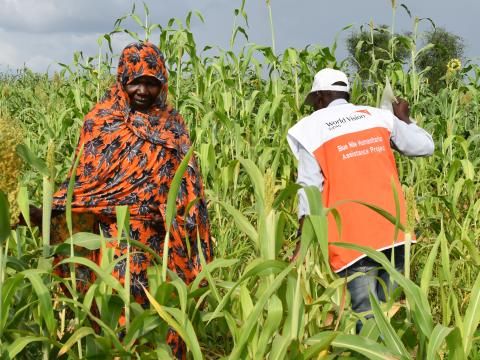
Women constitute a substantial proportion of the agricultural workforce, particularly in Africa. Source: World Vision
Third: The gender gap in access to resources despite women’s central role
Women face structural barriers that prevent them from making their full contribution, including limited land ownership, restricted access to agricultural financing, inadequate extension and technical services, and exclusion from decision-making bodies.
These disparities contribute to lower agricultural productivity among women compared with men, not because of differences in ability, but because women are denied equal access to resources. International reports suggest that closing this gap could significantly increase agricultural production and reduce global hunger. Food security, in this context, is not merely a technical issue; it is a matter of distributive justice: Who owns the land? Who makes the decisions? And whose work is counted?
Fourth: The Sudanese context: The feminization of food insecurity in Sudan
The crisis takes on a more severe dimension in Sudan, where 75% of female-headed households experience food insecurity. These households are three times more likely to face hunger than other households, while 73% of women fail to meet the minimum dietary diversity requirements.
This situation is linked to a complex combination of factors, including conflict, displacement, loss of income sources, increased caregiving and household responsibilities, and limited access to assistance.
We are witnessing a phenomenon that can be described as the feminization of hunger, in which women shift from being major food producers to becoming among the groups most exposed to food deprivation as a result of structural imbalances in the economic and social systems.
Fifth: Women and resilience
Despite these constraints, women play a decisive role in strengthening community resilience, diversifying food sources, managing limited resources efficiently, transmitting traditional agricultural knowledge, and supporting mutual-aid networks such as takayas (community kitchens providing free meals) and communal kitchens.
Evidence visible on the ground suggests that communities in which women lead food-related initiatives tend to demonstrate greater sustainability and flexibility, particularly during crises. Women are therefore not merely victims of crises; they are agents of resistance who sustain and rebuild life under the most precarious conditions.
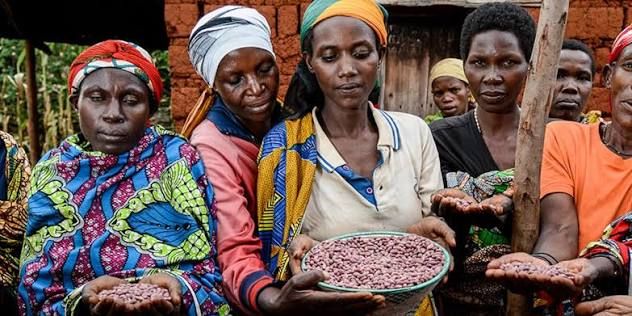
Feminization of hunger, in which women shift from being major food producers to becoming among the groups most exposed to food deprivation. Source: The Alliance of Bioversity International and CIAT
From inclusion to transformation: Toward meaningful gender-responsive policies
Most policies suffer from what is known as gender blindness, meaning they overlook the differences between men and women when designing programmes. The transformation required must therefore move beyond women’s inclusion toward their empowerment, making the restructuring of the system a policy priority. This includes guaranteeing women’s land ownership rights, expanding access to finance and technology, integrating women into agricultural decision-making, designing gender-responsive nutrition programmes, and reducing the burden of unpaid work.
Food security, as a fundamentally feminist issue, is not merely a matter of production or distribution; it directly reflects the power structures within society. When women are excluded from resources and decision-making, hunger becomes a predictable outcome rather than an isolated incident. Women’s empowerment is not only a moral imperative but also a high-return strategic investment. Empowering women means increasing production, improving nutrition, and strengthening community resilience. To put it more bluntly, food security cannot be achieved in a world where women are marginalised, because those who are marginalised are themselves the ones who feed the world.
Food systems as arenas of power: Who owns, who decides, and who profits?
Understanding women’s position within food security systems requires more than analysing their productive and caregiving roles in isolation from the broader power structures governing these systems. Food systems are not neutral spaces; they are shaped by intersecting relations of ownership, decision-making, control over resources, and the distribution of returns. From this perspective, four central questions determine who benefits and who is excluded: Who owns the land? Who decides what is grown? Who controls the value chains? And who receives the profits?
First: Land ownership
Prevailing patterns show that, despite their substantial contributions to agriculture, women own only a small proportion of agricultural land. This was highlighted by a female farmer in Al-Gezira State who is also a member of the Al-Gezira and Al-Managil Farmers’ Union. Women often hold only informal or conditional rights to use land. This deprivation not only limits their ability to invest or access financing but also leaves them in a vulnerable position within the production system, as these rights can be withdrawn at any time.
Land, in this context, is not merely a resource; it is a source of power that determines who has the right to produce and who is recognised as an economic actor.
Second: Decision-making over what is grown
Women are often excluded from agricultural planning and decision-making, whether at the household, community, or public policy level. In many cases, decisions are driven by market considerations or cash crops dominated by men, while women are steered toward less profitable subsistence crops.
This divide between what is consumed and what is sold reflects a gendered division of decision-making: women bear responsibility for food security without having the authority to determine its direction. In some Sudanese states, women are also denied the right to inherit land.
Third: Food value chains
Women are concentrated in the lower-value stages of food value chains, such as primary cultivation, harvesting, and manual processing, while male actors or larger entities dominate transportation, storage, manufacturing, and marketing, which are the stages that generate greater added value.
This unequal positioning means that women contribute to food production but are excluded from accumulating value, thereby reproducing economic inequalities within the system itself.
Fourth: The distribution of profits
Women receive returns that are disproportionately low compared with their actual contributions. These returns are often unstable or indirect. In rural and vulnerable settings, women may receive no cash income at all, despite being the actual producers of food.
This imbalance reflects not only an economic gap but also a lack of decision-making power within households and communities, limiting women’s ability to break the cycle of food insecurity.
These four dimensions reveal the hierarchical structure of food systems, in which women are positioned at the bottom as producers and caregivers, while decision-making power and profits are concentrated at the top.
Consequently, any intervention aimed at improving food security without redistributing these dimensions of power remains a partial solution that fails to address the root causes of the problem. Achieving genuine transformation in food systems therefore requires an approach centred on redistributing power. This includes guaranteeing women’s land ownership rights, involving them in agricultural decision-making, supporting their access to higher-value segments of food value chains, and ensuring that they receive fair returns.
Ultimately, the fundamental question is not simply how food is produced, but for whose benefit is it produced, and who has the right to determine its future?

Women receive returns that are disproportionately low compared with their actual contributions. Source: UN Women
Food-Based violence against women
Women’s food insecurity cannot be understood in isolation from the underlying violence embedded in how food is distributed within societies. Food-based violence refers not only to the material deprivation of food but also to a system of practices and structures that systematically exclude women from equitable access to food or subject them to unequal conditions for obtaining it.
In this context, food becomes a tool of control, and gender discrimination is reproduced through one of the most fundamental human needs. This violence manifests at several interconnected levels.
At the household level, women are often the last to eat and the first to sacrifice their own food portions in favour of children or men, particularly during periods of scarcity. This exposes them to chronic health and nutritional risks. At the community level, social norms may restrict women’s access to markets or agricultural resources, or require them to rely on male intermediaries to obtain food or production inputs.
In conflict settings, food is sometimes used as a means of coercion, with women forced to make economic or bodily concessions in exchange for access to food assistance or livelihood opportunities. At the policy level, overlooking gender differences in the design of food programmes can effectively exclude women, even when they are nominally identified as intended beneficiaries.
From an analytical perspective, food-based violence can be understood as an extension of what is known as structural violence, in which violence does not necessarily take the form of a direct act but instead results from unjust distribution systems that systematically exclude particular groups. In this case, women become trapped in a vicious cycle: they bear responsibility for feeding others while being denied their own right to adequate nutrition.
More troubling still, this violence often remains invisible or socially normalised. Women’s food-related sacrifices are viewed as natural behaviour or a moral obligation, concealing the coercive nature of these practices. Consequently, addressing food security without dismantling this dimension of violence leads to superficial interventions that fail to tackle the root causes of the problem.
Addressing food-based violence therefore requires gender-sensitive approaches that go beyond food provision to redistribute power within food systems, guarantee women safe and independent access to resources, and strengthen protection mechanisms against exploitation in aid programmes. The goal is to transform food from an instrument of control into an enforceable right.
The care economy and food security: The invisible infrastructure that keeps food systems alive
The care economy is one of the most neglected dimensions in food security analysis, despite being the invisible infrastructure that sustains individuals and enables communities to endure. It encompasses all forms of unpaid work associated with caring for others, from preparing meals and caring for children to supporting sick people and older adults, as well as managing household resources. Across different contexts, women bear a disproportionate share of this work, particularly in fragile and conflict-affected settings.
At the heart of food systems, food production cannot be separated from the reproduction of life itself. Women do not simply grow food; they transform it into nourishment, manage its distribution within the household, and ensure the continuity of daily consumption despite scarce resources. This places the care economy at a critical intersection between food availability and food utilisation, two essential pillars of food security. Yet this work remains outside formal economic accounting, resulting in its undervaluation in the design of policies and interventions.
During crises, this burden expands significantly as women are forced to fill the gaps left by the collapse of public services, including healthcare, water provision, and social protection. This creates an invisible expansion of care work. Such an increase is rarely accompanied by compensation or support; instead, it often comes at the expense of women’s time, health, and economic opportunities.
The result is what can be described as care capacity depletion, in which women are exhausted as human resources to ensure the survival of others.
From a policy perspective, this reality exposes a fundamental flaw in the design of food security interventions. Such interventions often focus on productive inputs, including seeds, tools, and cash transfers, without recognising the time and physical constraints that unpaid care work imposes on women. Consequently, even programmes specifically designed to support women may fail to achieve their objectives if they do not account for the burden of unpaid care.
Repositioning the care economy within the food security agenda requires a conceptual shift: moving away from treating care as a private responsibility and toward recognising it as a public good that warrants investment and protection.
This includes incorporating care-work indicators into food security assessments, designing interventions that reduce time burdens through services such as water supply, energy provision, and childcare, establishing social protection systems that recognise unpaid work, and redistributing caregiving responsibilities across society.
Put bluntly, sustainable food systems cannot be built on invisible and exhausting labour. The care economy is not peripheral to the food system; it is a condition of its very existence. Any approach that fails to recognise this merely accumulates vulnerability under the guise of providing a response.
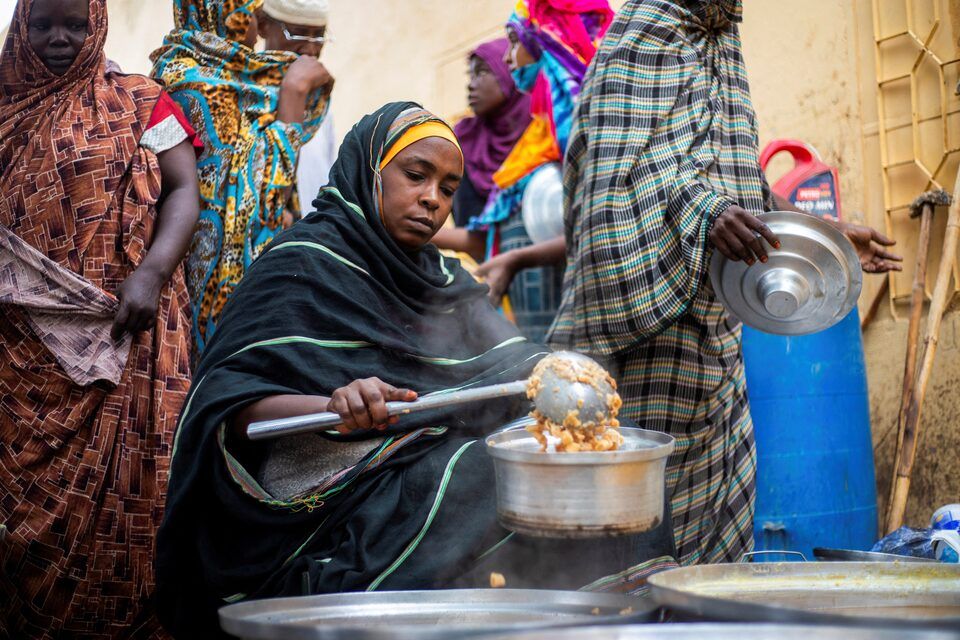
Food production cannot be separated from the reproduction of life itself. Women do not simply grow food; they manage its distribution within the household. Source: Rueters
The feminisation of food system survival: When sustainability is reduced to women’s bodies
A deeper analysis of the structure of food systems suggests a new concept: the feminisation of food system survival. This critical framework explains how the sustainability of these systems, particularly in fragile and conflict-affected contexts, depends on women’s invisible and exhausting labour.
The concept refers not simply to women’s increased participation in food production, but to a qualitative shift in which women become the primary pillar preventing the complete collapse of food systems by absorbing shocks and compensating for the gaps left by crises.
In practice, this survival is sustained through a series of unrecognised daily sacrifices: women reducing their own food consumption to ensure others are fed, doubling their working hours across production and caregiving, developing survival strategies in the absence of resources, and bearing accumulating psychological and physical burdens.
This means that the food system does not endure because it is inherently sustainable, but because women are compelled to adapt. However, this pattern of feminised sustainability contains a dangerous paradox. It ensures the system’s survival in the short term while accumulating fragility over the long term. Exhausting women’s bodies, time, and productive capacity ultimately weakens the very foundations upon which the system depends. Consequently, what appears to be community resilience is often an unjust transfer of the costs of survival onto women.
From a policy perspective, the concept of the feminisation of food system survival also exposes a profound flaw in food security approaches that implicitly rely on this invisible labour without recognising it or investing in its support. Any intervention that fails to dismantle this arrangement by reducing unpaid burdens, strengthening women’s rights, and redistributing resources and power contributes to reproducing the very conditions of vulnerability it claims to address.
To put it bluntly, food systems that survive only because women exhaust themselves are not sustainable systems; they are systems whose collapse has merely been postponed.
