Picture the moment before it became a photograph. Khartoum, April 2019. A young woman climbs onto the roof of a car wearing a white toub, the traditional dress worn by Sudanese women during the anti-colonial protests of the 1950s. She begins to chant, and the crowd below chants back.
Within a day, her image is everywhere: projected onto buildings, printed on posters, and shared by people who had never heard of Sudan’s uprising until they saw one woman standing above it. Her name is Alaa Salah, and the toub she chose was no accident. It was a costume carrying a memory, a way of telling the crowd: we have done this before, and we will do it again.
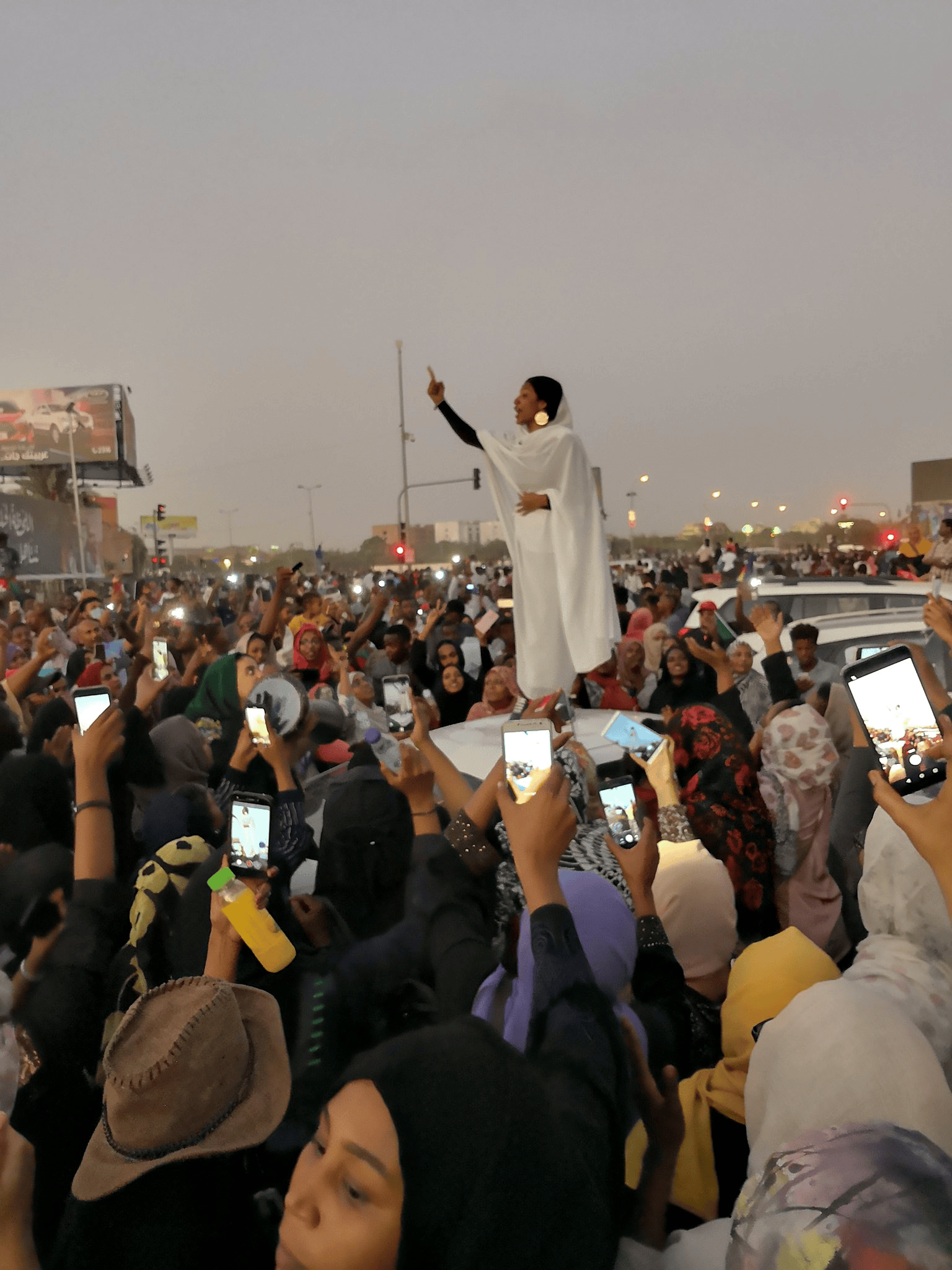
The photo of Alaa Salah standing atop a car in a white toub, leading a crowd of protesters in a chant. Sources: Picture taken by Lana. H.Haroun on X
I keep circling back to that image, not because it's inspiring, though it is, but because I want to know what happened to it after the cameras moved on. That's really the question underneath this whole piece. Not "did women show up" in Sudan's revolution, or Kenya's parliament, or Marsabit's football pitches. They did, reliably, everywhere I looked. The harder question is which of those moments turned into something that outlasted the moment itself, and which ones evaporated.
Run that question across Sudan, South Sudan and Kenya. Three countries with almost nothing else in common politically and a shape starts to emerge. It has less to do with courage, which nobody here is short of, and more to do with what happens in the unglamorous months after the courage was spent.
The chant that didn't get a seat
Alaa Salah wasn't chanting alone, and she wasn't improvising. She was speaking for MANSAM, a coalition of Sudanese women's political and civil groups that had been organising since before the protests began, quietly building the kind of infrastructure shared lists of qualified women, working relationships across party lines that a single viral photo can't build on its own. That's the part the poster doesn't show.
By October 2019, Salah was in New York addressing the UN Security Council, telling them plainly that women had been sidelined from the talks shaping Sudan's transition, even though women had made up an estimated seventy percent of the people who filled the streets. Only one woman took part in the negotiations between the military and civilian coalitions, and only after MANSAM pushed hard enough to force it.
What happened after that is the part I find genuinely hard to sit with. The 40 percent parliamentary quota promised in 2019 was never delivered. When the war broke out in 2023 and a new round of talks convened in Jeddah, no woman was in the room at all. And the arrangements floated more recently point to a quota closer to 30 percent, lower than what was already unmet.
It isn't only a Sudan story, either. Next door, South Sudan's own peace-deal quota for women sits at 35 percent on paper; in practice, female representation in its transitional legislature has been sliding rather than climbing, with women being quietly swapped out for men as seats come up.
Two different wars, two different peace processes, and the same pattern: organise brilliantly, get invited to the revolution, get left off the guest list for what comes after. Coalition-building got Sudanese and South Sudanese women into the streets and onto the world stage. It didn't, on its own, get them a vote in the room where the actual redistribution of power happens. That takes an enforced seat, not a promised one, and nobody has built the enforcement yet.
The bill that needed two kinds of women
Kenya's story runs almost the opposite direction, and it's worth sitting with the sheer unglamorousness of how it worked.
In the ninth Parliament, in a chamber where eighteen out of 224 seats belonged to women and there wasn't even a toilet for them outside the chamber, a nominated MP named Njoki Ndung'u picked up a bill on sexual violence that had been shelved, rewritten, and shelved again since the 1990s.
She didn't do it from her office alone. She organised a retreat with the parliamentary committee handling the bill, brought in outside groups WiLDAF, the Kenya Women's Parliamentary Association, CREAW, to help draft and lobby, and when the bill hit trouble, she asked to withdraw it, fixed it, and brought it back. It passed in 2006 as the Sexual Offences Act. She also carried through the amendments that gave Kenyan women paid maternity leave.
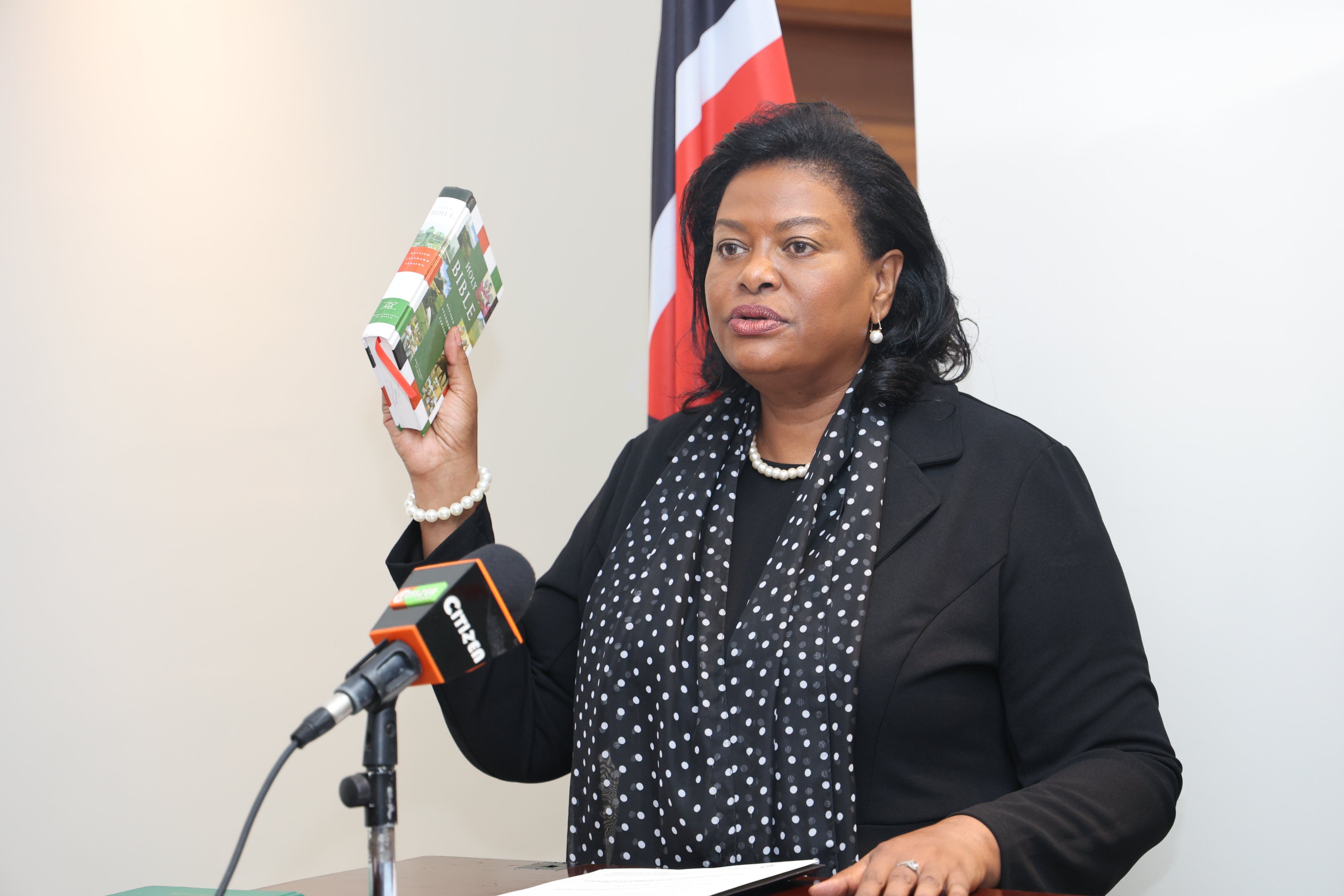
Njoki Ndung’u, who fought for Kenyan women and for justice on their behalf. Source: The Star
I keep coming back to this example because it's the least cinematic of the three, and that's the point. Nobody photographed the committee retreat. What made the law durable wasn't the drama of passing it; it was that an insider with procedural access, someone who could actually walk a bill through a hostile committee, was working in lockstep with an outside coalition supplying the pressure, the research, and the drafting labour neither side could produce alone. A statute like that is hard to undo. Governments change. The law is still on the books.
The pitch that keeps working when the money doesn't
The example I trust most, though, is the one built with the least money and the least attention: Fatuma Abdulkadir Adan's work in Marsabit, in Kenya's arid north. She was born to a Borana mother and a Gabra father, two communities that had been fighting each other for generations, and after training as a lawyer, she went home instead of taking a job in the judiciary.
In 2003 she started what became the Horn of Africa Development Initiative, with six volunteers and a legal aid desk for people who couldn't afford a lawyer. The idea that made it famous came a few years later: "Shoot to Score, Not to Kill," a football league that puts boys from rival ethnic groups on the same team, with matches split into three halves so the players actually have time to talk to each other between periods of play.
Alongside it, a programme for girls called Breaking the Silence, tackling forced marriage and FGM directly, by name, in a region where naming those things out loud was its own kind of risk. She was called a witch in the mosque for starting a girls' team. She got death threats on her phone. She kept running the league.
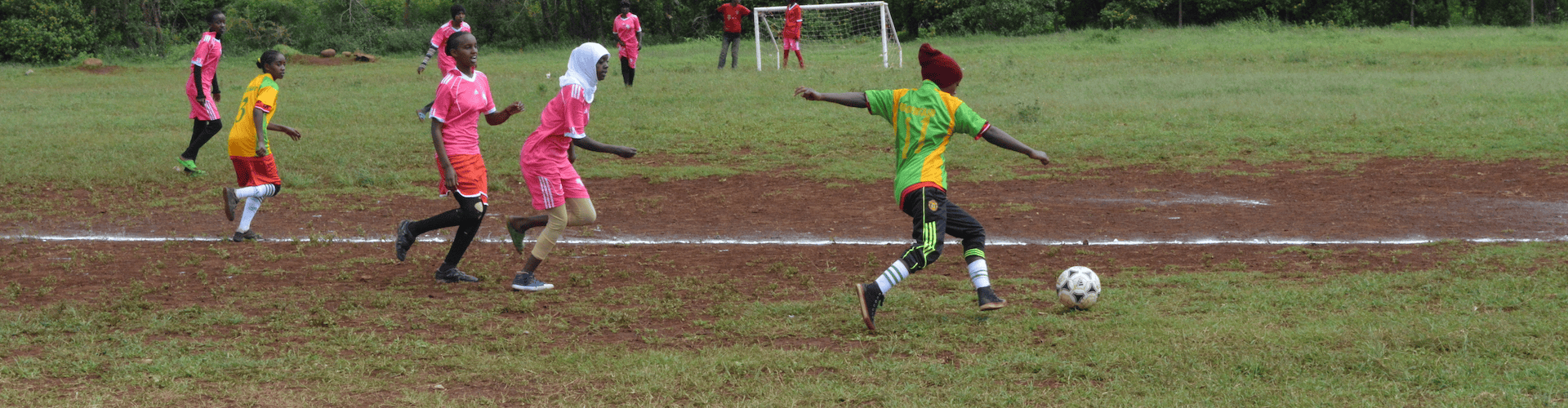
Girls playing football. Sources: Horn Of Africa Development Initiative (HODI) Website
What makes this model different from the other two isn't that it's more heroic, Alaa Salah and Njoki Ndung'u took real risks too. It's that it doesn't depend on a donor renewing a grant or a negotiating table adding a chair. It runs on relationships between neighbours who now have a reason to see each other every week.
That turns out to matter more than it sounds like it should, because the donor money that used to underwrite Kenyan organisations working on gender-based violence has been drying up fast. USAID's withdrawal alone has forced Kenyan GBV programmes to scale back or close at exactly the moment demand for their services is rising.
A programme that depends on a foreign grant line can be switched off by a decision made in Washington. A football league that runs on volunteer coaches and borrowed pitches is much harder to switch off from anywhere.
So what is actually owed
Line the three up and the pattern gets hard to miss. Sudanese and South Sudanese women built the coalitions and did the organising, and still got shut out of the rooms where the actual power got redivided. Njoki Ndung'u took that same organising energy and paired it with a legislator's procedural access, and it became a law that has outlived three changes of government.
Fatuma Abdulkadir Adan skipped the negotiating table and the donor circuit entirely and built something rooted so deep in daily relationships that neither can easily kill it. None of these women needed more recognition. Salah already has the photograph; Ndung'u already has the statute with her name attached in every legal textbook; Adan already has the peace prizes.
What's actually missing is the boring, structural stuff underneath the recognition:
- Negotiating seats that are enforced rather than promised, so a quota can't be quietly renegotiated down to 30 percent once the cameras leave.
- Domestic financing for the organisations doing the daily work, so they're not one funding decision in Washington away from turning survivors away at the door.
- Real, continued investment in the Marsabit model, the community-level work that was built to survive exactly this kind of shock, because it never needed anyone's permission to keep going in the first place.
That's the slower, less photogenic work. Not the next viral image, but the plumbing behind it, the thing that decides whether the moment in the white toub becomes a memory people tell their daughters about, or a law, a coalition, a football league still running twenty years later.