The Ujamaa policy was introduced by President Julius K. Nyerere in 1967, just 6 years after the Tanzanian Independence on 9th December 1961. The Ujamaa policy was introduced as a means to bring back the power of the people that was taken away from them for decades. This policy stood for the right for cooperative economics, this simply meant the locals cooperated together to provide essential living conditions, and socio-economic growth. This policy leaned greatly toward the socialist movement but mainly focused on the agricultural sector and rural migration. As seen later, this policy will influence the socio-economic and technological conditions of Tanzania for years to come.
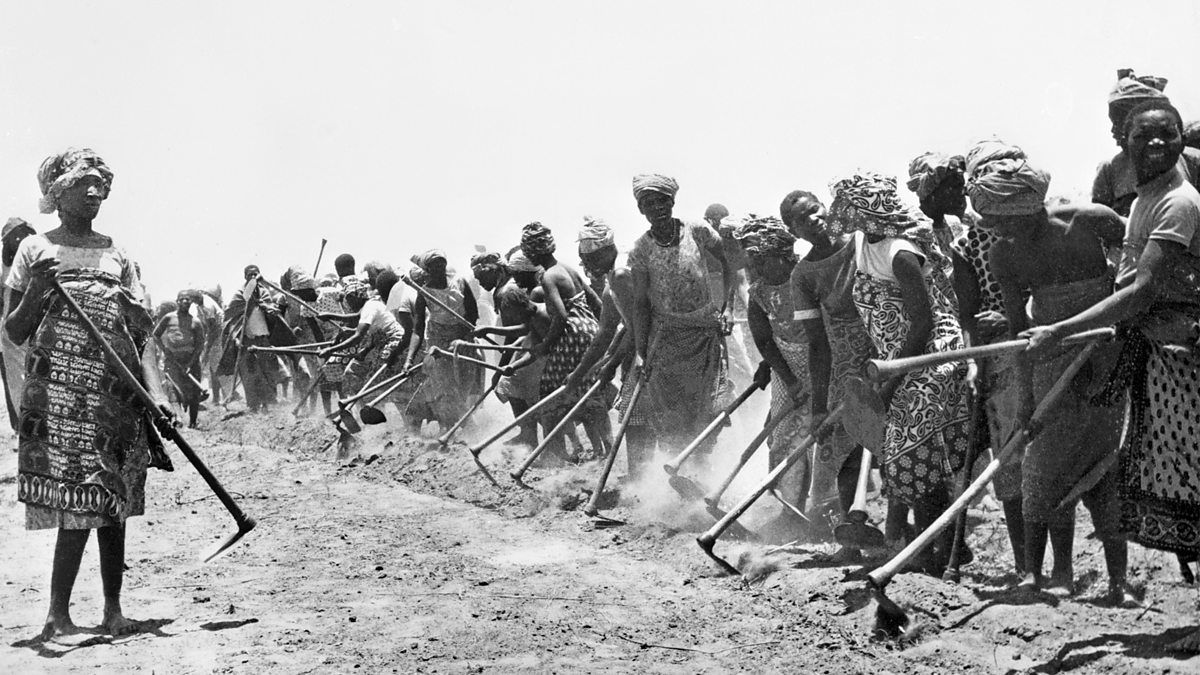
The Ujamaa policy created a cultural shift of how agriculture was prioritized in the country and with it came progress and setbacks. Photo credits: Pius Msekwa
The Ujamaa policy introduced
In 1967 Nyerere introduced the “Arusha declaration”. This was the mother base for the new socialism policy also known as the Ujamaa policy. The policy also aimed at creating a spirit of a nuclear family or an extended family, but as a community. It was emphasized that people would work for themselves and others like they were part of their own personal families, and that was
what was done.
“A person becomes a person through other people.” J.K. Nyerere
The Ujamaa policy also influenced the introduction of a single party system in the country known as TANU (Tanganyika African National Union). The introduction of a single party only acted as a catalyst to create a central democracy and abolition of discrimination based on the ascribed status and economic classes. This policy contributed greatly in removing the reliance on European influence, promoting villagization, and creating more education opportunities for the communities. Health care, especially for maternal care, as well as the education system, were given high priority during this period.
Shortly the fruits began to sprout. Visible changes began to take place. For instance the mortality rate reduced drastically from 138 deaths per 1000 births in 1965 to 110 in 1985. The life expectancy also rose from 37 in 1960 to 52 in 1984. The education system progress and advancement led to increase in the literacy rate throughout the country as well as gender equality in educational provision. For example the adult literacy increased from 17% in 1960 to a 63% in 1975 (this was the highest literacy rate of any other African country at the time). Primary school enrollment also increased greatly from 25% (with only16% girls) in 1960 to 72% (85% girls) in 1985.

Independence in Tanzania paved way for a new beginning. New opportunities to create changes that benefit the community and the nation. Photo source: Bettman
This policy created a communal utopia for the locals. They would attain skills and experience as well as financial aid from the government to keep this movement alive. Special Ujamaa rural communities or villages were introduced by the government for locals to move and produce resources for themselves and their communities. Nyerere was determined that this movement of self-communal sustenance with minimal external influence succeeds at all cost.
"We, in Africa, have no more need of being 'converted' to socialism than we have of being 'taught' democracy. Both are rooted in our past, in the traditional society which produced us."- J.K.Nyerere
Introducing the single party system
As stated earlier, after the British collapse in 9th December 1961, J.K. Nyerere introduced the single party system also known as TANU (Tanganyika African National Union). This political party was a catalyst to the introduction of the Ujamaa policy. The political party was comprised of representatives from the peasant population specifically from the rural areas. Its inclusivity led to the village organized political structure that localized the political presentation. There was a massive increase of supporters of the political party from 100,000 to 1,000,000 in only 5 years.
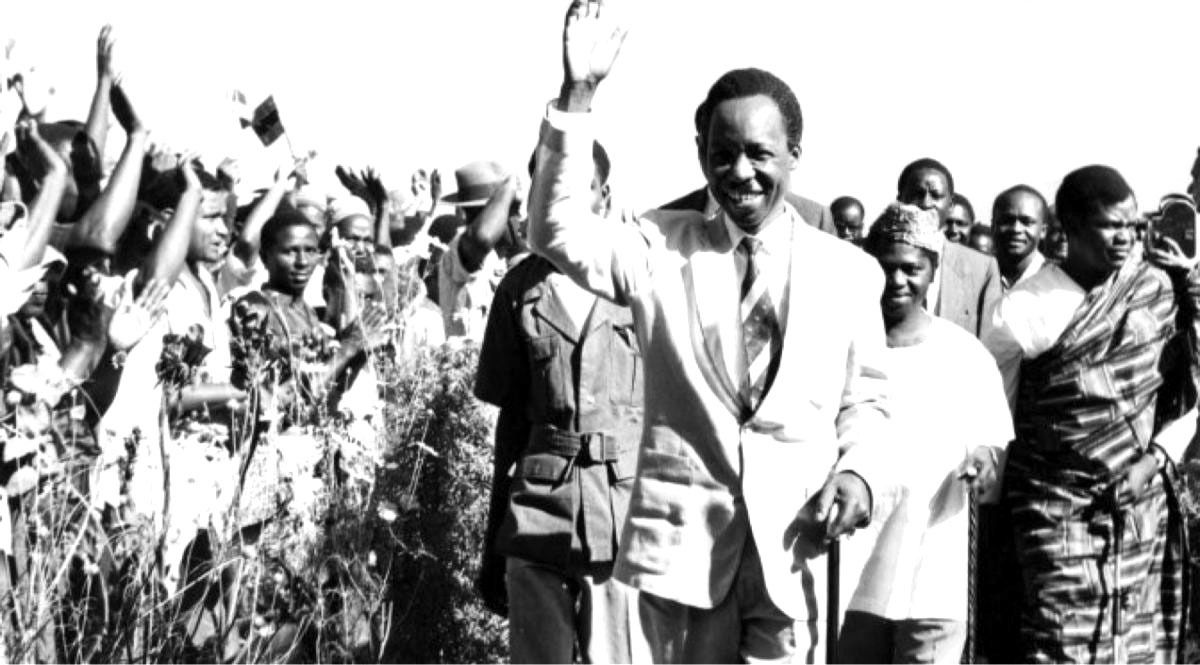
The new political party (TANU) as well as the socialist policy created a unified pillar for all classes and levels in the country. Photo source: Madenge
Trouble in paradise
The policy did not come without flaws. With time the flaws began to outweigh the benefits. When the rural migration and socialist influence emergence was introduced it was a voluntary decision to move to the rural settlements. But with time the government created more tension for the people to move to these communal villages. It was only a matter of time till the government orders became mandatory. The locals were pressured to support the policy.
There was also gender based friction and discrimination due to the policy. The government aimed to create equal labour opportunities of the genders through the Ujamaa policy. But the entrenched traditional values and customs that discriminate against women were still strong. Women were expected to care for the family as well as cater to the given labour activities. This led to a lot of stressful experiences to the women in the communities, so much that TANU introduced the women’s rights movement to minimize the friction brought by gender roles- (Umoja wa wanawake wa Tanganyika) UWT. This movement provided only temporary solutions.
Other problems included the decline of the purchasing power, high taxes and bureaucracy which led to corruption from business men (according to the World Bank research). Instead of creating unified classes, divisions began to reappear again. The very thing that the movement fought against.
The Urambo scheme was another failed project. The project aimed to create opportunities which provided growth and developmental opportunities to the farmers. It was shut down after a while because the farmers began to get richer and richer which was against the socialist ideology.
The Tanzanian economy has always been agrarian. The country’s preoccupation with agricultural production, which increased in the 1970s and ’80s due to the Ujamaa policy was a reflection of the government’s commitment at that time to socialist development and central planning, as outlined in the Arusha Declaration of 1967. The declaration also resulted in the nationalization of a number of industries and public services. In the long term, however, the centrally planned economy led to a marked economic decline.
There are other factors that led to the failure of the Ujamaa policy. These include the 1970s oil crisis, the collapse of export prices (specifically coffee and sisal), and the lack of foreign investment. There was also public resistance of the 1970s after a period of being forced to live in rural communal territories, where people began to protest against the movement specifically due to lack of capital to engage in the project with minimal or no personal capital at all.
The movement died in 1985. Nyerere retired the same year after the presidential election, introducing the next president of what was now the United Republic of Tanzania, Dr. Ali Hassan Mwinyi.
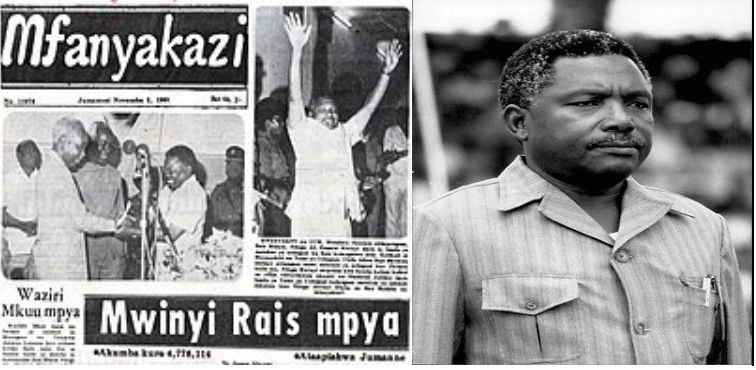
Newspaper article announcing the new president of Tanzania Dr. Ali Hassan Mwinyi on 8th November 1985. Photo source: Edward A. Gargan
Early in this political transition, many believed that Mwinyi was unlikely to deviate from Nyerere's policies since he was viewed as a loyal supporter of his predecessor. However, Ali Hassan Mwinyi and his followers called for economic and political reform to liberalize the market and review traditional socialist ideologies. He surrounded himself with reformists, even replacing three cabinet members and other ministers who were opposed to change.
The Ujamaa policy and the current socio-economic Influence
The Agricultural sector
Before the Ujamaa policy the agricultural sector in Tanzania, or Tanganyika as it was formerly known, did not practice sustainable techniques. It was very common to practice shifting cultivation, rotating crops annually and leaving some fields to fallow for 20 years, this was an effective way during the time for fertility renewal. It took longer to rejuvenate and this led to low surplus.
The Ujamaa policy also influenced rural migration especially of professional and well trained farmers. Their contribution and influence created new effective agricultural techniques and tools. Technical advancements also paved way for growth and increased production. The nucleation of rural settlement made agriculture a strong focus for productivity. Physical tools and fertilizers also contributed to progress.
The influence is visible with today’s agricultural technology as well as scientifically accurate procedures to ensure healthy and sustainable land usage.
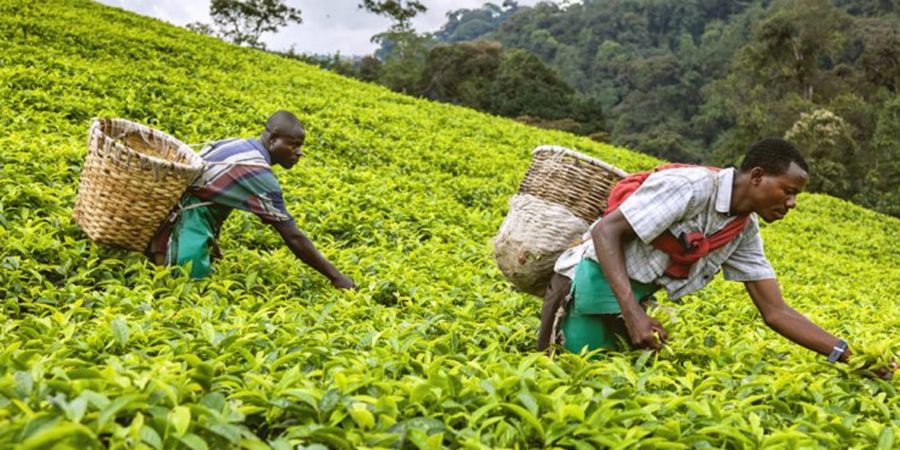
Farmers harvesting tea in Njombe region, Tanzania Photo source: Elizabeth Mwambulukutu (2018)
The Industrial sector
Agriculture accounts for 26.7 percent of Tanzania's GDP and provides employment for majority of the nation’s population. Opportunities exist for agriculture businesses across domestic, regional and international markets, for both traditional and new products.
Based on this background, the Government of Tanzania established the Agricultural Sector Development Program (ASDP) as a framework for agricultural development and it has been promoting agricultural development under the program. Similar programs such as JICA have worked hand in hand to ensure new advancements are implemented in the agricultural sector. The focus includes sustainable water and land use management, enhanced agricultural productivity and profitability, commercialization and value addition, sector enablers, coordination, monitoring & evaluation. The influence of the Ujamaa policy played a major role in creating a strong and developed technological approach to agricultural production and having it as a major influence for growth and economic development in the country.
"[A] man is developing himself when he grows, or earns, enough to provide decent conditions for himself and his family; he is not being developed if someone gives him these things."- J.K.N
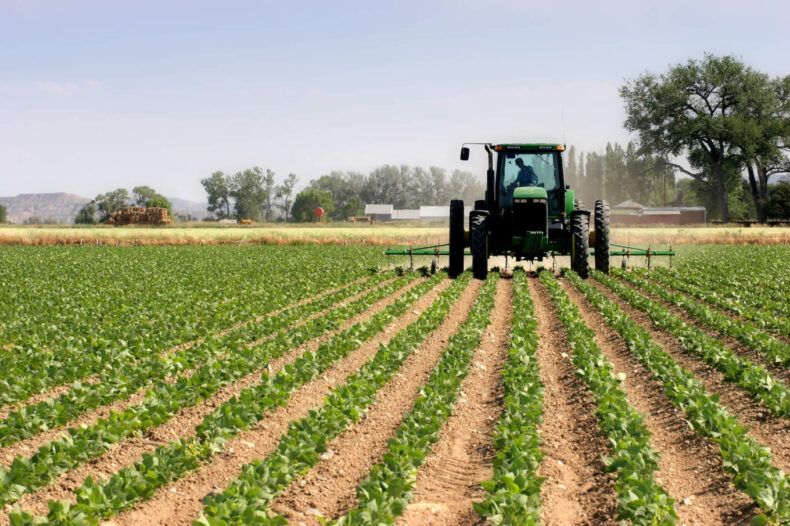
Use of advanced technology and machinery was emphasized during the Ujamaa movement. Photo source: Ntengua Mdoee
Science and Technology
Mobile phone service
We are now in the biggest technological revolution in history, or as the youths like to call it, the Tiktok generation. Things have changed greatly since the 60s and there are obvious changes and new approaches of efforts and procedures in numerous sectors especially agriculture. Ujamaa policy paved the way for future growth opportunities that were all seen as a far-fetched fantasy in the past. For instance the communal farmers struggled with keeping pace with the production flow as well as keeping records, and hence losing a lot of data and information. Modern farmers have also experienced similar problems.
Introduction of new technology such as mobile applications have changed how farmers work forever. Just recently a new program called "Tigo Kilimo" of using a mobile text messaging platform for farmers was introduced in the village. Farmers could now receive free access to vital agricultural information that helps them fight diseases, increase soil fertility and thereby boost crop yields.
Muhidini Kayanda, a farmer in Magole village has been using the platform to get advice on when to plant and how to deal with pests. The text messaging service, which he has been using for two years has helped him reap a good quality bumper harvest. "I cannot be much happier, this service is very useful, I get a lot of information to improve my farming and increase my income," Kayanda said.
The 48-year-old farmer who is married with four children has seen an increase in maize production. He says he now gets up to 29 bags per acre, whereas before embracing the new technology he only got six to seven bags.
The notable project is known as the Magole agricultural project which is run by Sokoine University of Agriculture (SUA), a public university in Morogoro. According to the project's founders, its aim was to bridge the information gap between farmers and agricultural experts. The new innovation has not only helped extension officers overcome logistical challenges but also save time. "I used to spend about six hours daily walking through the villages to reach farmers," an extension officer noted. Adding "Sometimes I was forced to sleep there until the following day, that experience will now be history."

Technological advancement has created many agricultural solutions and new opportunities for the farmers. Photo credits: GSMA
It is stated that even though the agriculture sector contributes much to the national economy, the agricultural gross domestic product (AgGDP) is falling due to low incentives provided by the Tanzanian government caused by shifting of the resources to other sectors of the economy such as transport services, mining, industry and construction. Hence, agriculture policy formulated and implemented by the Tanzanian government should focus much more on agriculture sub-sectors (crops, livestock, and fisheries) as major contributors to the Gross Domestic Product (GDP) in general and Agriculture Gross Domestic Product (AgGDP) in particular.
However, the agriculture sector has a trickle-down effect on the development of rural poor farmers in the country. Hence, improvement of the agriculture sector as a major employer of the labour force implies alleviation of poverty in the country. More focus is required for the sector.
Recap
Nyerere's socialist outlook required Tanzania's leaders to reject capitalism and all its trimmings, showing restraint over salaries and other perks. But as the policy was rejected by a significant fraction of the population, the main foundation of Ujamaa, villagization failed. Productivity was to increase due to collectivization. Instead, it fell to less than 50% of what had been achieved on independent farms.
Towards the end of Nyerere's rule, Tanzania had become one of Africa's poorest countries, dependent on international aid. Despite the flaws, we cannot ignore the flowers. Despite the destruction that shaped this era, many scholars argue that Nyerere’s state-building project of Ujamaa was the most successful post-colonial attempt to dismantle the structures of indirect rule. The achievements brought by Nyerere’s vision, all the advancements we have in various sectors currently (agriculture, science and technology, transportation) stretches back to that one policy. The influence is still visible and we have a sense of gratitude for the growth we have now.
We are looking forward to more technological revelations for the near future; for instance agriculture will be expected to use sophisticated technologies such as robots, temperature and moisture sensors, aerial images, and GPS technology. These advanced devices and precision agriculture and robotic systems will allow farms to be more efficient, profitable, safe, and environmentally friendly. The future is bright and we, our children and children’s children will be here to witness it.
