Food is the essence of life. Good food is a form of art and a representation of history, culture and individuality. Since the beginning of time mankind has always struggled with finding ways to survive and with time, they attached their survival instincts to beauty. Then just like that things changed.
Food became more meaningful, something to celebrate, to enjoy and to unify. Varieties of food flavors, aromas can all be expressed as experiences unique to ourselves but embraced universally. We stand out and yet are collectively similar; that’s the beauty of cuisine. We will dive deep into its roots, and peel the barks to unravel the motivations, meanings, passion and history of African cuisines. Want tips on what to try on your next trip and why? Why don’t you get your plate and stick around.
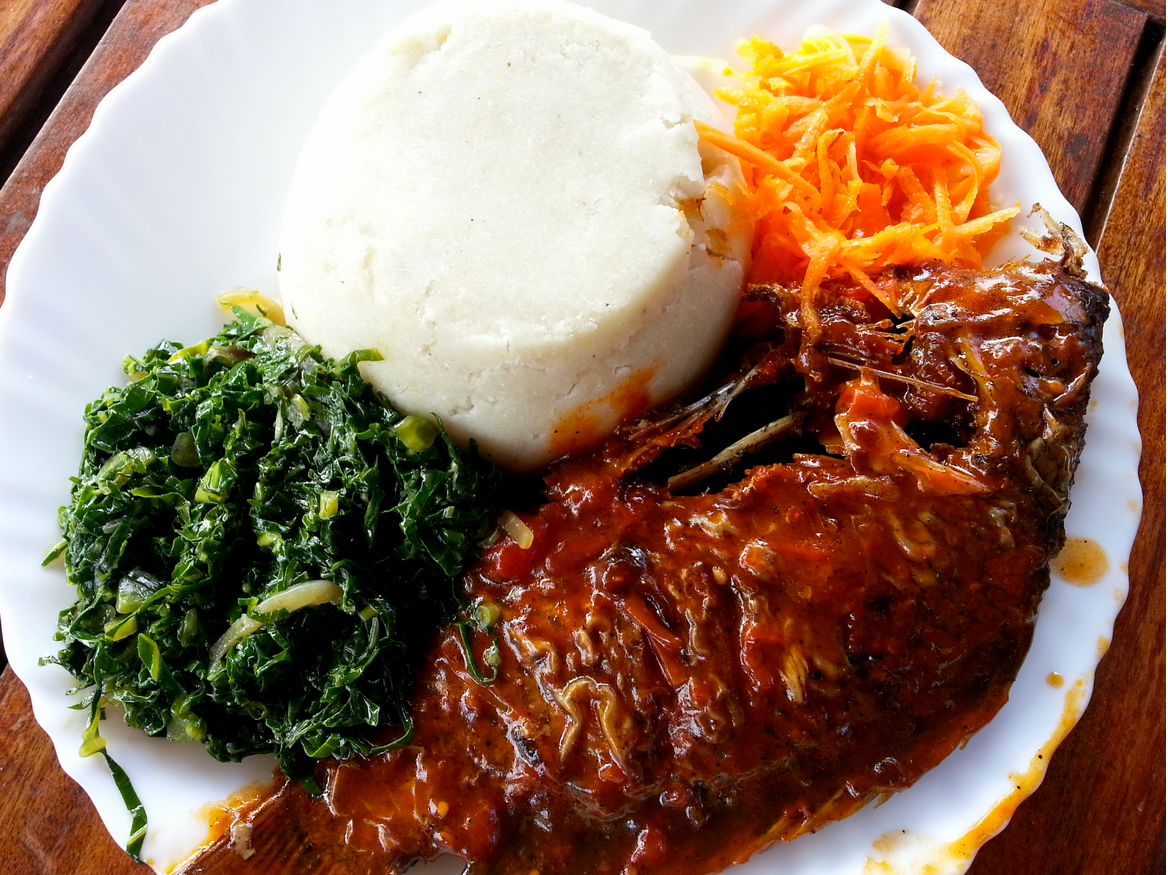
“Ugali and samaki” (fish) a very popular and staple food in Eastern Africa. (Photo source: Helen Hector)
History of African Dishes
Culture began when the raw got cooked.
—Felipe Fernández-Armesto, Food: A History
African cooking is a part of the whole universal human experience. Oils, herbs and spices add flavor and texture to primary ingredients and remove food from the state of nature, smothering and turning it into art. African cuisines are not simply the result of what outsiders brought, but the formative imperial experiences of political history. Ideas about cooking and ingredients were more often intra-African sharing of ideas.
But it would be wrong to completely dismiss the influence of external cultures. Colonialism has played a role in the cooking style of most East African and overall African countries. Hundreds of years ago, traders brought Arabic herbs and spices to the sub-region, specifically the East African coastal lines. Afterward, the Portuguese brought sweet potatoes, maize, and cassava from Brazil. The British colonizers arrived and introduced the locals to Indian spices and a new range of food from Southeast Asia. Many cultures have influenced East African dishes, which introduced unique melting pots of flavors, ingredients, and cooking methods.
African Dished You Can't Miss Trying
When you visit Tanzania, or any other country in Africa, and want to get a little adventurous with your taste buds, here is a list that should not miss in your menu.
Ugali
Also known as cornmeal porridge. Ugali is a popular dish throughout East and Southern Africa, particularly Kenya, Uganda, Tanzania and Zambia. It has many names like gauli, ngima, and sadza. Some people taste it and decide it’s just tasteless carbs, but it’s not. It has a popcorn-like taste that can be enhanced by salt and butter. I recommend trying it with meat stew, samaki (fish stew), sour milk, or vegetables for the full on experience. This was my father’s favorite dish and it holds a special place in my heart.

Ugali served with beef stew and some vegetables, a popular staple in East African Households. (photo source: cookpad)
Beyaynetu
This is considered as Ethiopia’s most famous vegetarian dish. The word “beyaynetu” simply translates to “a bit of everything.” Beyaynetu consists of a platter of injera topped with different vegan curries and vegetables. This dish is mostly popular on Wednesdays and Fridays and longer fasting seasons for Ethiopians, since that’s when they abstain from eating meat.
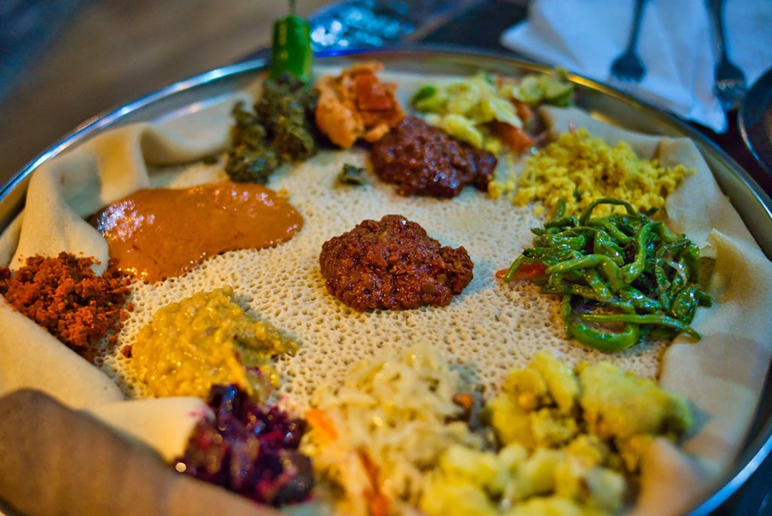
Beyaynetu, popular Ethiopian dish served with varieties of vegan curries (photo source: Calgary Food - Facebook)
Nyama Choma
No African food list is complete without probably the most delicious dish on the entire list, the grilled roasted meat. This is probably a subjective opinion, but I’m sticking by it. Freshly-slaughtered goat and beef are the top choices for meat, but chicken and fish options are also suitable. The slow roasting process brings out the rich flavors of grass-fed goat and selected spices. My favorite part of this dish is the minimalism in preparing it. All you need is a grill, fire, salt lemon and you’re good to go. You can eat it with fried plantain, potatoes, Ugali or serve it as it is.
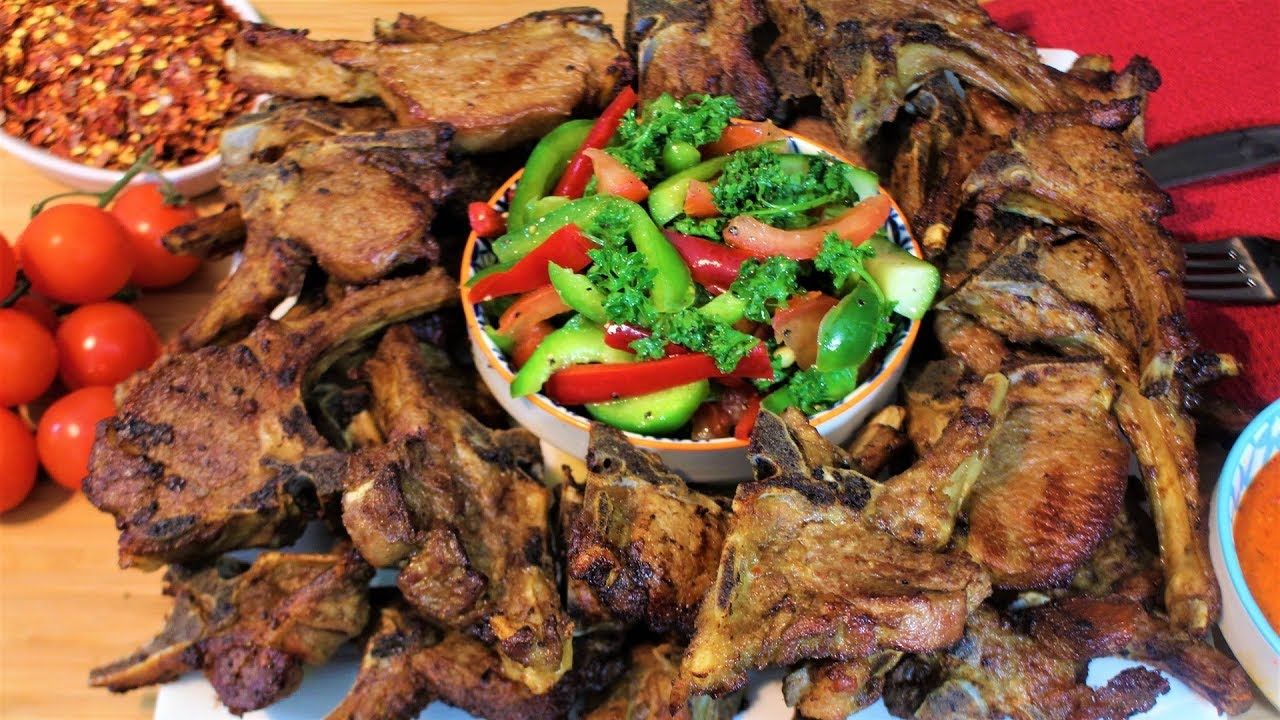
Nyama choma served with veggies (photo source: African cooking with Estelle)
Chipsi Mayai (zege)
This is a very popular dish in Tanzania. The term “chipsi mayai” or “zege” translates to “chips and eggs” in Swahili. You will find this simple dish of eggs, potatoes, and spices in most food stands. For a full experience try eating it with a toothpick and smear some ketchup on it as well. You would normally find the recipe online under the name “French potato omelet”, but there’s something wild and authentic about eating fresh hand-peeled potatoes made in small batches mixed with local eggs.
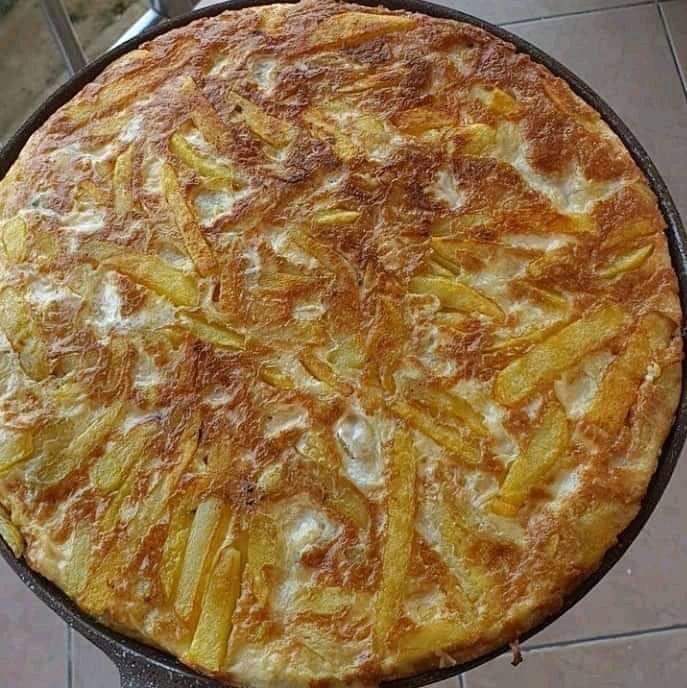
Chipsi Mayai. Try it with a cold drink such as a Fanta or Coca-Cola on a hot afternoon sun. It really hits the spot. (Photo source: twitter:@chipsmayai)
Jollof Rice
Not to forget one of my favorite West African dishes, the Jollof rice. Jollof rice is found throughout West Africa and is thought to be the origin of the Cajun dish, jambalaya. It is a common staple dish in Nigeria and Ghana but it is also popular in Mali, Senegal, Gambia, Liberia, and many other countries in around the region. The dish is typically made with long-grain also known as Basmati rice in East Africa. Tomatoes, onions, garlic, masala spices, vegetables and meat are all placed in a single pot. The smell when prepared is heavenly. It’s also served with a side of salad or fried plantain.
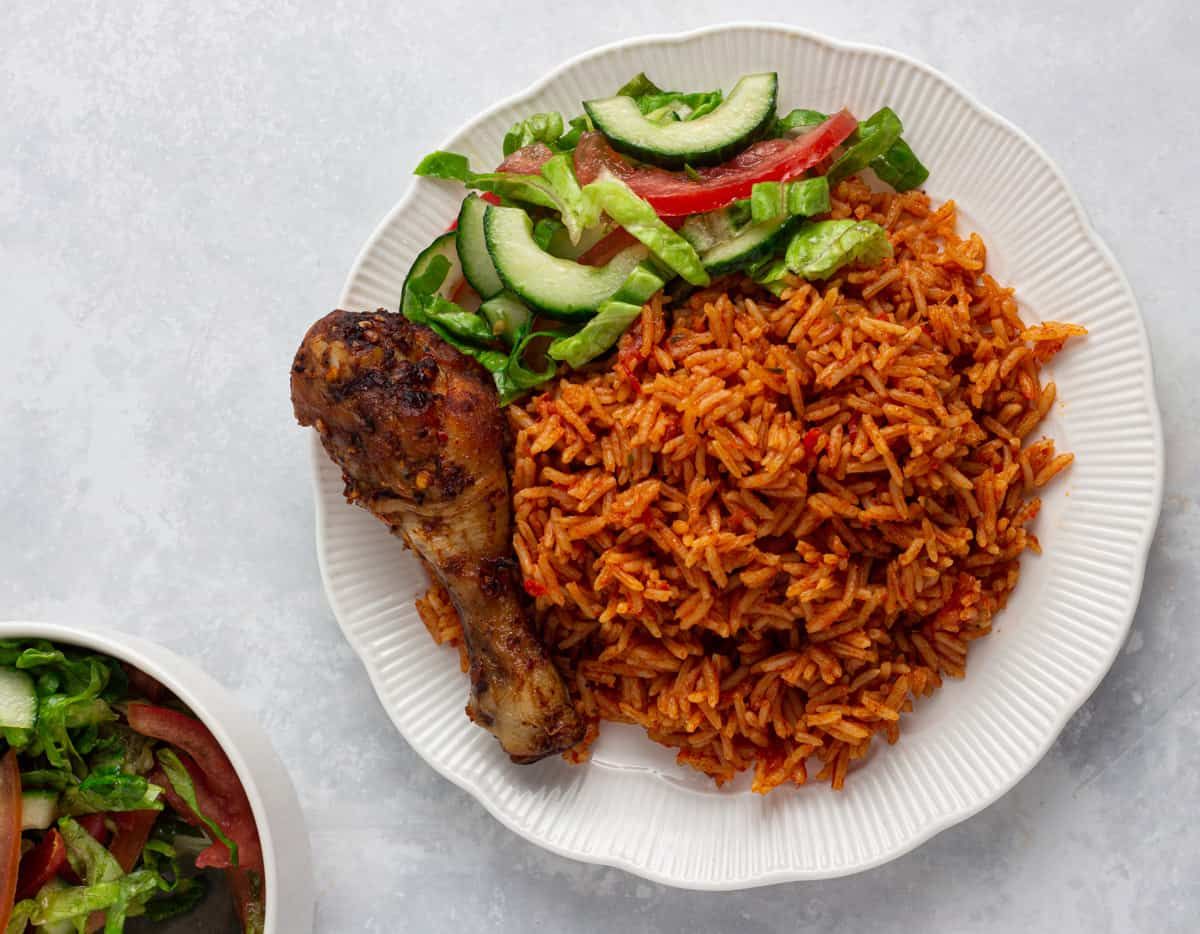
Jollof rice with a side of fresh salad ready to be served. One of the most popular dishes in Western Africa (Photo source:Urban Famie)
When people think of Africa the first thing that comes to mind is safaris, landscape and rich cultures, but food is also a major part of the culture as it represents our history. A heirloom kept and given from one generation to another. So the next time you get a privilege to enjoy authentic African food, know that you’re putting a piece of history in your mouth and that’s something to cherish.
