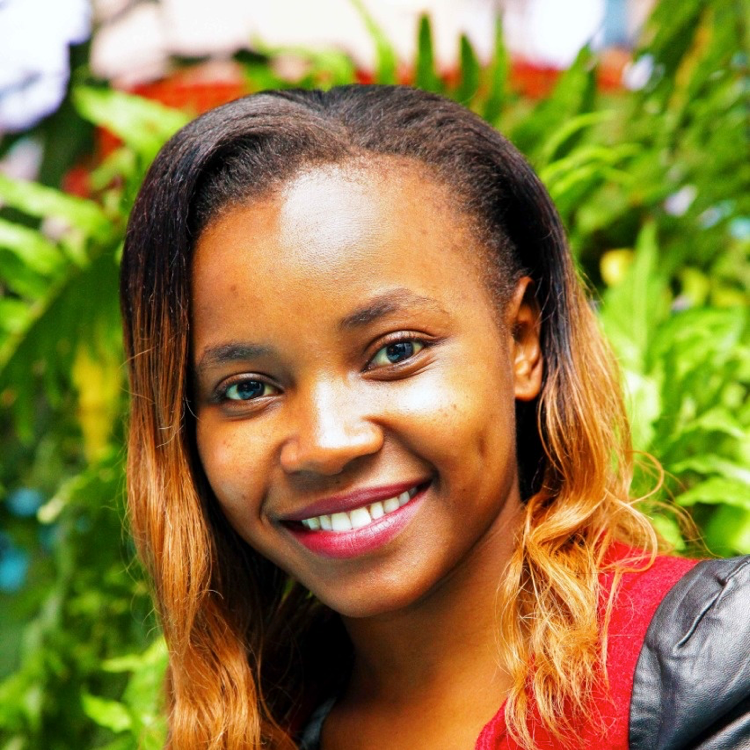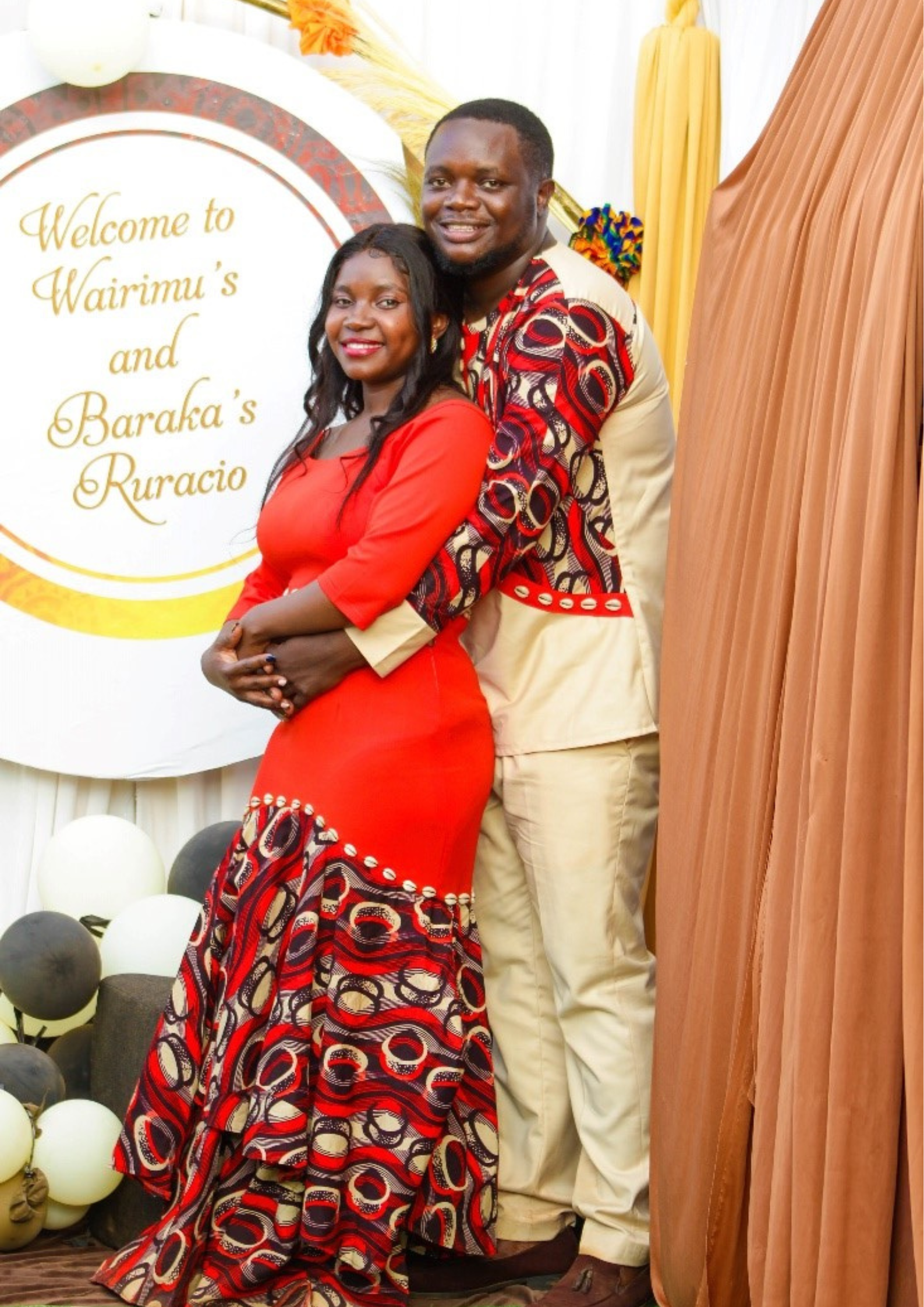
The bride and groom. Source: Maryann Muchugia
The majority of Kenyans frequently use the Kikuyu word "ruracio" to describe the dowry payment procedure. The Kikuyus are a Bantu ethnic group in Kenya and one of Kenya's 42 tribes, and a ruracio is the customary action a man does when he is prepared to pay the bride price for his wife. The payment of dowries varies from tribe to tribe in Kenya, because each has its own unique method.
In this article, I take you through my beautiful ruracio and give you the details of how everything went down.
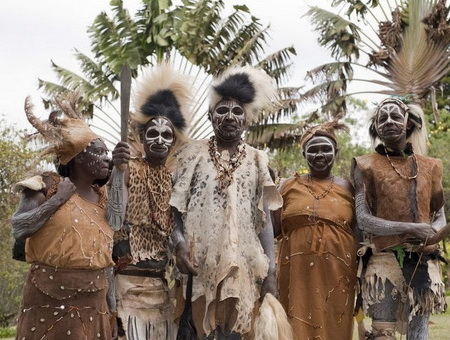
An image of the Kikuyu tribe in Kenya dressed in their traditional Kikuyu attire. Source: Africa 101 Last Tribes
On May 6th, 2023, my Mr. Right decided that it was time to make it right by the Kikuyu customs. However, prior to the date, we had to follow protocol and have a preliminary discussion with my parents. Baraka, my fiancé informed my parents that he had chosen a date and that his family was prepared to discuss dowry payment. Of course, my parents were delighted that their firstborn was finally making it official by bringing a "ruracio" home.
Baraka's family (the Jefwas) had to wait for my parents, Mr. and Mrs. Fadiga, to give a go-ahead before we could start making the arrangements. You guessed right, it was a yes from them, and a date was set. It was now my responsibility and that of the Jefwas to make sure that everything was in place to make that day a success. Typically, the male is given the task of funding the entire ruracio celebration, which will also give him an opportunity to show off how capable he is financially.
Setting the Groundwork in Motion
Now that we had a date, we started sending our invitations to friends and family and waited for their confirmations. I mean, what is an event without the people that matter the most to us? Here comes the most exciting part for a girl which had to be choosing the attire for myself, my fiancé, and our lineup, as well as planning the décor for the main event. There was never a lineup for the man or the woman back in the day, but in more recent times, couples have updated their dowry payment process and now request a few friends to be part of their lineup and dress in traditional attires that will complement their outfits.
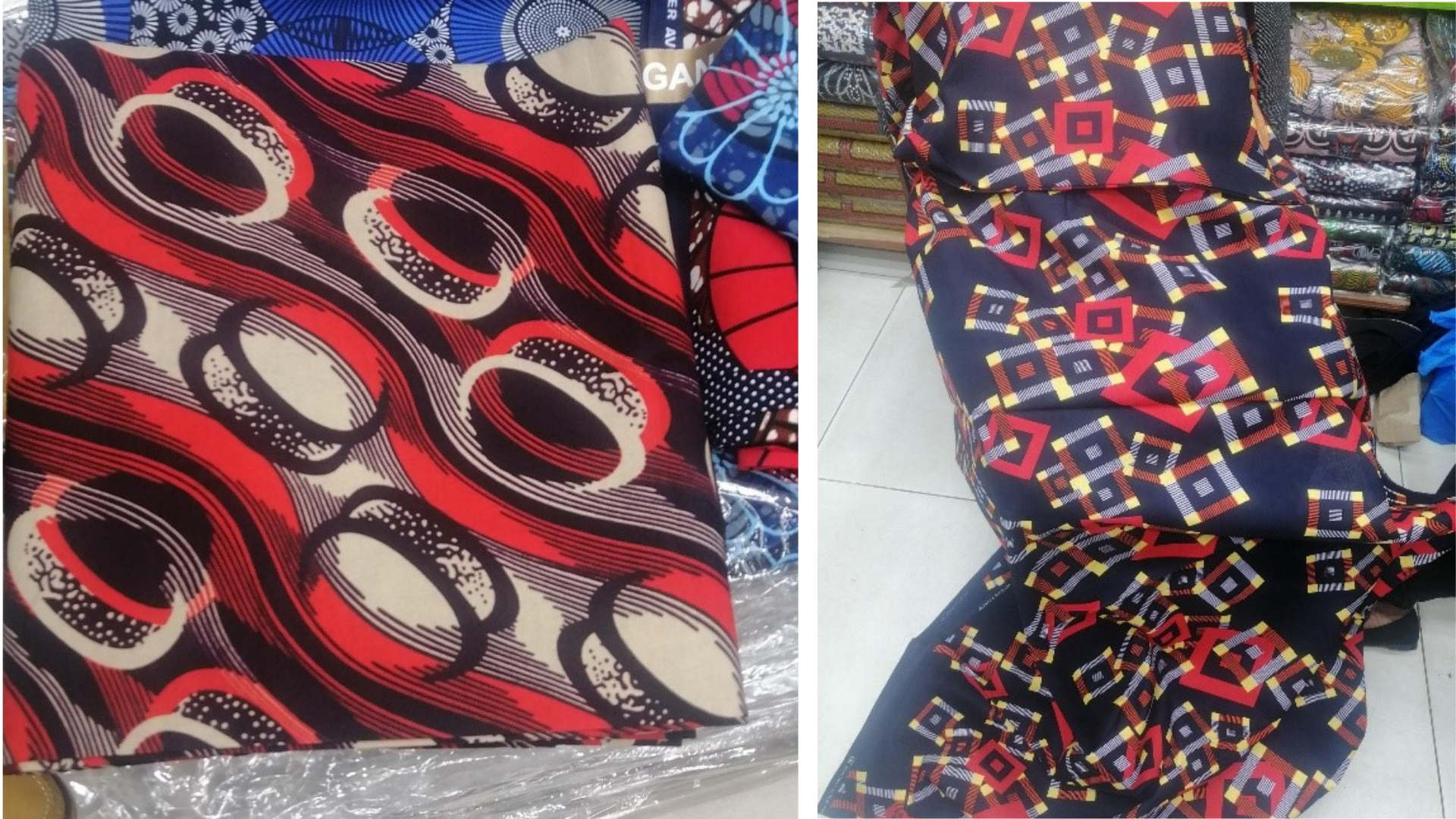
On the left is the Kitenge fabric my fiancé and I wore during our Ruracio while on the right is the Kitenge fabric we choose for our bridal lineup. Source: Maryann Muchugia
This also applies to the décor though not much attention was given to such back in the day. Recently couples are now going out of their way to have different themes for their special day, incorporating various traditional ornaments to symbolize what the event is all about. For the Kikuyus you will spot something like a calabash, hay, traditional kikuyu beads, and sometimes the color brown or a different color depending on how you want your day to look. For Baraka and I, the theme for the décor was white and a bright brown.

A photo of my ruracio décor and the setup. Source: Maryann Muchugia
The D-day
Finally, the long-awaited day was here and when I tell you everyone was ready, you better believe it. Let it be known that the Jefwas did not come to play. They let everyone in my hometown Gachie, Kiambu County at the United States of Fadiga premises know that they had arrived and were ready to pay dowry for their daughter Maryann. They came with a brasso band all the way from the coast playing coastal tunes as they waited eagerly for the gates to be opened. Mrs. Jefwa had selected a few of her lady friends who wore the Kishoto leso which has specific prints and patterns to represent their Giriama culture.
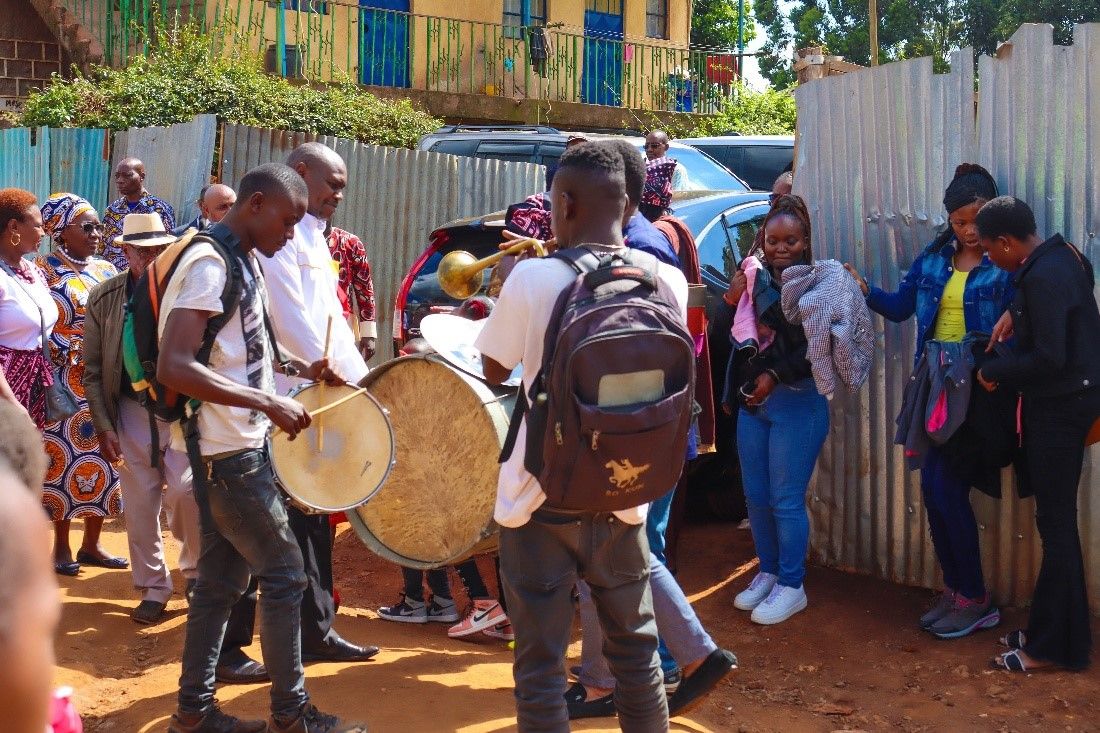
The Brasso band playing coastal tunes outside the gate during my ruracio. Source: Maryann Muchugia
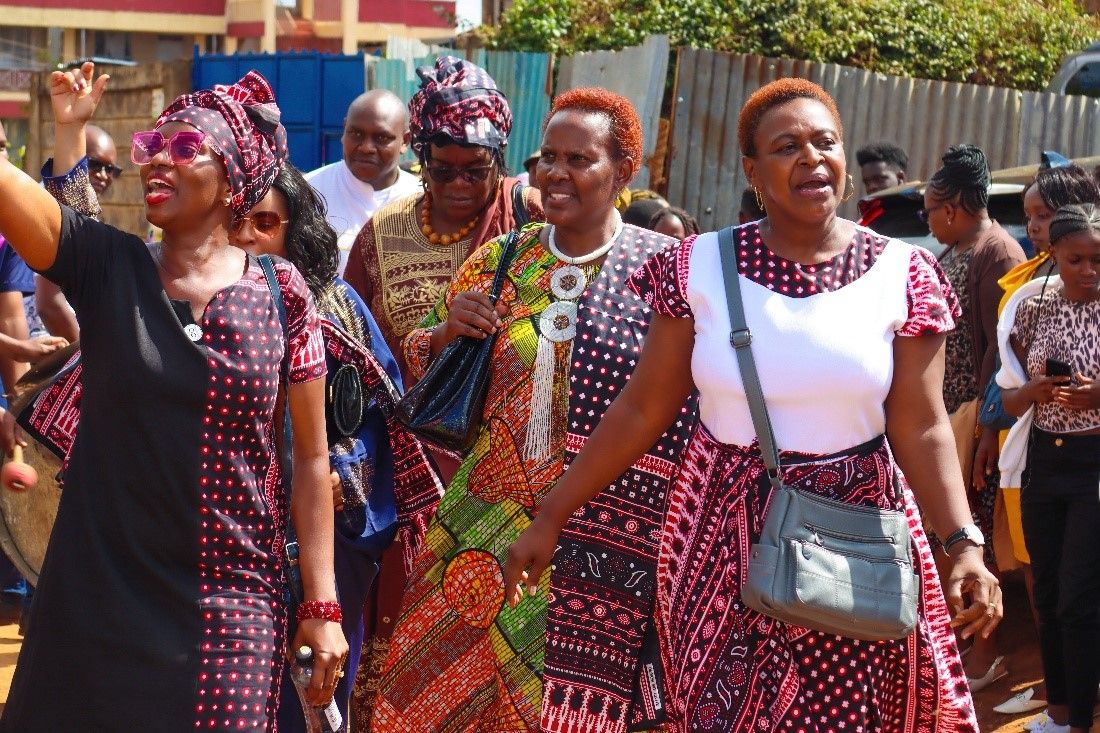
Mrs. Jefwa's friends dressed in the Kishoto leso singing and dancing to the brasso tunes as they make their way towards the United States of Fadiga premises for negotiations at the gate. Source. Source: Maryann Muchugia
Mr and Mrs. Fadiga were also not left behind with their preparations. They had family and a group of women dressed in beautiful traditional Kikuyu attire singing Kikuyu traditional songs before opening the gate for the guests to come in. During a ruracio, before welcoming the man's family into the girl's home they must wait until they are permitted entry. This will only happen after there is a negotiation between women from both sides of the families at the gate, which prompts some kind of fine or small payment from the man's family to allow them to get inside the girl's homestead.
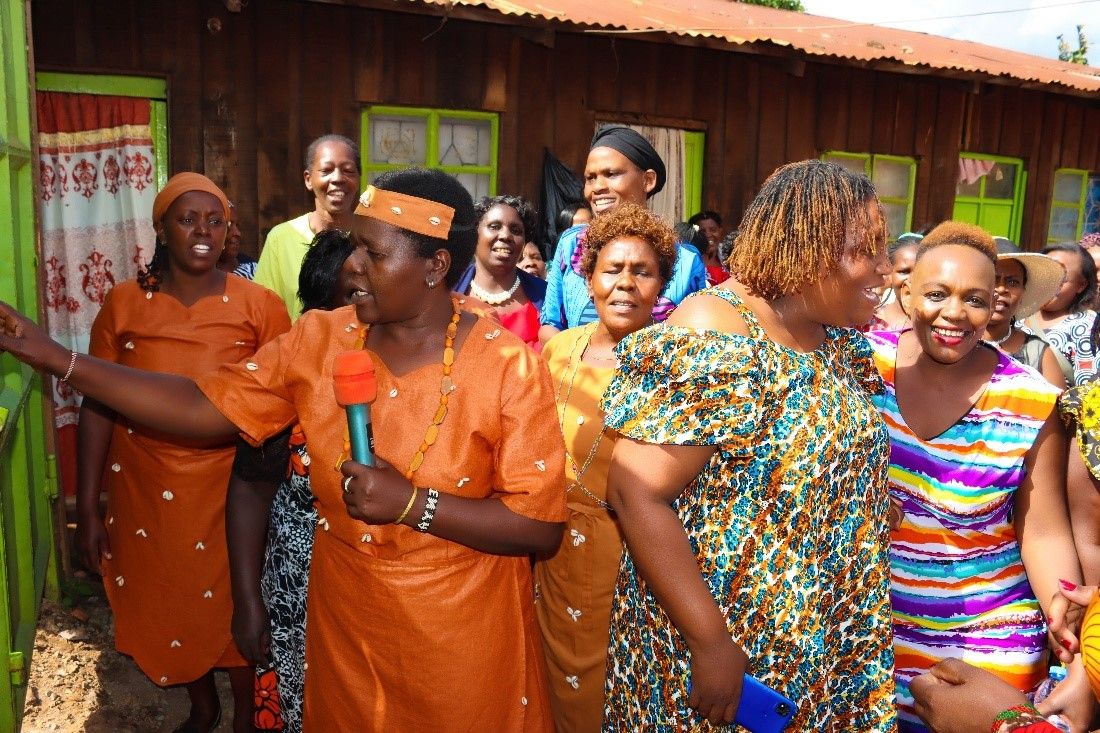
Women dressed in Kikuyu traditional attire Inside United States of Fadiga Premises dancing and singing as they negotiate at the gate. Source: Maryann Muchugia
At last, the gates were opened, and everyone was in, I peeped through the window inside my parents' house and was able to see my fiancé, Baraka. He was dancing at the gate as my friends and relatives from Gachie welcomed his family inside United States of Fadiga premises with Kikuyu traditional songs as they also danced to the brasso band. Everything about the day was going as I had hoped.
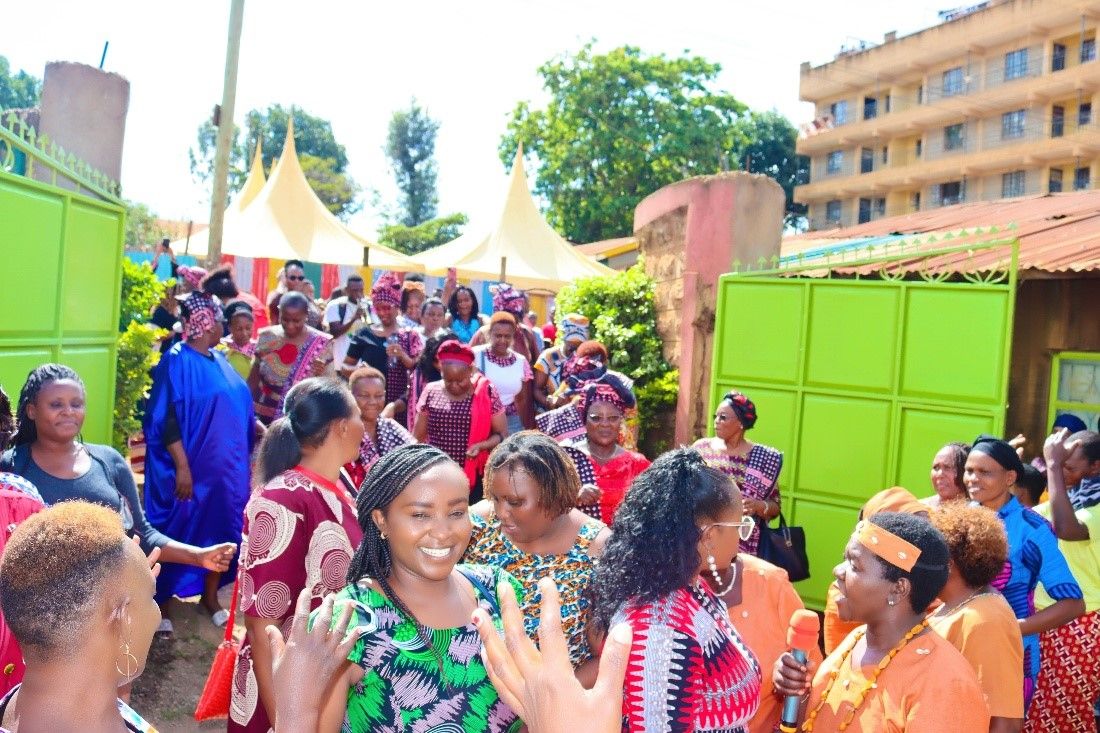
Guests being welcomed into the United States of Fadiga premises after reaching an agreement. Source: Maryann Muchugia
Food was readily accessible, and the moment had arrived for us to satisfy our bellies. A variety of foods were served to the guests, including the well-known Kikuyu delicacy Mukimo, a combination of mashed potatoes, greens, and corn. We also enjoyed the well-known Njahi, known as Black Beans in English, which are a staple of Kikuyu ceremonies. The coastal region was also represented in the menu with Pilau a famous Swahili dish that primarily consists of seasoned rice with meat.
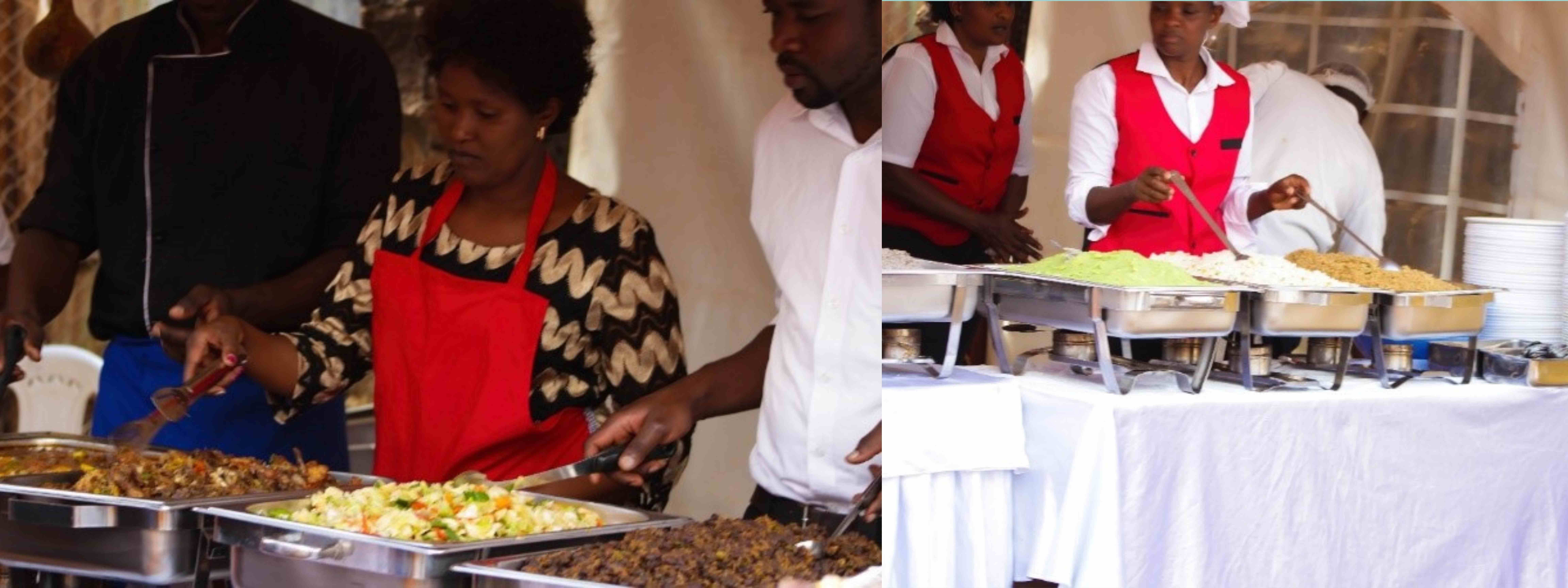
The catering team serving guests during the ruracio. Source: Maryann Muchugia
Once everyone had finished eating, it was time for members of both families to introduce themselves and get to know each other. With all the information we had about one another, we could finally put a face to the name. My parents gave Baraka's family a warm welcome at their home and told them they may come whenever they wanted.
Discussing the bride price
It was now time for the wazees and our parents to have a meeting aside and discuss what was needed for the bride price. In a ruracio, we have a group of middle-aged men and women who are selected from both sides to conduct the necessary negotiations regarding dowry payment. The main negotiator from both sides is strictly a man who will ensure that their side is favored when it comes to payment. For the selected women, they sit and listen silently to the negotiations as they wait for their turn to ask for something, and their six crates of sodas that mama Baraka, Mrs. Jefwa, was requested to bring. The bride is not allowed in the negotiations.
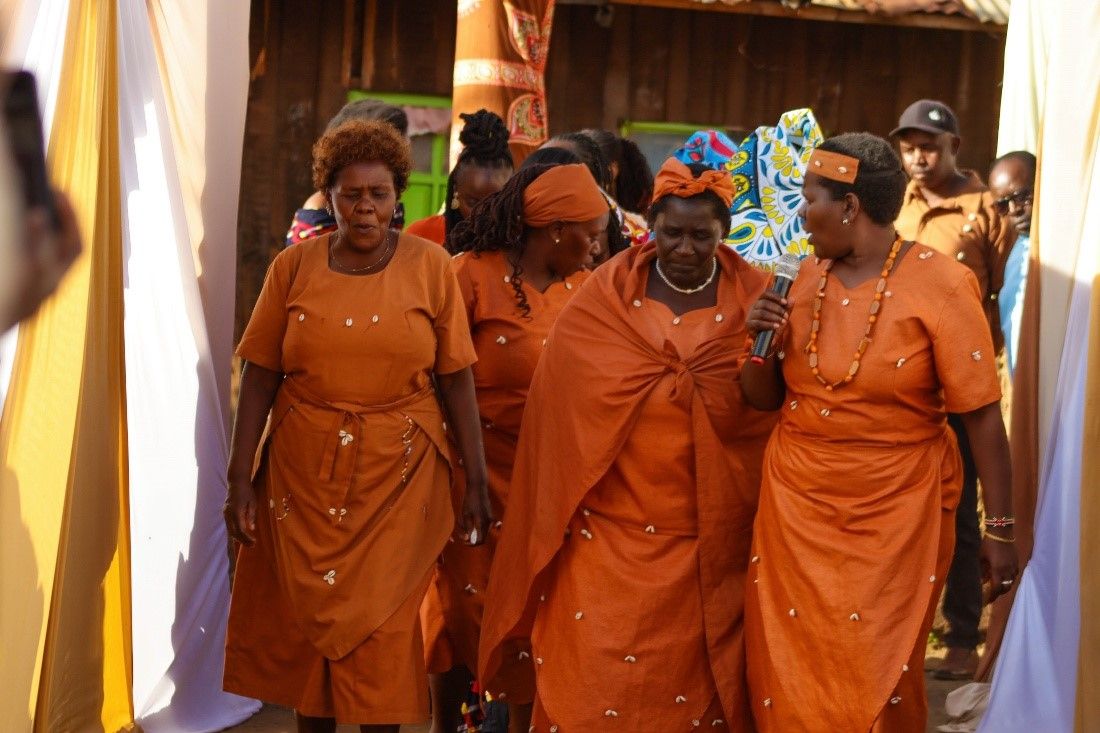
Women dressed in Kikuyu traditional attire ushering ladies covered in lesos into the event with traditional Kikuyu songs. Source: Maryann Muchugia
While all of this was going on, the Master of Ceremony entertained the other guests with some comedy whilst they waited for me to be unveiled to them. It was now my turn to shine, as well as those who are part of my lineup. A few chosen girls, including me, were completely covered in lesos, a type of cotton fabric printed with colored designs, used mainly for women's clothing, to conceal our clothing and faces. This is done to test the man's ability to choose his bride from among those who are covered. Not to mention that the Kikuyu ladies will fine Baraka some amount of money if he picks someone else who is not his bride. This is normally entertaining for the guests because everyone is eager to see if the man will make a mistake and choose the wrong person.
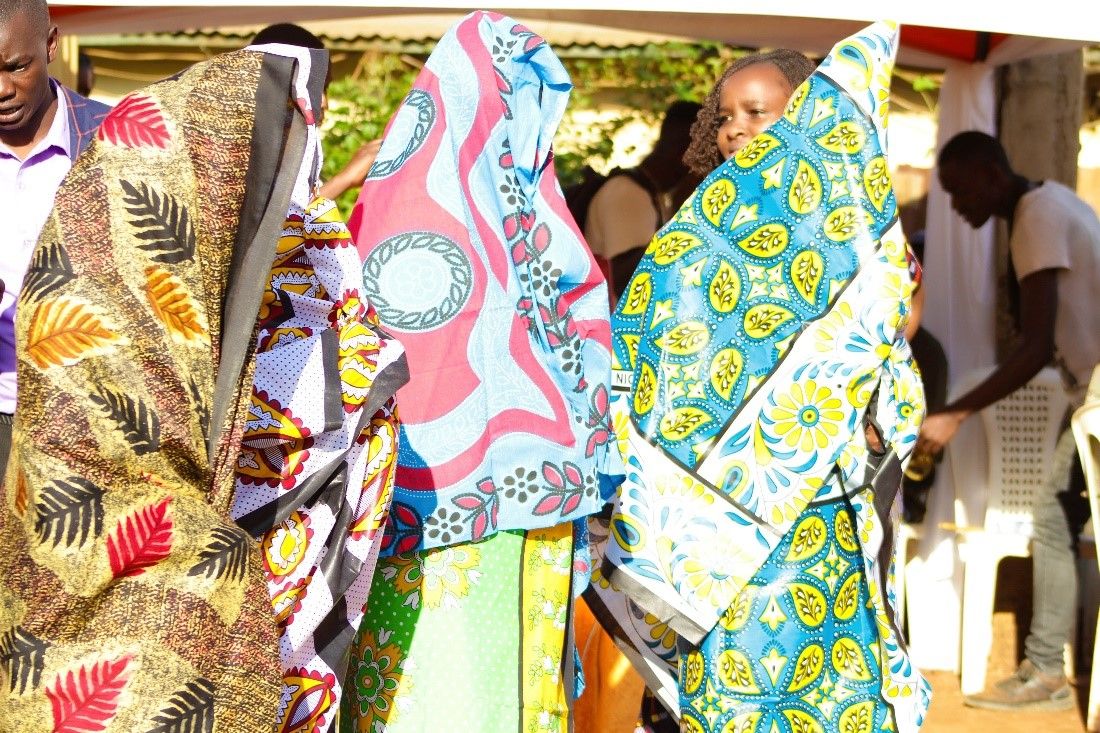
Ladies covered in lesos waiting for the groom to take his pick. Source: Maryann Muchugia
We were ushered in to beautiful Kikuyu traditional songs as other girls in the bridal lineup held our hands and guided us into the venue (keep in mind that we were covered with lesos so we could not see anything). The singing abruptly halted, and Baraka was instructed to pick his partner. He initially had his doubts and chose to request some support from his lineup of three male friends. He was now prepared to make a decision, and before I knew it, he unveiled my leso and was grinning at me.
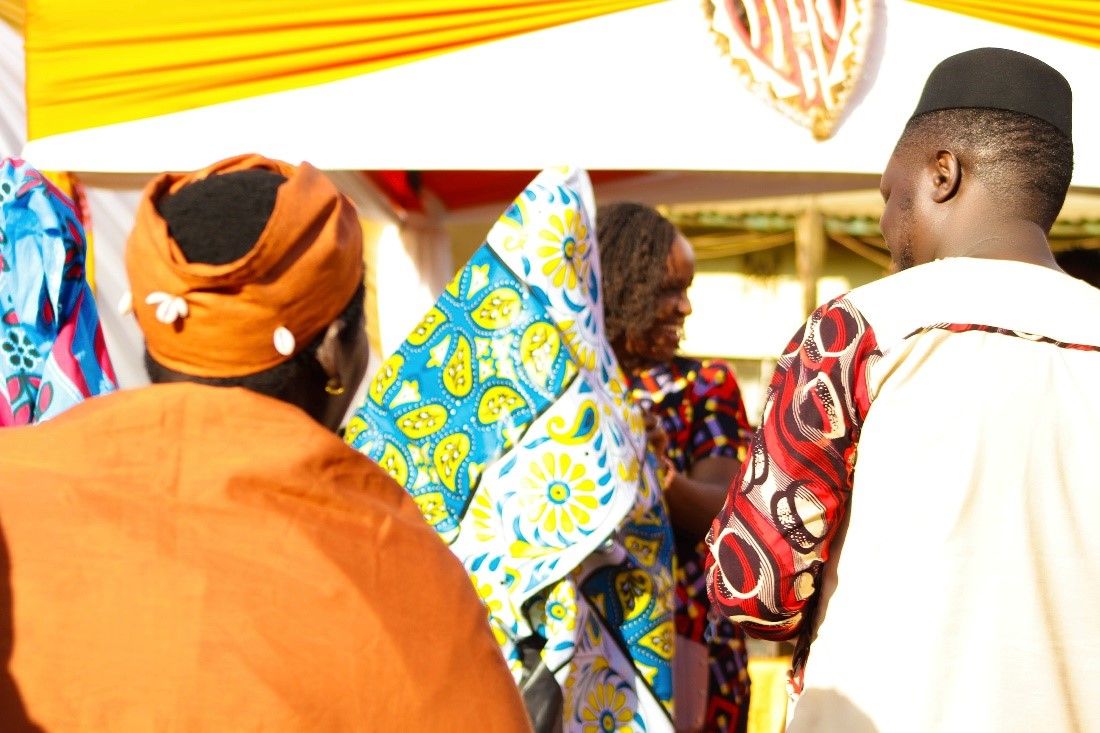
Baraka chooses his bride. Source: Maryann Muchugia
The brasso band hammered their drums and blew their trumpets as happy tunes filled the ceremony. Baraka had made the right choice. The guests joined me on stage as we danced with Baraka in our traditionally decorated attires. Brown is the color that is normally associated with a ruracio and ngurario, the Kikuyu traditional wedding.
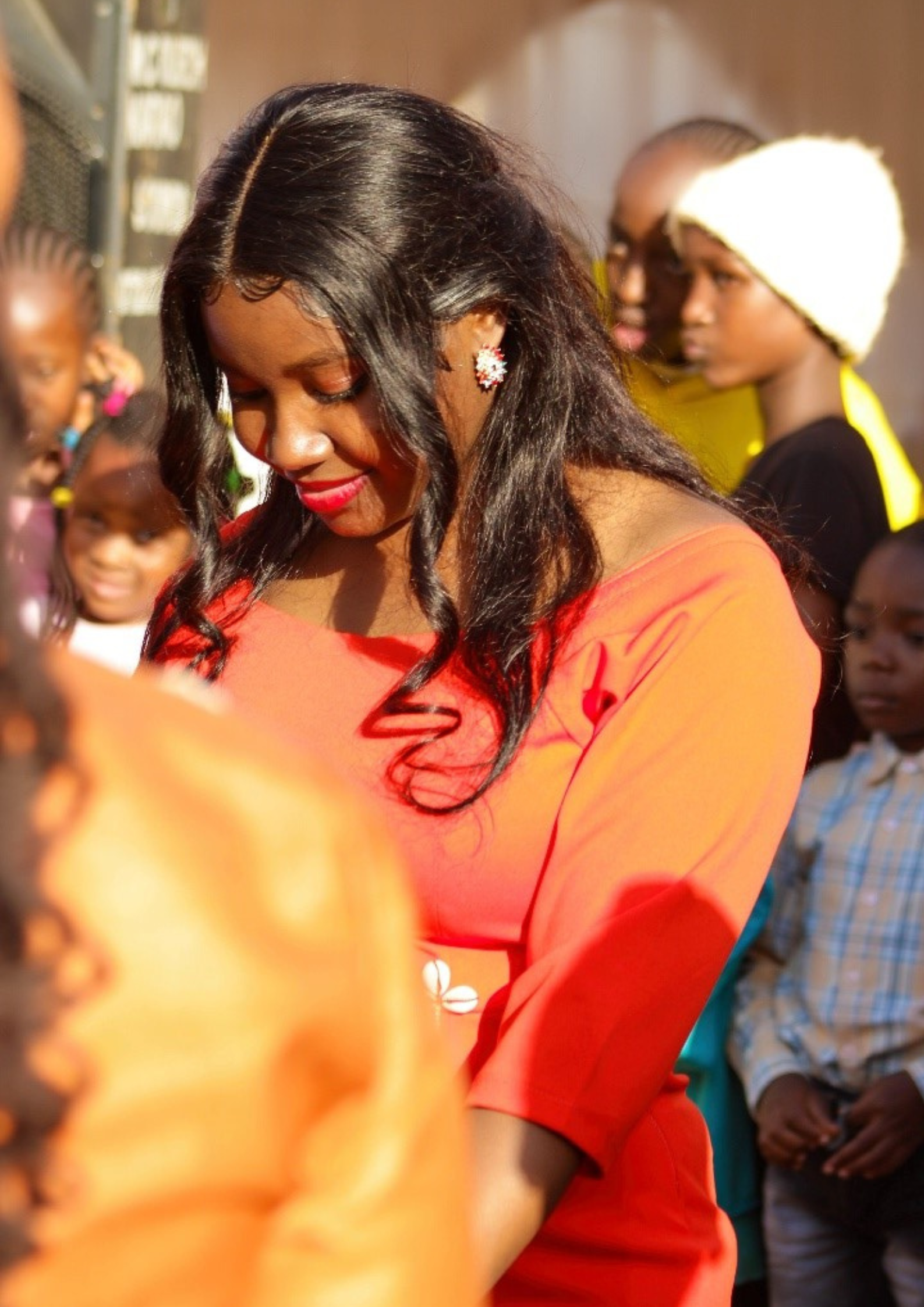
After the leso was removed and my face unveiled confirming that Baraka had made the right choice. Source: Maryann Muchugia
In order to make the day vibrant for our celebration, I chose a rich brown hue for my gown that almost appeared orange. Baraka, my fiancé, decided to match the kitenge pattern on my dress and my outfit by choosing the beige color for his shirt and pants. The white shell beads that are typically worn with kikuyu traditional clothing were also used to complement the clothing. The outfits were "lit".
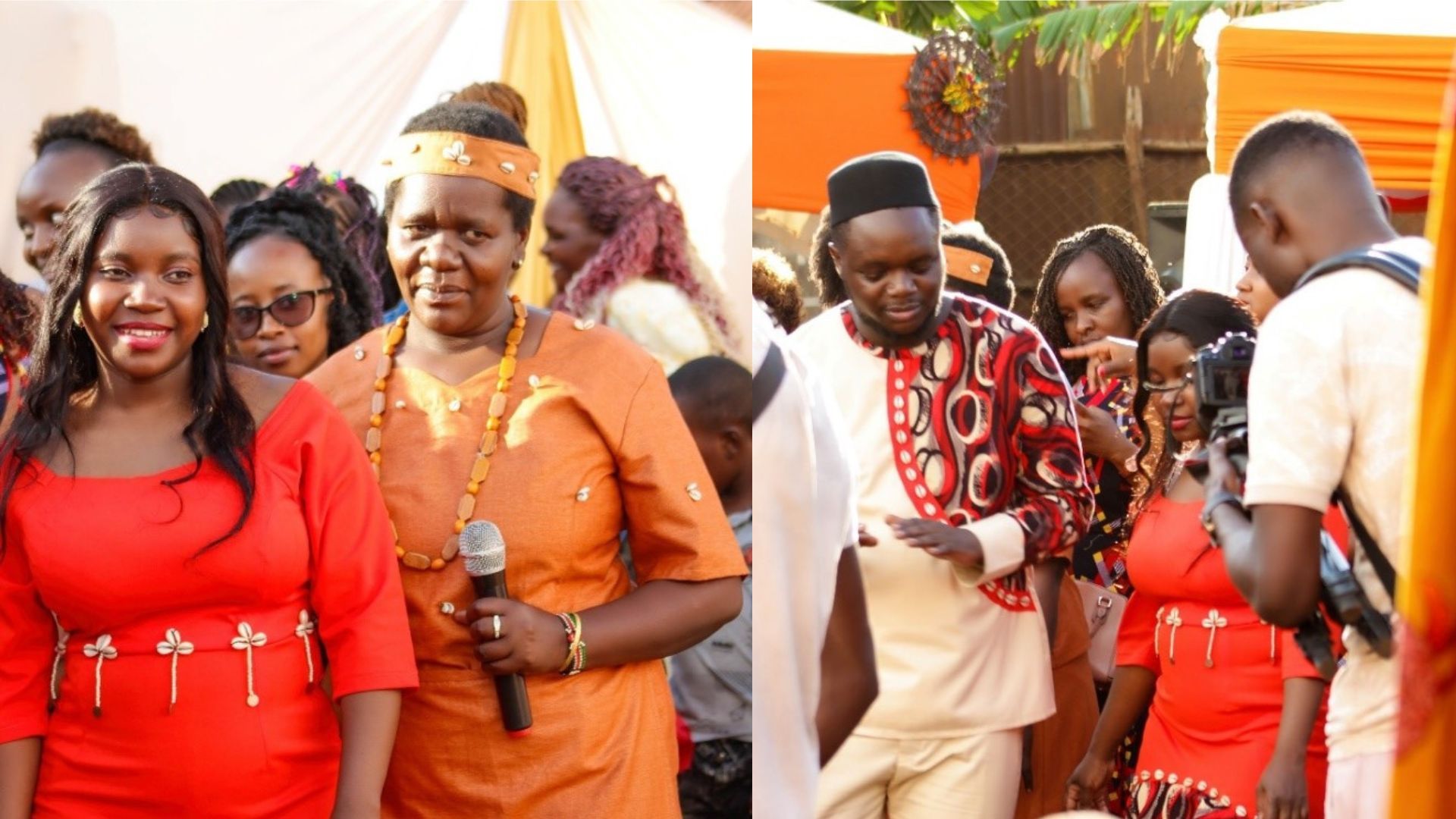
On the left is the outfit I wore on my Ruracio and on the right it is Baraka and I dancing and singing along to traditional songs during our ruracio. Source: Maryann Muchugia
Cementing the official journey and new family with Baraka
Baraka and I were serenaded by the guests to enjoyable tunes till our feet gave in. The elders commonly referred to as wazees finally reached a consensus, and the bride price was paid. Prior to the ruracio, the Jefwas and their guests were asked to bring sodas, muratina a traditional Kikuyu alcoholic drink, as well as gifts of their choice. Only women are permitted to carry these items and bring them into the girl's homestead. They typically do so while singing traditional songs. My fiancé and I were summoned into the house where the wazees were, to seek blessings from our parents.
This was accomplished by Baraka and I giving our fathers Mr. Fadiga and Mr. Jefwa a sip of the muratina drink and allowing the wazee to drink it at our function. For our mothers, we gave them both a sip of soda and asked them to bless us and our family. The dowry negotiations were concluded, and it was now time to cut the cake and for the guests to indulge. To symbolize the Kikuyu culture, the cake was designed with a traditional motif and baked in the shape of a calabash. Guests were now allowed to hit the dance floor to enjoy their favorite jams and leave at their own convenience.
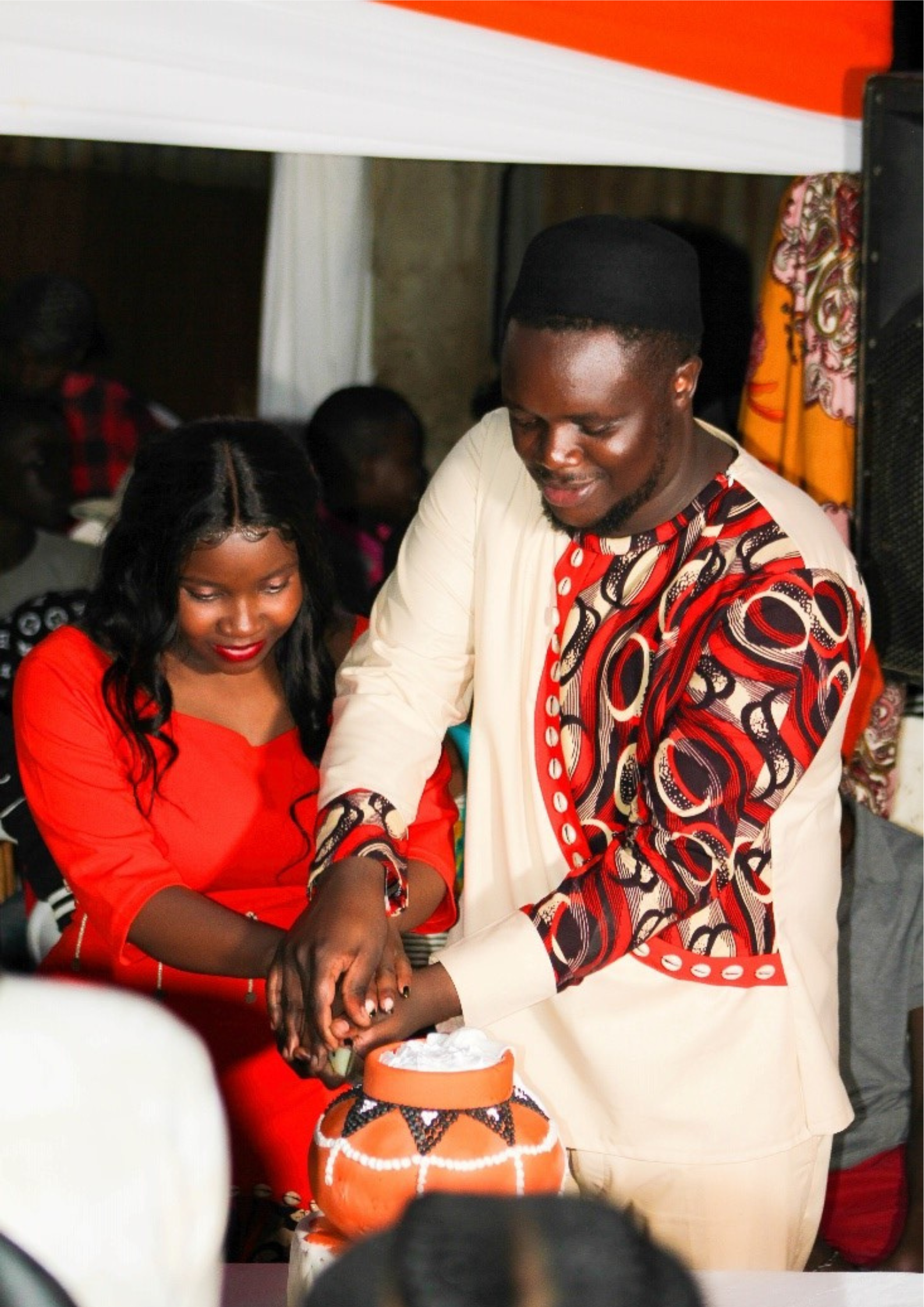
Bride and groom, Maryann and Baraka, cutting the cake before serving the guests. Source: Maryann Muchugia
I became part of the Jefwa family and according to the Kikuyu customs, I could not be left behind after the bride price had been settled. Baraka was officially my finance and when the right day comes this girl will finally say I do. The celebration was all we could have asked for, and having family and friends present made it much better.
On this day different Kikuyu and Giriama tribes and cultures were brought together, and the result was magical. The guests were exposed to traditions they had never seen before, and they appreciated every bit of it. Our traditions are part of our identity, and they make us who we are. The fact that we were able to blend modern and traditional practices just shows how much we all have to offer, and how Kenya is made up of many tribes and it blossoms with different rich cultures and their beauty.