There is a child in Kawangware who learned about her rights from a phone. Not from a teacher, not from a parent, not from a lawyer, but from a short video on TikTok. She is eleven. She does not have a laptop. She has never heard of the Internet Governance Forum. She will not be in Accra in November. But the decisions made there will shape everything about how she experiences the internet for the rest of her life.
According to DataReportal, 2026 figures, TikTok's own advertising tools put its adult user base in Kenya at 18.4 million by late 2025, reaching an estimated 78.5 percent of the country's internet users. Alongside WhatsApp, it is one of the two most-used platforms in the country, closer to infrastructure than entertainment, the place young people search before they Google, learn a skill, sell a product, build an audience. That is the terrain governance is supposed to be governing, and it was not built with a child in Kawangware in mind. This is the paradox at the heart of internet governance: the people generating the most cultural energy on these platforms are almost never in the room where they get shaped.
What is the IGF and What Does "Multistakholder" Actually mean?
The Internet Governance Forum is a UN-mandated space for dialogue on how the internet is governed. It gathers governments, the private sector, civil society, the technical community, and academia. Its First Open Consultations and Multistake-holder Advisory Group Meeting for 2026 took place from 24 to 26 June in Nairobi, feeding into the African IGF in Ghana this November and the global IGF returning to Nairobi in December- a rare moment of geographic proximity, a chance for African voices to shape the agenda. And yet, if you asked the average Kenyan teenager, the ones actually building the continent's most vibrant digital culture, whether they knew this consultation was happening, you would be met with a blank stare.
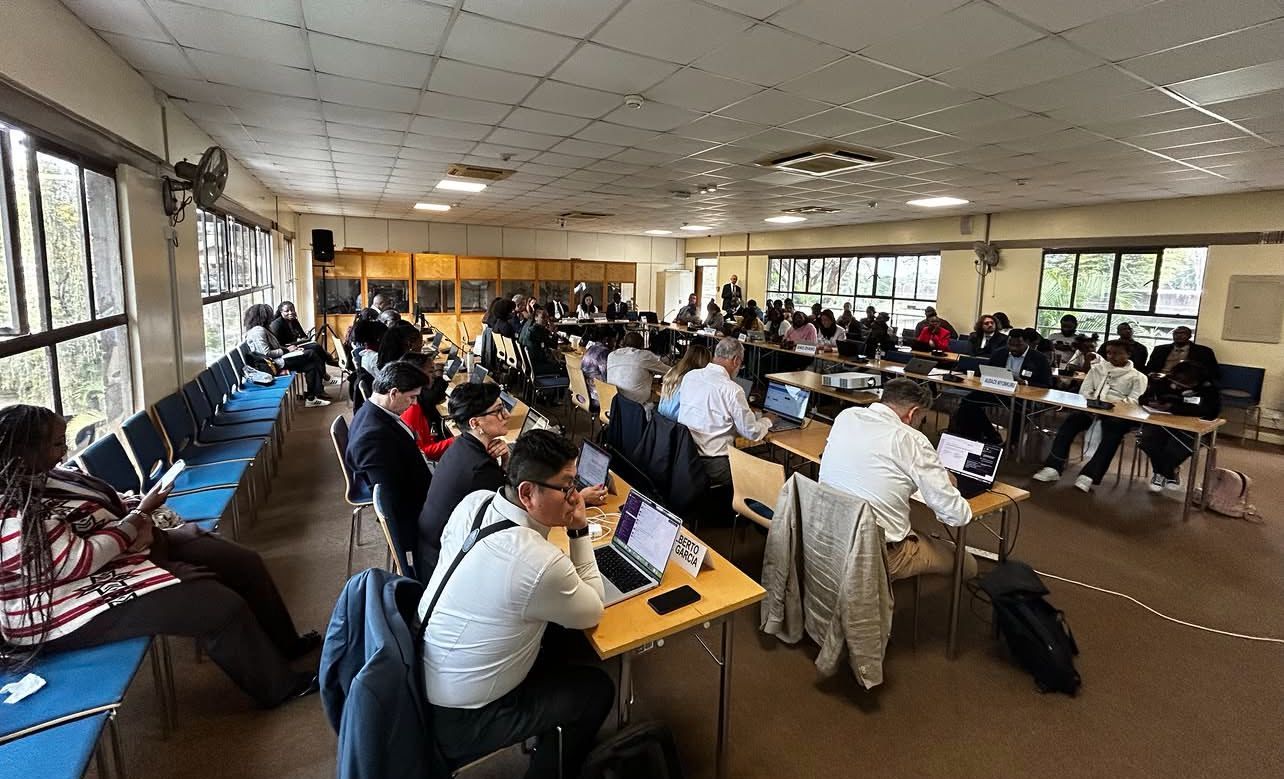
Day 1,Of the Open Consultation on the IGF at the United Nations Office In Nairobi, Kenya. Source: intgovforum on Instagram
What Does "Online" Actually Look Like for a Kenyan Teenager?
Strip away the policy language and look at the platform as a cultural space. TikTok's architecture rewards speed, repetition, remix, performance. A trend lands in Lagos or Los Angeles and is reinterpreted in Sheng within hours captioned, soundtracked, localized before most institutions finish drafting a memo about it. Kenyan creators have built informal economies on this: comedy skits in Sheng and Kiswahili, dance challenges remixed with gengetone, thrift-flip "mtumba" styling content, live-selling sessions that function as a digital open-air market. Sprout Social 's TikTok Marketing Insights places Gen Z account ownership at 72 percent globally, and GWI and DataReportal both confirm entertainment as the primary driver of engagement everywhere the platform operates.
But the same architecture that rewards a fourteen-year-old's dance video for going viral has no localized circuit breaker for what comes after. Amnesty International found that within 20 minutes of a new account signaling interest in mental health, more than half of the videos in TikTok's "For You" feed related to mental health struggles, several romanticizing suicide. A BBC investigation found TikTok profiting from sexual livestreams performed by Kenyan teenagers as young as fifteen- the same live-gifting machinery that lets a teenage comedian in Dandora earn pocket money, repurposed for exploitation when nobody is watching closely enough. The creator economy and the harm economy run on the same rails. That is the part most governance conversations skip past.
I sat with a mother in Dandora recently. She works two jobs and hands her son a phone before school because the school now requires it for class materials. She is not a negligent parent; she is doing exactly what the education system asked of her. But she told me something that stayed with me: "I know something bad can happen on that phone. But I don't know what it looks like. And I don't know who to call." That gap between a platform that knows exactly how to hold a child's attention, and a parent who has no idea how to interrupt it is the real story underneath the policy story.
The Questions Governance Keeps Dodging
Who pays for access? Reporting from the KenyanWallStreet report , World Bank and GSMA confirms that mobile data costs in Sub-Saharan Africa are among the highest globally relative to income, often exceeding 5% of monthly income for low-income households. These high costs, paired with expensive device ownership, turn digital participation into a financial burden, forcing a transactional, limited approach to internet access for many households.
Whose values shape the feed? The dominant platforms are headquartered in the United States or China, and their moderation and ranking systems reflect contexts that are not African. In Kenya, where the median age is twenty, content moderation is still overwhelmingly trained in English, meaning harmful content in Kiswahili, Kikuyu, Sheng, or Dholuo slips through while legitimate speech in those same languages gets misclassified or suppressed.
Where are children's voices in the rooms making these decisions? The IGF has a Dynamic Coalition on Children's Rights in the Digital Environment. It meets. It publishes statements. But walk the corridors of an IGF meeting and you will find very few children there, almost none from Africa.
It is possible to do better, and I watched it happen. On 29 June, UNICEF's For Every Child, together with a coalition of civil society organizations and Mtoto News, convened a multistakeholder dialogue on online safety and children's rights in Africa and this time, children aged twelve to sixteen, from several different African countries, were actually in the room, speaking for themselves rather than being spoken about. One Kenyan child put the entire governance debate in a single sentence better than most policy papers manage in ten pages: navigating the internet should be taught through skills, not fear. Children, he argued, should not be trained only to protect themselves from the internet, as though danger were the whole story; they should be included in co-designing the policies meant to govern their digital lives, not handed a finished framework drafted on the sidelines and asked to endorse it. Build with children. Make reporting easy, and make sure that when a child does report harm, someone responds quickly. And the line every implementer in the room needed to hear, stop writing new policies before fully implementing the ones that already exist. That conversation, more than any session I attended at the UNON consultations, is what a genuinely multistakeholder process is supposed to sound like.
Governments, Not Just Platforms, are the Problem Too
It isn't only platforms restricting children's access, governments do too, and more aggressively. Top10VPN 2025 tracking found government-imposed network disruptions across fifteen African nations including Cameroon, Chad, the DRC, Ethiopia, Nigeria, Tanzania, and Uganda accumulated more than 24,000 hours of downtime, wiping over a billion dollars from regional economies, frequently timed around elections and protests.
We often talk about protecting children from the internet. We talk far less about protecting children's access to it from their own governments. A community health worker I know in Lucky Summer described what the 2025 shutdown meant for her work: she could not reach the children she tracked through an online referral system, could not update case files, could not connect a girl who needed urgent support to the organization meant to help her. "The internet going down," she told me, "is not just an inconvenience. For some children, it is the difference between getting help and not getting help at all."
Kenya's TikTok Debate, and Why it Fell Short
Kenya's parliamentary engagement with TikTok in early 2026 is worth examining closely, because it shows what attentive, if still incomplete, platform scrutiny can look like. On CIO Africa Members of Parliament moved to regulate the app after a petition calling for an outright ban, citing explicit content, data privacy violations, and mental health harm, driven in part by the BBC Africa Eye documentary on sexual exploitation via TikTok Live. To their credit, MPs pushed back against a blanket ban. Committee Chair Eric Muchangi Karemba argued that regulation does not have to mean banning, and that social media now plays a real role in youth communication, creativity, and entrepreneurship. Ministries were instead directed to report on age verification, local data localization, and media literacy.
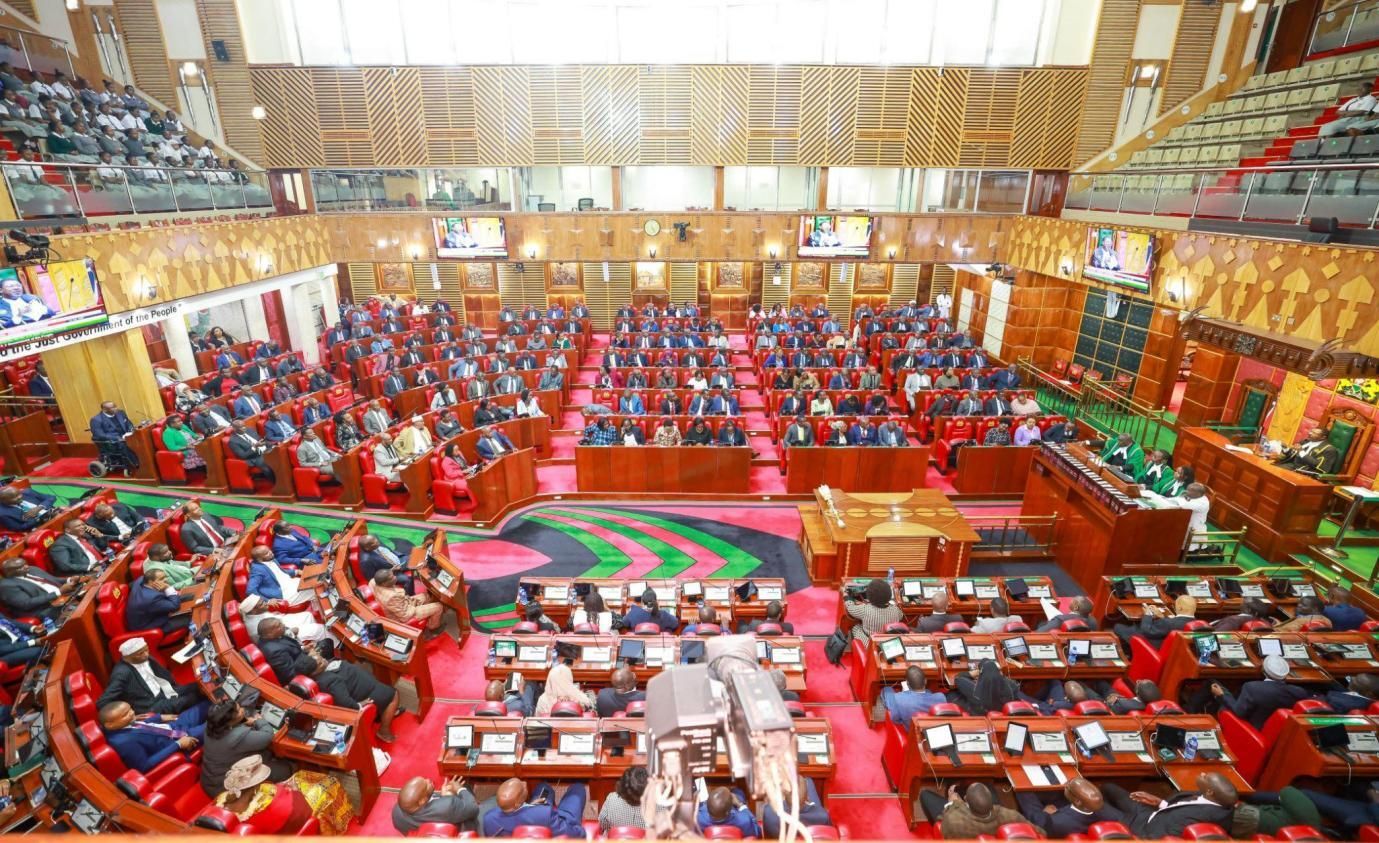
Picture taken during the Kenya Members of Parliament Deliberations on Regulations, Not Ban of Tiktok. Source: Mps Website.
A teacher I spoke to in Kawangware, who had followed the debate online, was relieved TikTok was not banned. Several of her students use it to share their artwork and build small audiences. But she was frustrated that the conversation circled values and morality rather than the structural question underneath: why does a platform that removed more than 820,000 videos for violations in Kenya in a single quarter still have no Swahili-language safety helpline? Why does a thirteen-year-old in Nairobi have less platform protection than a thirteen-year-old in London, purely by accident of geography?
That gap is structural, not accidental. The European Commission issued preliminary findings showing that TikTok found that its core design, infinite scroll, autoplay, and hyper-personalized recommendations breaches the EU's Digital Services Act by driving compulsive use and undermining minors' self-control. European regulators can compel system-level redesign and levy turnover-based fines. Kenyan regulators, by contrast, operate through soft power: the Communications Authority issues guidelines, the Office of the Data Protection Commissioner engages platforms for voluntary compliance reviews. Without binding enforcement capable of mandating algorithmic change, platforms can treat Kenyan directives as optional. Age verification, which parliament has leaned on as the fix, runs into its own wall: a thirteen-year-old without a national ID, or whose parents were never enrolled in a digital identity system, cannot be meaningfully verified by tools built for a different infrastructure entirely.
What's Actually Moving
It would be dishonest to write only about failure. UNICEF and GSMA, as per a report from GSMA Africa, have launched the Africa Taskforce on Child Online Protection, the continent's first coordinated multi-stakeholder platform on children's digital safety, bringing mobile operators, regulators, civil society, and youth representatives into one structure. Zimbabwe has approved a National Child Online Protection Policy for 2026–2030. Rwanda is weighing restrictions on social media access for children under sixteen. The African Union has adopted a continental Child Online Safety and Empowerment Policy, the first of its kind globally, anchoring children's right to safety, privacy, and participation online.
Caroline Mbugua of GSMA Africa described the Taskforce's purpose in terms I find both honest and sobering: previous efforts were fragmented, confined to national silos or single-company programmes; the goal now is to move from strategy to coordinated implementation. That word implementation carries the weight. It is what separates a framework from a result, and it requires money, institutional capacity, and the kind of community trust that is built slowly, not declared in a press release. A policy adopted is not a child protected.
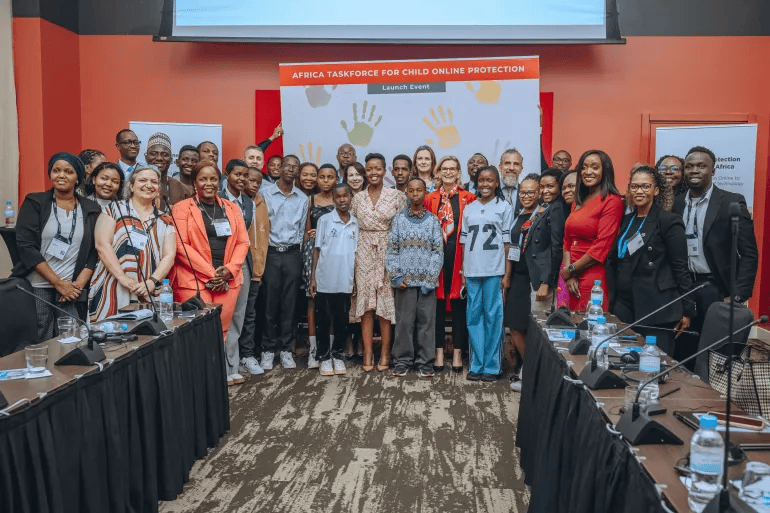
UNICEF and GSMA Launch on the Taskforce for Child Online Protection (COP) in Rwanda. Source: UNICEF/GSMA.
Accra, November 2026: The Opening that's Still there
The 15th Africa Internet Governance Forum takes place in Accra from 2 to 5 November 2026, under the theme "Advancing Africa's Digital Future Through Innovation, Inclusion, and Trust." The Forum's call for session proposals is open now, and its agenda already spans AI governance, cybersecurity, digital identity, and online safety. What's missing is the deliberate choice to put children at the center of that scaffolding, not as a side session at 4pm on the last day when delegations are heading to the airport, but as substantive programming: the right to internet access as a child right, children's data as a distinct legal category, internet shutdowns as a violation of the right to education and information, platform accountability in African languages, and genuine child participation- not a token youth panel, but the kind of co-design the children at the 29 June dialogue were asking for: a seat at the table while the policy is still being drafted, not a signature requested once it is already finished.
There is one more thing that should come out of Accra that has nothing to do with a policy document. During the Nairobi consultations, a UN staff member pulled me aside after an interview and told me, with real feeling, that he wished someone would make a simple video practical, in plain language, showing a parent how to set parental controls on a phone, block harmful content, and have the conversation with a child about what to do if something goes wrong online. "This," he said, "could help so many parents who want to protect their children but simply don't know how." He was right. And the fact that a man working inside the United Nations had to say that in a corridor, rather than find it already built into the systems being discussed down the hall, says everything about the distance between the governance conversation and the ground reality.
What Parents and Caregivers can Actually Do
While the policy architecture catches up, there are real, working resources already available to Kenyan parents and caregivers: The National Child Helpline, 116, is toll-free, and operates 24 hours a day across all 47 counties, run by Childline Kenya in partnership with the Department of Children's Services. It takes confidential reports of online and offline abuse and connects children to counseling, legal aid, and family support. It is also reachable via WhatsApp on 0722 116 116, and through the Childline Kenya Facebook page, for families who find a written or anonymous first contact easier than a phone call.
The Communications Authority of Kenya runs a Child Online Protection programme that publishes practical guidance for parents and educators on safe internet use, alongside the National Plan of Action to Tackle Online Child Sexual Exploitation and Abuse, which has produced a children's guidebook on online safety and trains the social service workforce on response pathways.
On the platform side, TikTok, YouTube, and Meta all carry built-in parental control tools: Family Pairing on TikTok, Supervised Experiences on Instagram, and parental controls in YouTube's settings that allow a parent to limit screen time, restrict direct messaging, and filter content, even without technical expertise. They are not a substitute for conversation, but they are a starting point, and they are free.
And then there is the conversation itself, the one the UN staff member asked for, the one Kenyan parents keep telling me they do not know how to start. It does not require legal language. It can be as simple as asking a child what they watched today, who they were talking to, and what they would do if something online made them uncomfortable and meaning it as an open door, not an interrogation.
The Uncomfortable Truth
The internet governance ecosystem has a children problem. Not the problem of children being online that is complex and real and, in its creative and economic dimensions, genuinely full of life. The deeper problem is that children are perpetually discussed and rarely consulted, their culture studied for its virality and rarely protected for its vulnerability. In a continent where over half the population is under twenty-five, this is not a niche concern. It is a central democratic failure.
The child in Kawangware who learned about her rights from a TikTok video is not naïve about what the internet can do for her. She is fluent in a platform that was never designed with her in mind, navigating a legal environment that barely acknowledges she exists, generating value in a digital economy that profits from her attention without protecting it, on infrastructure she could lose the next time a government decides silencing dissent matters more than keeping the lights on. She is not a beneficiary waiting to be protected. She is a rights-holder waiting to be heard and, increasingly, a culture-maker the rest of the internet is already learning from.