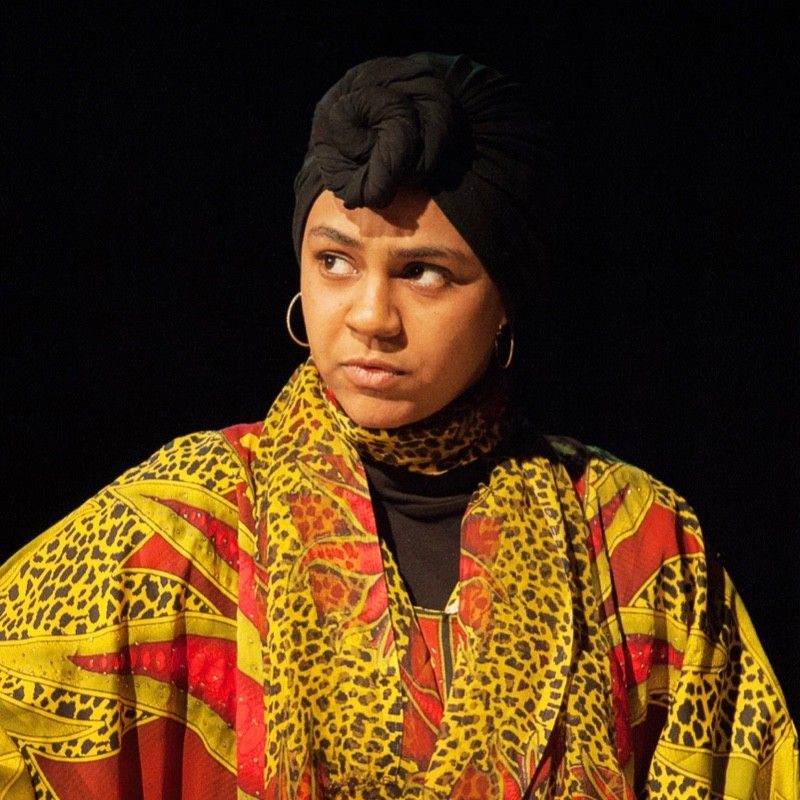
“Down with the lion!” was a chant repeatedly shouted by a group of Sudanese children during a theater piece they created themselves after three days of intensive drama workshops held as part of a half-term project in February 2019.
At the time, I gathered a group of children aged 7-10 to create a short theatre performance that would encourage them to tell stories. Back then, I was part of a training programme at a community arts organisation in Bristol, where I was learning about community theatre practices and drama facilitation.
Over three days, we explored games, improvisation, storytelling exercises, and theatre-making techniques. The children were invited to create and perform an original piece for their families and friends. As ideas were thrown around the room, one recurring theme kept resurfacing: Sudan.
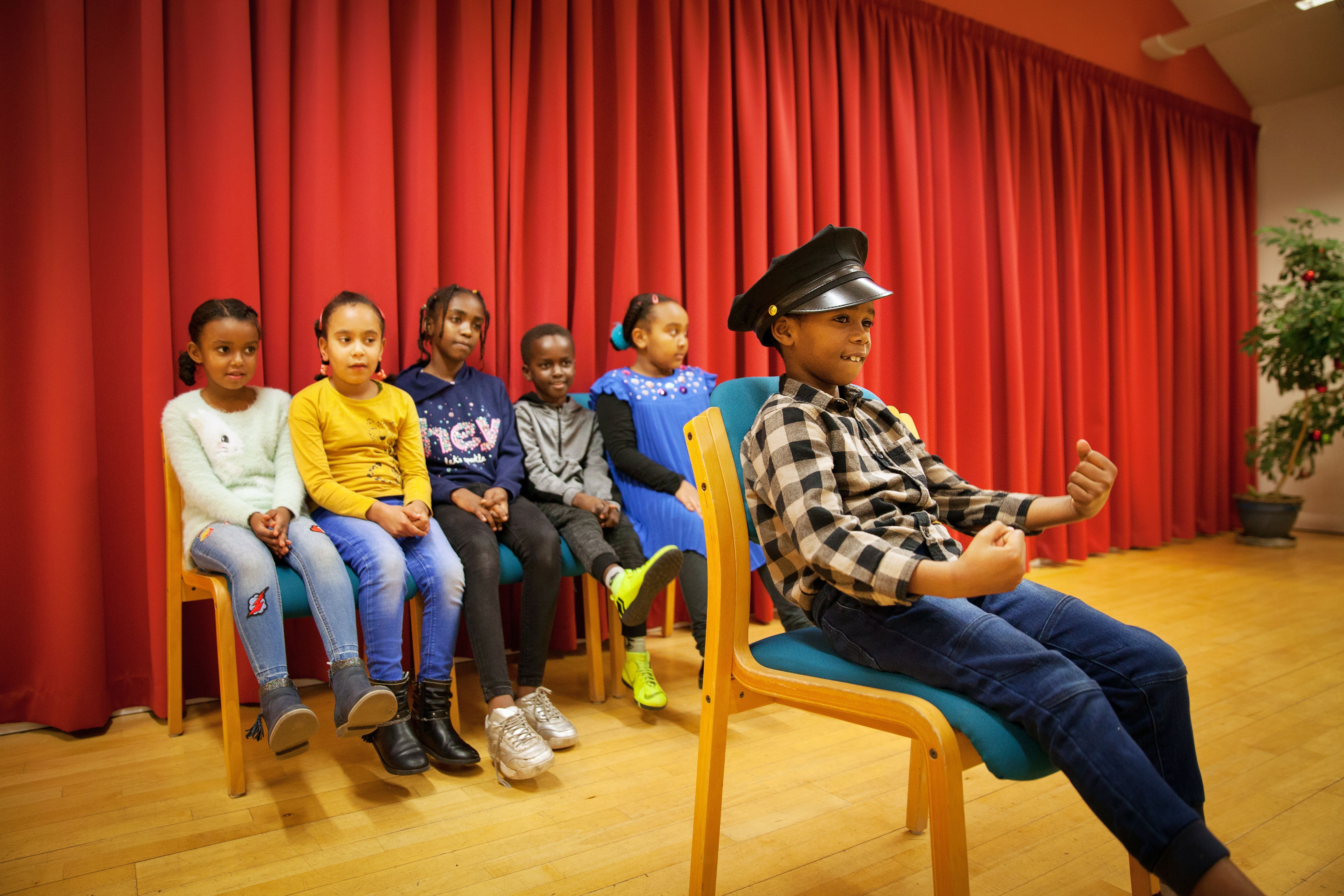
Stories Under the Lemon Tree Performance (2019). Image by Mark Simmons
Many of the children had been constantly exposed to conversations, images, and videos of the 2018 Sudanese uprising in their homes. Parents closely followed events through social media, witnessing from afar a profound political and social change in Sudan. These discussions shaped the children’s own emotions and imaginations, and the workshops became a space where they could express those feelings in their own language.
Together, they created a story about a lion who ruled over the jungle unfairly, forcing all the animals to work endlessly while living in misery. The animals felt powerless and afraid of challenging the lion and his kingdom. Eventually, however, they gathered together and decided to stop working for the lion and begin protesting instead. Carrying handmade placards and chanting slogans, the animals organised demonstrations until they finally managed to topple the lion.
With only a few costume pieces, a soundtrack played through a Bluetooth speaker, and no formal script or theater facilities, the children managed to create a performance that explored themes of revolution, justice, unity, and civil disobedience, ideas that felt deeply personal to them. What emerged was not only imaginative and humorous but also a striking reflection of how children absorb and reinterpret political realities through play and storytelling.
Discovering Community Theatre
For a long time, I have been drawn to theatre. Growing up in Sudan, on the outskirts of Khartoum, my encounters with theatre were relatively limited, but deeply memorable. I remember family trips to the National Theatre to watch the famous Sudanese actor Al Fadil Saeed and performances by Al Asdiqaa Theatre Group. I was fascinated by seeing well-known actors performing live on stage, their movement, timing, and ability to tell stories that could make audiences laugh, reflect, and sometimes cry within the space of a single performance.
Later, while studying French language at university, my interest in theatre grew further. During La Francophonie Cultural Week, I often participated by writing short sketches in French and performing them on stage. Theatre became a means of deepening my linguistic skills and engaging with French culture from afar.
When I moved to the UK, I encountered acta Community Theatre, a Bristol-based company with more than 40 years of experience working with communities who often face barriers to accessing theatre due to economic, social, cultural, or linguistic challenges. Through acta, I was introduced to the idea of making theatre “in reverse”, a process where performances emerge collaboratively from participants’ stories and imaginations rather than beginning with a finished script.
Acta believes that “theatre is for everyone, and everyone has a story to tell”. The company uses a mixture of games, improvisation exercises, storytelling activities, and devising techniques to encourage participants to create and perform their own work. One technique that stayed with me was “The Julie Story”, an exercise designed to spark imagination.
A facilitator stands in front of the group with a flipchart, draws a stick figure, and asks, “Who is this?” Participants call out suggestions for the character’s name, home life, personality, and daily routines until a fully developed character begins to emerge collectively. From there, entire worlds and stories can grow.
What struck me most while training and working at acta was not only the performances themselves but also the transformation that occurred within the workshops. I watched participants connect with one another, gain confidence, make friends, and discover joy through storytelling and play. I became interested in how these methods could be adapted for Sudanese children growing up in diaspora communities.
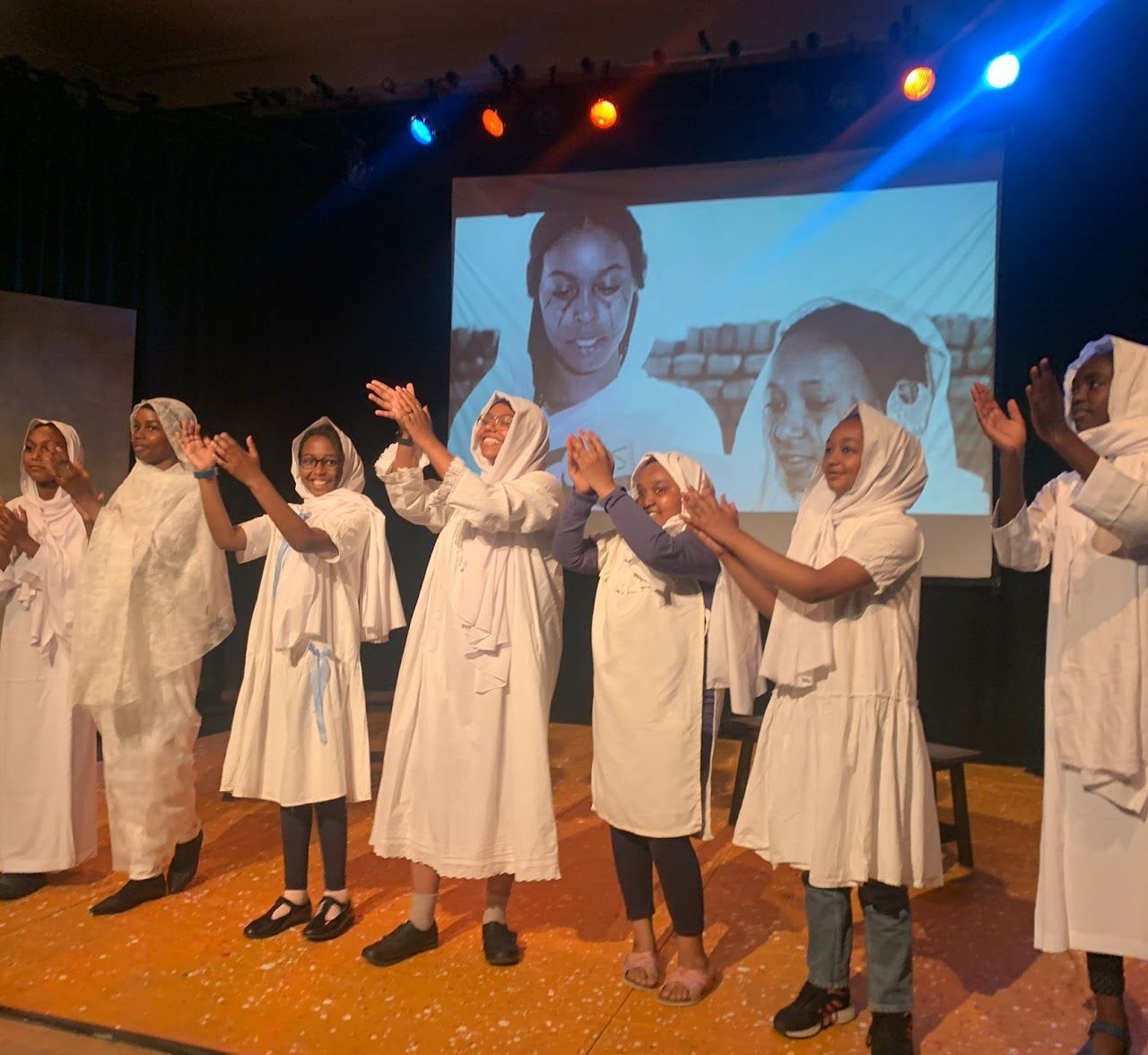
Youth Theatre Performance of Malkat Aldar (2022). Image by Hiba Elhindi
Bringing Community Theatre to the Sudanese Community in Bristol
My experience at acta deeply influenced my work with the Sudanese community in Bristol. I wanted to bring that same spirit of collaborative theatre-making to Sudanese children and young people, many of whom were growing up between cultures and often disconnected from aspects of Sudanese heritage, language, and storytelling traditions.
I began designing weekly theatre workshops inspired by the acta model, while adapting many of the games and exercises to suit Sudanese cultural references and experiences. Since 2019, different groups of children have created original performances and shared them with friends, families, and festival audiences of more than one hundred people.
One of the earliest productions was Stories Under the Lemon Tree (2019), which follows the story of a Sudanese grandmother, or Haboba, telling traditional tales such as Hassan Al Shatir and The Wise Man to her grandchildren. The performance ended with a lively journey to the moulid celebrations, where the children enjoyed eating Moulid sweets while watching a Sufi parade and dervish whirling.
Another production, Malkat Aldar (2021), introduced young participants to the story of Malkat Aldar Mohamed, considered one of Sudan’s first female novelists. The project explored the lives of Sudanese women in the early twentieth century, touching on themes of patriarchy, gender expectations, and social practices such as facial scarification (Al Shulukh).
In Haboba’s Sheep (2022), the grandmother character returned once again. The story follows a grandmother in Sudan who loses her sheep on the day of Eid al-Adha. The story reflected themes of neighbourhood solidarity, collective care, and familiar scenes of Sudanese community life.
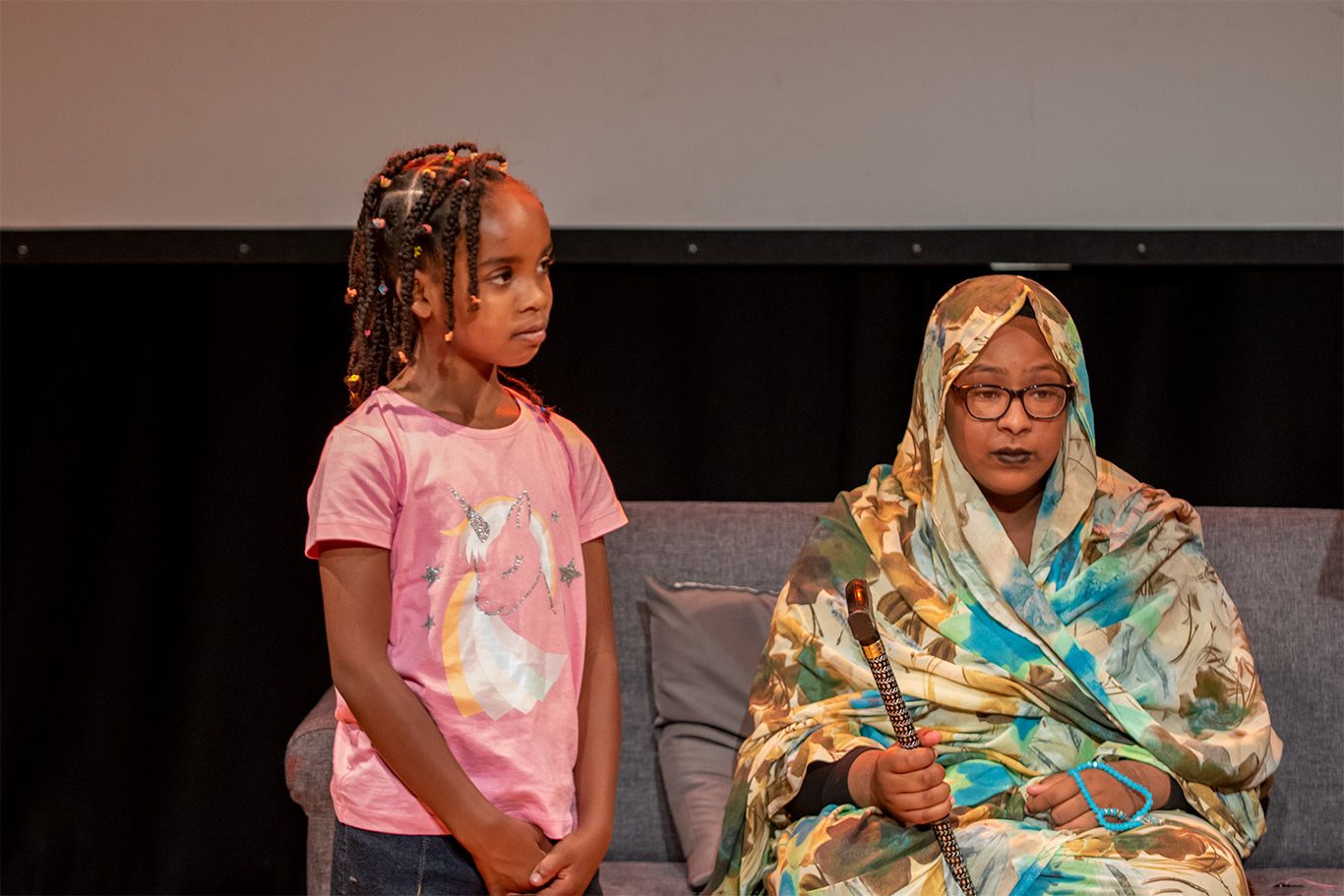
Habobas sheep Photo by Hassan Abuzaid
More recently, We Will Remember (2024) explored feelings of loss and displacement following the war in Sudan through a series of performed poems and spoken word pieces created by young participants.
Our current project follows a Sudanese grandmother who relocates to Bristol to live with her family. As she navigates cultural differences and feelings of displacement, she becomes unsettled by the rise of far-right riots around her. Through humour and storytelling, the piece explores migration, belonging, and identity in contemporary Britain.
Most of these productions are performed primarily in English, with a mixture of Sudanese Arabic, often spoken with an unmistakable British accent, woven throughout. They often include songs, rhymes, traditional games, and references to Sudanese folklore, allowing children to move fluidly between both cultural worlds.
Reflections
As the projects evolved, I found myself becoming interested in what the productions revealed about the children creating them. For many of them, Sudan is not a place they remember through lived experience, but one they know through family stories, WhatsApp calls, music, food, photographs, and the memories of others.
What I have found particularly striking is how certain themes and characters continue to reappear across different projects, even when working with entirely different groups of children. Two themes in particular have consistently resurfaced: the Sudanese uprising and the figure of Haboba, the grandmother.
The recurring presence of Haboba feels especially significant. Across multiple workshops, children instinctively return to the grandmother figure as a storyteller, protector, and emotional anchor. Perhaps this reflects a wider sense of longing for intergenerational connection within diaspora communities, where many children grow up physically separated from grandparents and extended family members. At the same time, the repeated appearance of stories connected to the Sudanese revolution reveals how deeply political events continue to shape the emotional lives and imaginations of Sudanese children growing up far away from Sudan itself.
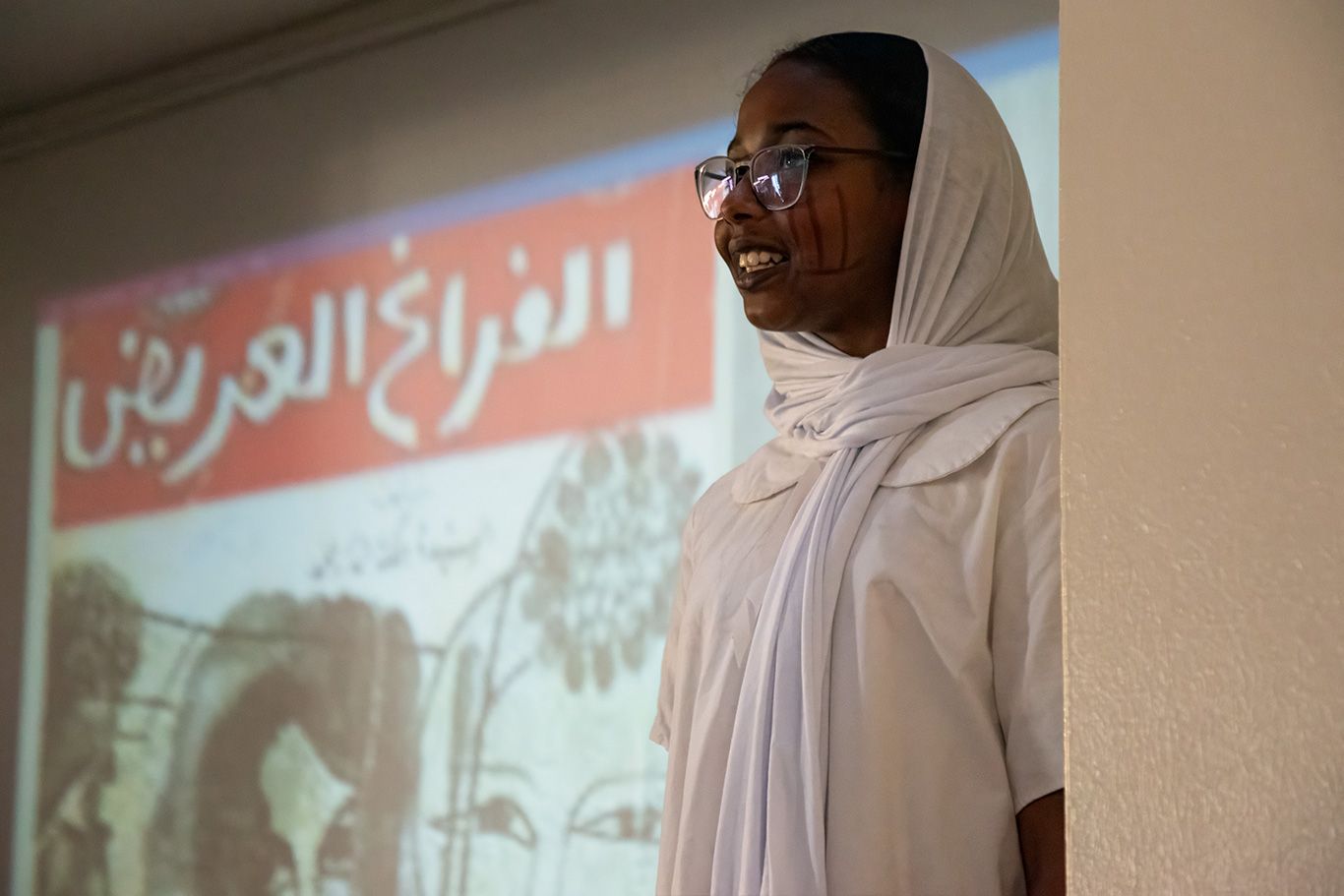
The recurring presence of the Haboba in children's stories held particular significance in the workshops. Photo by Hassan Abuzaid
These projects have also made me reflect on why theatre is such a powerful way of exploring culture. Unlike a history lesson or storytelling session, theatre allows children to embody culture rather than simply learn about it. They do not just hear about a grandmother, a folktale, or the Sudanese revolution, they become the storyteller, the protester, or the dervish whirling in the Moulid place. Their culture becomes something they carry in their bodies as well as their memories, absorbing it through movement, voice, and imagination.
I have also come to recognise that the theatre we create differs considerably from the theatre I encountered growing up in Sudan. While our productions draw on Sudanese folktales, songs, games, and cultural practices, they are devised using community theatre methods I learned in the UK. They are performed in both English and Sudanese Arabic and often explore themes of migration, integration, identity, and cultural difference. Together, these elements create a new form of expression, one that reflects the lived realities of its participants while preserving and reinterpreting Sudanese cultural traditions through the experiences of a generation growing up between cultures.
Since the outbreak of war in Sudan, these reflections have taken on even greater significance. As conflict has disrupted theatres, cultural centres, and artistic life across the country, I have come to see Sudanese Youth Theatre in Bristol as more than simply a cultural programme for children. Through these workshops, theatre has become a space where young people explore questions of identity, history, memory, and belonging, while remaining connected to their heritage despite distance and displacement.
Watching them recreate Sudan through songs, games, revolutions, grandmothers, and folktales has been a reminder that diaspora theatre is a living, evolving space where traditions continue to be reinterpreted, new expressions of Sudanese identity emerge, and stories continue to be told across generations and borders.