How Kenya’s Women-Led Chamas Are Shielding Traders from Digital Debt Loops
The promise of Kenya’s digital financial revolution was simple: instant, frictionless capital delivered straight to a smartphone. For millions of micro-entrepreneurs, mobile loan platforms offered an unprecedented lifeline, bypassing the intimidating paperwork and steep collateral requirements of traditional commercial banks. However, years into the boom, that frictionless ladder has frequently turned into a predatory debt trap.
To understand the tension between mobile lending and grassroots finance, it is important to consider the scale of both ecosystems. Since the launch of pioneers like Tala (originally founded as Indenture), which introduced non-traditional credit scoring using smartphone data, digital microloans have expanded rapidly across Kenya.
According to the Central Bank of Kenya (CBK) FinAccess Household Survey, formal financial access reached over 84%, driven largely by mobile money and digital credit. Yet, this rapid expansion came at a steep social cost. High daily interest rates, short repayment periods (often between 7 and 30 days), automated risk-assessment algorithms that overlook borrowers' individual circumstances, and aggressive debt-collection practices have left small-scale traders vulnerable to negative listings with Credit Reference Bureaus (CRBs) following even minor defaults.
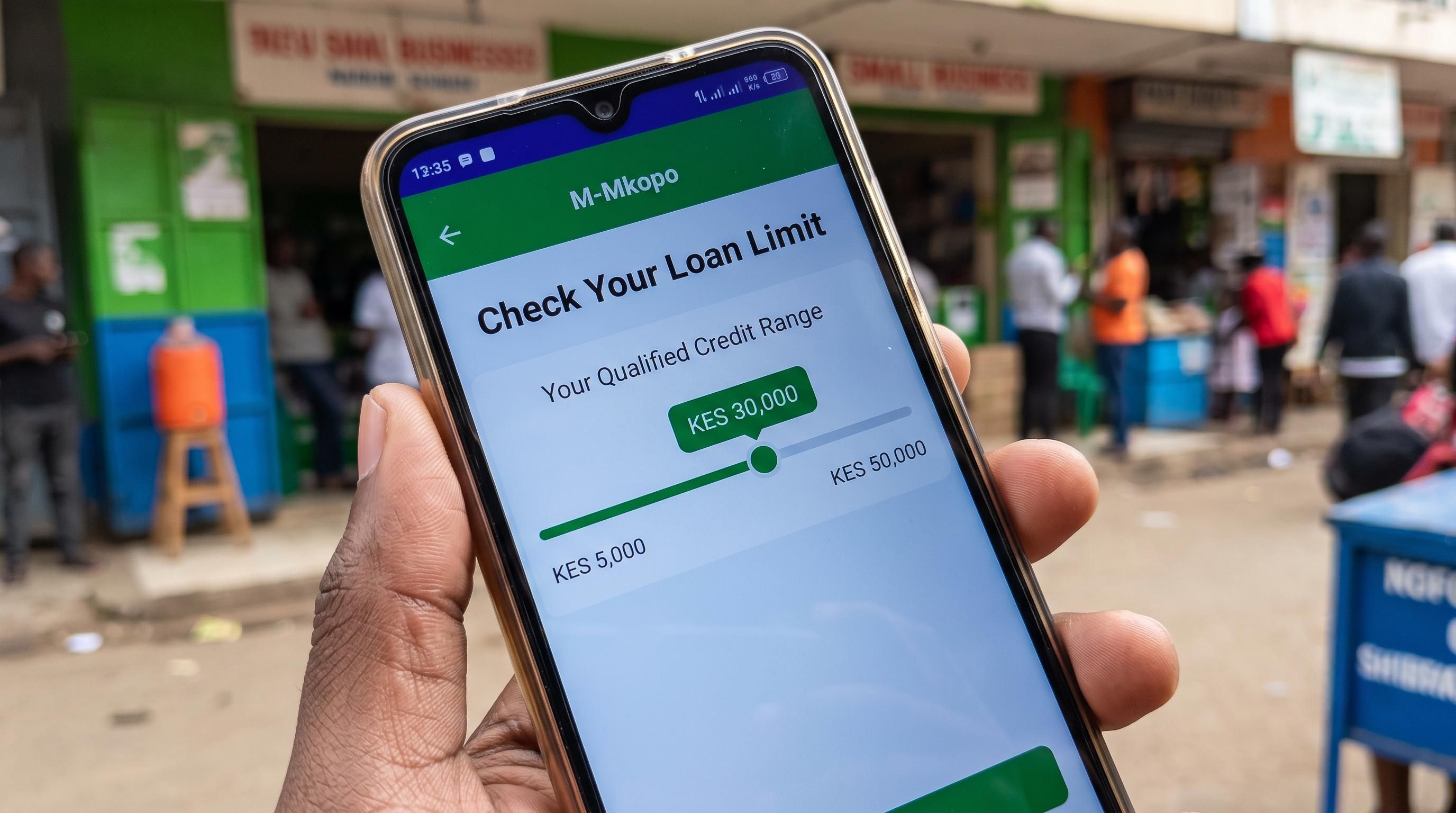
Credit Score Range on one of the mobile loan platforms. Source:
Two Contrasting Financial Systems
A stark contrast exists in Kenya's smallholder and micro-enterprise credit landscape between algorithm-driven mobile finance and informal cooperative finance.
Algorithmic mobile finance offers instant, automated access to funds, but often comes with high interest rates, rigid repayment schedules, and severe default penalties, including blacklisting by Credit Reference Bureaus (CRBs). In contrast, informal cooperative finance is built on social trust and flexibility. It provides access to low- or zero-interest emergency funds while ensuring that capital remains within the local community.
Parallel to this fintech wave is Kenya's informal financial backbone, commonly known as chamas. Deeply rooted in post-independence traditions of mutual aid, particularly Harambee, chamas have evolved from informal savings circles into significant economic drivers.
According to estimates by the Kenya National Chamber of Commerce and Industry, more than 300,000 chamas operate across Kenya, collectively managing hundreds of billions of shillings annually through savings, real estate investments, and community lending. While regulators have intensified efforts to eliminate predatory lending practices, the fundamental structure of algorithmic lending remains transactional and often unforgiving.
Yet, rather than accepting a narrative of vulnerability, Kenyan women micro-traders are leading a quiet revolution. By drawing on communal trust and collective financial support, they are transforming their local chamas into responsive networks that help members break free from cycles of digital debt.
Bridging Digital Speed with Collective Trust
One of the most compelling realities on the ground is that women traders are not abandoning digital finance altogether. Instead, they are pioneering a strategic hybrid financial model that combines the speed of formal digital credit with the risk management and flexibility of informal collective finance.
Speaking from her busy business stall in Machakos County, Teresa Mbuvi represents this emerging generation of digitally strategic traders. Unlike borrowers who fall victim to compounding debt, Teresa manages her digital credit limits with precision.
"I used to have many digital lending platforms," Teresa reflects, rearranging her stock. "But over time, some cut me off the moment I missed a tight deadline. Today, I've narrowed it down to just two platforms, including Tala, which I manage strictly. They are incredibly useful for quick, day-to-day stock purchases, and I do everything I can to keep my credit limit high. But when cash flow tightens, I don't borrow from another app to pay off the first. I turn to my chama."
Through her chama, the Charcoal Barrier Women Group, which comprises more than 30 members, Teresa and other traders participate in a rotational savings system locally known as itika (merry-go-round).
Each week, members contribute a fixed amount, and the entire pooled sum is given to one member in rotation. "When I see a digital loan deadline approaching and realize my sales won't cover it in time, I don't panic," Teresa explains. "I simply ask the chama sister scheduled to receive the next pool if we can swap places. I get the cash pool early, clear my digital loan, keep my credit score spotless, and then pay back my chama sister when my turn comes around."
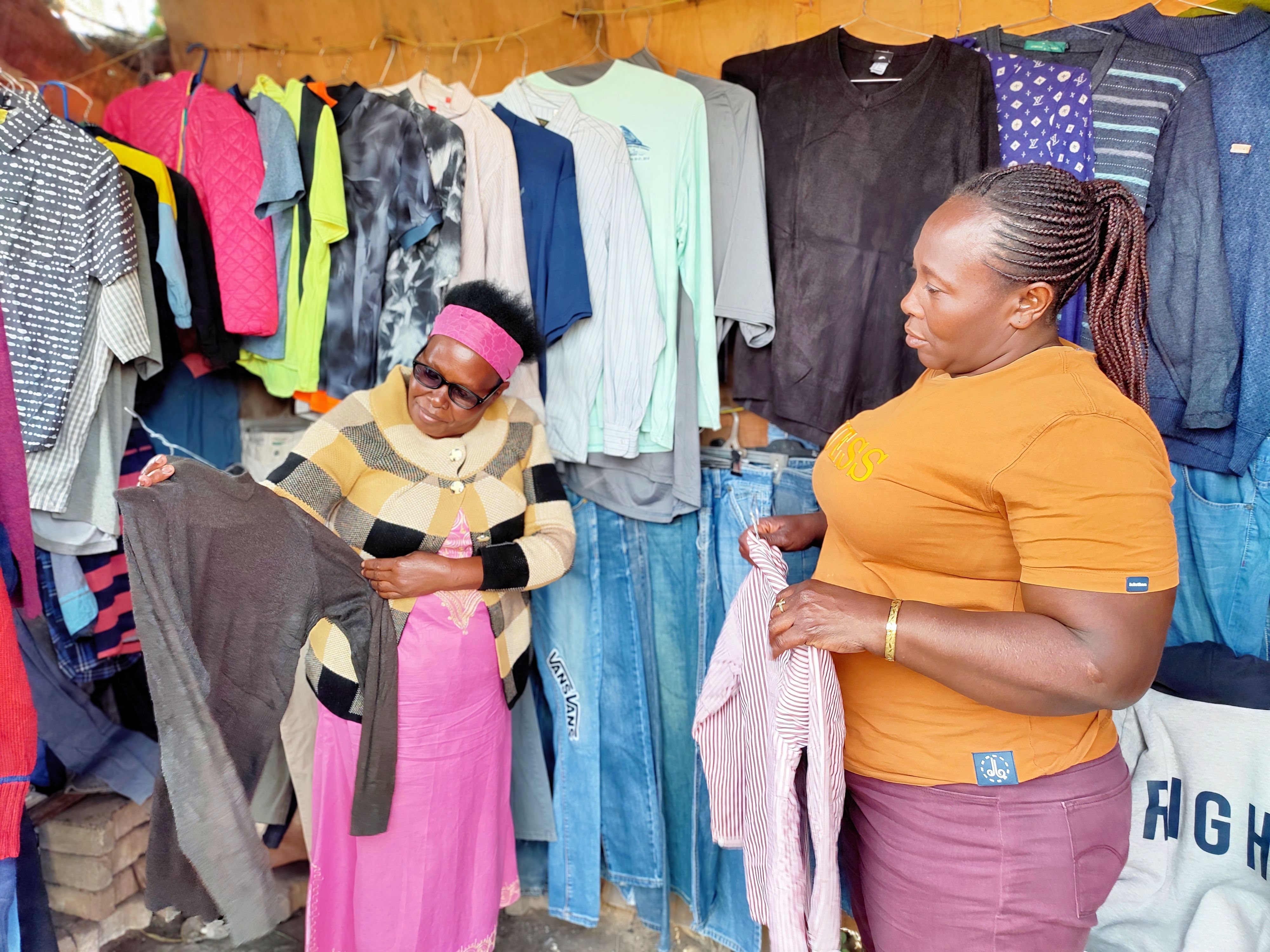
Teresa Mbuvi (right) Assists a Customer at Her Shop in Machakos County. Source:
Merry-Go-Rounds vs. Table Banking
To understand how these systems work, it is important to distinguish between the two main mechanisms that underpin community-based finance.
1. Merry-Go-Round (Itika): focuses strictly on liquidity rotation. Members pay a fixed contribution per meeting, and one member takes home the entire cash payout. It carries zero interest and serves as an immediate cash injection for planned purchases or strategic debt clearance.
2. Table Banking: focuses on capital growth and access. Members physically place their savings "on the table" during meetings. This accumulated pool is immediately lent out to members as short- or long-term loans with minimal interest. Because interest paid goes back into the collective pot rather than to a third-party bank, it returns to the members as annual dividend payouts.
As Solomon, a corporate representative of JOYWO, explains: "By formalizing the chama structure while retaining its cooperative core, we support hundreds of thousands of women. The model bypasses traditional collateral barriers, ensuring interest paid stays within the community to build collective wealth."
As Solomon, a JOYWO corporate representative, shared "By formalizing the chama structure while retaining its cooperative core, we support hundreds of thousands of women. The model bypasses traditional collateral barriers, ensuring interest paid stays within the community to build collective wealth."
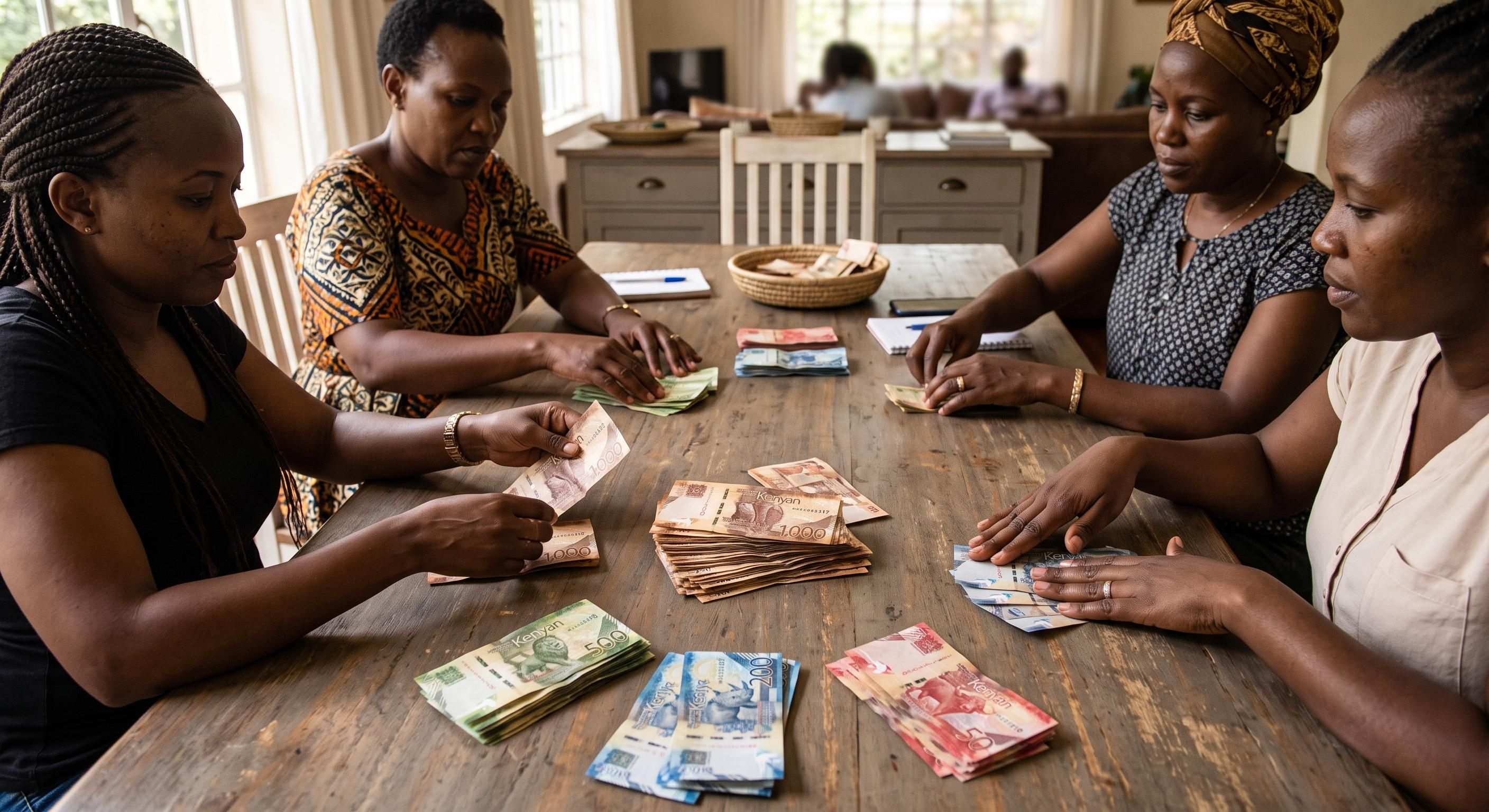
Table banking into which members deposit their savings during meetings, to be distributed later as annual profits. Source:
Why Fintech Misses the Human Context
Financial analysts and development economists point out that reliance on chamas exposes fundamental limitations in algorithmic lending.
"Digital credit algorithms assess risk using static, historical data like airtime purchases, mobile money transfers, and transaction velocity," said Walter Maundu, an economist based in Nairobi. "What algorithms fail to measure is dynamic social collateral and human vulnerability. A machine cannot distinguish between a negligent defaulter and a reliable trader facing a temporary emergency like market fire or hospital bill. Chamas succeed precisely because they underwrite risk using human relationships, empathy, and flexible negotiation."
While digital apps offer unmatched scale and convenience, professionals like Maundu acknowledge that high default rates and aggressive recovery tactics damage user trust. The industry's current direction reflects an attempt to move toward softer recovery mechanisms and integrated group lending products, borrowing principles directly from community finance models.
Policy and Regulation: Progress and Remaining Gaps
Kenya's digital lending policy landscape has evolved significantly. Following public outcry over excessive interest rates and violations of data privacy, including cases in which lenders accessed borrowers' contact lists to send messages to their relatives, regulators introduced the Central Bank of Kenya (Digital Credit Providers) Regulations.
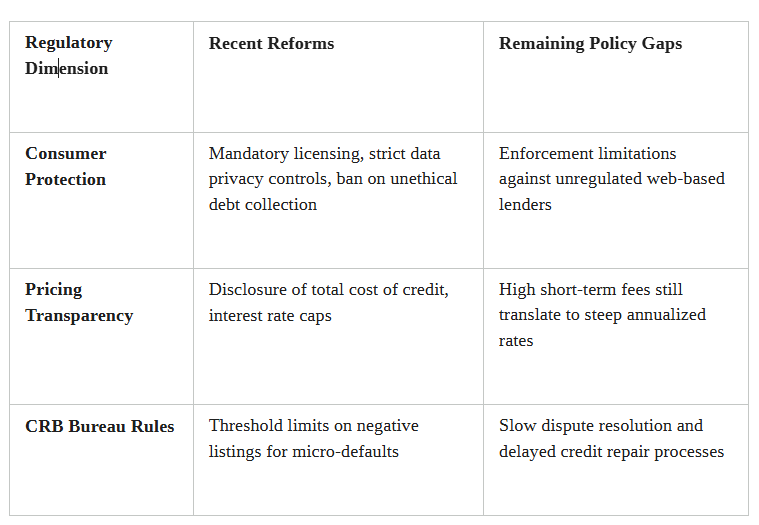
Despite these legal strides, policy gaps remain. Algorithmic models still cannot offer flexible, customized restructuring during personal emergencies. This structural rigidity is precisely the gap community finance continues to bridge.
Limitations of the Chama Model
While chamas offer vital security, an objective view reveals that they are not a silver bullet due to several inherent operational limitations. They rely heavily on social cohesion and interpersonal trust, meaning that issues like fraud, leadership disputes, or unexpected defaults by multiple members can disrupt the entire system. Furthermore, they present exclusionary barriers and are not universally accessible; newcomers, migrants, or individuals lacking strong local social networks often struggle to join established, high-trust groups.
For traders who navigate both worlds, clear boundaries exist between mobile loans and community funds. Grocery trader Violet Wawira has built a mobile credit limit exceeding KES 50,000, allowing her to purchase bulk inventory at a moment’s notice. Yet, Wawira keeps her chama reserved for personal emergencies and financial safety nets.
"My chama is my safety net, but I don't use it for random or unnecessary business loans," Wawira notes. "I run daily operations with cash on hand or digital credit but when real emergencies like damaged goods or family tragedy strikes, the chama is where I go. A digital lender expects its money regardless of personal loss. Chama emergency funds are disbursed with empathy, designed purely to help a sister stand back up."
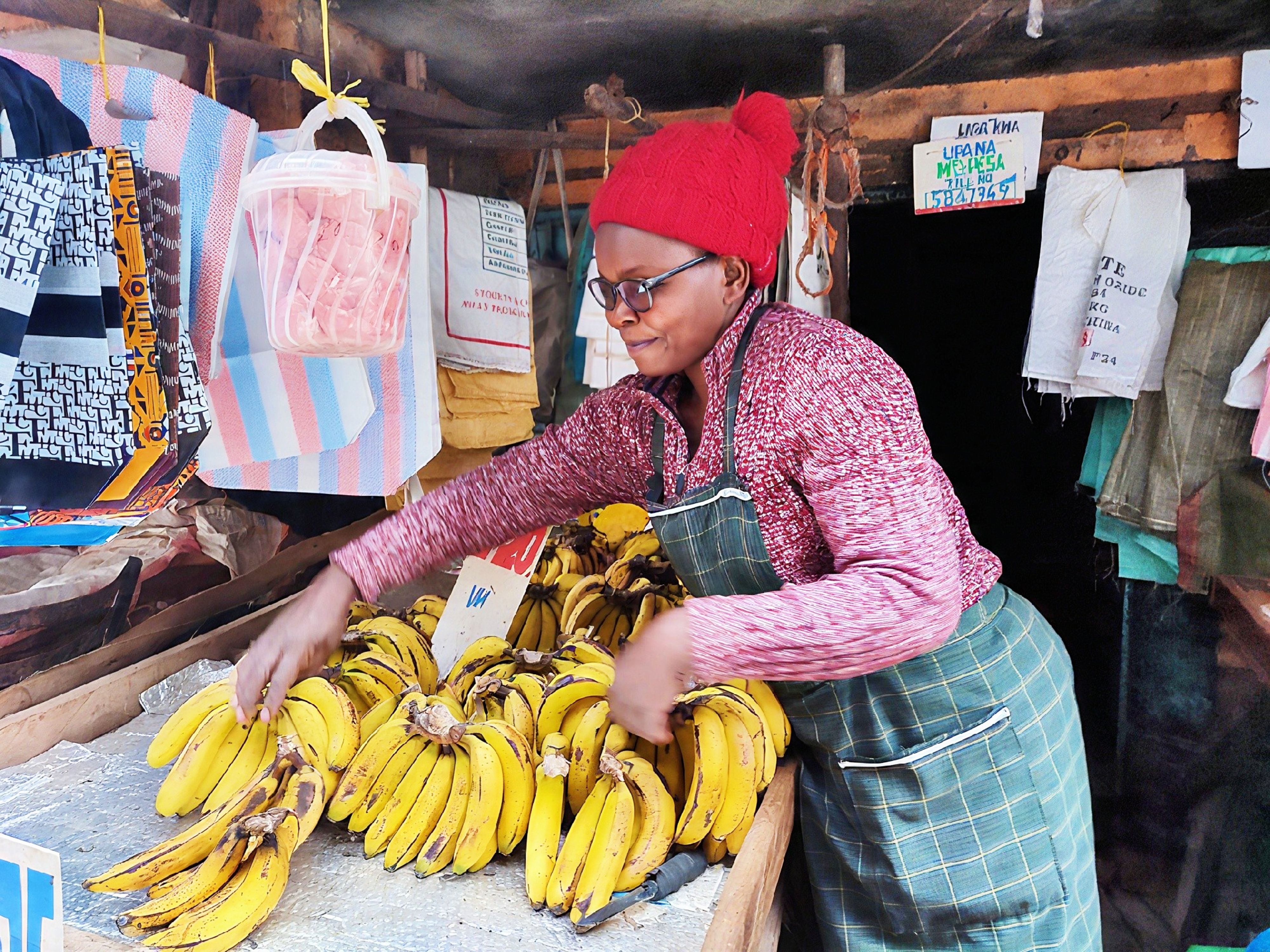
Violet Wawira Organizes Groceries at Her Stall in Mlolongo Market. Source:
Rethinking Financial Inclusion
Rather than viewing informal chamas as relics of the past to be disrupted by technology, Kenya’s financial evolution suggests a different question: Should fintech innovation focus solely on perfecting digital algorithms, or should technology adapt to support community-based financial systems?
The experience of Kenya’s women traders proves that technology alone does not equal empowerment. True financial inclusion requires flexibility, agency, and human-centered risk management.
As policymakers refine digital finance regulations and tech developers design the next generation of financial tools, the humble chama offers a timeless lesson: financial systems are most resilient when anchored in community, trust, and shared accountability.