Photos by the author
Marine ecosystems along Kenya’s coast are under severe threat from plastic debris, while urban centers like Nairobi and Mombasa struggle with clogged waterways that funnel waste into rivers and eventually the ocean. Studies confirm that sea turtles, fish, and mangroves are directly harmed, while city drainage systems routinely overflow with plastic waste.
In an effort to counter this, over the last two decades, creative movements have taken root across Kenya. What began as individual survival tactics in low-income neighborhoods has grown into a structured, globally recognized creative economy. Today, Kenyan social enterprises and artists are turning discarded flip-flops, single-use plastics, and organic waste into premium art, consumer products, and structural materials.
This macro-level exploration demonstrates how creative upcycling addresses Kenya's waste management bottleneck, shifts public mindsets, and creates employment while exposing the structural limitations of relying on art to solve a systemic pollution crisis that requires more stakeholder participation.
The Scale of the Crisis: Kenya's Waste Bottleneck
According to the National Environment Management Authority (NEMA), Kenya generates an estimated 8 million tonnes of solid waste annually. Urban centers carry the heaviest burden, with the capital of Nairobi alone producing roughly 2,400 tons of solid waste every single day. Yet, despite this massive output, only an estimated 45 percent of urban plastic waste is recycled, reused, or transformed, and nationwide less than 10 percent of solid waste undergoes any form of formal recycling, as noted during the concluded 11th Ocean Conference held in Mombasa.
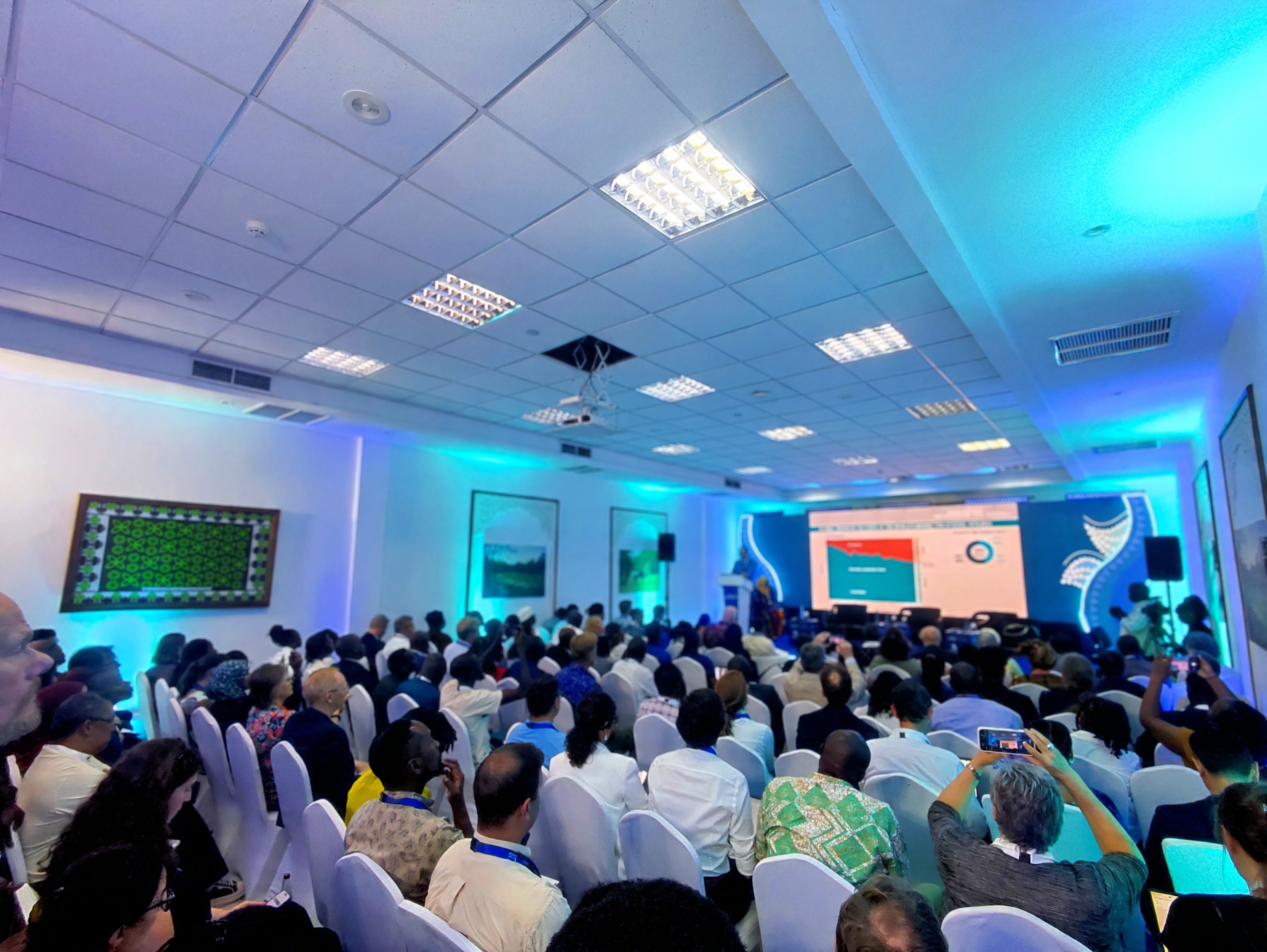
Ongoing session at the 11th Ocean Conference held in Mombasa, Kenya.
The consequences of this deficit are severe whereby uncollected trash is often burned in open-air dumpsites such as Dandora in Nairobi or Kibarani in Mombasa, releasing hazardous emissions into the environment. At the same time, millions of tones of waste are swept into Kenya’s major waterways, with rivers like the Athi carrying urban plastic pollution directly into the Indian Ocean. This flow of debris not only endangers marine life but also undermines coastal tourism, leaving both ecosystems and livelihoods at risk.
While creative reuse and industrial upcycling offer distinct pathways for waste diversion, environmental leaders are increasingly advocating for systemic changes that hold manufacturers accountable while empowering local communities. This structural pivot was a central theme at the recent 11th Ocean Conference in Mombasa, where Joyce Gachugi-Waweru, Chief Executive Officer of the Packaging Producer Responsibility Organization (PAKPRO), addressed the pressing need to formalize the circular economy.
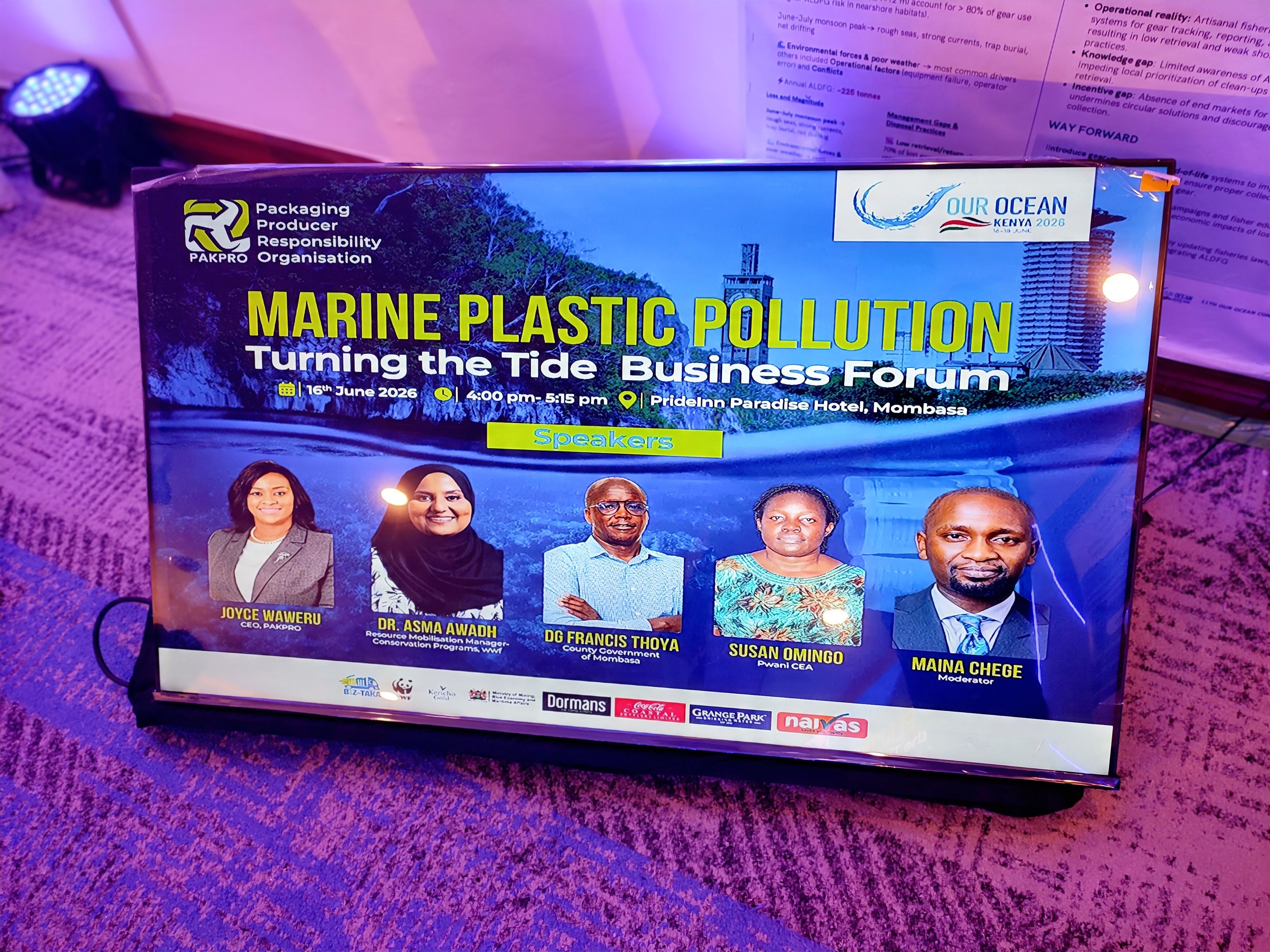
List of speakers led by Joyce Gachugi-Waweru, CEO of Packaging Producer Responsibility Organization (PAKPRO) during 11th Ocean Conference
Representing over 4,000 manufacturing entities and brand owners, PAKPRO operates with a clear mandate: ensuring that everyday consumer packaging materials are properly managed and kept out of marine ecosystems once discarded. For Gachugi-Waweru, the narrative surrounding ocean plastic must fundamentally evolve. She argues that society must stop treating coastal and informal communities as helpless victims waiting for external cleanup campaigns, and instead recognize them as the most cost-effective and capable workforce already on the ground.
"Every piece of plastic that reaches our ocean passes through someone's hands," Gachugi-Waweru noted during her address. "The question that should keep all of us in this room awake is not whether those hands can stop it, but whether the rest of us will finally choose to invest in them."
The stakes of this investment are staggering. As the CEO noted, beyond the estimated 2,400 tons of plastic waste Kenya generates daily, the economic toll on coastal livelihoods is severe, before noting that marine pollution costs Kenyan fisherfolk approximately 3.2 billion shillings annually in lost income, a figure that does not even begin to capture the cascading nutritional, generational, and cultural losses borne by these communities.
Gachugi-Waweru pointed out that conventional responses, that is where organizations parachute in, clean up, and leave, are inherently flawed because rivers simply carry the same loads of trash the following season. Pollution, she argues, is not defeated by cleanups; it is defeated by changing the underlying systems, led by the people already living inside them.
To execute this, PAKPRO has focused on treating waste recovery as a viable grassroots business. By building an agent model that spans across Kenya’s 47 counties, the organization is formalizing waste collection, segregation, and aggregation from the ground up. This framework integrates hundreds of informal waste pickers into a structured value chain, turning an environmental burden into a genuine, sustainable livelihood.
Case Study: How Ocean Sole Upcycles Footwear
A prominent example of this structured creative ecosystem is Ocean Sole, a social enterprise that addresses among other wastes, the synthetic flip-flops. Cheap, universally worn, and non-biodegradable, discarded flip-flops are carried by ocean currents and deposited by the thousands along the East African coast. Ocean Sole intercepts this waste by orchestrating structured beach cleanups led by community initiatives like Ocean Mamaz. According to Joe Mwakiremba from Ocean Sole, the organization cleans up shores, protects nesting grounds, and diverts up to one tone of plastic pollution weekly, collecting and recycling roughly 50 tones of flip-flops annually.
As highlighted during our interview, the transformation from discarded shoreline pollutant to striking gallery sculpture unfolds through a carefully choreographed process. Each week, teams comb Kenya’s beaches and waterways, collecting flip-flops that have been washed ashore. These discarded shoes are thoroughly cleaned and sorted by color and density, preparing them for their second life.
Artisans then glue the pieces together, layering contrasting hues before compressing them in a mechanical press to form dense blocks of synthetic rubber. From these blocks, master carvers, armed with knives and traditional woodcarving tools, shape iconic figures of Kenyan wildlife, from towering giraffes to elephants and sea turtles. The sculptures are then refined: rough edges are sanded smooth, surfaces are polished, and the natural striping of the layered flip-flops is brought to life.
The social impact hits close to home for master carvers like Bryant Muhanji, who grew up in Nairobi's informal settlements, navigating a cycle of poverty and crime. "Ocean Sole dragged me out of crime, and I took on responsibility," Muhanji reflected. Today, he is a father of six and advocates for creative industries as a viable livelihood where formal jobs are scarce. "Formal jobs aren't always necessary when unemployment is high. Passion and commitment to your craft can open other doors."
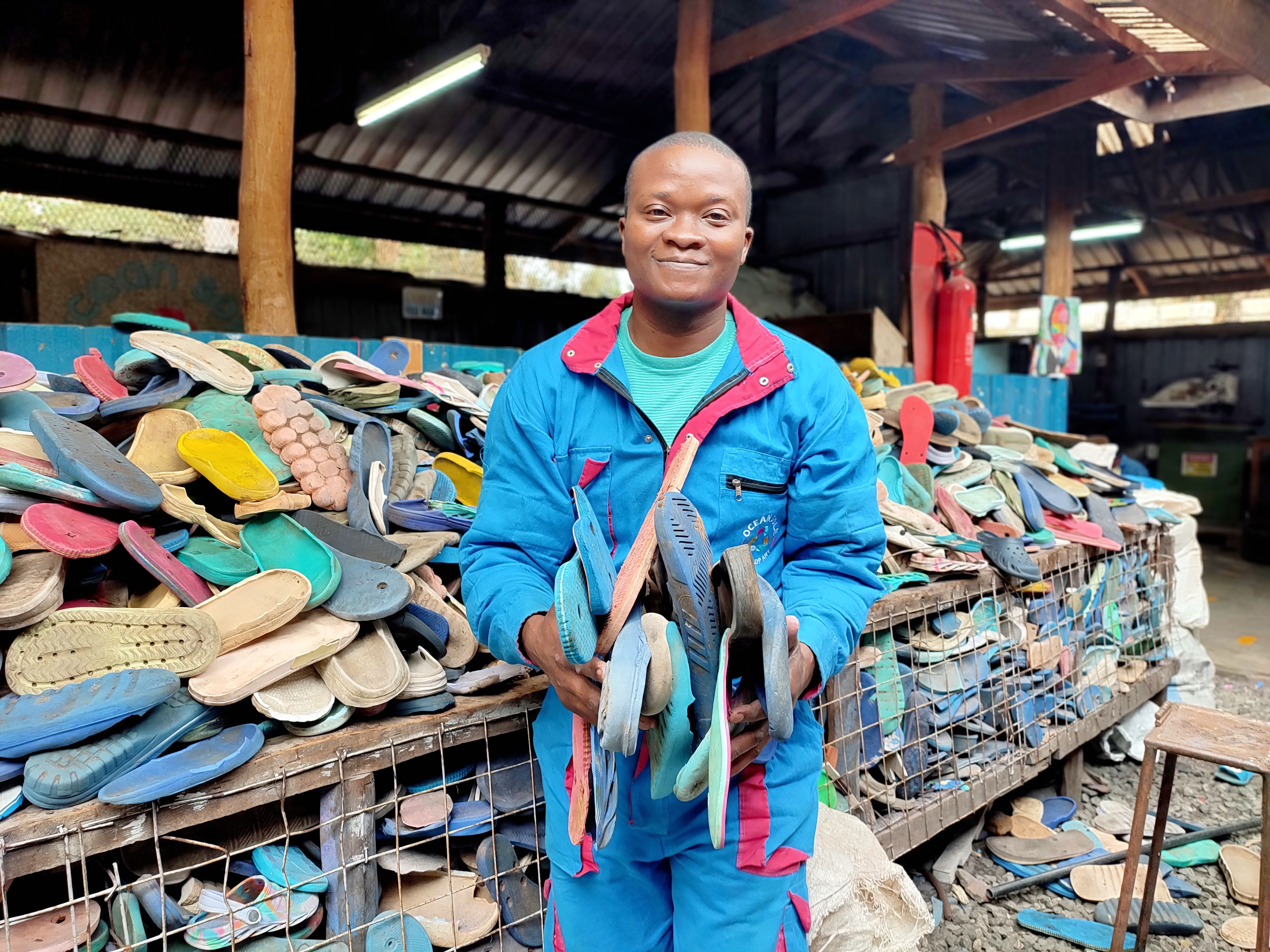
Bryant Muhanji, artisan at Ocean Sole in Nairobi
As Mwakiremba shared in the way of a conclusion, Ocean has also closed its own production loop whereby rubber offcuts left behind by carvers are shredded and repurposed into insulated mattresses for refugees in Northern Kenya, showing how a creative business can operate within a circular framework.
The Scaling Dilemma: Can Creative Reuse Solve the Macro Crisis?
This industry-led perspective provides a definitive answer to whether creative reuse can truly solve Kenya’s macro-level waste crisis: on its own, it simply cannot. While upcycling ventures are vital for shifting public perception and capturing global imagination, a hand-crafted artisan model cannot scale to absorb thousands of tons of daily municipal waste. Gachugi-Waweru’s take shifts the burden of the crisis away from downstream creatives and places it squarely on upstream creators.
By demanding that the 4,000-plus manufacturing entities represented by PAKPRO take Extended Producer Responsibility (EPR), the conversation evolves from celebrating localized, feel-good interventions to enforcing systemic, mandatory accountability at the source of production.
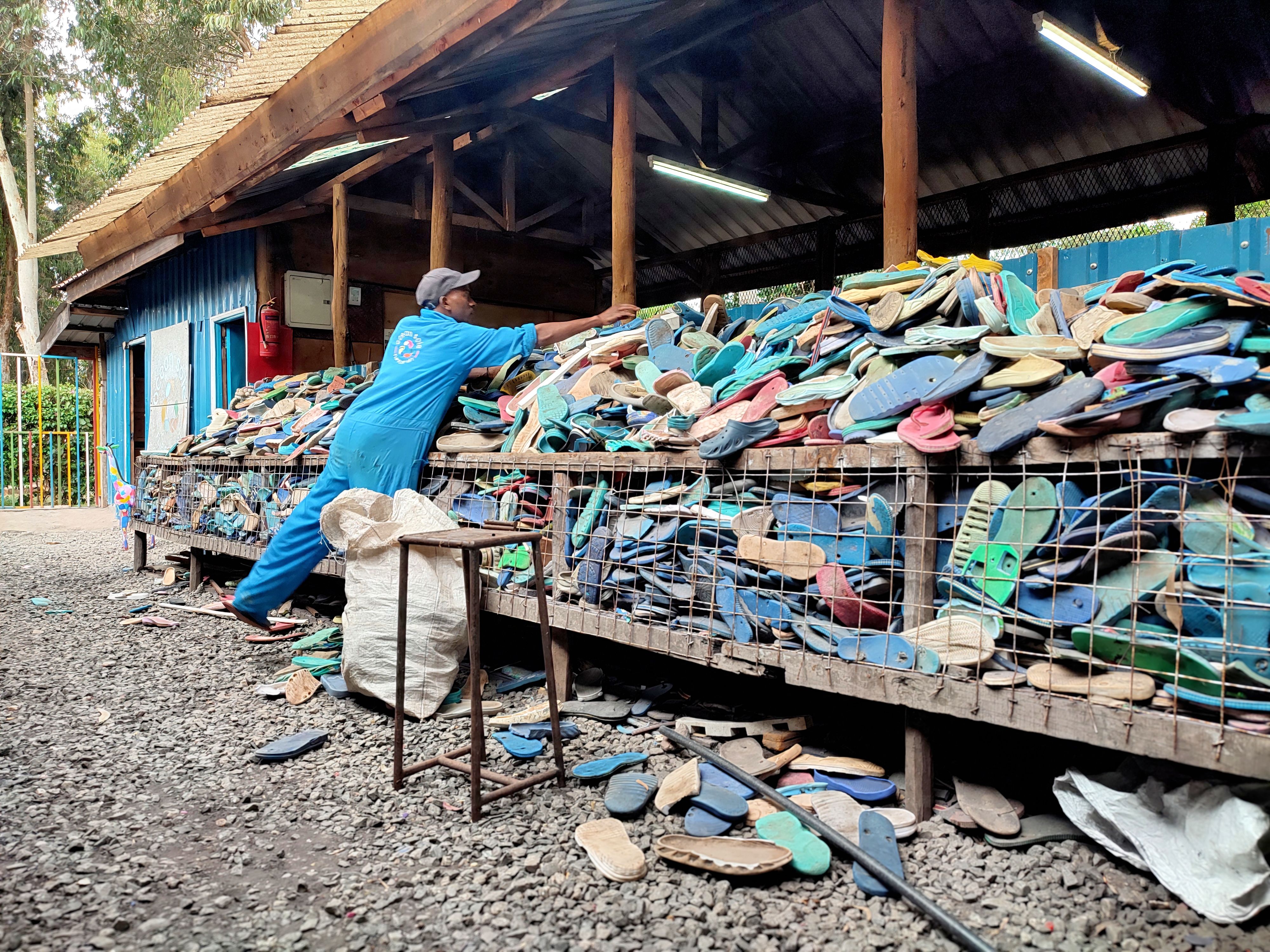
Heap of discarded flip-flops at the Ocean Sole production house in Nairobi
To match the scale of an 8-million-ton annual waste bottleneck, the solution must move from high-value niche crafts to high-volume commercial viability. PAKPRO’s model demonstrates that the real engine for macro-level change lies in transforming informal grassroots efforts into investable enterprises. By backing local waste pickers and youth cooperatives with formal financial mechanisms like credit profiling, guaranteed off-take agreements, and group financing, waste recovery becomes a self-sustaining industrial value chain.
Suffice it to say, while creative art serves as a powerful cultural catalyst to expose and attempt to solve the crisis, it is this web of formalized business infrastructure and corporate investment that turns a localized environmental triumph into a scalable national reality.
My dearest reader, this growth of recycled art and upcycling in Kenya proves that public perception can be shifted, turning a symbol of pollution into a source of pride and income. However, to truly protect Kenya's environment, these creative initiatives must serve as an entry point, inspiring the wider manufacturing, political, and industrial sectors to invest in large-scale circular economies.