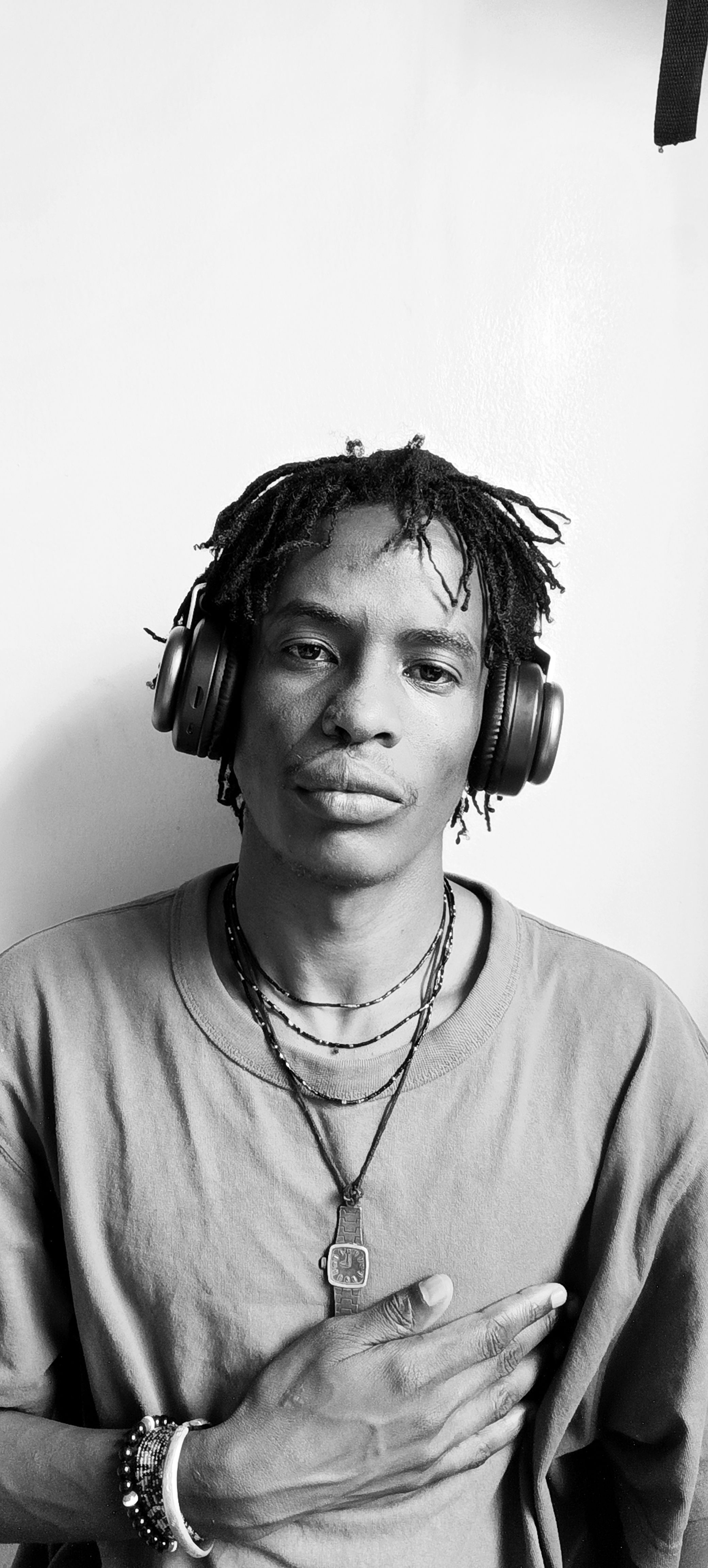
In a narrow room in one of Kampala’s neighborhoods, Murtada Ahmed’s weary face is lit by the blue glow of his laptop, while the scent of old coffee drifts through the air, mingling with the slow-turning fan. Open notebooks and scattered papers surround him, some stained with ink, others holding photos and reports about the war in Sudan. The soft notifications from his phone break the room’s silence every few minutes; each message represents a new story waiting to be documented. It was in this corner that the idea of “Droobb”, a digital platform that has endured the chaos of war and forgetting-was born, reflecting the will of a man who chose to act despite physical and emotional challenges.
Murtada sits on his black chair, his fingers pressing the cold keys of his keyboard as he writes about a new displacement in West Kordofan. Every word carries a sense of responsibility and a determination to erase the silence imposed by violence in the country. In a calm yet charged voice, he says: "I may be physically far from my homeland, but I am close to it with my journalistic senses. Every story I write makes me feel like I am there, among the people facing daily devastation."
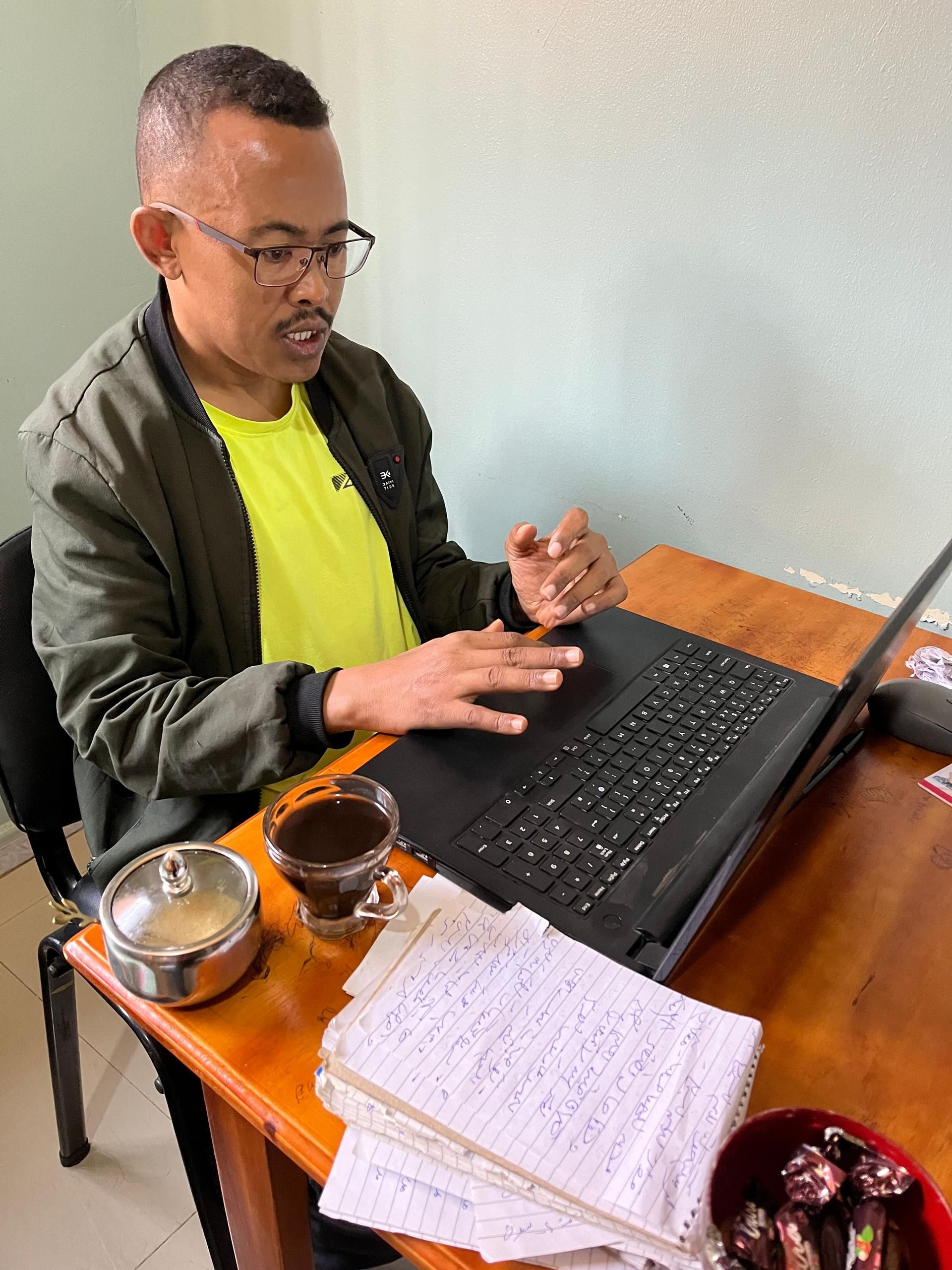
Murtada sits on his black chair, his fingers pressing the cold keys of his keyboard as he writes about a new displacement in West Kordofan. Taken by the author.
Between Khartoum and the Cells: the Journey of a Journalist Who Refused Silence
At 36 years old, Murtada Ahmed has been working in journalism since 2013, moving between newspapers such as Al-Ahram Al-Youm, Al-Rakoba, and Sky News Arabia. His path was far from easy; between 2013 and 2023, he faced harassment, arrests, and threats for reports exposing war crimes and human rights violations.
Before the war broke out, he was arrested four times, faced 13 fabricated complaints, and endured continuous threats of death. In 2014, he was first detained while covering a protest in Khartoum. That same year, he was summoned by the Sudanese Minister of Oil over a report on fuel subsidy removal. Legal summons continued, 13 cases over ten years, and in 2018, he was arrested again with a group of journalists while covering protests in front of the Sudanese Parliament.
"Being in the cells was not only a physical ordeal but a test of the spirit. Every blow, every threat, made me see journalism as a human duty before being a profession" he recalled. His physical disability increased his vulnerability under oppression, yet it did not break his determination. He said"My body is limited, but my mind knows no boundaries. That makes journalism a responsibility toward those without a voice."
According to the Journalists’ Freedom Secretariat in early 2025, more than 110 violations against journalists were documented last year alone. Since the outbreak of the Sudanese war, over 520 incidents have been reported, including 77 direct threats, 32 of which targeted female journalists. These numbers are not mere statistics; they reflect the reality of journalists facing daily dangers, often caught between violations and fear of death or imprisonment.
Exile as a Space for Freedom and Independent Work
With the outbreak of war, working as a journalist inside Sudan became almost impossible. Murtada had to flee to Kampala, where exile became a new space for freedom and independent work. There, he established “Droobb” to cover war, displacement, and human rights violations, transforming his small room into a mini media center for writing, editing, publishing, and documenting, while the sounds of the fan, phone notifications, and keyboard taps blended into the rhythm of his day.
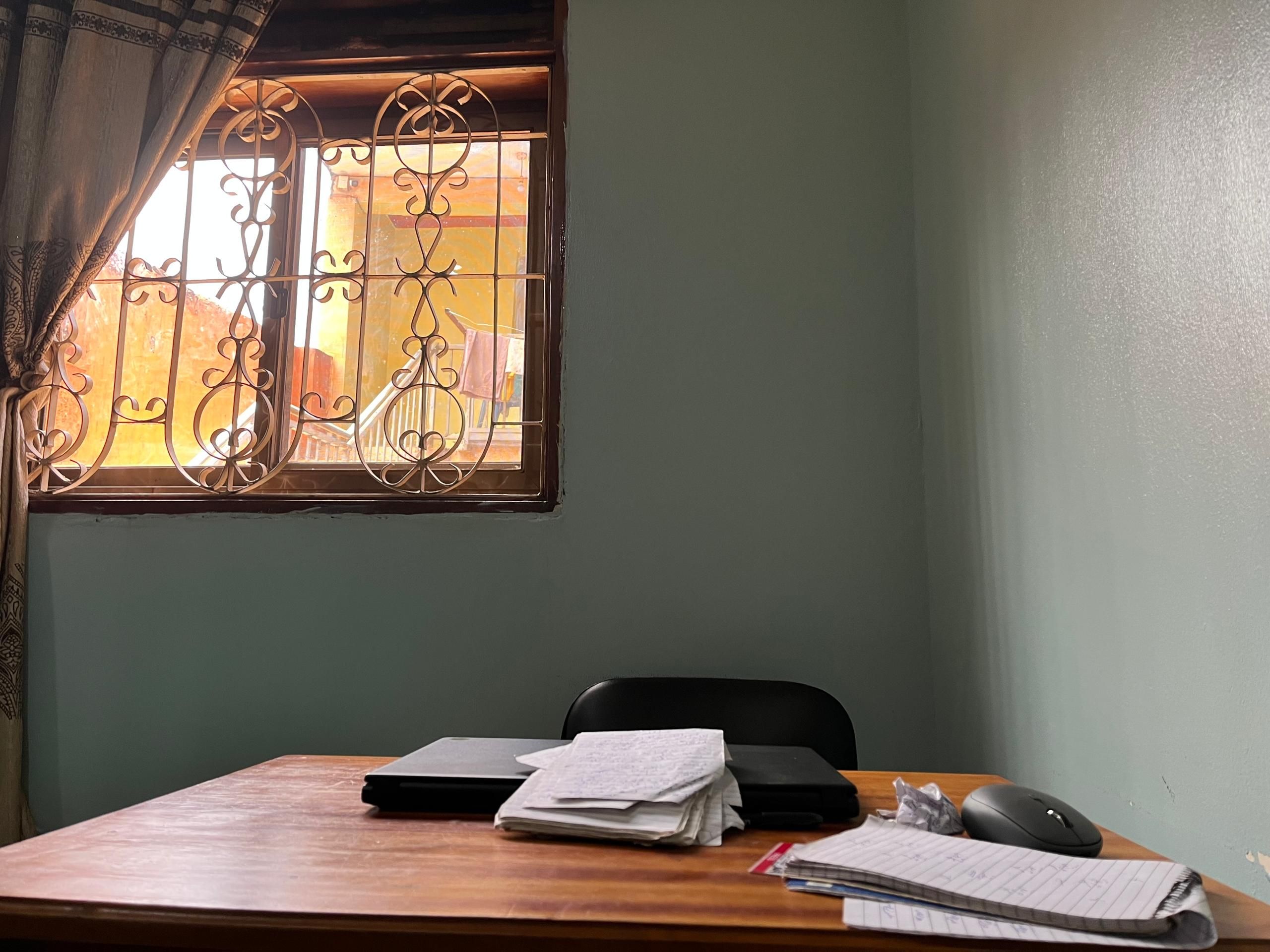
Murtada turned his small room into a mini media center for writing, editing, publishing and documentation. Photo by the author.
A follower from West Kordofan (who requested anonymity for security reasons) says:"We always wait for Droobb’s reports. They publish what other media cannot reach. It’s our window to the truth in Kordofan after most media outlets disappeared."
Sudanese refugee Sara Adam in Kiryandongo camp adds that "Droobb’s stories made me feel I was still connected to Sudan, and I understood the war through the voices of people actually living it."
Volunteering and Independence: Resistance Without Funding
Unlike many exile platforms, “Droobb” operates entirely on a voluntary basis without institutional support or external funding. Murtada explains:"I founded the platform voluntarily because we believe journalism must remain free from political and financial control. The platform is a form of resistance."
He manages the platform daily, relying on occasional help from colleagues to bridge the information gap created by the collapse of Sudan’s media sector. Amid the room’s heat, the fan’s whir, and persistent phone notifications, Murtada finds motivation to continue despite physical and psychological exhaustion.
Journalism as a Weapon Against Forgetting
“Droobb” conducts daily verification of rumors related to displacement and local conflicts, warning communities against involvement in hate speech or disease outbreaks before traditional media can cover them, with a focus on marginalized areas entirely lacking independent coverage.
Murtada received the CFI (French Agency for Media Development) Award for the best war coverage, recognizing his commitment to independence and truth. Yet challenges persist: high internet costs, electricity outages, misinformation, difficulty communicating with sources, and security threats.
He says:"Sometimes I wait for days staring at my phone, waiting for a source in South Kordofan to restore Starlink service so I can write a story that would have otherwise been buried."
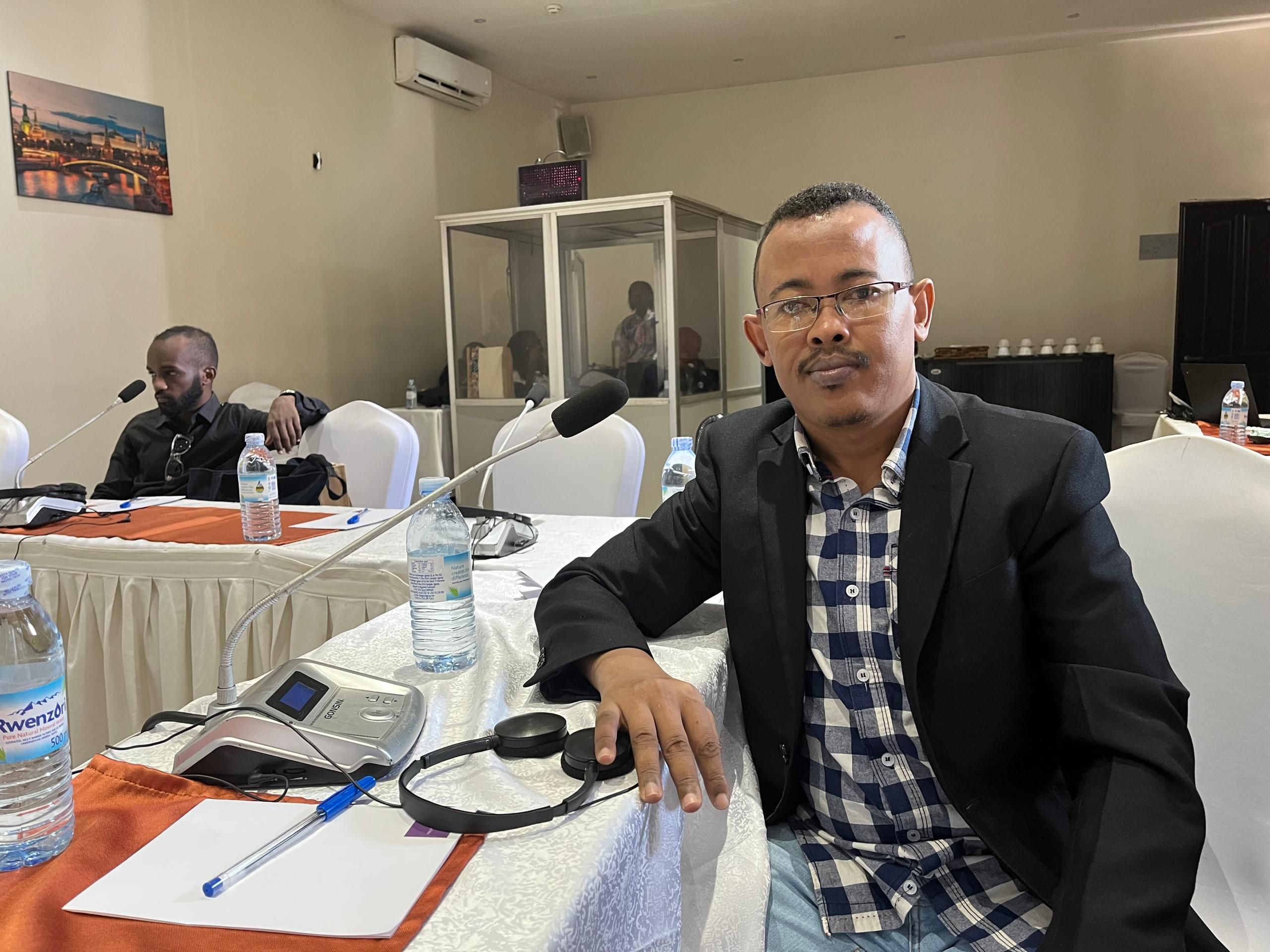
Murtada founded the "Droobb" platform to cover war, displacement, and human rights violations in order to spread the truth. Photo credit: Murtada Ahmed.
The platform attracts 20,000 to 25,000 daily readers across its website and social media pages, publishing short reports, interviews, analyses, and news. In areas with weak internet like Kordofan, Darfur, and Blue Nile, “Droobb” relies on WhatsApp and Telegram networks, with volunteers and readers manually redistributing links and audio clips to ensure communities receive information despite connectivity challenges.
Despite its expansion, risks remain. Murtada has received repeated warnings from Sudanese security agencies and unknown individuals due to his reports on violations. The platform’s pages have been repeatedly hacked, forcing the team to use alternative links. He has also received direct death threats via phone and social media as recently as the time of this interview.
Disability as a Lens and Vision as Strength
Murtada Ahmed has never seen his disability as a limitation; rather, it is a lens to view the world with greater honesty and a driving force to write what others cannot say. He reflects,"I write about marginalized people differently because I belong to them in meaning, not just in form."
Every arrest, every threat strengthened his resolve to speak the truth. Through “Droobb,” he continues asserting his presence in Sudanese media, creating space for dignity in a time when values and boundaries are fading.
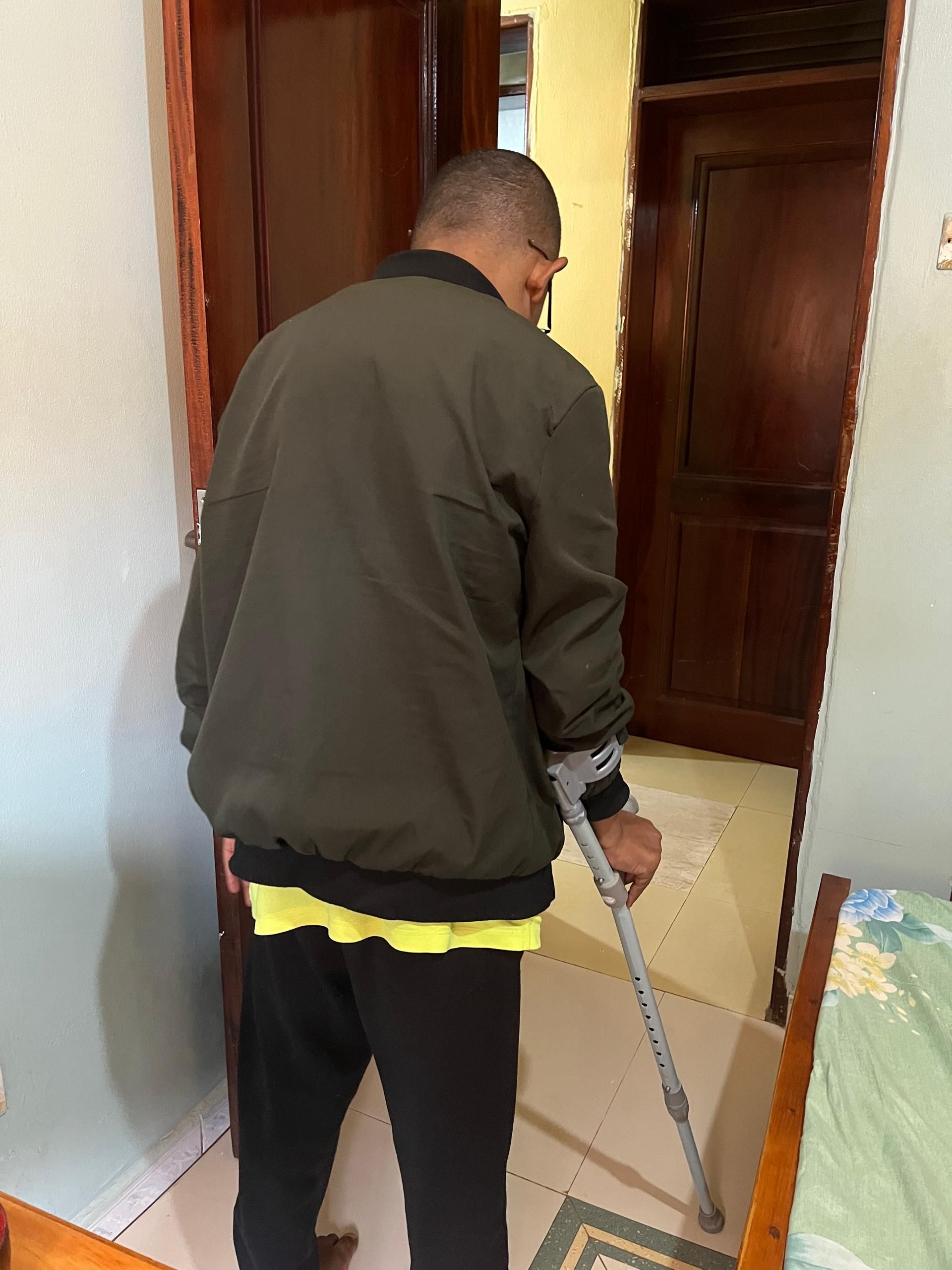
Murtada has never seen his disability as a limitation; rather, it is a lens to view the world with greater honesty. Photo by the author.
Platform trainee Mohamed Ahmed says: "Murtada teaches us how to live journalism, not just practice it. His vision, working despite disability and exile, makes us realize journalism is more than a profession. It’s a sacred mission."
On the last day before preparing a report, Murtada sat on his balcony, feeling the evening breeze through the narrow room, hearing distant street sounds, and contemplating the horizon above Kampala. He says: "Exile is a new space to discover ways of expression. Journalism is a means of human survival before being a profession. As long as there is injustice, there will be someone writing against it."
His small room, notebooks, and laptop all stand as testimony that determination can create a voice amid silence, and exile can mark the beginning of a new freedom.