Introduction
Since the dawn of history, the human body has been intertwined with symbols and meanings that transcend its biological limits, becoming an expression of identity, belonging, and beauty. Across cultures, bodily practices such as tattooing, scarification, and adornment have formed an integral part of social, religious, and aesthetic rituals.
In Sudan, two prominent phenomena stand out in this context: shulukh (facial scarification) and dagg al-shaloufa (lip tattooing). These bodily markings carved a deep place in popular memory, serving as standards of beauty, symbols of identity and tribal affiliation, and at times as a form of spiritual protection against evil forces- according to ancient beliefs.
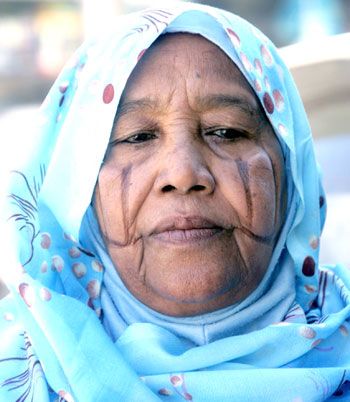
Facial scarification was once an expression of identity, belonging, and beauty. Source: Al-Arab Newspaper
Studying these rituals is not merely an attempt to document a fading custom; rather, it is an effort to understand the profound cultural and social transformations experienced by Sudanese society, from adherence to heritage and symbolism to openness toward new aesthetic and health standards shaped by education, globalization, and urbanization.
These practices also carry an anthropological dimension that allows for comparison with similar customs in other African societies, as well as a gendered dimension that reveals how both female and male bodies became arenas for expressing societal values and roles.
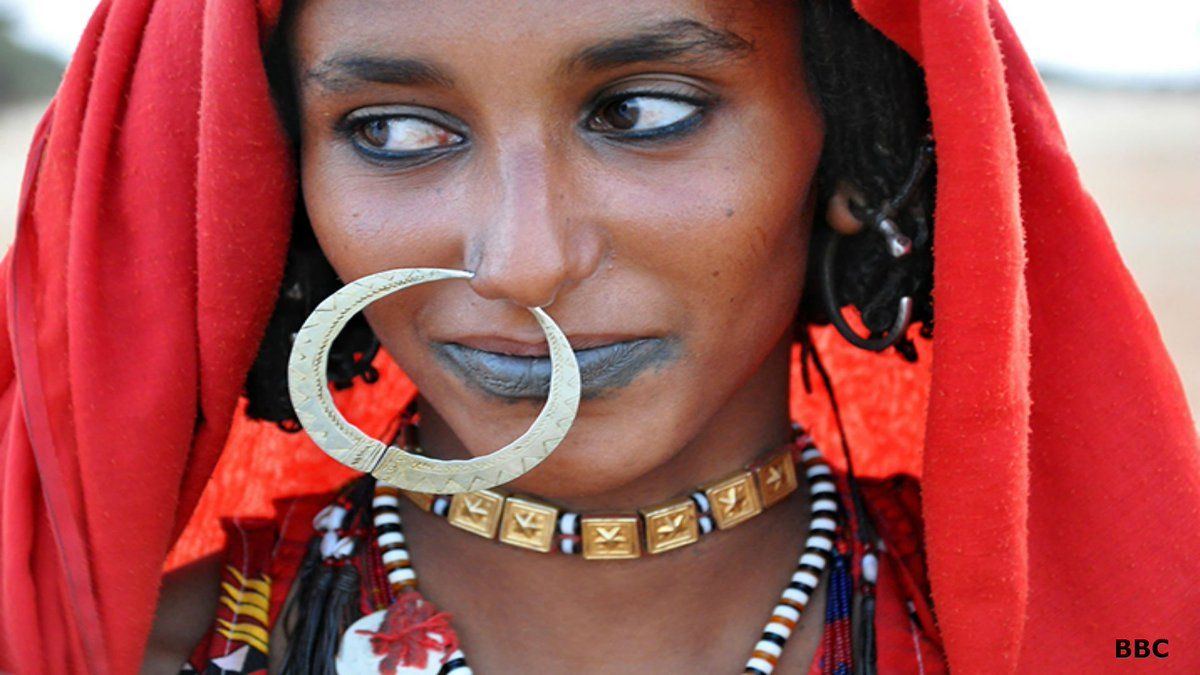
Lip tattooing is an ancient Sudanese beauty tradition. Source: Africa 101 Last Tribes
Historical and Aesthetic Roots
Origins and Symbolism
Shulukh and dagg al-shaloufa are among the oldest aesthetic and social practices known in Sudan. Anthropological studies trace their beginnings to the pre-Islamic era, around the fifth century CE, when the kingdoms of Nubia and Meroë practiced forms of bodily adornment through tattooing and scarification as part of religious and social rituals. These customs continued to spread until the nineteenth century, becoming more distinct across different regions of Sudan, particularly as tribal identities deepened.
At the time, shulukh were not merely lines etched into the face; they functioned as a social and cultural identity card. Their shape and placement varied from one tribe to another. For example, the Ja‘aliyyin tribe was known for three vertical lines on the cheeks, while some Nubian tribes preferred horizontal or intersecting patterns.
Unofficial estimates suggest that until the mid-twentieth century, more than 70% of women in northern Sudan bore these markings on their faces, while the percentage among men did not exceed 40%, reflecting shifts over time in notions of masculinity and courage.
Symbolically, shulukh and dagg al-shaloufa carried multiple meanings. First, they were expressions of beauty: a scarified face or lips tinted in dark hues were considered more attractive. Second, they signified tribal affiliation, distinguishing the individual within the collective. Third, they were believed to offer protection from evil spirits according to older belief systems.
Dagg al-shaloufa in particular was regarded as an exclusively feminine rite. It was often performed on girls at puberty as a sign of completed womanhood and readiness for marriage. Its forms varied between communities: in some areas only the lower lip was tattooed, while in others both upper and lower lips were marked to enhance the beauty of the mouth and symbolically emphasize the fullness of feminine features.
Types and Forms of Shulukh
The patterns of shulukh varied by tribe and region and differed between men and women, carrying aesthetic, social, and sometimes religious connotations.
First: Shulukh Among Men
- Al-Matarig (The Hammers): Three vertical lines on each cheek. Associated with the Ja‘aliyyin and the Abdallab tribes, and also called “Matarig al-Sheikh” due to their link with followers of Sheikh Idris Wad al-Arbab.
- Darb al-Tayr (The Bird’s Path), also known as ‘Wad Hassouna Casne': Shaped like the English letter “T,” consisting of a vertical line intersected by a short horizontal one. Common in the Um Dawan Ban area, symbolizing strength and religious affiliation.
- Al-Nagarabi: Cross-shaped scarification (✚), with a vertical line intersected at the center by a horizontal line. Spread among some Nile Valley tribes.
- Shayqiyya scarification: Three parallel horizontal lines extending from the side of the mouth to the end of the cheek, sometimes four. Worn by both men and women of the Shayqiyya tribe.
- Shulukh al-‘Arij: Patterns shaped like the numbers (٧) or (٨) or the letter “N.” Associated with followers of Sheikh Mustafa al-Fadni and prevalent in the Butana region.
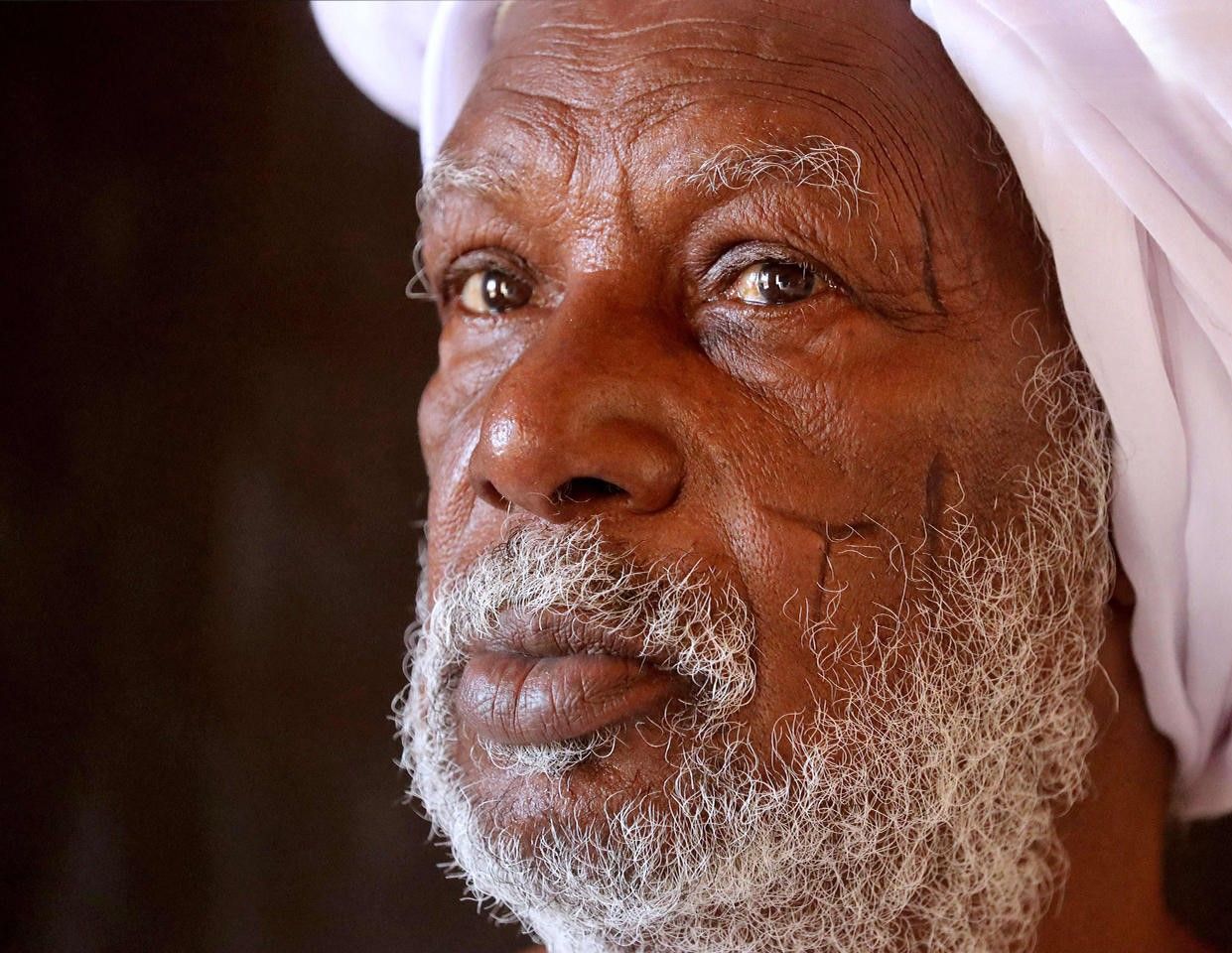
Darb al-Tayr shulukh symbolizing strength and religious affiliation. Source: Al-Jarida Newspaper
Second: Shulukh Among Women
- Female Matarig: Similar to the male pattern but finer and more delicate, often tinted green or black to enhance facial beauty.
- Matarig with al-‘Arid (The Crossbar): Three vertical lines intersected by one or more horizontal lines, resembling a ladder. Sometimes referred to as Waja‘ al-Qalib (Heart ache).
- Al-Rasham: A short, carefully drawn slanted line on the cheeks, resembling a small “T.” Considered one of the most attractive and elegant forms of female scarification.
- Female Darb al-Tayr: A short line placed delicately at the center of the cheek, similar to the male version but more refined.
Third: Therapeutic Scarification (Al-Fusud)
These were used for medical purposes, such as treating eye diseases (by making small incisions near the temples beside the eyes), relieving headaches (through scarification on the head), or addressing abdominal ailments.
Over time, some of these marks evolved into aesthetic adornments, particularly among women.
In the Nuba Mountains, shulukh became especially diverse, serving to distinguish tribal affiliation among dozens of ethnic groups. Among the women, short facial scars on the cheeks, or marks on the arms and abdomen, were widespread. They were regarded as signs of beauty and femininity, in addition to marking tribal identity.
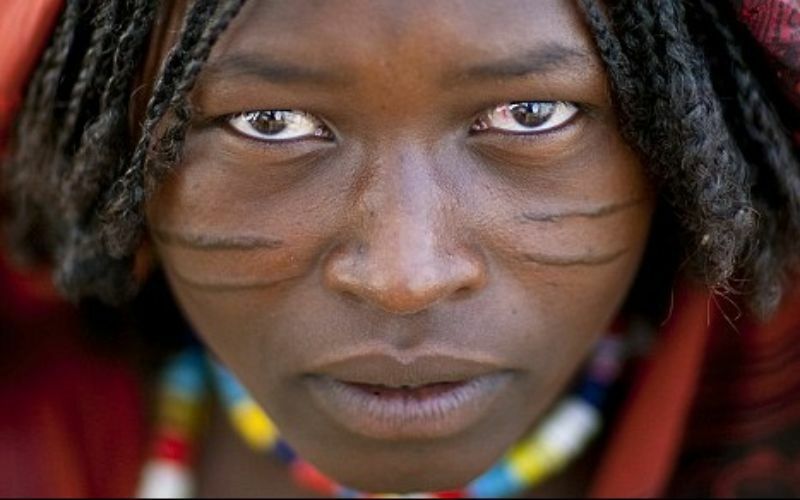
The scarification patterns vary among the different Sudanese tribes. Source: Eric Lafforgue
Ritual Practices: From Shulukh to Dagg al-Shaloufa
The practice of shulukh in Sudan was carried out through carefully observed rituals imbued with a celebratory and communal spirit. The process began with simple tools such as a sharp razor or a small knife.
The desired pattern would first be outlined on the face, then incised according to tribal tradition. It was usually performed in early childhood, between the ages of seven and ten, to ensure better healing and to integrate the child into the group’s identity from an early age.
The procedure was not merely a physical act but a social rite in which family members and neighbors took part. Songs were chanted, and congratulations were offered once the scarification was complete. A child who endured the pain was regarded as having attained a degree of strength and courage that qualified them for true belonging within the tribe.
From a gender perspective, the practice carried different meanings for men and women. For women, scarification was considered an indispensable standard of beauty; in some tribal communities, a girl might be rejected for marriage or deemed of lower status without them. For men, shulukh symbolized bravery and manhood. However, among men the custom began to decline more rapidly by the mid-twentieth century as modern notions of masculinity evolved.
Some living testimonies describe the experience as a test of endurance. One woman in her sixties recounts suffering from fever for several days after undergoing scarification, yet afterward she was regarded as having achieved full womanhood and readiness for marriage and childbearing. Her account reflects the profound social and human dimensions underlying the practice.
Much like shulukh, dagg al-shaloufa (lip tattooing) represented a distinctive aesthetic and social rite in Sudanese society, though it was practiced primarily among women. The process began by piercing the lower lip with a needle or a small sharp tool. Into the puncture was inserted a black powder known as al-āti, a mixture of soot and local plants, which gave the lip a permanent dark color. This procedure was typically performed during adolescence, between the ages of twelve and fifteen, as a symbol of completed femininity and preparation for marriage.
Dagg al-shaloufa was a social occasion no less festive than shulukh. Women’s chants accompanied the ritual, and animals were sometimes slaughtered in celebration of the girls who underwent the procedure. Oral testimonies recall that the girl would be praised in folk songs and admired for her new beauty, with the darkened lips becoming a mark of distinction among her peers.
This rite carried a clear gendered dimension. While shulukh were associated with both men and women, dagg al-shaloufa remained an exclusively female practice, in which the dark lip color was regarded as a powerful sign of attractiveness. In some communities, a girl who had neither been scarified nor had her lips tattooed was considered incomplete in her femininity and might face difficulty in marriage, reflecting the centrality of these markings within traditional social standards.
Despite the intense pain involved, since the piercing could cause days of swelling and bleeding, girls often took pride in enduring the procedure, viewing it as proof of resilience and readiness to confront the hardships of married life and motherhood. In this way, the body became a canvas upon which social values were inscribed and through which ideals of strength and beauty were tested.
Popular Memory and African Comparisons
In Sudanese collective memory, shulukh and dagg al-shaloufa are more than outward appearances; they are anchors of childhood memories, resilience, and identity. Zainab, a woman in her sixties, recounts undergoing scarification at the age of seven and a half. She vividly remembers the pain and how the procedure was performed with a razor after the face had been treated with a lime-based substance for disinfection. Three vertical lines were cut from beneath the eyes to the chin, the pattern associated with the Danagla tribe. Yet she emphasizes that they had never heard of anyone dying as a result of shulukh.
Zainab adds that society granted social privileges to the scarified woman. She was treated as fully feminine, celebrated in poetry, and regarded as honorable and reputable within the tribe. By contrast, a woman without such markings was locally referred to as "al-marhāh" and placed in a lower social position. The variation in shulukh patterns also enabled people to identify a person’s tribe at a glance, making them a powerful marker of tribal distinction. Over time, however, these rituals began to fade, persisting mainly in remote rural areas.
These practices were not unique to Sudan but shared with other African societies. Among the Mursi and Suri tribes of Ethiopia, for example, lip piercing and stretching using clay or wooden plates is customary. This practice typically begins for girls at the ages of fifteen to sixteen as a symbol of beauty and a prerequisite for marriage. Similar customs also exist among tribes in South Sudan, such as the Toposa and Kichepo, though they too are declining due to social change and external influences.
Despite differences in detail, these practices share a common symbolic dimension related to identity and beauty. Pain and endurance are viewed as part of proving maturity and courage, echoing Sudanese women’s accounts of the suffering that followed shulukh. The distinctions lie in symbolism: in Ethiopia, lip plates are closely associated with beauty and bride wealth, whereas in Sudan, shulukh combine aesthetic value, tribal identity, and protection from evil spirits.
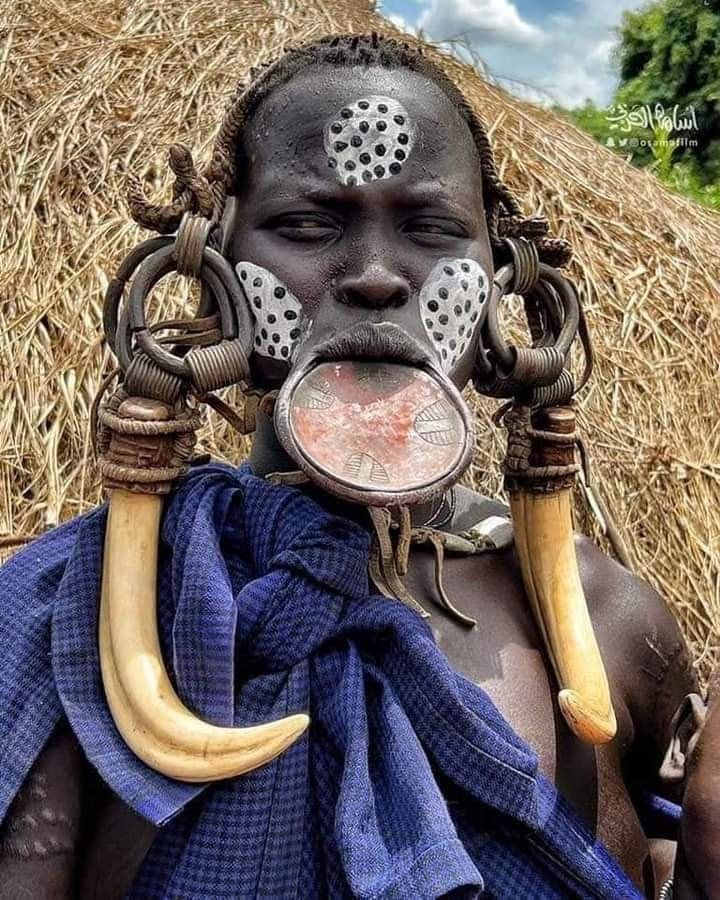
Women of the Mursi tribe place plates in their lower lips; the larger the plate, the greater the woman’s perceived beauty and her chances of marriage. Source: Facebook.
Transformation and Decline
The Beginning of Decline and Changing Standards
By the mid-twentieth century, shulukh and dagg al-shaloufa began to decline gradually after having stood for decades as prominent symbols of beauty and identity in Sudan. Major social transformations reshaped aesthetic sensibilities; a scarified or lip-tattooed girl no longer enjoyed the same status she once had. On the contrary, these markings increasingly came to be viewed as facial disfigurement, especially with the spread of global beauty images and models through modern media and education.
Some studies indicate that the decline became particularly evident in major cities such as Khartoum and Omdurman from the 1970s onward, where education and urbanization played a central role in reshaping the convictions of younger generations. By the early 1990s, most educated families had abandoned these rituals entirely, considering them remnants of the past. In contrast, the practices persisted in remote villages and rural areas, where the influence of media and formal education was less pronounced.
In addition to education, both internal and external migration accelerated the decline. Sudanese who settled in cities or abroad embraced new conceptions of beauty more aligned with modern standards. Medical warnings about health risks, such as infection and bleeding, also persuaded many families to discontinue these practices. Thus, what had once been a symbol of pride and belonging became, for some individuals, especially the younger generation, a social and psychological burden.
Moreover, increasing social pressure contributed to their disappearance. In urban environments, those who practiced or bore these markings sometimes faced criticism or even ridicule. Over time, the tension between their cultural value and their health risks became the defining feature of public debate, leading society to gradually abandon them and preserve them only as memories of the past.
Between Heritage and Health Risks
Despite the powerful symbolic value long associated with shulukh and dagg al-shaloufa, the health risks linked to them prompted many to reconsider their continuation. One poignant story is that of Ruqayya from the River Nile State, as recounted by a neighbor. In the 1980s, Ruqayya underwent scarification in her village, but within days she contracted tetanus due to the use of unsterilized tools. She suffered for weeks, enduring severe convulsions that nearly claimed her life, and only recovered after a prolonged course of treatment. The incident became a living example within the local community of the dangers of such rituals and a cautionary tale that led many families in the area to abandon the practice.
Contemporary Social Attitudes
Current social attitudes reveal a clear generational divide regarding shulukh and dagg al-shaloufa. While older generations regard them as symbols of identity, heritage, and the adornment of the past, evoking nostalgia for childhood and youth, younger generations tend to reject them outright, viewing them as bodily disfigurement incompatible with modern beauty standards.
To better understand this divergence, I conducted a telephone survey in July 2025 involving 57 participants from diverse social and educational backgrounds, aiming to assess current attitudes toward these rituals. The age distribution was as follows: 62% youth (18–35 years), 26% middle-aged (36–50 years), and 12% older adults (51 years and above), reflecting a stronger representation of younger voices.
The results revealed a profound shift in perception. Eighty-one percent of participants identified health risks and associated pain as the primary reason for the disappearance of these rituals. Nine percent considered education and urbanization the most significant factors in their decline. Six percent pointed to globalization and media as drivers of changing aesthetic preferences, while four percent attributed the shift to internal and external migration. These findings indicate that health concerns were the decisive factor, with other influences accelerating the transformation of these practices into elements of cultural memory rather than lived reality.
Many elders maintain that shulukh and dagg al-shaloufa were not mere customs but emblems of beauty and authenticity. Haj Zakariya, an elderly man from northern Sudan, recalls that what first drew his attention to his late wife was not only her eloquence or attire, but the deep shulukh that adorned her face and, in his words, made her the most beautiful woman of the tribe for his generation.
Sudanese traditional poetry has also documented shulukh and dagg al-shaloufa as striking symbols of beauty within the popular imagination. They were not silent bodily practices; rather, poems were woven around them, and poets sang their praise, making them part of classical Sudanese love poetry. A scarified face was likened to the lines of swords, and these markings were celebrated in verse. One poet described his beloved:
Your shulukh are like sharp daggers, your brows a rising crescent,
And the sight of you lifts burdens carried for years.
In folk dobayt poetry, it was said:
Tell me, O daughter of Obaid, brave of heart though slender,
Since I saw you in Eid, even my stride falters.
Those shulukh are more beautiful than baskets finely woven,
Bless it, may blessings be upon you.
In the 1940s, the renowned artist Hassan ‘Atiyya’s song “Ya Jamil Ya Sada” (“O Beautiful One, O Graceful Lady”) marked a turning point in beauty standards, as he sang of a girl without shulukh. The song carried a subtle message rejecting old molds and calling for a natural beauty unmarked by scars or tattoos. Many regarded it as the beginning of a gentle cultural revolution against shulukh in the popular imagination.
As waves of modernity continued and Sudanese society increasingly engaged with global cultures, dagg al-shaloufa also receded. Glossy red lips enhanced by cosmetics became the new beauty ideal, and what had once symbolized femininity and identity turned into a cultural trace preserved in collective memory.
Ultimately, the rituals of shulukh and dagg al-shaloufa were not merely marks engraved upon the body; they reflected an entire culture that shaped Sudanese identity for centuries. Today, despite their disappearance under the pressure of modern beauty standards and health warnings, they remain present in collective memory, literature, and song as symbols of the aesthetics and rites of the past.
This tension between disappearance and nostalgia reveals the enduring struggle between heritage and social transformation, and the need for younger generations to reinterpret these symbols within their historical and anthropological contexts- not as practices to be revived, but as chapters in the broader narrative of Sudanese identity. Thus, shulukh and dagg al-shaloufa stand as testimony to the human body’s enduring capacity to serve as a mirror of beauty, identity, and resilience, past and present alike.