This is the second part of "Art, Space, and Everything In-between" a series that explore the experiences and processes of art and the space in which it is made. It follows the first cohort of artists in residency at 32° East's new home in Kabalagala, Kampala. The narration is from the perspective of one of the artists Rebecca Khamala, as she takes us through her process of creation to her interactions with the other artists in residence and their work. To read the first article, click here.
Studio 2: Learning to Breathe Again
"Every person needs to take one day away. A day in which one consciously separates the past from the future. Jobs, family, employers, and friends can exist one day without any one of us, and if our egos permit us to confess, they could exist eternally in our absence. Each person deserves a day away in which no problems are confronted, and no solutions searched for. Each of us needs to withdraw from the cares which will not withdraw from us."
Maya Angelou, Wouldn't Take Nothing for My Journey Now
Throughout my childhood we were sold the lie that we could get all the rest time we wanted when we got older, so we pushed ourselves to the limits to get to the promised adulthood, only to find bigger battlefields awaiting us with barely any room to breathe.
I fought with myself a month after the residency for taking time off to merely rest. I often beat myself up for lying around without any active engagements, regardless of my very obvious need for a break. I struggled with feelings of inadequacy yet I needed the time off to get my mind in order before getting back to adulting. The strive went on for over a month to the point of, "...ye nfa ki?" (But what the heck am I dying for?). That's when I was reminded of fellow artist Birungi Kawooya's reflections on self-care: that rest is not something to be earned through exhaustion, but a necessary part of healing, recalibration, and simply being human.
In a society where one's worth is equated to how productive they are and productivity is measured by how hard one works, adult life gradually becomes a trap of goals, schedules, and deadlines- the quicksand we find ourselves sinking in. Back at 32° East, my studio was next door to Birungi' Kawooya's. Her studio and mine were both shrine-like which spooked out a few guests during our open studios.
We were both working with plant fibers, navigating tempestuous parts of ourselves; mine grief, her familial trauma. I resonated with Birungi's work in many ways, her art practice striking a chord in me. Birungi Kawooya, a Ugandan-British self-taught artist, has developed her therapeutic art practice over time, focusing her craft primarily on her mental health and well-being and that of others.
Successive periods of anxiety and depression brought Birungi back to her creative self after years of feeling invalidated in a toxic workplace. She started practicing self-portraiture, exploring collage using African print, as a way to hold conversations with herself. As a way to piece herself together and accept all her identities, equipping her to better engage in dialogue about mental health and black womanhood.
Having been raised in South East London, Birungi did not see a lot of women like her growing up. As such, she created images of black women that she could relate to, inspired by women in the African diaspora. In portraying them, she'd mirror herself, making work to remind her to take care of herself. Birungi works with collage, paints, and sculpture, and has taken an interest in performance art and movement, specifically dance.
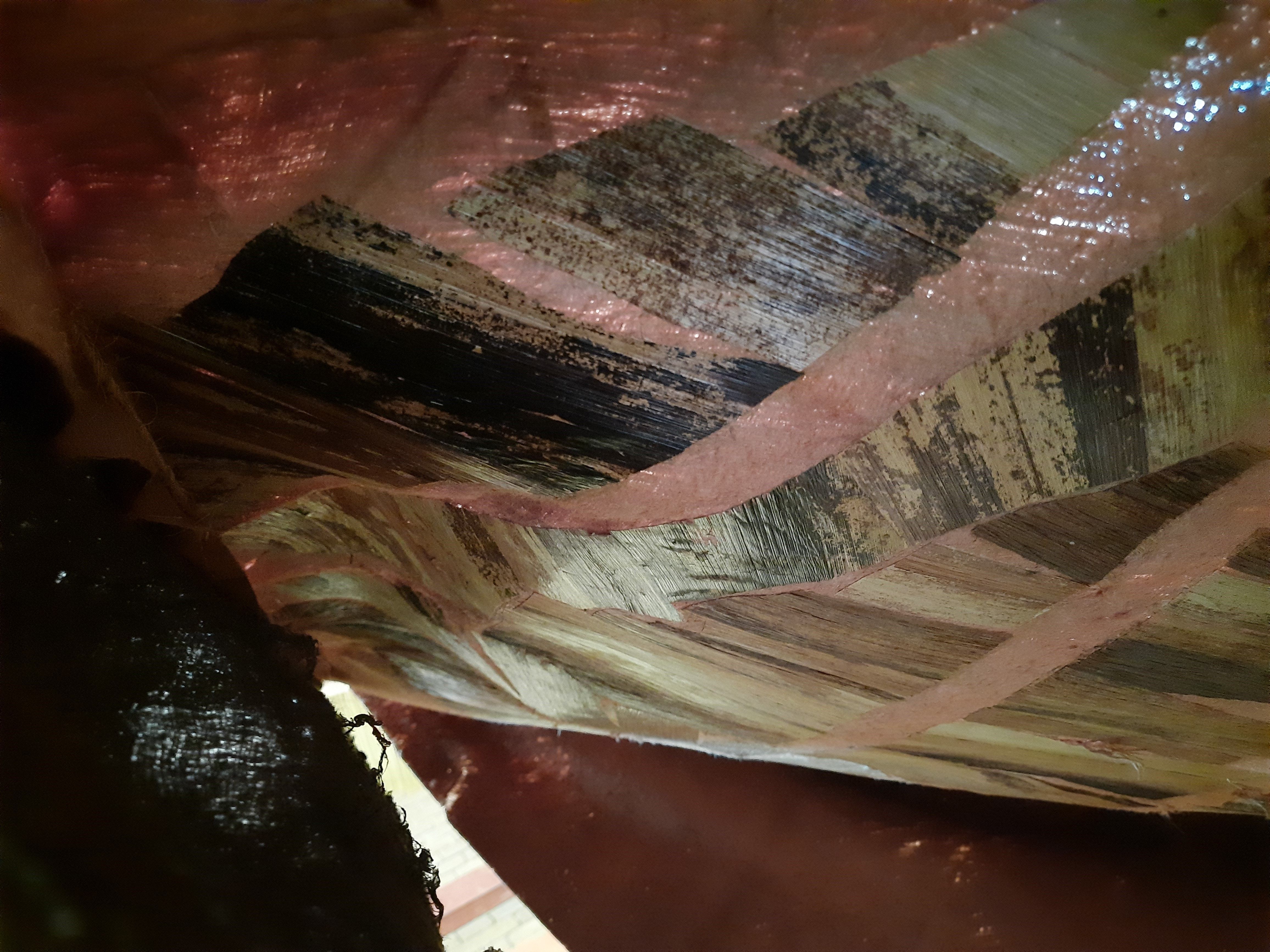
Banana fibre on bark cloth collage part of a pyramid installation by Birungi Kawooya. Source: Rebecca Khamala
For her residency, Birungi made Rest In Time and Space, a triptych of collaged self portraits (past, present, future), using lubugo (bark cloth), and byayi (banana fibre), to process, visualise, and release past trauma. Her material pallete was one she grew up with, of rich textures and cultural significance in Uganda.
Preconceived ideas of the bark cloth
I had the privilege of conversing with Birungi countless times, where we shared our personal experiences and perspectives on life, art, and projects. Since we were both working with lubugo, we talked much on it where I related my new appreciation for the material. I grew up with preconceived ideas of bark cloth being an unfavorable material because of its associations with witchcraft and death. And although I engaged with it artistically, I developed a completely new perception of lubugo after experiencing loss intimately.
During my big sister's burial, my mum asked for blankets to be bought as she got some of her gomesis to cover her child's body. When I asked her why she did so, she said it was to keep her warm. She explained to me that the lubugo served the same function. Traditionally, lubugo was used as the shroud because of its thick and firm nature, as well as embalming qualities.
Lubugo played a big part in bidding farewell to loved ones as they were put to rest in their final earthly dwelling. It was also about closure. My mum revealed to me that she felt even a little bit of comfort knowing that her daughter was heavily covered and not left alone in the cold. Lubugo now became a material of care in my perspective. A material of laying to rest, of shielding precious memories, the end of a life and the continuation of another.
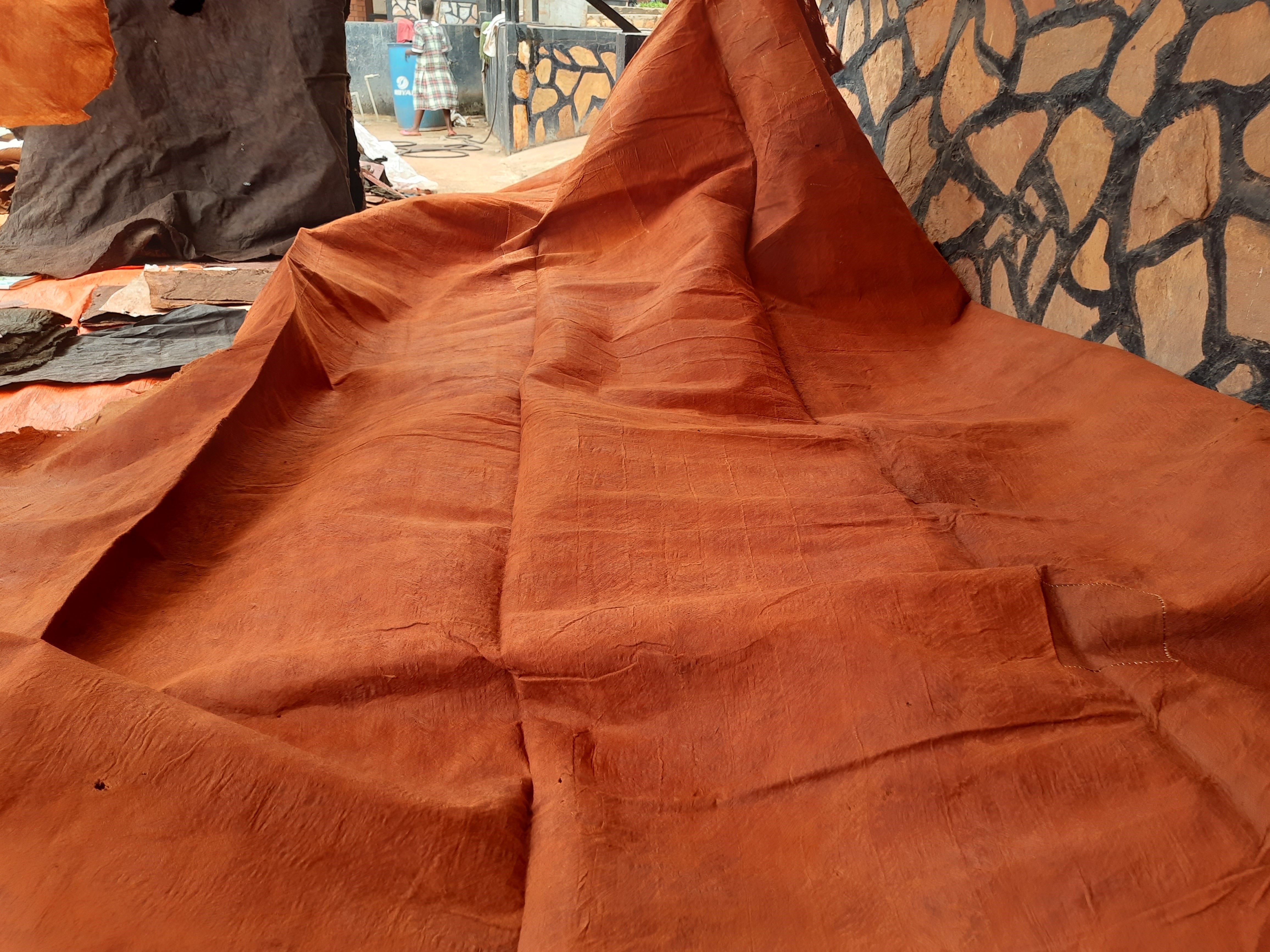
A photo of lubugo. Source: Rebecca Khamala
In her first collage, Birungi potrays her enraged self crouching behind a shield, depicting forces that laid the foundations of self censorship. She uses lubugo as a metaphorical shroud to lay her past self down with care, tracing back where she learned to silence herself so that she can create space for her past self to be heard and comforted.
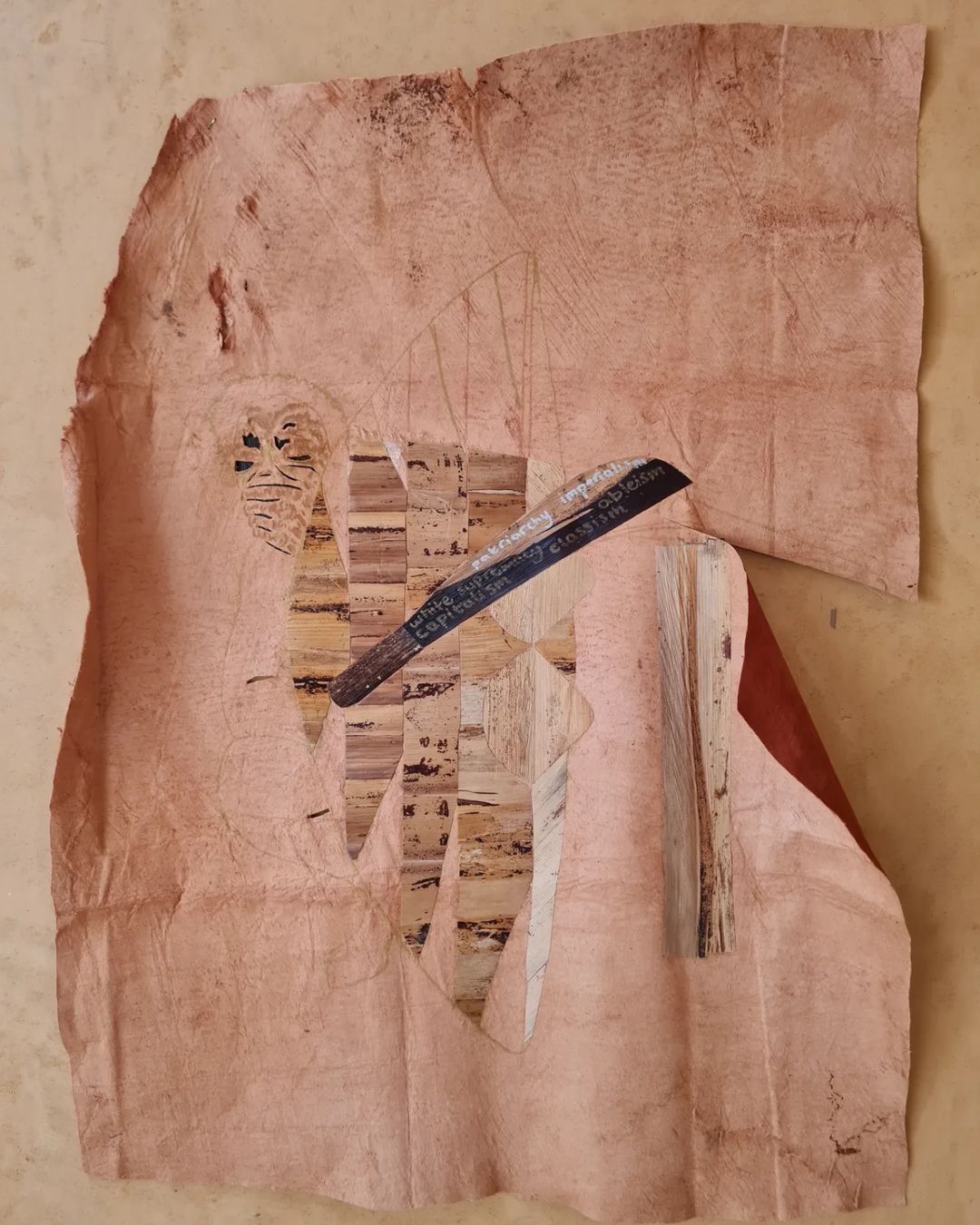
PAST: Birungi, you are (not) hysterical. Source Birungi Kawooya
The second collage is a representation of her present self. One that acknowledges the continuity of healing and priotizes her well being, learning immensely from her past self.
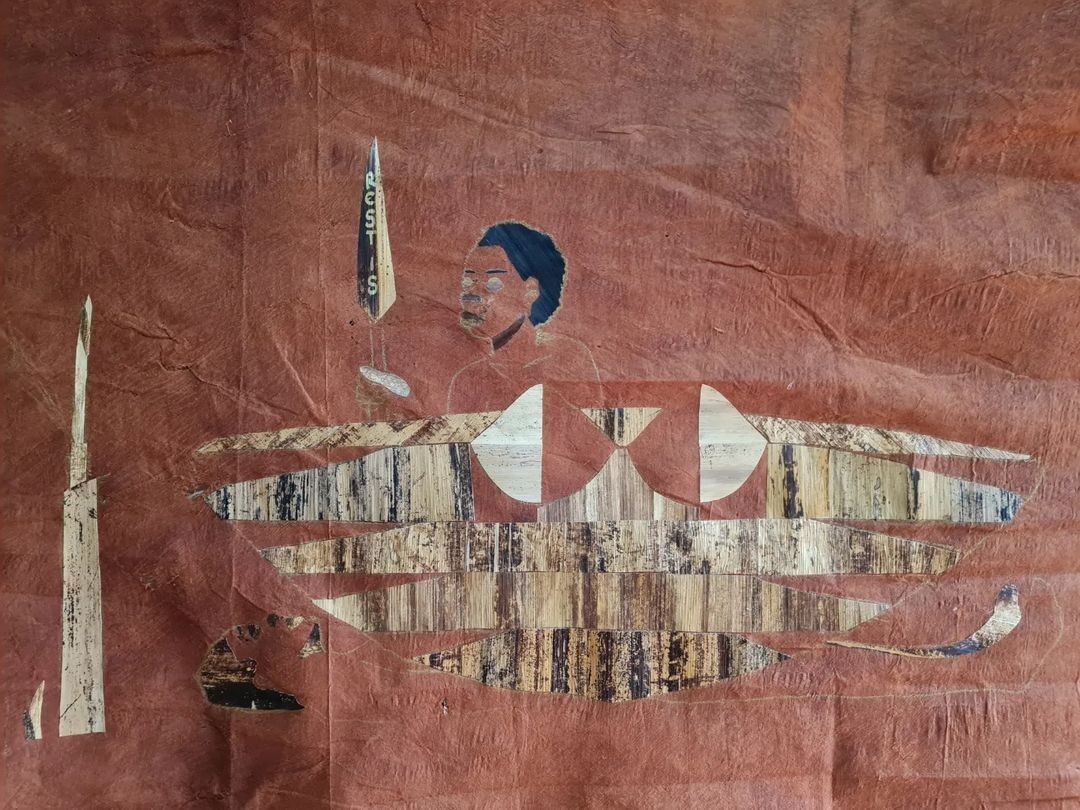
PRESENT: You have to work twice as hard to recover. Source: Birungi Kawooya
In the third collage, Birungi's well rested self imagines her future self as upright and strong, living her dream and helping others dream out loud. The piece portrays her dancing and moving towards a fruiting banana plant. I especially loved how well she created that movement by utilizing the wealth of color and texture that the banana fiber has contrasted with the black bark cloth.
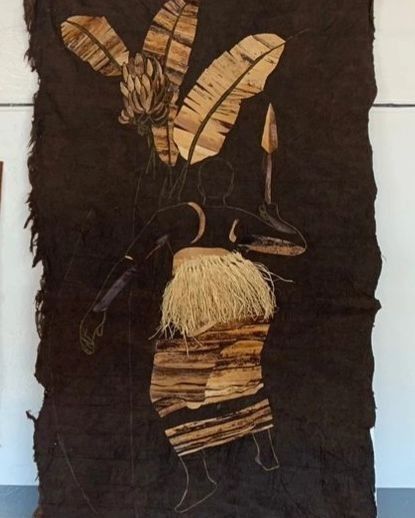
FUTURE: Fly Birungi, fly. Source: Birungi Kawooya
The exhibition
Birungi exhibited the triptych at the Njabala Annual Exhibition at Makerere art gallery, along with an installment of a rest space where people were encouraged to rest as part of the exhibition. She extended that experience to her studio, where she invited guests to rest in a pyramid space made of lubugo.
It was interesting being underneath the material contrary to simply viewing it from a distance. Birungi did curate her studio to accommodate the atmosphere of rest. Besides the pyramid were plants that made the space tranquil. Inside the pyramid, light from the skylight shimmered through the fiber which made me smile and reminded me of the little joys of life like color and light.
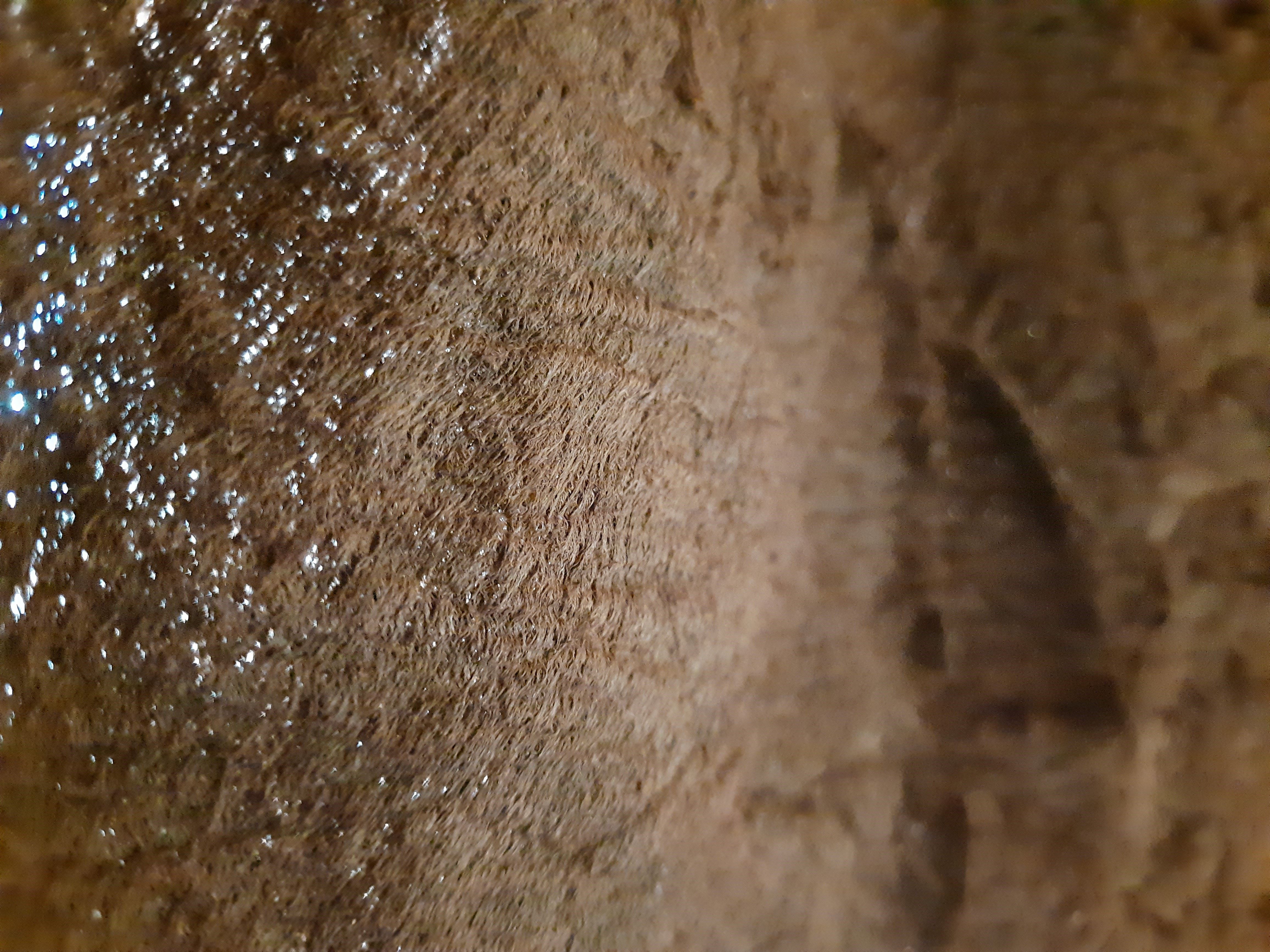
Inside the pyramid. Source: Rebecca Khamala
So when I was fighting myself over rest, I was reminded of that. I had just lost a big part of myself, the world was not going to fall just because I chose to stay in bed and watch a Kdrama. I spent two months just resting. And rest takes on so many forms, it isn't always about stopping. It's about doing things that give us life. Healing is a continuous journey. So rather than engaging in self comparison, how about a little self compassion?
