Photos by the author.
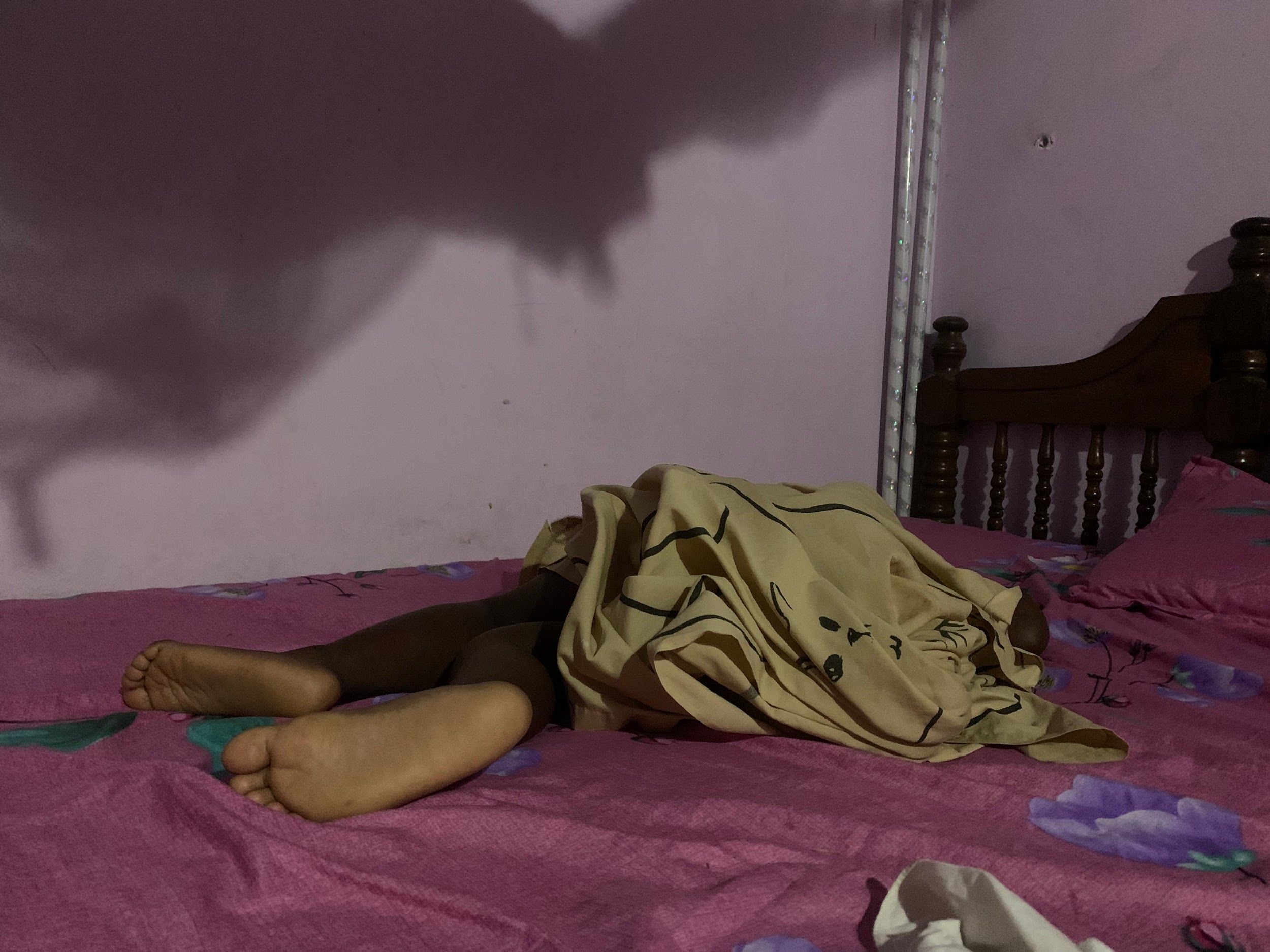
(A child asleep, half-covered): The day begins before the city is awake. For many mothers, this is where responsibility starts
It Is 4:45 a.m.
That is when my alarm goes off.
The sound slices through the room before the sun has even decided whether it’s coming out. My daughter shifts in her sleep, one leg flung over the blanket, her breathing still soft and even. For her, the day has not yet begun. For me, it already has. I move quietly, not because I want to, but because I’ve learned how. I straighten the living room, rinse cups left in the sink, put water on for breakfast before I even think about myself. By the time I shower, I’m already running through deadlines in my head. At 5:30 a.m., I wake her up.
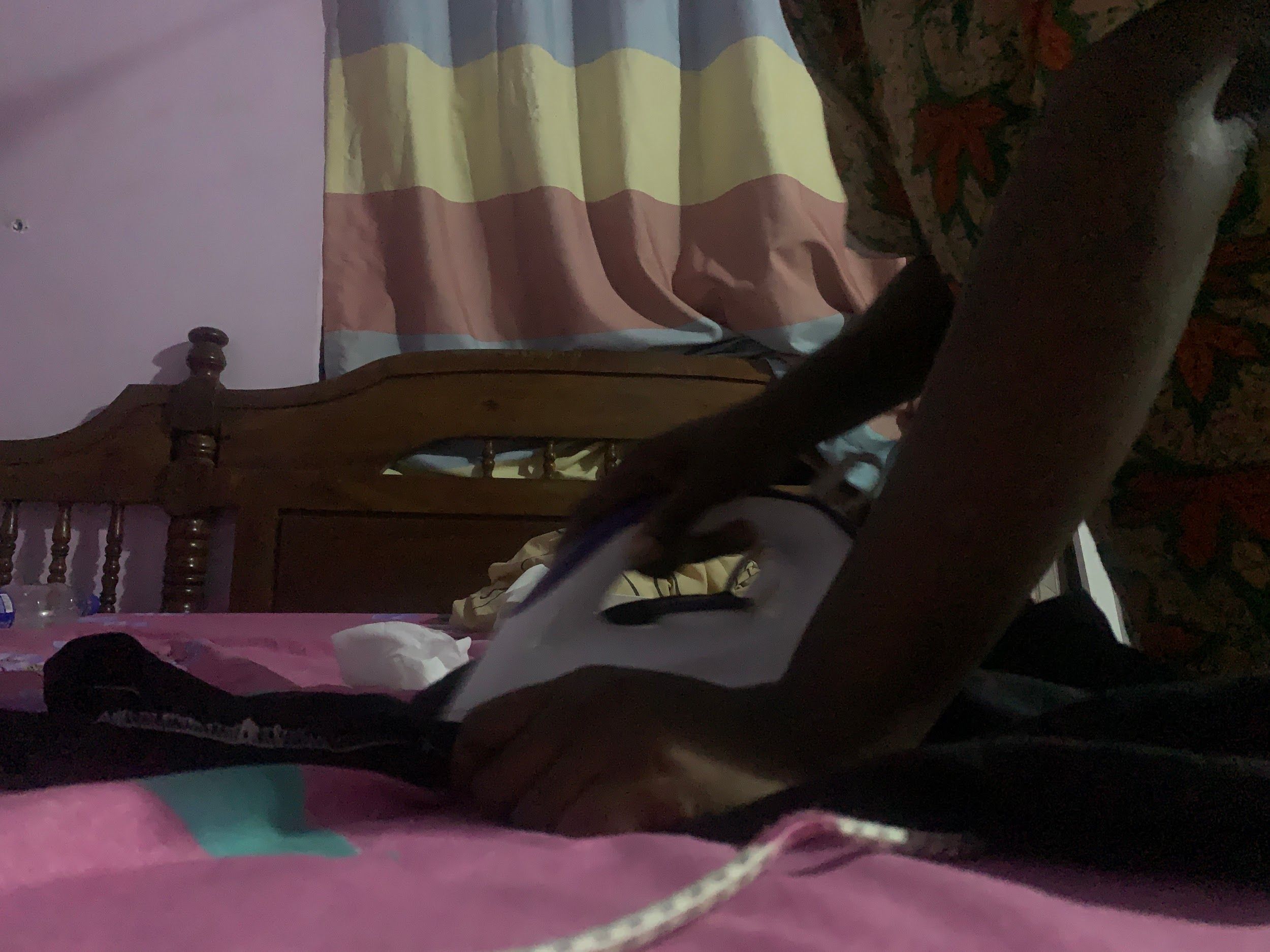
(hands ironing): Care work doesn’t announce itself. It repeats every morning, quietly holding households together.
She hates early baths. She always has. She complains, rubs her eyes, asks questions she already knows the answers to. This morning, as I’m fastening my shoes, she looks up at me and asks, “Momma… are you leaving without me again?”
Her lip trembles. Her eyes fill. I pull her into my chest and promise I’ll come back with something small, something sweet. A treat. A distraction. She nods, convinced enough. I am not.
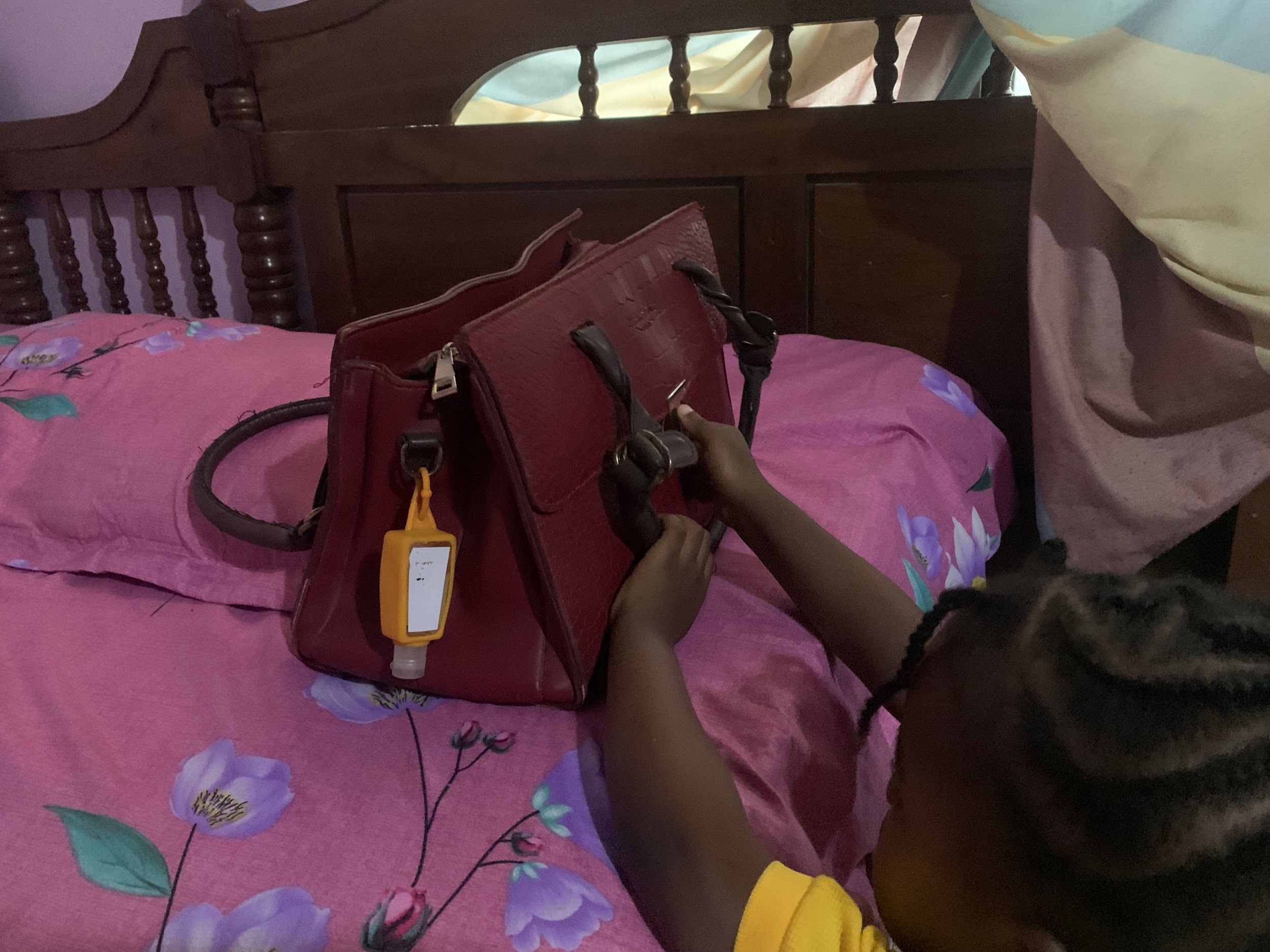
(A child’s hands playing with my packed bag): The hardest goodbyes are the ones you make for survival, not choice.
Outside, the city is waking up too. Boda bodas roar to life. Footsteps pass. Doors open. Everyone around me is negotiating their own version of survival. By the time I lock the door behind me, I’ve already made a dozen decisions that will return later in the form of guilt.
And this is just one morning. One of hundreds. One of thousands.
This is what motherhood looks like for me.
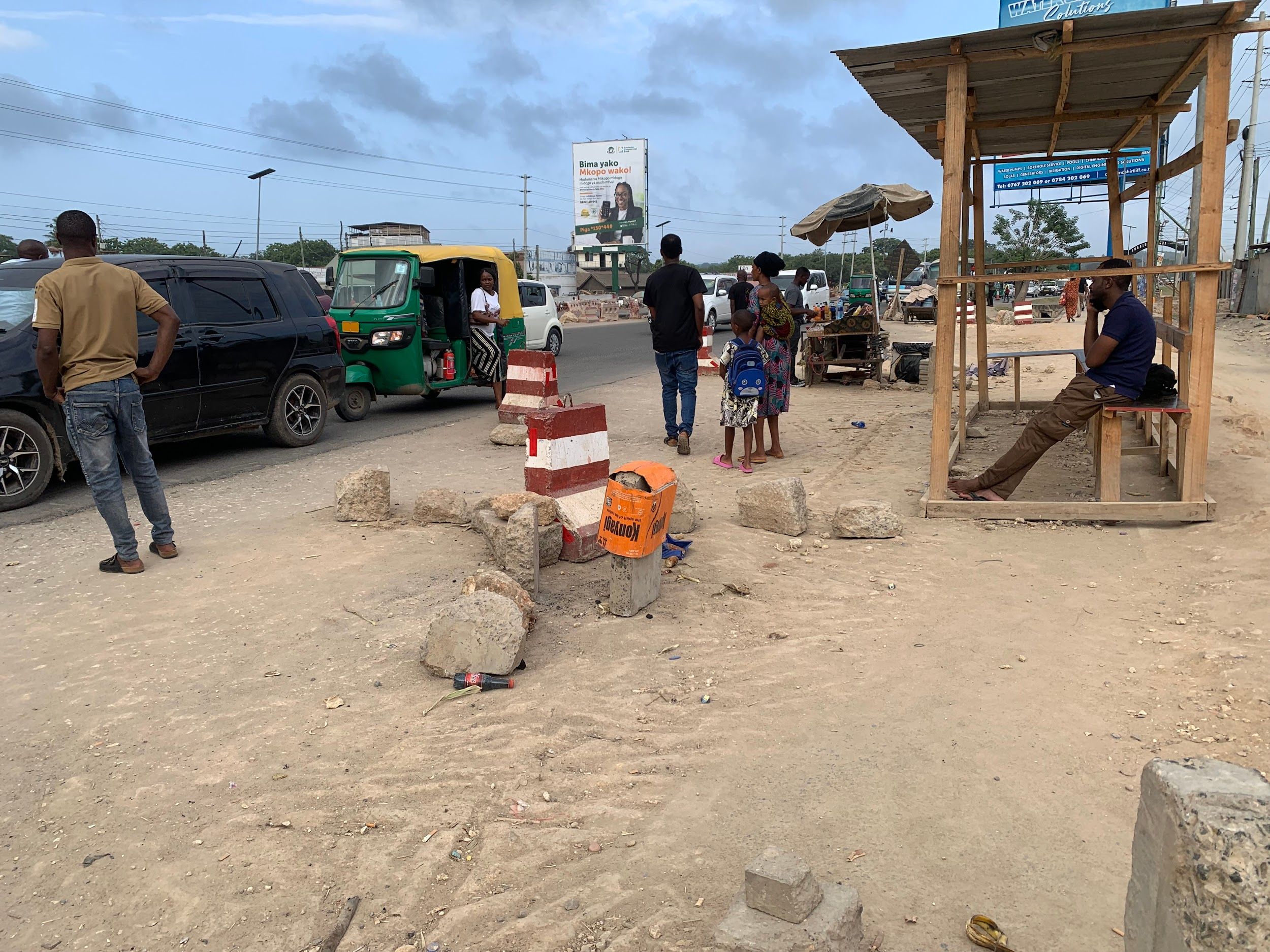
As the city begins its negotiations with the day, some mothers have already made theirs
This morning feels deeply personal, but it is not rare. In Tanzania, a significant and growing number of households are led by women, many of them single mothers. According to the Tanzania National Bureau of Statistics, approximately one in three households is female-headed, particularly in urban areas where separation, migration, and informal labor patterns are common (National Bureau of Statistics [NBS], 2022). Yet despite how common this reality is, it remains socially uneasy. Single motherhood is visible in numbers, but rarely validated in conversation.
Motherhood, in Tanzania, is revered loudly and proudly, as long as it fits inside marriage. It is celebrated in churches, praised in family gatherings, held up as a woman’s highest calling. But outside that frame, the admiration shifts. A mother without a husband is not seen as sacred. She is seen as a cautionary tale.
This is not just a private judgment. It is a public conversation in churches, in dating culture, even in family gatherings. Single motherhood is discussed as failure rather than circumstance. The absent father fades into silence while the present mother becomes evidence of moral decay. This is the dominant story we tell.
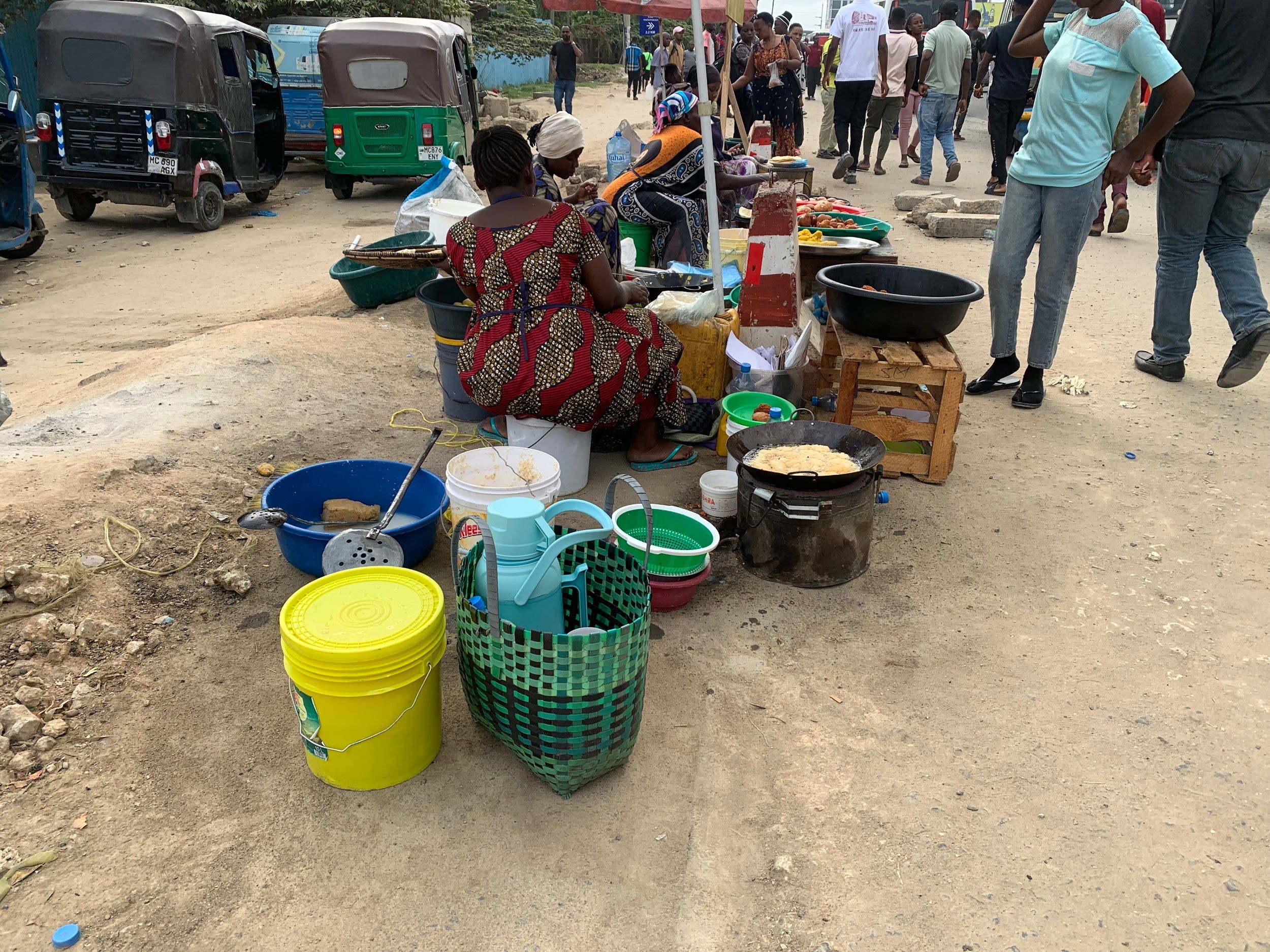
(Food vendors at the bus stop): Motherhood is celebrated until it steps outside the boundaries society approves of.
Traditionally, mornings are meant to look different. A mother wakes early to prepare breakfast for her husband and children, making sure everyone is ready to step out into the world. If she works too, she becomes a master of time, rising before dawn and leaving the house before most people are fully awake. Even then, her labor is invisible. She holds the household together; cooking, cleaning, budgeting, caregiving and often while contributing financially as well.
She is the glue. The backbone. Rarely the headline.
Now remove the husband from that picture. The responsibilities don’t lessen. They double.
For a single mother, there is no shared load. The child is entirely hers — emotionally, financially, logistically. She must earn and nurture at the same time. If she has money, she hires help. If she doesn’t, her child comes with her everywhere. To work. To meetings. Or to the roadside stall.
Economically, this reality pushes many single mothers into informal work. The International Labour Organization estimates that over 76% of employed women in Tanzania work in the informal economy, a sector characterized by unstable income, lack of maternity protection, and minimal job security (International Labour Organization [ILO], 2018). For single mothers, informal work is often not a preference, but the only option flexible enough to accommodate childcare.
Workplaces are rarely designed to accommodate this reality.
I know this firsthand. I spent a full year as a communications intern while my childless colleagues were promoted. I went on unpaid maternity leave. When I returned, the important assignments and work trips quietly passed me by. No one said it outright, but the message was clear: I was no longer reliable in the way the system required.
And even then, I was lucky.
On my way home some evenings, I pass women selling tomatoes or cooked food by the roadside. Their children crouch beneath wooden tables, shielding themselves from the sun or dust. Sometimes it’s late. Sometimes it’s unbearably hot. I imagine the calculations these women make every day; like how much they need to sell, who will watch the child, what happens if the child gets sick. Our systems were never built to protect single mothers. At best, they tolerate them. At worst, they punish them.
This is not a personal failure. It is a systemic one. Yet alongside this blame exists a quieter truth. Single mothers are already holding together the social fabric that institutions fail to support. Through informal work, shared childcare, and relentless emotional labor, they ensure children eat, attend school, and survive. This reality is rarely celebrated, but it is deeply understood by those living it.
Anthropological studies in East Africa have long shown that women bear disproportionate blame for relationship breakdowns, regardless of circumstance, while men’s absence is more easily normalized (Silberschmidt, 2005). Single motherhood becomes not just a social condition, but a moral verdict that follows women into work-spaces, relationships, and public life.
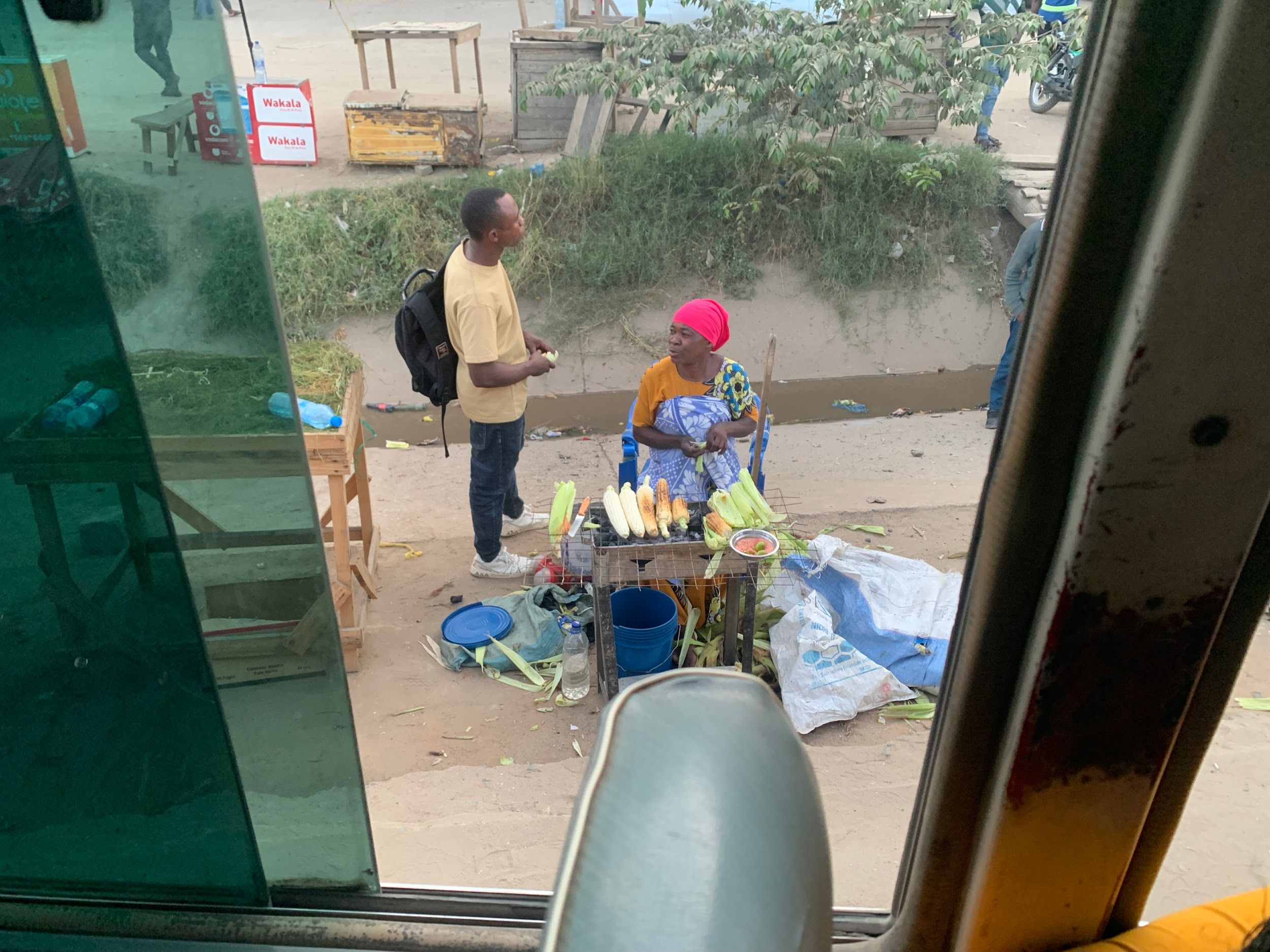
(Woman selling maize on the road): For many single mothers, work and care-giving happen in the same space by necessity, not choice.
The burden does not stop at money or labor. There is also the social cost.
Single mothers are expected to disappear from desire, from romance, from softness. In many spaces, they are treated as “used goods,” women whose past disqualifies them from future love. Dating a woman with a child is framed as “baggage,” as if her motherhood exists solely as a liability.
The assumption is always transactional; that she must be seeking rescue, money, or replacement. Rarely is she allowed complexity. Rarely is she seen as a woman who still hopes, still loves, still wants companionship without surrendering her dignity. I remember a call from my cousin, her voice breaking. Her partner is absent, rarely contributing, rarely present.
Every conversation about child support turns into a fight. She works two jobs. Her mother, while frail, helps care for the child when she has to work. That experience hardened something in her. She told me she was done with men, done with romance altogether.
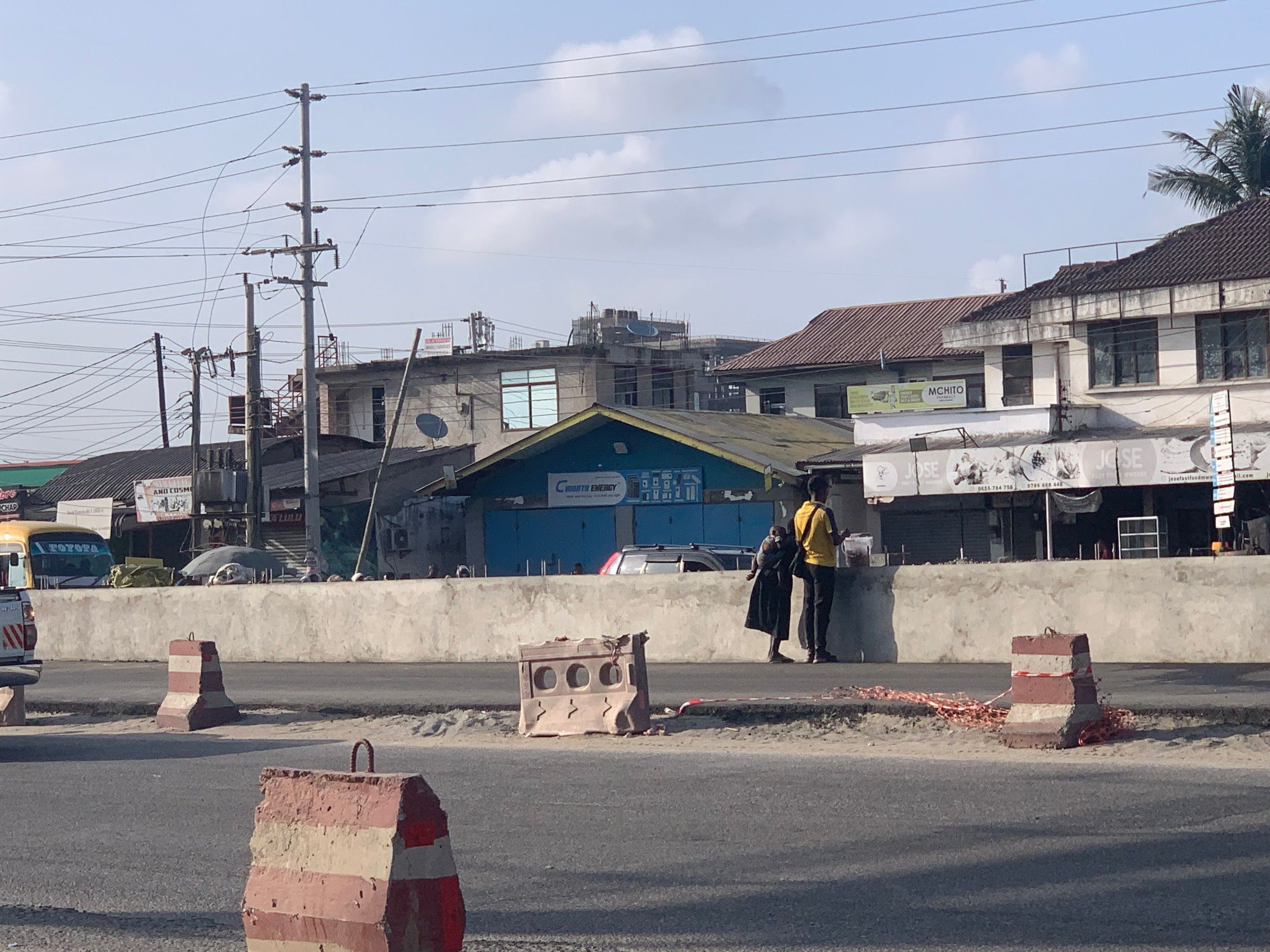
(Young woman with child on back): When systems fail, blame looks for the nearest woman.
This is how the hurt spreads. Quietly. From adult to child. From relationship to worldview.
And when things go wrong, for instance; when a child struggles, acts out, deviates from expectations, the blame returns, full circle, to the mother. “What do you expect?” people say. “He was raised by a single mother.” The judgment is relentless. And almost always gendered.
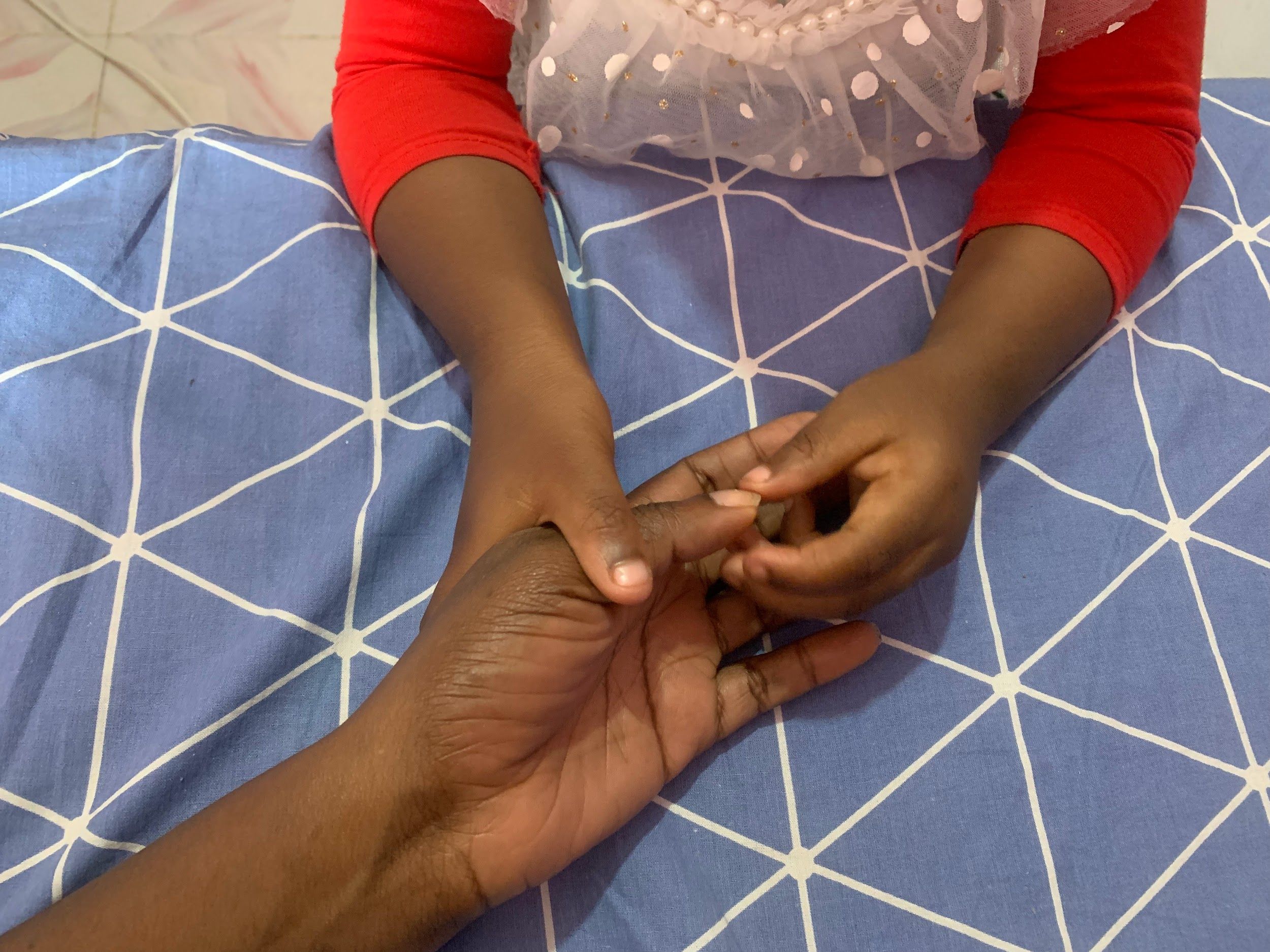
Despite everything, love remains the constant
Still, we keep going.
We raise these children knowing we cannot replace every absence. Knowing we will fall short in ways we cannot predict. We love them fiercely anyway. We work anyway. We wake up at 4:45 a.m. anyway.
I am writing this now because silence has stopped feeling neutral. Because my child is watching. Because the casual jokes, the blame, the exclusion are not abstract. They shape how children understand their worth and how society decides who deserves care.
Beneath the labels and the stigma, a mother is still a woman. A human being. Someone who feels exhaustion and desire and grief and hope all at once.
Motherhood, single or otherwise, is not a weakness nor a mistake nor a moral failure.
Motherhood is labor. It is sacrifice. It is resilience shaped by circumstance.
And until our systems, cultures, and conversations learn to hold that truth with honesty and compassion, mothers like me will continue doing what we’ve always done: surviving quietly, loving loudly, and carrying far more than anyone sees.