Photos by: Nuuradin Abi
Qool-Caday village in Maroodi Jeex Region illustrates how global and regional dynamics converge at the local level. Located approximately 40 kilometres from Hargeisa and close to the Somaliland–Ethiopia border, Qool-Caday is home to an estimated 6,000 people living in around 1,000 households. The village’s economy is overwhelmingly pastoral, with about 85 percent of households relying entirely on livestock herding and the remaining 15 percent practicing agro-pastoralism. Community life is shaped by strong social ties, shared traditions, and collective coping mechanisms in the face of recurrent droughts, water scarcity, and fluctuating grazing conditions, overseen by a village head and a community committee appointed through district administration.
However, the accelerating impacts of climate change have pushed this resilience to its limits. Recurrent droughts and environmental degradation in the Qool-Caday area have caused significant livestock losses, undermining pastoral livelihoods and food security. As pastures dried up and water sources disappeared, many families were forced to migrate in search of survival.
This displacement has had profound consequences for children’s education. During a school visit in September 2025, the school principal, Mr. Abdirisaq, reported that enrollment had dropped from 80 students to just 35, as 45 children migrated with their families. Each empty desk reflects a child whose education has been interrupted by drought and displacement, and a community struggling to safeguard its future amid growing uncertainty. In Qool-Caday, climate change is no longer an abstract threat; it is an immediate crisis reshaping livelihoods, disrupting education, and placing the prospects of the next generation at serious risk.
Banka Qool-Caday: A Lifeline for Pastoral Livelihoods
One of the distinctive features of Qool Caday village is an expansive area known as Banka Qool-Caday. This rich landscape spans approximately 15 to 20 km² and boasts fertile soils, making it an ideal environment for grazing livestock and nurturing a variety of vegetation. During the rainy season, the land transforms, with lush grasses thriving and vibrant foliage flourishing, creating a picturesque scene that highlights the natural beauty and productivity of the region.
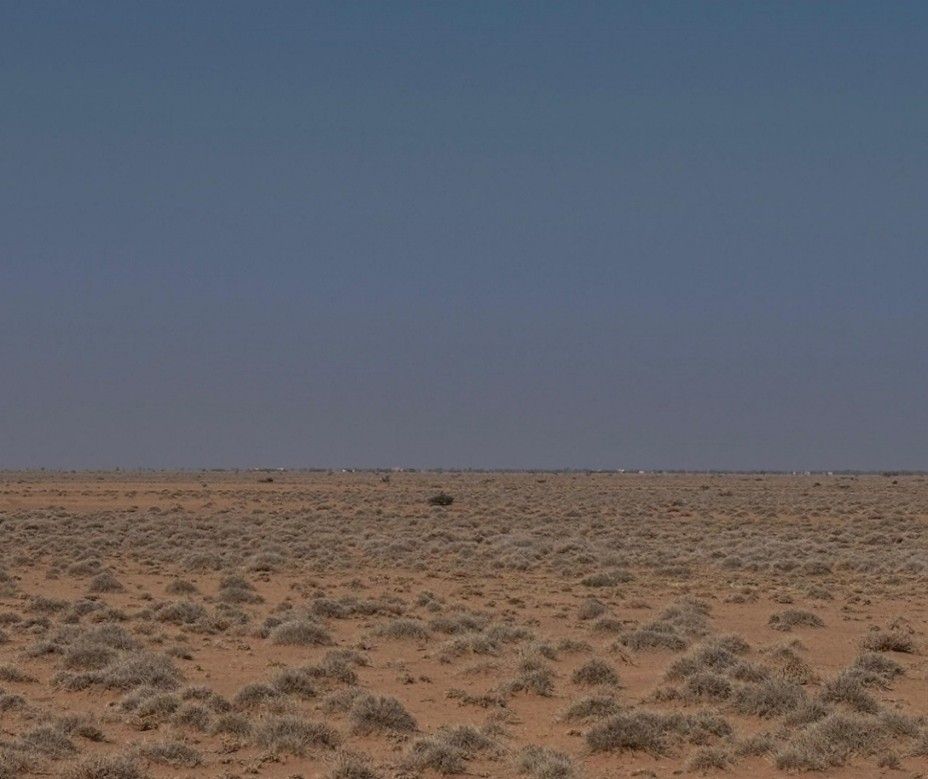
Destruction of environment and degradation due to climate change- Qool caday rangeland- Photo by: Nuuradin Abi, Sept 2025
The rangeland of Banka Qool-Caday, nestled in the Salaxlaly district of Somaliland, is a region steeped in history and tradition. It was once managed as a protected rangeland, locally known as SEERO, under the stewardship of the Somali central government. Access to these pastures was deliberately restricted and closely supervised, allowing the grasses to regenerate and maintain their richness. Local leaders collaborated with the government to ensure that pastoralists could utilize this vital resource during the demanding dry seasons, when grass and water were scarce.
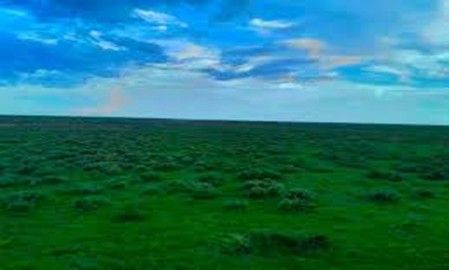
Qool caday rangeland during the rainy season 2024. Source: Facebook
The Decline of Banka Qool-Caday
Spanning approximately 15–20 km², Banka Qool-Caday was more than just land; it was a lifeline. Its fertile soils and verdant vegetation provided a crucial dry season grazing refuge for pastoralists, sustaining livestock that underpinned the community's survival, economy, and cultural identity. For generations, this rangeland supported the traditional way of life, ensuring the continuity of pastoralist livelihoods even during periods of drought.
However, the disintegration of the Somali central government in the early 1990s marked a profound shift. With the weakening of formal management structures, community customs and regulations that had once governed sustainable land use began to disintegrate. The cherished rangeland faced unprecedented challenges, succumbing to the pressures of overgrazing. The unchecked movement of livestock led to a dramatic decline in grass cover and the gradual degradation of this once-thriving ecosystem, threatening the very livelihoods it had sustained for generations.
This historical trajectory illustrates that the only accessible grazing areas for many communities across Somaliland, particularly in the Maroodi Jeex region, are frequently disrupted during both rainy and dry seasons. As families are compelled to migrate in search of pasture, tensions often arise with neighboring communities, including those from Qool-Caday, highlighting how environmental change, governance, and social dynamics are deeply interconnected.
Obstacles and issues of Qool- caday village
In Qool-Caday and the surrounding pastoral areas of Somaliland, climate change and recurrent droughts are gradually erasing a traditional way of life. Over the past decade, drought frequency has increased, and prolonged dry seasons have caused severe degradation of grazing lands and water resources, leaving once-productive rangelands barren and unreliable. Pastoral households that depended on mobility and seasonal rains now face failing rainy seasons and chronic water scarcity, driving significant livestock losses and reduced income from livestock products (Somaliland Climate Assessment, 2020; FSNAU/FEWS NET, 2023).
During the most recent prolonged drought cycle from 2020 to 2023, household herds in many pastoral and agro-pastoral zones declined sharply: goat and sheep holdings dropped by as much as 30–35 percent below baseline levels, and camel and cattle numbers also fell substantially due to deaths and distress sales forced by lack of pasture and water.
For many families, milk production, once a steady source of nutrition and cash, collapsed because animals are weakened, fewer young ones are born, and water scarcity cuts body condition and lactation. This loss of livestock assets drives households to sell remaining animals at low prices just to buy essential food or pay for water, effectively liquidating their savings and safety net.
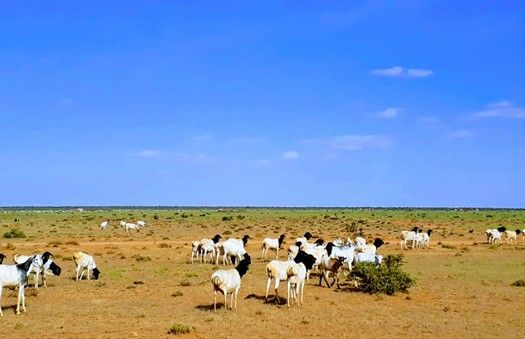
Climate variation impacts on Qool caday rangeland August 2024. Source: Facebook
Climate Change and the Loss of Pastoral Identity
Community surveys in Somaliland reported that during the peak of recent droughts, as many as 60 percent of households lost most or all their livestock, forcing many to migrate or move into urban peripheries where they stay with relatives or live in improvised settlements.
Some return when the rains come, or aid reaches the village, hoping to rebuild what they lost, only to find that things have irrevocably changed. Ahmed, a Somali herder from Qool Caday village, recalled the struggle during a recent drought: “We rely on livestock, and if the animals become weak, there is nothing left to bring us back. The land feels empty, and so do our hearts.”
Even those who manage to reach safer ground sometimes choose not to go back. Nimo, a pastoralist who settled near a town after losing most of her goats, explained the wrenching choice: “If I could get some goats, then I would return to herding. I can’t feel good about being in a settlement. It has been forced on me. I don’t wish it for my life.”
Many never return. Without herds, pastoral life cannot restart, and towns with casual work or relief become a permanent refuge. Mohamed, describing how recurrent dry seasons are eroding his way of life, said bluntly: “There are recurring droughts in our country, and the climate is unpredictable, so the traditional way of pastoralist life is no longer sustainable.”
This ongoing struggle leads not only to economic shocks but also to the emotional toll of losing cherished animals, which are more than just sources of income. In pastoralist communities, livestock hold deep cultural significance: they are symbols of wealth, social status, and identity. Cattle, goats, and camels are central to marriage negotiations, social obligations, and community standing. Losing animals, therefore, represents not just financial loss but also a blow to personal and social dignity, eroding the cultural fabric that binds the community.
Economically, the impact is equally devastating. Livestock are the primary source of food, income, and savings, and families rely on milk, meat, and the sale of animals to cover school fees, healthcare, and daily expenses. When herds are decimated by drought, disease, or conflict, households are forced into casual labor, reliance on aid, or migration to towns, breaking traditional pastoralist livelihoods. The combination of cultural loss and economic collapse creates a cycle of vulnerability, where the community struggles to recover, children may leave school, and traditional knowledge about herding and land management risks disappearing.
The influx of migrants from Ethiopia in 2022, searching for grazing land, has intensified competition for these already scarce resources. While the exact number of arrivals from the Ethiopian side remains undocumented, the effects are evident: climate change has forced herders on both sides of the border to adopt increasingly frequent and unpredictable movements, reshaping the lives and livelihoods of entire communities. This movement has increased in recent years as the climate crisis and droughts in the Horn of Africa continue to worsen. The struggle for survival in response to changing environmental conditions can lead to increased conflict as different groups compete for limited pasture.
Resource Scarcity and Pastoral Migration Conflict
In Somaliland, communal clashes in Ali Sahid village in the Togdheer region, which resulted in deaths and injuries before the government intervened to restore peace in Burao city in 2023, highlight the urgent need for effective resource management and conflict resolution strategies.
The consequences of rangeland degradation, particularly in areas like Banka Qool-caday, have manifested in various troubling ways. This deterioration has led to significant environmental challenges, including the loss of fertile soil, shifts in grassland composition, and the encroachment of desertification. Factors such as climate change and the increasing movement of pastoral communities further exacerbate these issues, compounding the stresses on the land and altering the delicate balance of the ecosystem.
The host community of Qool-Caday is facing growing challenges as pastoral migration places increasing pressure on the surrounding rangelands. The arrival of new groups driven by drought, livestock loss, and the search for scarce pastures has intensified competition for essential resources such as water and grass. These resources, once sufficient to sustain the community, have become increasingly limited due to climate change and overuse.
As a researcher during my PhD Dissertation in Sept 2025, I found the elders expressed deep concern about the growing pressure on the rangelands. They spoke with quiet sincerity, describing how the constant movement of pastoralist groups into the area has strained relations between communities. With a sense of sorrow, they explained that the irregular influx and mobility of different groups often intensify tensions over the dwindling natural resources that everyone depends on.
“This kind of movement brings many challenges,” one elder emphasized. “People are desperate, and when resources are low, disagreements can quickly turn into conflict.” According to the community, the competition for pasture and water has at times escalated beyond simple disagreements, leading to outbreaks of violence and discord between host communities and migrating pastoralists. For Qool-Caday, a village already struggling with severe drought and declining livelihoods, these conflicts add yet another layer of hardship, deepening the vulnerability of families who are trying to survive in an increasingly fragile environment.
Drought, Water Scarcity, and the Cycle of Forced Mobility
Similarly, Qool-Caday has been severely affected by limited rainfall during recent seasons; an unmistakable consequence of ongoing climate change. The reduced rainfall has dried up many of the natural water sources the community once relied on, leaving households struggling to secure enough water for both people and livestock. As grazing lands shrink and wells become depleted, the community has suffered heavy livestock losses, weakening their primary source of income and food security.
These harsh conditions have also triggered increased movement and displacement. Many families, unable to survive on the diminishing local resources, have been compelled to migrate in search of areas that offer better access to water and pasture. This constant movement places additional strain on already fragile resources, both within Qool-Caday and in the places, they travel to, intensifying competition and hardship across the region.
Impact of Climate Change on Livelihoods
Climate change has led to prolonged periods of drought that have become a recurring challenge for the community of Qool-Caday and the country of Somaliland as a whole. This persistent lack of rainfall has resulted in a severe scarcity of water and grazing areas, creating dire consequences for local livelihoods. The community, reliant on livestock for its income, is struggling to sustain both its animals and them as the harsh conditions continue to impact their way of life. The once vibrant landscapes are now barren, leaving families in a constant battle against the elements to secure their livelihoods.
Mrs Halima Jama requested that her picture not be used. She shared her story with a mix of strength and sadness. Once the proud owner of 500 goats and sheep, she now has only 50 left after years of recurring droughts wiped out most of her livestock. The severe weather conditions of the past year were particularly devastating, leaving her family in a fragile and uncertain situation.
She spoke openly about the difficult choices she has been forced to make. With her livestock nearly gone, she could no longer rely solely on pastoralism. Instead, she made a courageous shift, opening a small shop in the village to support her family and rebuild her livelihood. Halima’s experience reflects both the harsh impact of climate change and the remarkable resilience of Qool-Caday’s women. Her journey shows how environmental pressures are pushing families to adapt, innovate, and find new ways to survive in a rapidly changing world.
During the interview, community leaders highlighted the deep struggles facing families in Qool-Caday. Many have endured severe losses of livestock due to the relentless effects of climate change, combined with a critical scarcity of water and grazing land. Where families once owned around 280 animals, they now often have fewer than 70 remaining. This dramatic decline affects more than just their livelihoods; it threatens the very fabric of their way of life.
During community discussions at Qool Caday on September 10, 2025, as part of my research for a PhD dissertation on the effects of climate change-induced resource conflict on pastoral migration dynamics in Somaliland, many community elders expressed their deep concern about the increasing pressure on the rangelands. They spoke sincerely about how the constant movement of pastoralist groups into the area has strained relations between communities. With a sense of sorrow, they explained that the irregular influx and mobility of different groups often intensify tensions over the dwindling natural resources that everyone relies on.
Community Response: Resilience and Innovation
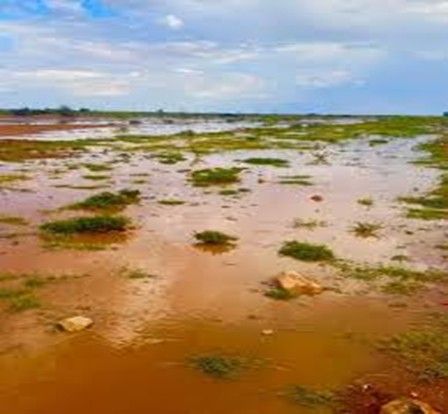
Flooded grazing land in Qool-Caday, rangeland April 2024. Source: Facebook
In the heart of Qool-Caday village, the community has faced the harsh realities of climate change with remarkable creativity and resilience. Determined to safeguard their livelihoods, residents came together to develop innovative solutions that would sustain both their environment and their way of life. They built water-harvesting berket systems, ensuring that clean water remained accessible even during dry spells. Simple plastic containers and other clever storage methods allowed them to conserve this precious resource efficiently. It also protects their land from the ravages of soil erosion. The community constructed small soil pond structures, turning challenges into opportunities for environmental stewardship.
Their efforts extended beyond water and soil. Through organized grazing, they maintained healthy pastures, balancing the needs of livestock with the land’s capacity to regenerate. Seeking economic stability, villagers established local markets and explored alternative income-generating activities, creating new pathways to prosperity.
Collaboration became a cornerstone of their approach. Local farming cooperatives emerged, fostering shared knowledge, mutual support, and collective resilience in agriculture. Together, these initiatives tell the story of a community that refuses to be defined by hardship, one that embraces innovation, protects its environment, and builds a sustainable future despite the challenges of climate change.
Women’s Leadership and Economic Diversification
In Qool-Caday, a quiet shift has been taking place, led mostly by the determination of women. As the challenges of climate change continued to threaten livestock and household income, the community knew they needed new ways to survive and grow. Women stepped forward, opening small shops and vendor stalls that brought new life to the village marketplace. At the same time, a few farmers began experimenting with greenhouses, growing fresh vegetables even during harsh seasons. These small changes created a big impact.
Families who once relied entirely on livestock now had additional sources of income. The money earned from vending, small shops, and greenhouse farming helped households buy food, secure water, and even cover school fees for their children. Through these efforts, Qool-Caday has become a strong example of resilience, showing how simple, community-driven initiatives can transform livelihoods and bring hope to families facing uncertainty.
The community of Qool-Caday has established a community-based early warning system through indoor meetings held during social gatherings in the village. They have also received training from an INGO like ActionAid at the beginning of this initiative, as the community shared information during my research assessment.
Being an oral society, the people of Qool-Caday share knowledge and raise awareness about the effects of climate change and possible ways to cope, combining traditional practices with more advanced methods such as climate-resilient farming techniques, rainwater harvesting, rotational grazing, mobile weather alerts, and participation in community training programs on sustainable pastoralism. One of the members of Qool-Caday village said, "We are now better prepared after receiving training on climate change. It has helped our community improve awareness and establish an early warning system, especially to respond to drought and food.
The community of Qool-Caday has also established a feedback mechanism, using phones and direct calls to regional or district authorities to address support needs and climate-related issues. In addition, the community continues to rely on indigenous knowledge and systems, including rotating grazing areas, constructing soil ponds to conserve water, planting drought-resistant fodder trees, and sharing weather observations through community gatherings
Project Spotlight: Rangeland Rehabilitation in Qool-Caday
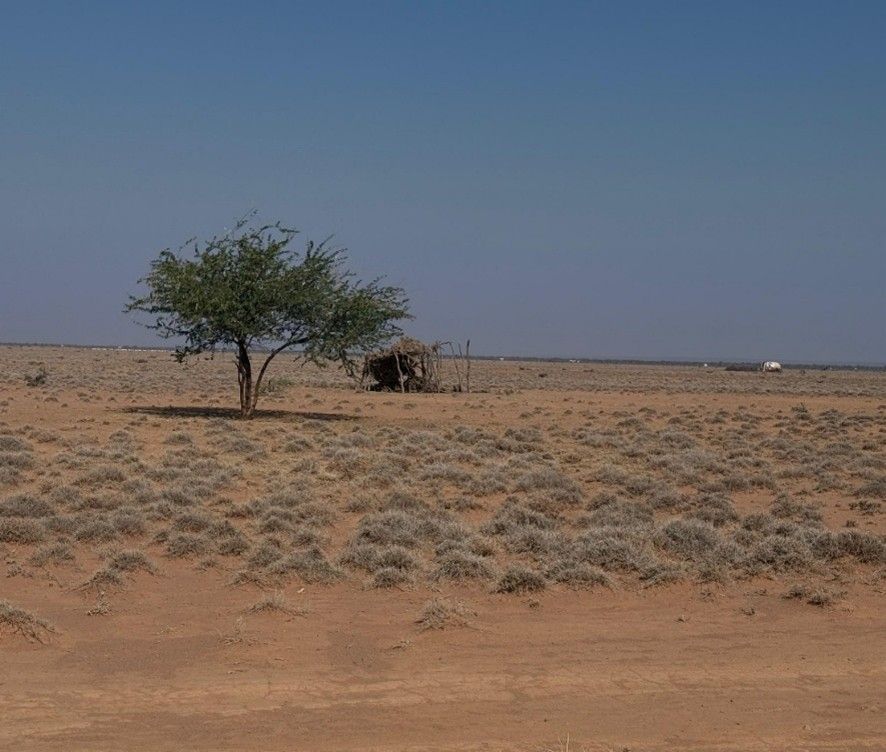
climate crisis on Qool caday rangeland December 2024. Photo by: Nuuradin Abi
The recent partnership agreement between the Somaliland Development Fund (SDF) and the Ministry of Livestock Development marks a major step forward for rangeland restoration in Banka Qool-Caday. Through this collaboration, approximately 10 km² of rangeland have been selected for enclosure and fencing. The purpose of this initiative is to protect the area, promote natural regeneration of pasture, and strengthen resilience against the increasing impacts of climate change. By restoring grass cover and improving soil fertility, the project aims to revive the productivity of the rangeland and provide long-term benefits for pastoral communities who depend on.
The project brings together several important components designed to restore life and opportunity to Banka Qool-Caday. It includes the construction of a large Haffir dam, shallow wells, and other vital water structures that will help communities survive recurring droughts. A new veterinary training school and a climate-livestock research center are also planned, creating a place where young professionals can learn and where new knowledge can guide better rangeland management.
Another key part of the project is the regeneration of grazing areas. By protecting and rehabilitating the land, fresh grass can return, soils can recover, and livestock can once again find the pasture they need. Training programmes for pastoralist communities will teach new skills from sustainable grazing to livestock health management, ensuring that families are better prepared for tough seasons.
During times of drought, the pastoralist community in Qool-Caday and the surrounding areas will benefit directly. They will have access to fodder reserves, clean water from the Haffir dam and shallow wells, and improved livestock treatment services. For many pastoralists, this project represents hope, a chance to protect their animals, safeguard their livelihoods, and build a stronger, more resilient future.
The project is estimated to cost approximately $6 million, as announced by H.E. Mr. Abdirahman Mohamed Abdilahi “Cirro,” President of the Republic of Somaliland, during the foundation stone ceremony in September 2025. This initiative brings new hope to the people of Qool-Caday and to pastoralist communities across Somaliland, particularly in the Maroodi-Jeex region.
Through initiatives such as rehabilitating rangelands, improving water access, and supporting sustainable livestock management, the project aims not only to strengthen immediate livelihoods but also to build long-term resilience against drought and climate change. Over time, the plan envisions empowering communities with the knowledge, infrastructure, and adaptive strategies needed to sustainably manage natural resources, diversify income sources, and reduce vulnerability to environmental shocks, ensuring that future generations can thrive despite the challenges posed by a changing climate.
Outlook of the story
The story of Qool-Caday highlights both the severe challenges posed by climate change and the remarkable resilience of its pastoralist community. Despite repeated droughts, livestock losses, and shrinking grazing lands, residents have drawn on traditional knowledge, innovative practices, and collective action to survive and adapt.
The $6 million rangeland restoration project complements these local efforts by providing water, rejuvenation of grass, infrastructure, training, and sustainable resource management, reinforcing the community’s capacity to withstand environmental shocks. This story demonstrates the importance of combining local wisdom with targeted interventions, showing that meaningful support for pastoralist communities must address both ecological restoration and human resilience to secure livelihoods and hope for the future.