Where Are You From, Really?
There are stories you grow up around, quiet as wood smoke in the evening air, but you do not realise they are shaping you until the world asks who you are. My father, every time he eats, breaks off a slice and hands it to me. “This is the law of the jungle,” he says. “You must share with your child.” I once thought it was just a playful habit. Now I understand it as inheritance. A small ritual teaching me that identity is not just claimed in words, but carried in what we pass down.
Where are you from?
Not the town your parents moved to in search of work.
Not the city estate you list on LinkedIn.
I mean your clan.
What is your story?
In Kenya today, that question is rarely neutral. It carries the aftertaste of the 2007–2008 post-election violence. A season that hardened tribal lines and made identity feel dangerous. I was a child then, but I remember the tension in adult conversations, the way certain names were whispered. Since then, rapid urbanization has blurred rural roots, digital culture has flattened identity into flags on bios and hashtags, and many of us have chosen safety in vagueness. We say “I’m Kenyan”, which is true, but we stop there and yet, in that careful avoidance we have quietly stepped away from one of the most meaningful ways African societies have understood themselves for generations. We learned that naming tribes could divide. What we did not realize is that silence could also disconnect.
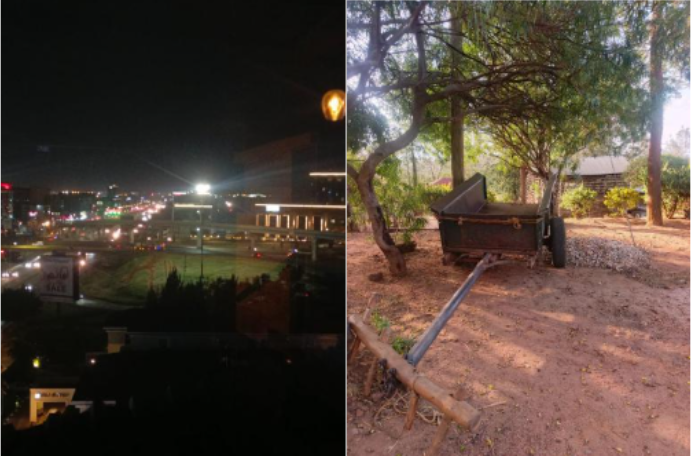
Nairobi skyline and an animal cart in a Kamba homestead. Rapid urbanization has blurred rural roots and how we relate to ancestral land. Photos by Ngina Mualuko
Not In Coin, but In Breath
These stories live in deliberate pauses during long, dusty drives across the rolling hills of our land. They live in the smell of rain before it touches the red soil. They live in the way a father clears his throat, that subtle sound signaling a shift from the ordinary to the ancestral. For the longest time, Amũũnda was simply my answer to a question when asked. A label. A dry fact on a family tree. It was not yet a song.
That changed the day my father chose to hand me my inheritance. Not in coin or title, but in breath.
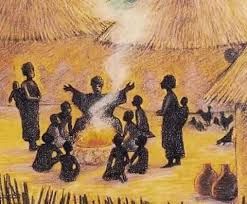
Photo of an elder telling a story to children around fire. Source : Facebook
This is how oral tradition survives. It does not announce itself loudly. It whispers. In kitchens, on verandas, in moments when one generation decides the other is finally ready to listen.
Born at the Margins: Mbũsi and the Making of a Clan
The Amũũnda clan of the Kamba people traces its heartbeat back to a woman named Mbũsi. A woman from the Akitondo clan. According to oral tradition, Mbũsi was cast out of her community. In some tales, she was an unmarried woman who became pregnant; in others, a wife displaced by famine or social conflict. The details shift, as oral histories often do. What remains constant is the exile. She was pushed to the margins and forced to survive in the mũũnda, the cultivated fields beyond the safety of the homestead.
It is there, among furrows and seasons, that she gave birth to a son. She named him Mũũnda (field).
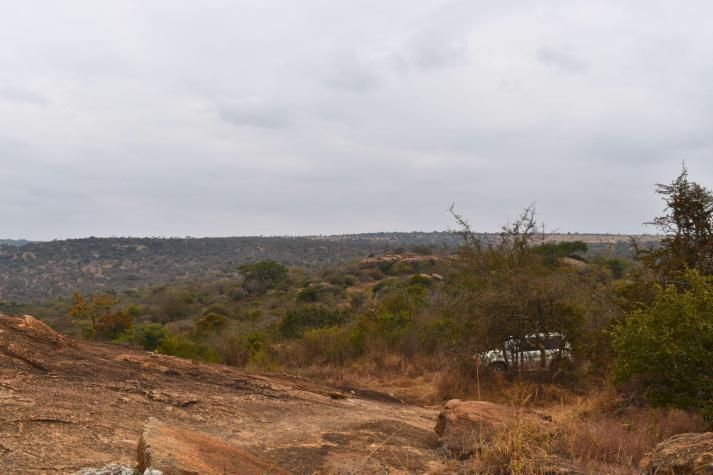
A photo of a field in Lukenya, Machakos County. The word mũũnda (field) is central to the origin of the Amũũnda clan. Photo by: Kwote Afrika
I often think about that naming. How radical it is to refuse erasure. To take a place of rejection and turn it into an altar of origin. Mbũsi raised her son in the fields and taught him that the land does not judge; it only responds to the hands that tend it. From mũũnda came the Amũũnda — the People of the Field — a clan historically known as farmers, custodians of land, and keepers of soil knowledge.
The Porcupine’s Lesson: Quiet Endurance and Sacred Boundaries
Resilience did not arrive later. It was there at the beginning.
That resilience is embodied in our totem: the porcupine (nzee). The porcupine is grounded, unassuming, and quiet. It does not seek confrontation, but it does not retreat easily either. Its strength lies in its boundaries. Among the Amũũnda, harming or eating a porcupine was taboo. To do so was to dishonor ancestors who survived by knowing when to withdraw into the earth and when to stand their ground until the quills of their character made them untouchable.

Porcupine. Amũũnda clan totem (Source: Wikipedia)
Clan Stories as Mirrors, Not Relics
Listening to my father, I began to understand that clan stories are not just about the past. They are mirrors, frameworks. They explain patterns we often overlook. Why endurance comes quietly, why protection does not always look aggressive, why survival can be dignified.
We are living through renewed political polarization. Elections still stir ethnic suspicion. Social media amplifies stereotypes in seconds. People move to cities and marry across communities, sometimes losing language within one generation. Many elders pass on with entire lineages stored only in memory. This is not about nostalgia. It is about cultural continuity under pressure.
When we do not know our stories, identity becomes reactive instead of rooted. It becomes something that can be weaponized rather than something we understand for ourselves.
Endurance today looks different from Mbũsi’s. It may not mean surviving exile in literal fields. It may mean resisting online tribal baiting. It may mean choosing principled leadership over ethnic loyalty. It may mean protecting your mental boundaries in a culture that rewards noise over depth. The porcupine’s lesson still applies: boundaries are not hostility. They are wisdom.
In our part of the world, elders are not just storytellers; they are living archives. Entire lineages live in their memories. Names, places, taboos, blessings. Unrecorded, vulnerable, waiting. Yet today, many of us carry our clan names like loose change in our pockets. Something to produce when asked or during a formal introduction, then tuck away. We have traded long, winding stories for clipped digital summaries. We assume there will be time later. The danger facing oral tradition today is not rejection. It is silence.
And when a story is no longer told, the ancestor it belongs to begins to fade.
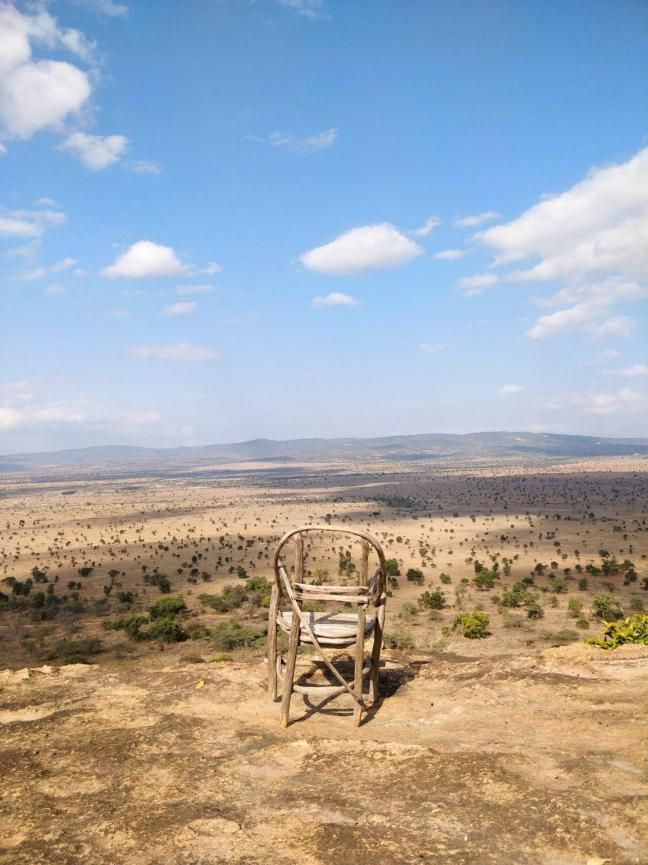
An Empty seat overlooking Lukenya hills view, a reminder that stories untold can disappear quietly. Photo by Kwote Afrika
Bigger Than One Clan
This hunger for origin is not a Kamba solitude. Across East Africa, clans carry similar weights of memory and meaning yet different political events have reshaped how many communities relate to identity.
Among the Luo, oral tradition passed on by Dr Osito Kalle through song, the Kakia clan of Asembo traces its origins to a man named Lee. His story begins with loss. When a hunter from Kano killed his hunting dog, Atwoni, Lee responded with violence, taking the hunter’s life. The matter was brought before the council of elders, the Jodongo, who ruled that restitution must be made.
Lee was required to give one of his daughters in marriage to the deceased man’s brother, Onyango of Kano. The older daughters refused. In grief and anger, Lee cursed them, declaring they would not be remembered. It was the youngest daughter, Kia, who stepped forward. She accepted the weight of responsibility. Lee blessed her and that blessing became inheritance.
Kia married Onyango and relocated to Kano, but the plains were prone to flooding. When Lee later visited them and saw their struggle, he intervened again. This time, he gifted them land back in Asembo piny maber, beautiful land, and urged them to settle there. From that blessing, that relocation, and that act of continuity, the Kakia clan of Asembo is believed to have flourished.
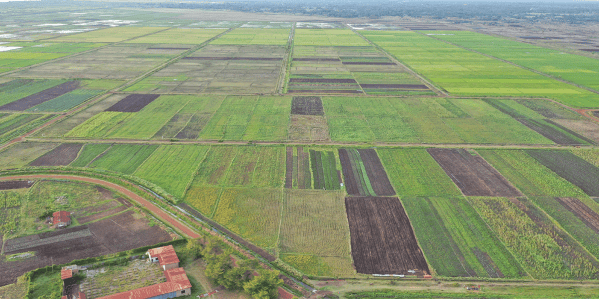
Photo: Kano Plains by the National Irrigation Authority
Different Soils, the Same Rhythm
When you place the Amũũnda story beside the Kakia narrative, you hear harmony. Different languages. Different soils. But the same ancient rhythm.
People pushed to the margins who create legacy.
Women whose choices carry entire lineages forward.
Land that becomes witness, refuge, and inheritance.
These parallels remind us that our stories were never meant to compete, they were meant to locate. They are not about superiority. They are not about ranking communities or hardening tribal lines, something we know too well. The tragedy of 2007–2008 in Kenya or the genocide in Rwanda of 1994 were not simply violence. They were how quickly historical memories were reduced to political arithmetic. The tribe became a voting bloc. Identity became suspicion. Many of us responded by retreating from our roots entirely.
But forgetting is not the same as healing. When history is stripped of reflection, it becomes a weapon. But that was never its purpose. The objective of history is simple and often forgotten: to help us learn, and to help us appreciate those who came before us.
Our ancestors were not perfect. But they made decisions under pressure, scarcity, fear, and love. Decisions that shaped the lives we are now living. To remember them is not to divide ourselves. It is to humanize ourselves.
What unsettles me most is not that these stories evolve. That is natural. What unsettles me is how easily they could disappear. My father told me the Amũũnda story because there was time. Because I asked. Because he remembered. But how many elders are carrying entire histories in their memories, waiting for someone to sit down and listen?
Oral tradition survives through breath, repetition, and care. When those chains break, history does not announce its disappearance. It simply fades.
Why Clan Stories Still Matter
I know we sometimes ask ourselves, why, for what reason? It is quite simple really. A generation disconnected from its roots is easier to divide, easier to manipulate, easier to mobilize by fear. A generation that understands its lineage can choose differently. Knowing where you are from does not trap you in the past. It grounds you as you move forward. It reminds you that identity is not something you invent alone. It is something you inherit and choose how to carry.
For me, being Amũũnda now means this:
Endurance without bitterness.
Boundaries without aggression.
Legacy without superiority.
It means carrying forward resilience with ethical grounding. It means remembering that exile can produce strength, and that identity, when understood deeply, resists being weaponized.
Perhaps this is the invitation.
To ask your parents questions you never thought to ask.
To sit with your elders while the tea is still warm and the memories still sharp.
To listen, not so you can compare or compete, but so you can understand.
Because where we are from does not only explain the dust on our shoes, It explains the fire in our souls.