The University of Khartoum is the oldest, largest, and most important university in Sudan, and one of the most prestigious and long-established universities in Africa and the Arab world. Its foundation was laid on November 8, 1902, under the name Gordon Memorial College, by the British military governor Lord Kitchener, in commemoration of his predecessor, Lord Gordon, who was killed during the attack by the forces of Imam Muhammad Ahmad Al-Mahdi’s army on the Governor-General’s Palace to liberate Khartoum.
Following Sudan’s independence in January 1956, it was renamed the "University of Khartoum", becoming the first African college formerly affiliated with the University of London to sever that relationship and transform into an independent university granting its own degrees.
Its graduates affectionately refer to it as “the Palm University”, a reference to the Royal Palm trees that line the road leading to its main library, while those aspiring to join it call it “the Beautiful and Impossible.”
The university comprises 19 faculties and 17 institutes and research and training centers. It also includes a printing and publishing house, a teaching hospital, a museum, a medical services center, a mosque, and a swimming pool.
In the heart of Khartoum, where the sounds of lectures once filled the halls, gunfire and the roar of aircraft have taken their place. The University of Khartoum was not spared by the war; rather, it found itself at the center of the conflict, bearing witness to the collapse of the academic dream amid the rubble of burned classrooms and closed libraries. The corridors once walked by thousands of students have turned into corridors of fear, while knowledge itself has been postponed, awaiting a ceasefire.
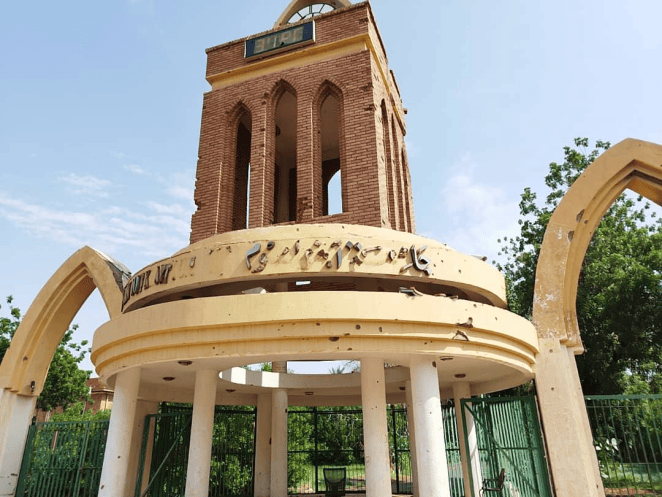
The University of Khartoum campus after destruction struck it. Source: Mujtaba Rizig's Instagram page
But when the sound of weapons finally subsided, even if only slightly, a new voice emerged: “From Liberation to Reconstruction,” an initiative led by the university through the hands of its students, professors, graduates, and even its supporters who never studied there, an attempt to restore life to the university campus and to revive what remains of an academic memory that resisted oblivion.
A young man, young in years, yet carrying within him a spirit far greater than the devastation wrought by war. Upon returning to his homeland, Sudan, he carried in his heart a mixture of pain and hope. As he wandered by chance through the campus of his venerable university, the University of Khartoum, he did not see only shattered stones and bullet-riddled walls; he saw a nation’s memory being violated and a scholarly legacy on the brink of erasure.
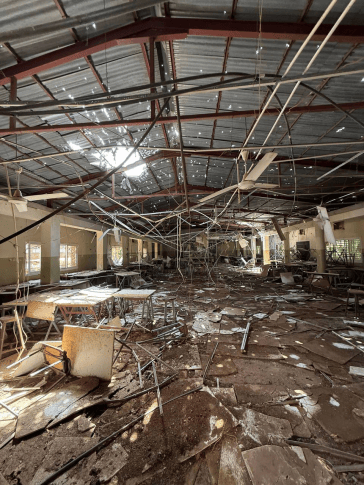
Standing walls bear Khartoum’s memory, bearing witness to the war and patiently waits. Source: Mujtaba Rizig's Instagram page
The initiative “From Liberation to Reconstruction” was not born of prior planning or institutional support, but rather emerged from a silent moment in which longing met devastation. In that moment, the decision wasn't deliberate or planned; it was an inner call, akin to the land calling out to its rightful owner.
The initiative began as an act of resistance against oblivion, a stubborn attachment to a place beloved by all. It was not merely about rebuilding walls, but about reviving a spirit. The motivation was clear: the university is dear to everyone's heart, and no motive could be stronger than that.
Yet the dream was greater, to become a spark that ignites in others the desire to return, and to restore Khartoum’s pulse, street by street, memory by memory.
Amid the ashes, Mujtaba and those who joined him planted a seed of hope. And just as the university was once a launching pad for revolutions, today it is returning as a starting point for rebuilding a nation. A young face that sees in the rubble a beginning, not an end, and turns helplessness into action.
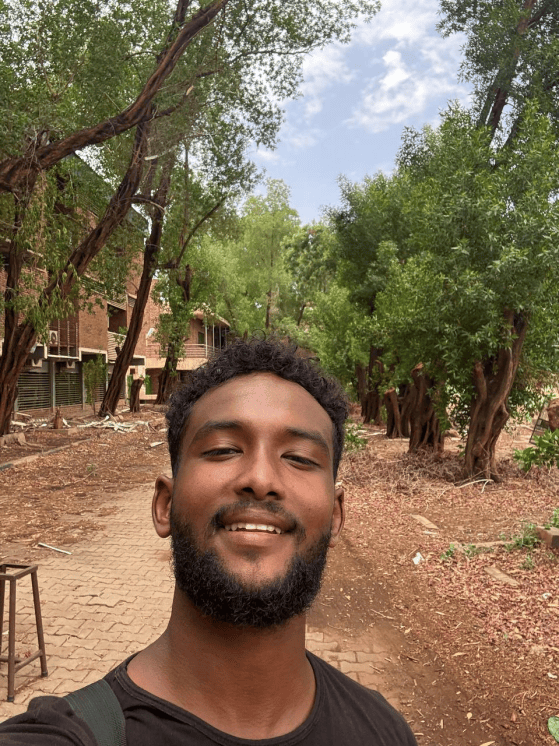
Mujtaba Rizig (founder of the “From Liberation to Reconstruction” initiative. Source: Mujtaba Rizig's Instagram page
He realized that silence is betrayal, and that the first step must begin here: from the seats of knowledge that may tremble, but do not fall. Thus, his initiative “From Liberation to Reconstruction” was not merely a voluntary effort, but a clear declaration that liberation is incomplete without reconstruction. It is a call to restore knowledge to its rightful place as a weapon that does not take lives, but rather gives them life. A step that embodies the dreams of an entire generation, a generation that believes nations are built with knowledge before bricks, and with hope before concrete.
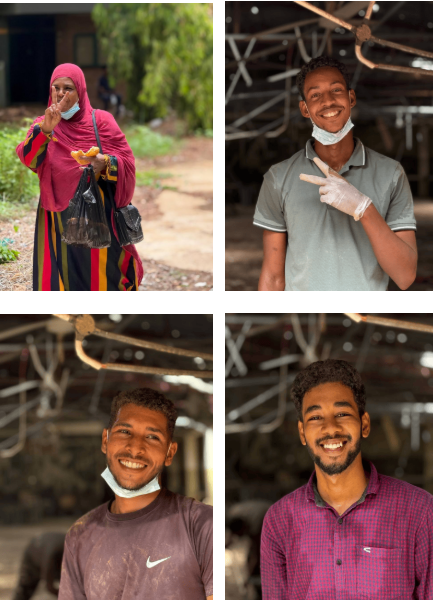
The first volunteers of the initiative inside the university campus. Source: Mujtaba Rizig's Instagram page
From an individual step to a collective journey, reconstruction is not born from a single person, but from hearts united in hope.
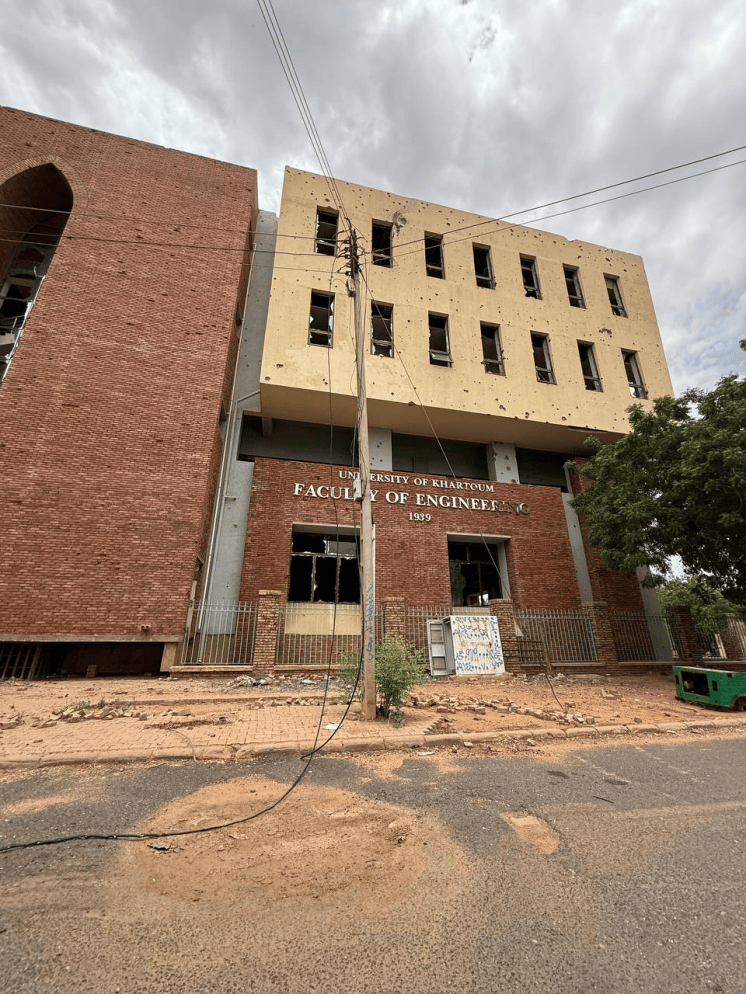
Faculty of Architecture, University of Khartoum, with war bullet holes in its walls. Source: University of Khartoum Initiative Facebook page
There, where Mujtaba studied how cities are designed and halls are constructed, he began to sketch a new reality with his own hands.
It was no coincidence that Mujtaba and his colleagues started at the Faculty of Architecture, an institution established more than half a century ago to plan, build, and reshape spaces. Within its halls, the dreams of engineers who define the city’s features were born, and from there the first steps of reconstruction were launched.
Starting the initiative from architecture meant that the idea was not merely about cleaning ruined walls, but an attempt to bring life back to a place designed to be a symbol of revival and renewal. Architecture here was not just for its students; it was a message that rebuilding begins in minds that believe every rubble can be turned into a foundation, and every empty space can become a platform for knowledge and life once again.
Mujtaba describes that period as the turning point between war and destruction, and between restoration and reconstruction. This is how the initiative got its name: “From Liberation to Reconstruction.” As for Mushtaha Ahmed, one of the volunteers, she describes entering the hall for the first time after the war, saying: "Being back in the lecture hall meant a possible new beginning for me. A mixed feeling between the pain of the past and the tremor of the future."
From that moment on, it was no longer just cleaning, it became a symbol of a broader beginning, as dozens gathered around Mujtaba, including students, university staff and faculty members, carrying brooms as they carried hope, in a scene that embodied the truth that building begins with a single step.
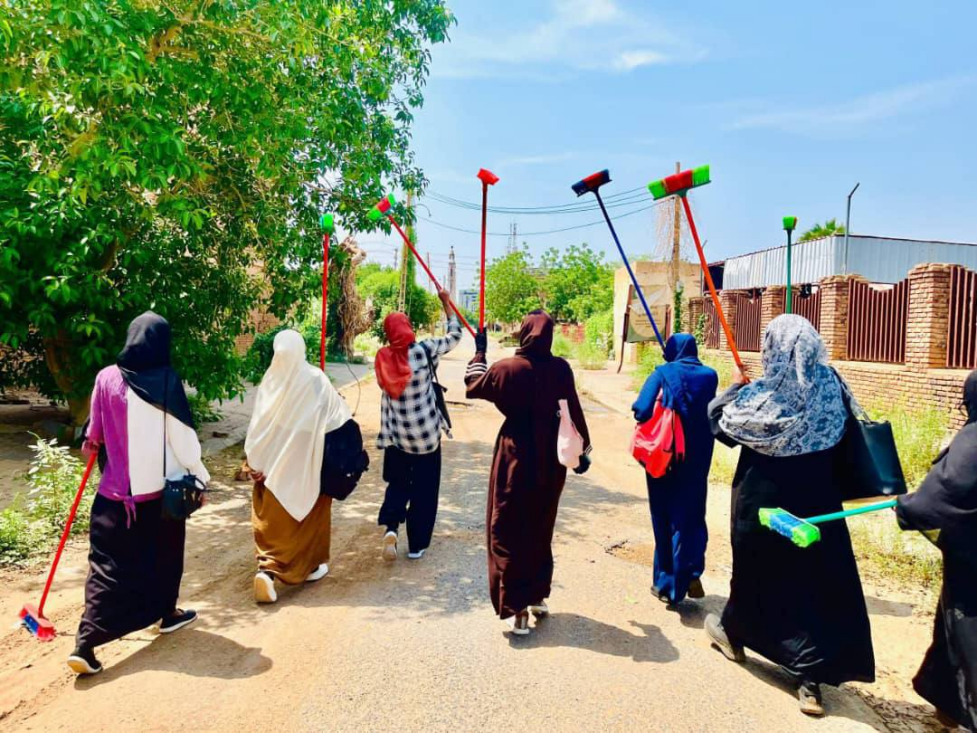
Volunteers of the University of Khartoum initiative, at the height of their enthusiasm. Faculty of Administrative Sciences. Source: University of Khartoum Initiative Facebook page
The brooms were not just bristles and wood; they were like small flags announcing a new beginning. Volunteer Mohammad Al-Hassan added: "What kept us going was nothing but a fleeting glance from a colleague, a brother, or a sister, a look in a moment of exhaustion that carried not pity, but a silent challenge and determination toward our shared goal.
That glance said, 'I am as tired as you, but we are together, and we will not give up.'
It was not a spoken word, but a deeper meaning conveyed without sound. Mohammad continued: "we are in this together, and we will see it through to the end. A small moment, amid the dust of work and the clatter of tools, yet enough to push us beyond the weariness of our bodies and fill us with a stronger spirit. Despite the challenges, we press on; despite the lack of tools, we continue. This is the beginning of the journey… from liberation to reconstruction."
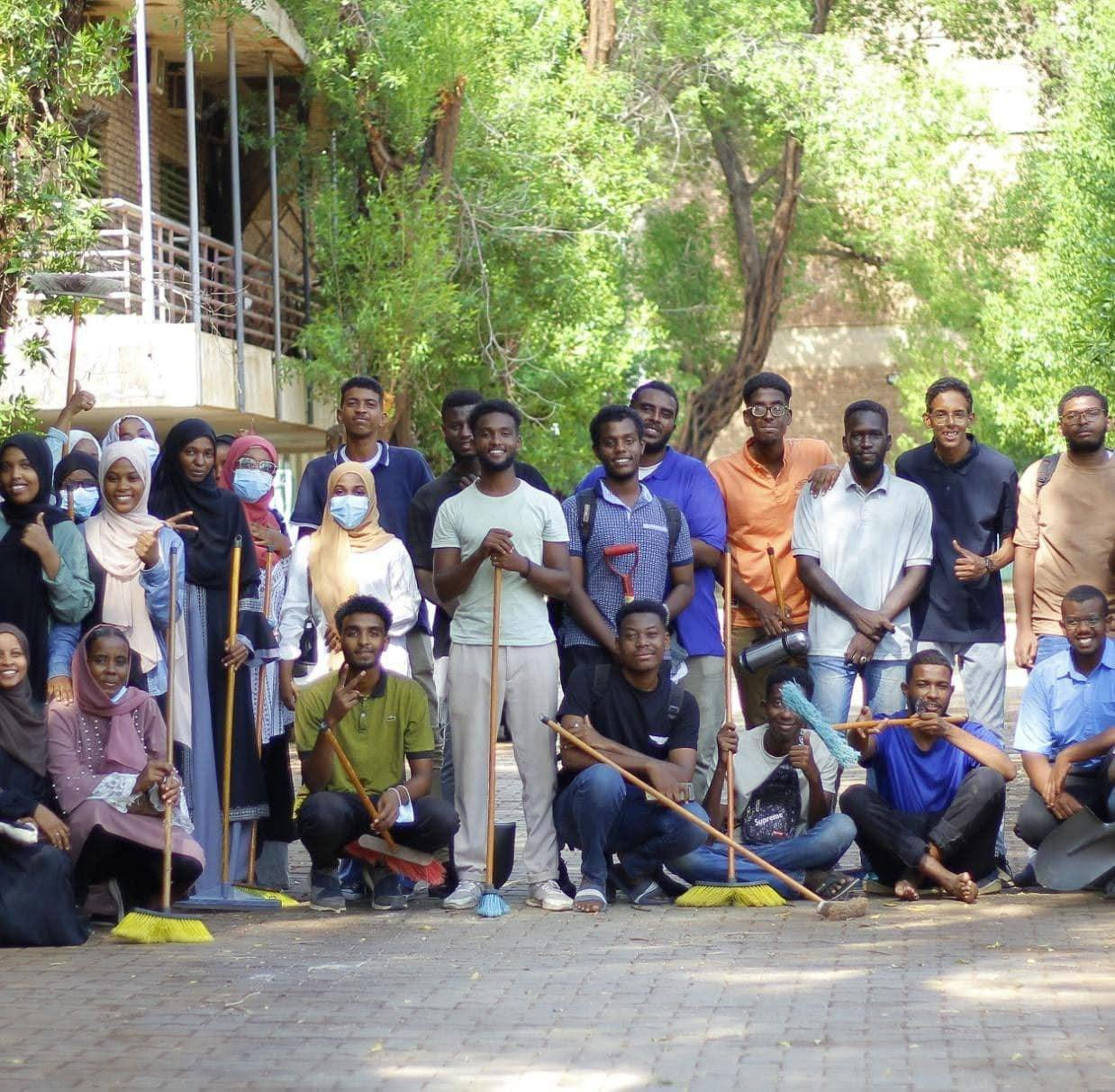
A group photo gathering a large number of initiative participants. Source: University of Khartoum Initiative Facebook page
The initiative began in Studio Five at the Faculty of Architecture with only nine people, but they quickly moved from offices to the open courtyards. From there, the work spread to the faculties of Engineering, Economics, Mathematical and Computer Sciences, and then to the medical complex, with efforts divided between the courtyards in the morning and the dental corridors and staircases for the rest of the day.
There was no strict schedule, but each morning began with a plan. Sometimes they worked separately, sometimes together, while in the more hazardous areas, they waited for the specialists. In this way, the work grew step by step until the initiative developed a beating heart in every corner of the university.
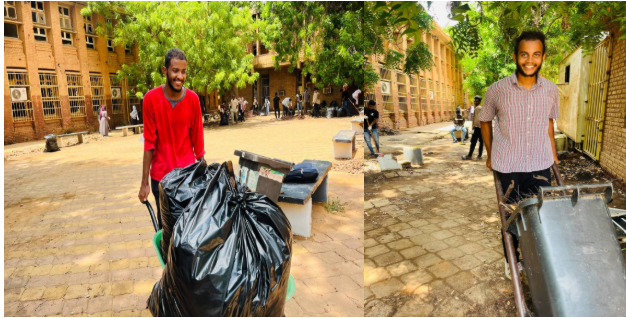
The initiative's volunteers, immersed in joy despite their fatigue. Source: University of Khartoum Initiative Facebook page
Despite their exhaustion, the volunteers insisted on continuing their efforts with a smile, affirming their belief in the youth’s ability to revive the university once again.
The trips coming from Omdurman, Khartoum, and Bahri soon became a special daily ritual. They were not just a means of transport, but journeys filled with singing, laughter, and excitement, making the distance feel shorter, as if they were heading to a mass wedding. And upon their return, despite the fatigue, the songs would precede them, filling the buses with the same spirit.
By 2:30 in the afternoon, the work paused to give way to another moment, no less beautiful: the tea and zalabia activities organized by the Faculty of Sciences. They enlisted one of the university’s aunties who prepared tea and coffee, filling the space with a special warmth, as if it were an extension of the university’s own memories.
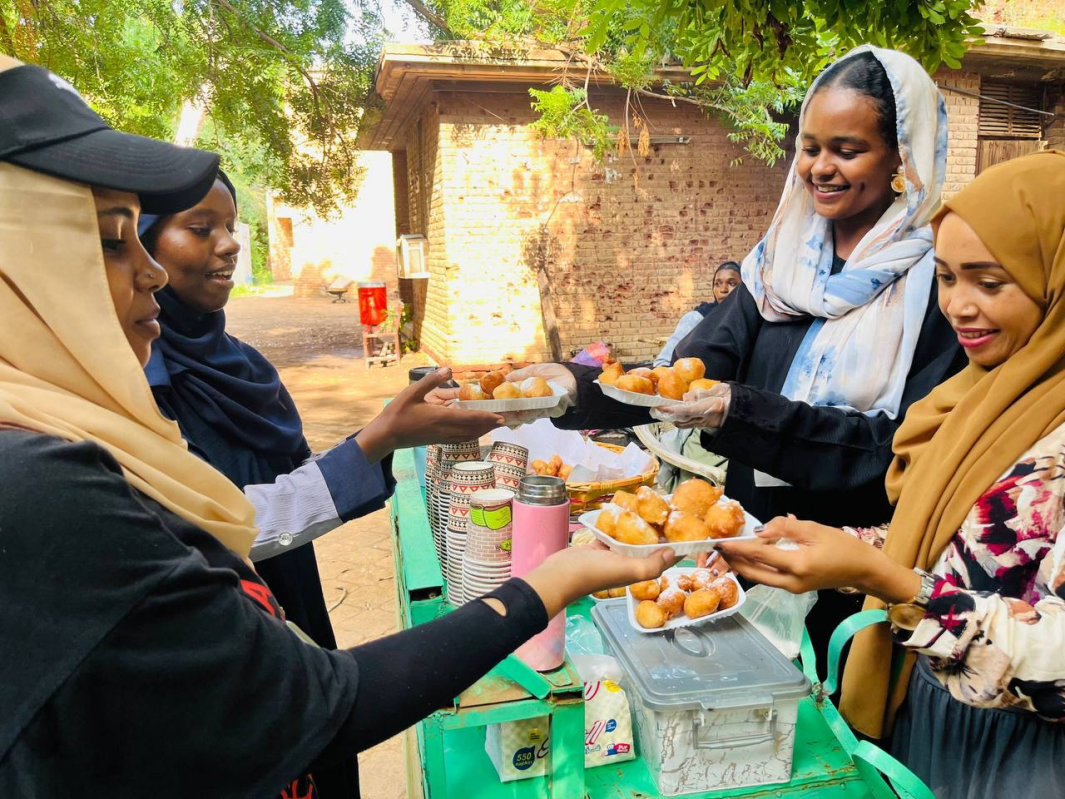
Tea and Ligemat event. Source: University of Khartoum Initiative Facebook page
The tea events turned into a safe space that brought warmth back to the place. Next came the Faculty of Economics with cake and evening gatherings, where students and volunteers shared laughter and play, between cards "Kushtina" and chess, which drew faces immersed in the silence of challenge, while small speakers filled the space with lively songs.
On that day, Muzn stood observing the scene and said sincerely: "The day at the Faculty of Administrative Sciences was the most beautiful day of the initiative. I felt as if the entire university had one heart; students from different faculties working for each other, as if all barriers between them had vanished. Laughter was wider, work easier, and spirits higher than any fatigue."
Her words were more than mere description, they captured the essence of the initiative, which softened the devastation through the determination of its students. Moments of group play became a simple declaration that the university remains a place for souls to meet, not just buildings.
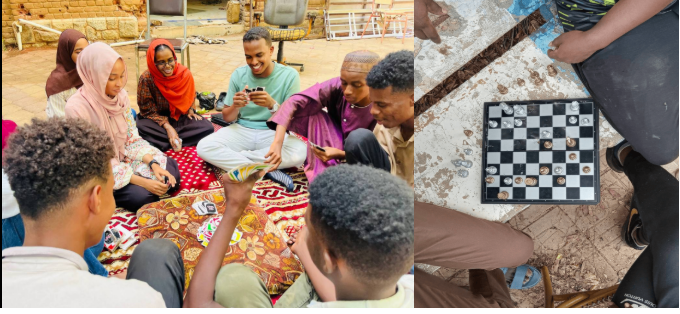
Uno and chess playing time during break time. Source: Mujtaba Rizig's Instagram page
On the morning of Tuesday, September 2, 2025, the Central Campus at the University of Khartoum held a different scene. It was not just a regular day of the initiative’s work; the presence of the university president, Professor Imad El-Din Ardeeb, marked a significant milestone in the ongoing efforts. He came to see firsthand what hope can achieve when met with willpower; walls worn down by events now stand witness to hands rebuilding and planting anew.
The visit was not merely an official inspection, but a deeply meaningful message: that despite everything, the university has the capacity to rise if hands join together. Professor Ardeeb expressed his full support for the initiative, emphasizing that these seemingly small steps are, in reality, seeds for bringing life back to the classrooms. Here, the wisdom is clear: repairing the stone begins with repairing the spirit, and when classrooms are illuminated by joint work, student seats will no longer feel abandoned.
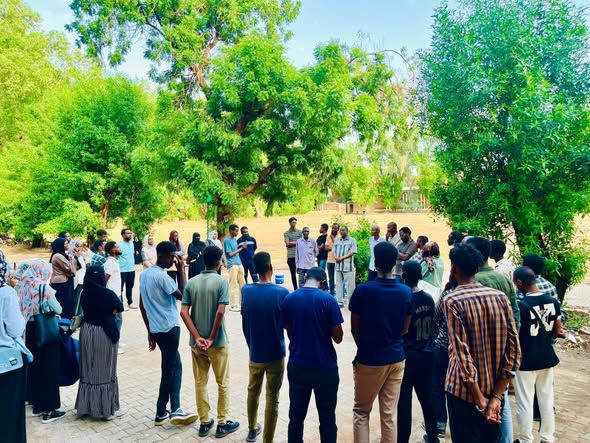
Professor Imad El-Din Ardeeb's visit to the Central Campus. Source: University of Khartoum Initiative Facebook page
The visit represented official recognition of the students’ efforts and raised the question of the administration’s role in transforming individual initiatives into an institutional vision for the university’s revival. Thus, the initiative was not merely cleaning stones and rubble, but reviving a spirit that was close to being extinguished. In their laughter, in their songs on the trips, in their chess and Kushtina games, in the scent of tea and ligemat, and in hands extended to help beyond their own faculties, a new university was born.
A university is built not only with walls, but with determination and hearts that believe what has been destroyed can be rebuilt. The scene was more than a student effort; it was a lesson that devastation cannot prevail when souls unite, and that life, no matter how many doors are broken, will return to open its windows in hands that know the meaning of belonging.
Yet the question remains: Is the enthusiasm of youth alone enough to restore a destroyed place?
Or is the responsibility of reconstruction incomplete unless everyone, individuals, institutions, and the state, shares this burden?
And can any effort truly flourish if the door to peace is not opened first?
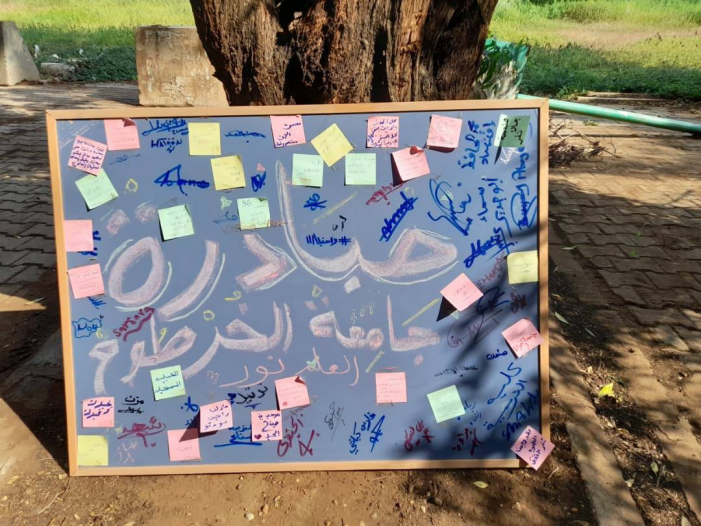
Student Signatures and Messages Board. Source: University of Khartoum Initiative Facebook Page
The answer extends beyond the initiative to the need for a broader vision, a vision that recognizes students as a spark but understands that continuity is only achieved through a genuine partnership between the university, society, and state institutions. Only then does the dream become reality, and the university a project for an entire nation, not just a campus. The board above became a space for expression, where students left their names and messages as a pledge that the university would remain alive as long as they remembered it.