Since the outbreak of war in Sudan in 2023, the country entered one of the largest and most severe humanitarian crises in its modern history. Social, economic, and political life has been profoundly disrupted, while many systems collapsed, including family support structures and sources of income. Food supplies have been disrupted, the humanitarian crisis escalated, and people faced acute challenges in accessing food and water as markets shut down and the prices of basic commodities skyrocketed.
Amid these circumstances, takayas emerged as a vital community-based response. A long-established social tradition in Sudan, takayas are voluntary community kitchens created to respond to severe emergency food shortages. They rely on financial donations from individuals, charitable figures, organizations, and volunteer groups to provide the minimum amount of food necessary for survival. Takayas reflect a longstanding Sudanese tradition of community organization and solidarity that becomes especially visible during times of crisis.
When armed conflicts erupt and chaos follows, their impact extends far beyond military and political spheres into everyday life. Food systems are often among the first sectors to be affected. In Sudan, the war disrupted agricultural production in several conflict-affected areas, including Al-Gezirah State. Transportation routes between production areas and markets were obstructed, and many families struggled to secure their daily food needs.
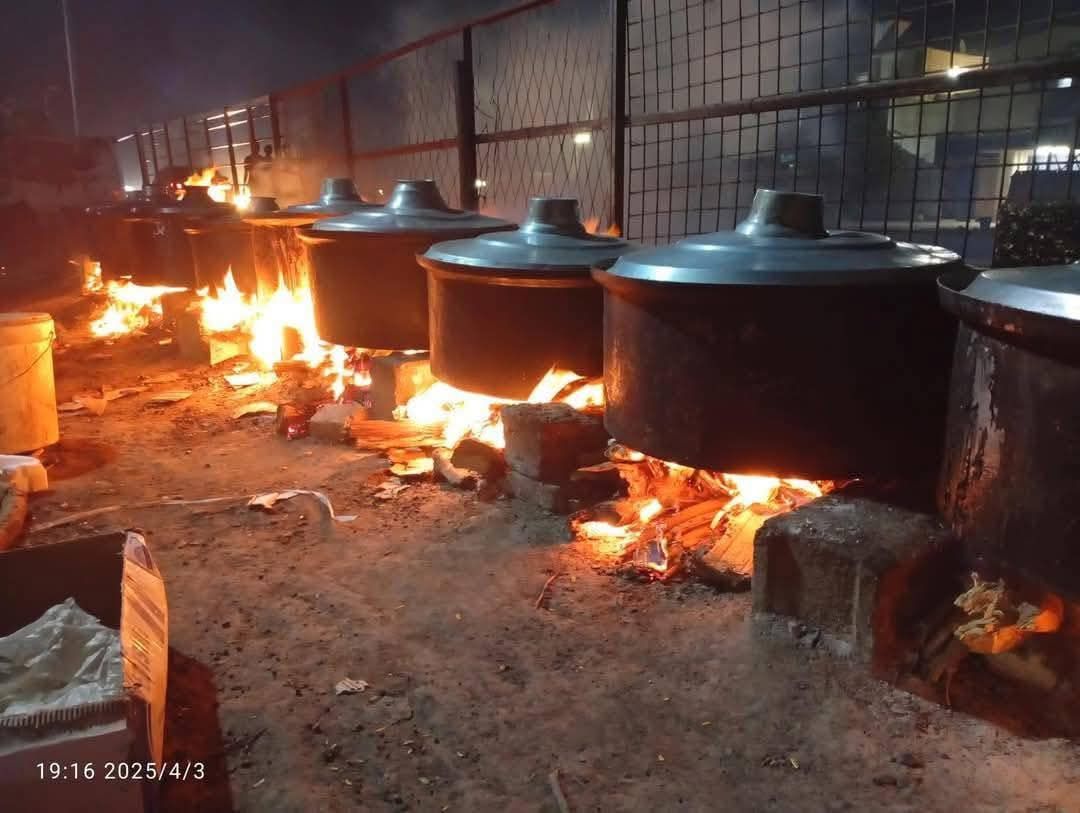
Tekayas are community-based volunteer kitchens that emerge as an immediate response to acute food shortages during times of crisis. Source: Al-Ghad Al-Sudani
Takayas: Sudan’s Collective Social Memory
Although takayas gained particular importance during the war, their roots are historical and deeply connected to Sudanese traditions of hospitality, charity, and generosity. In many areas, they were established to provide food for the underprivileged and became especially well known in places such as khalwas and maseeds, traditional Quranic schools and religious centers.
During the war, however, the role of takayas expanded significantly. What began as small charitable initiatives evolved into extensive networks of community kitchens supported by volunteer labor and local donations. This grassroots model played a central role in responding to the humanitarian crisis.
How Takayas Began in Residential Neighborhoods
Many takayas started as small initiatives led by young people who witnessed firsthand the growing difficulties families faced in obtaining food and other essentials, including medication for chronic illnesses. Recognizing the urgent need to act, they began collecting small donations, much of it from Sudanese living abroad. They then used these funds to prepare meals and distribute them to the most vulnerable households.
Mohamed Omar, one of the volunteers who helped organize a takaya in the Al-Andalus neighborhood of Wad Madani, explained: “We started by providing one meal a week after collecting donations from Sudanese abroad because we saw how difficult it had become for people to secure food. Over time, the number of meals increased, and so did the number of beneficiaries, which pushed us to expand the scope of our work.”
Interview with a Volunteer
We conducted an interview with one of the volunteers, identified as (T.T.), who participated in running a takaya in AlGezirah State during the first months of the war.
Speaking about how the idea of establishing a takaya in their neighborhood began, TT mentioned that "after the outbreak of the war, most businesses shut down, and many food vendors were displaced. People suddenly found themselves without income. A group of young people from the neighborhood came together and decided to collect donations through social media before communication networks collapsed. We then established a community kitchen that provided one daily meal, mainly breakfast.” TT continued “At first, we cooked enough food for only 20 households, but we quickly expanded. Sometimes the number of beneficiaries reached around 300 people.”
Running a tekaya in an active war is a challenging endeavor, TT lamented “The biggest challenge was maintaining consistent funding, especially with food prices increasing almost every day.”
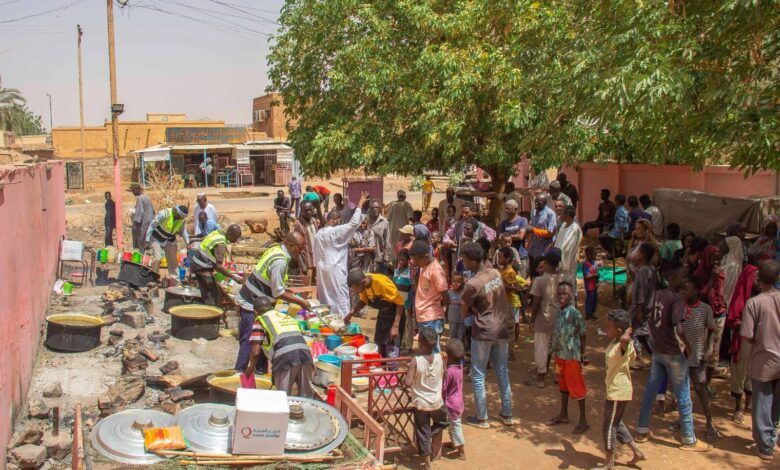
Funds are being collected from Sudanese abroad and used to prepare meals for distribution to the neediest families. Source: Zuhal News
Testimonies from Beneficiaries
The testimonies of beneficiaries highlighting the direct humanitarian impact of the takayas include Sara Hassan, a 26-year-old mother of two who was displaced by the war. She said “When we arrived in the village in Al-Gezirah State, the war had not yet reached it. But only a few days later, the Rapid Support Forces entered the area, and we had no source of income. The takaya became the only place we could get a daily meal from.”
Mohamed Abdelaziz, a laborer who lost his livelihood after the market shut down, explained: “The takaya provided us with food and restored our sense of solidarity. It made us feel that we were not alone.”
Women and Their Role in Operating Takayas
Although many initiatives in Sudan often begin as youth-led efforts, women play a central role in organizing and sustaining takayas. Women are primarily responsible for preparing meals, organizing food supplies, and managing distribution processes. This role reflects the often invisible labor women perform during crises and their critical contribution to managing humanitarian emergencies, both within households and in the wider community.
Challenges Facing Takayas
During the recent war, takayas helped reduce hunger levels in some neighborhoods, supported displaced families, and strengthened social solidarity among residents. At the same time, however, these initiatives remain limited in scope and heavily dependent on volunteer efforts.
One of the most significant challenges facing takayas is the lack of sustainable funding, alongside the continuous rise in food prices, difficulties accessing certain residential areas, and the exhaustion experienced by volunteers who must also attend to their personal lives.
These challenges should not be understood merely as isolated operational difficulties, but rather as indicators of the fragile environment within which takayas operate. Financial, security, and institutional crises intersect to create a complex situation that threatens their sustainability in the medium and long term.
The fragility of funding, for example, is not simply about irregular donations, particularly those coming from the Sudanese diaspora, but also reflects the absence of any sustainable or predictable financial framework. As a result, even planning becomes a risky undertaking. Takayas function according to a logic of immediate response, not because they lack vision, but because the coercive conditions force them to do so. In this context, every meal becomes a temporary victory against the constant threat of interruption.
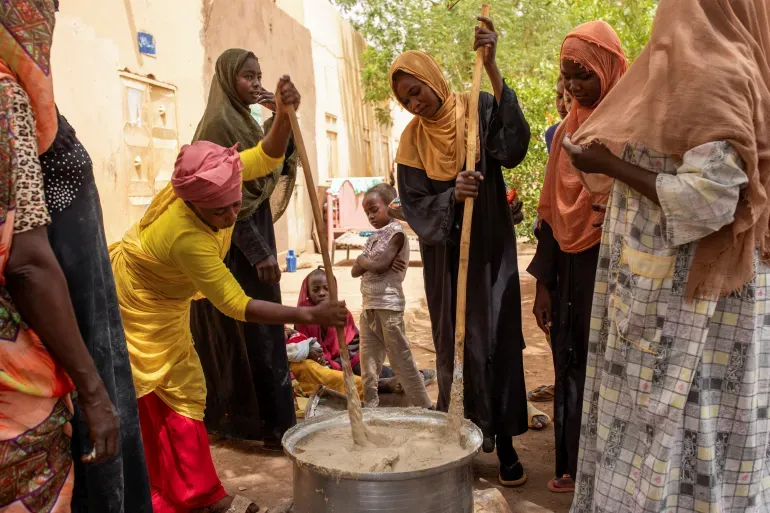
Women play a key role in organizing takayas, handling the cooking, preparation, and distribution of food. Source: Al Jazeera.net
Security risks add an even more complex layer to the challenges facing takayas. The issue extends beyond the direct threats volunteers face, such as arrest or violence, to the creation of a constant climate of insecurity that limits their ability to expand or even continue operating consistently. In this context, humanitarian work itself becomes an act fraught with personal risk, redefining volunteering from a form of social contribution into a daily practice of survival and exposure to danger.
Alongside this, the lack of official recognition emerges as a critical structural obstacle. Because most takayas are neither formally registered nor legally recognized, they are mostly excluded from access to international funding channels and institutional support systems, despite effectively performing the role of humanitarian institutions on the ground. This contradiction reveals a deep gap between those who generate humanitarian responses and those recognized as legitimate actors, reproducing unequal power relations within the humanitarian sector itself.
Finally, institutional exhaustion, or volunteer burnout, stands out as one of the most serious yet least visible challenges. Field experiences indicate that the psychological and physical strain on volunteers, combined with heavy workloads, scarce resources, and the prolonged nature of the crisis, threatens these initiatives with gradual collapse. Although takayas are rooted in collective action, they ultimately depend on individuals carrying immense burdens without adequate support systems. Their continuity therefore relies not only on the resilience of the model itself, but also on the personal endurance of those sustaining it.
In this sense, these challenges should not be treated merely as technical obstacles that can be partially resolved. Rather, they point to the urgent need to rethink the place of takayas within the broader humanitarian response system. Will they remain marginal initiatives sustained solely through determination and sacrifice, or can they be integrated into more sustainable and equitable frameworks without losing their grassroots spirit?
The experience of takayas demonstrates the capacity of local communities to develop practical solutions in times of crisis and highlights the importance of social solidarity in mitigating the effects of armed conflict. At the same time, however, it also points to the need for more effective public policies to ensure food security, so that communities are not forced to rely entirely on volunteer initiatives.
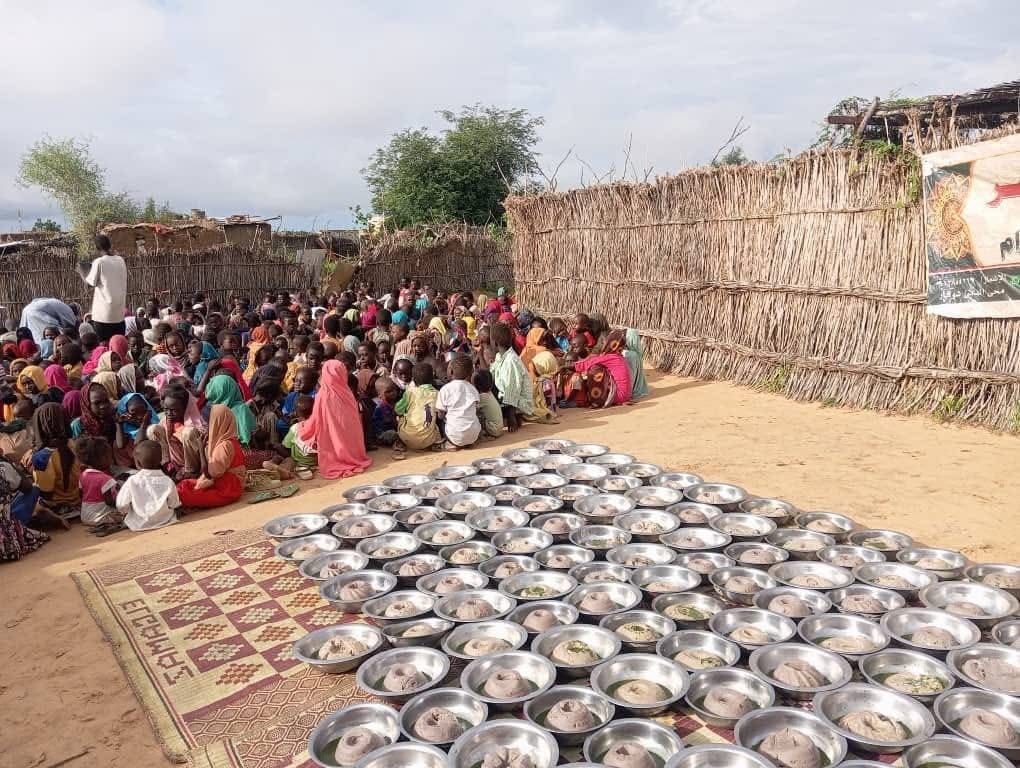
The experience of takayas reveals practical solutions for dealing with crises and a key factor in mitigating the effects of armed conflicts. Source: Nabdh News
Takayas as Informal Social Protection Infrastructure
The exact number of takayas operating in conflict areas across Sudan has never been fully documented. Most functioned informally and under emergency conditions, responding rapidly to the scale of the catastrophe, and many continue to operate to this day. As a result, there are no reliable statistics on their total number.
In the current Sudanese context, takayas are no longer merely spontaneous solidarity initiatives or temporary emergency responses. They have gradually evolved into what could be described as an informal infrastructure for managing food crises on a large scale, particularly amid the retreat or absence of state institutions and the limited reach of humanitarian organizations in many conflict-affected areas.
At a historical moment when increasing numbers of families depend on unstable food sources, estimates suggest that millions of Sudanese are experiencing acute (and in some cases catastrophic) levels of food insecurity. Within this reality, takayas have emerged not simply as temporary relief mechanisms, but as essential structures for daily survival.
This transformation is far from marginal. It reflects a profound restructuring of social protection systems within Sudanese society. In many neighborhoods and displacement areas, takayas no longer play a supplementary role; they have become the sole source of daily meals. Functions traditionally considered state responsibilities, such as ensuring minimum food access for the most vulnerable populations, have effectively shifted to community initiatives operating with limited resources and relying heavily on volunteer labor and unstable donations.
Yet this growing dependence on takayas raises difficult questions that cannot be ignored. Can these initiatives truly serve as sustainable alternatives to formal social protection systems? To what extent can communities already suffering economic exhaustion continue funding and managing such mechanisms? And what are the limits of the takayas’ ability to expand amid growing needs and dwindling resources?
More importantly, portraying takayas simply as a successful solution without critical reflection may produce unintended consequences. On one hand, there is a real danger that such narratives normalize the withdrawal of the state from its fundamental responsibilities by implying that communities can indefinitely manage crises on their own. On the other hand, this reliance places additional invisible burdens on women, who form the backbone of these initiatives through unpaid labor and who often bear the psychological and social pressures associated with managing scarcity.
The absence of institutional frameworks for these initiatives also raises concerns regarding sustainability, quality, and fairness in distribution. Despite their importance, takayas largely depend on informal local networks, which can result in unequal access and fragile continuity, particularly in contexts of repeated displacement or worsening security conditions.
The significance of takayas today therefore lies not only in their role as mechanisms for food provision, but also in what they reveal about the nature of the crisis itself. They are living evidence of the widening gap between escalating needs and limited institutional responses, while simultaneously demonstrating the remarkable capacity of local communities to innovate under extreme conditions.
Accordingly, the central question is no longer whether takayas are necessary, but rather: what does it mean for society to continue relying on them in this way?
Answering this question requires a shift in how humanitarian response is conceived; from a focus on short-term interventions toward building genuine partnerships with community-based initiatives, while simultaneously working to restore the role of the state and strengthen more comprehensive and sustainable social protection systems. Ultimately, takayas are not a solution to the crisis; they are living testimony to its depth.
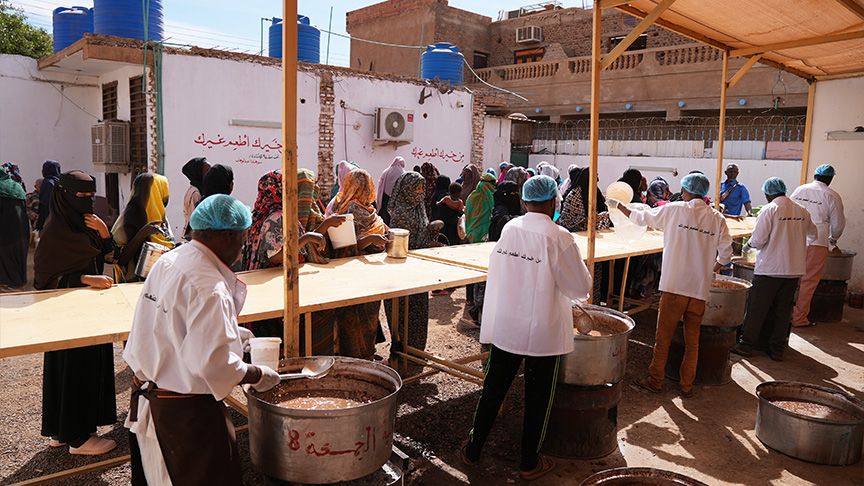
Estimates indicate that millions of Sudanese are facing acute levels of food insecurity, making soup kitchens (tekkes) a daily survival mechanism rather than just a temporary response. Source: Anadolu Agency
The Current Situation and the Decline in Funding
- The humanitarian landscape in Sudan is undergoing a critical shift that cannot be understood in isolation from the role of takayas. This shift is defined by the convergence of two pressing dynamics: the return of large numbers of displaced people to areas already devastated and lacking even the most basic services, and a significant decline in international funding allocated to the humanitarian response.
- With more than 4 million (IOM) people returning to their places of origin, often driven by a lack of alternatives or deteriorating conditions in displacement sites, pressure on already scarce local resources is intensifying. This is occurring in a context where infrastructure remains destroyed or barely functional, including markets, supply chains, and essential services.
- In this context, return does not necessarily signal improvement. In many cases, it represents a transition from one form of precarious setting to another. Returning families face increasingly complex living conditions, including loss of income sources, limited access to food, and the absence of formal support networks. This has led to a direct increase in demand for takayas, not only from displaced populations but also from host communities that have already been exhausted by prolonged crisis conditions.
- Within this dynamic, takayas become a point of convergence for two layers of vulnerability: that of returnees and that of host communities. This rising demand coincides with a sharp decline in humanitarian funding. Funding gaps have led to the reduction of international interventions, the withdrawal of some programs, and decreased direct support for community-based initiatives, including takayas.
- Unofficial estimates suggest that up to 80% of community kitchens in some areas have been forced to scale down operations or shut down entirely due to depleted resources, rising food costs, and volunteer exhaustion.
- This stark imbalance between increasing demand and shrinking resources places takayas before an almost impossible equation. In many cases, maintaining the same level of meals or regular distribution is no longer feasible, leading to reduced portions, fewer beneficiaries, or irregular delivery models. In other cases, takayas have disappeared entirely from neighborhoods that once depended on them daily, leaving behind a dangerous food vacuum with no clear alternatives.
- More critically, this pressure is not only measurable in material terms but also in invisible human costs. Takayas are largely run by volunteers, many of them women, working under extreme stress, with limited support and no guarantees of continuity. As the crisis prolongs, this work shifts from an act of solidarity into an exhausting burden, threatening collapse not only due to lack of funding but also due to psychological and physical burnout.
- A key analytical question therefore emerges: do takayas still represent a viable emergency response, or are they gradually turning into overstretched networks operating on the edge of collapse? The answer carries profound implications for the future of food security in Sudan. If reliance on these initiatives continues without sufficient institutional support, the risk of sudden service interruption becomes a real possibility, with potentially wide-ranging humanitarian consequences.
- Reading the role of takayas today thus requires moving beyond a narrative of community resilience as a success story, toward a more critical perspective that accounts for its limits. Local communities may innovate survival mechanisms, but they cannot and should not be expected to permanently substitute formal systems.
- The continued existence of takayas is therefore not evidence of adequate response, but rather an indicator of the scale of the remaining gap.
Solidarity at a Crossroads
Thinking about the future of takayas cannot be reduced to a technical question of whether these initiatives will continue. It is, rather, a socio-political question about the kind of society being rebuilt in the aftermath of collapse.
As structures of solidarity born in a moment of systemic breakdown, takayas now stand at a decisive crossroads: they may continue as emergency mechanisms dependent on unstable funding flows; they may gradually evolve into more formalized institutions capable of engaging with international actors and entering official aid networks; or they may decline with the return of state and market systems, leaving behind an ethical legacy without sustainable infrastructure.
However, this three-part framing remains overly simplistic if not situated within deeper dynamics. Field experience suggests that the future of takayas is not determined solely by funding availability, but also by their ability to redefine themselves beyond a purely relief-based function, toward broader roles in social protection, trust-building, and alternative forms of community organization.
If funding continues to decline, the risk is not only the closure of takayas, but also the fragmentation of the social networks they have produced. The issue would then shift from the loss of a service to the erosion of the very fabric of solidarity.
The scenario of institutionalization introduces its own tension between preserving grassroots flexibility and meeting bureaucratic requirements. Formalization may undermine the very adaptability that made takayas effective in the first place. Conversely, assuming their decline with the return of the state rests on the assumption that state functions will be fully restored, a highly uncertain prospect in post-conflict contexts, where governance gaps often persist and community initiatives remain necessary, albeit in evolving forms.
Within this framework, the repeated phrase found in some reports gains particular significance: “Every takaya that remains open is evidence of a living community.” This does not refer only to food provision, but to the persistence of the idea of community itself as an active agent of care beyond market and state logics.
Ultimately, the future of takayas is tied to whether they are recognized, not merely as temporary solutions, but as accumulated social experience that can inform the design of more just and sustainable systems.
The real question, then, is not whether takayas will continue, but how this form of solidarity can be transformed from an exceptional response into a foundational component of future reconstruction and social justice.
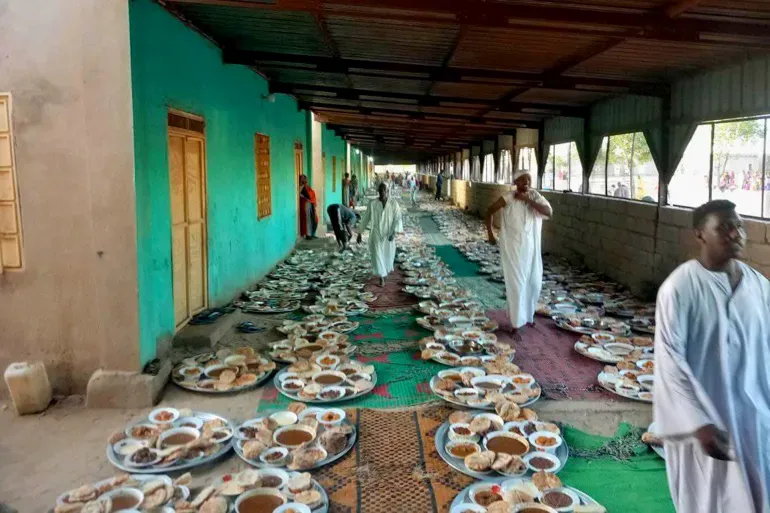
Al-Sharif Al-Tijani's Mosque in Karkoj, Sennar State, provides food to displaced people from various Sudanese cities. Source: Al Jazeera.net
Key Actors
Introducing the main actors is not merely a descriptive addition of the participating parties, but rather represents a necessary analytical shift to understand how the takayas are produced as a living humanitarian act within a complex network of relationships, resources, and power. The absence of naming the actors keeps the phenomenon at the level of spontaneous community action, while the reality reveals a flexible but deeply influential organizational structure. At the heart of this structure stand the Emergency Response Rooms, which were formed as an extension of the transformations of the Resistance Committees, not only as protest bodies, but as actors capable of managing daily life in a moment of collapse. These rooms do not manage the takayas as a separate service, but as part of a broader system that includes supply, coordination, data collection, and setting priorities, which makes them closer to local shadow governments that redefine the concept of governance from the bottom up.
In parallel, diaspora networks play a decisive role in re-injecting resources into this system, where the diaspora transforms from merely an emotional supporter into a direct economic actor. However, this funding, despite its importance, raises complex questions about sustainability and dependency, as the takayas remain linked to fluctuations in external economies and to a solidarity mood that may erode as the crisis prolongs. Here, the diaspora appears as a dual actor: a source of vital strength, and at the same time a latent element of fragility.
As for the entry of international organizations such as Islamic Relief and the International Committee of the Red Cross into this scene, it represents an important transformation in the relationship between the local and the global. These organizations, which have begun supporting some takayas, do not deal with them only as distribution channels, but as an entry point to access communities difficult to penetrate through traditional channels. Nevertheless, this engagement also opens potential tensions between the logic of strict international standards and the logic of local flexibility, between the need for documentation and accountability, and the need for speed and immediate response.
Therefore, introducing these actors does not only enrich the narrative, but reveals the takayas as a field where multiple forms of action intersect: grassroots action led by communities, transnational action led by diaspora networks, and institutional action through which international organizations attempt to reposition themselves within a changing context. This complexity is what gives the takayas their analytical importance, not only as a humanitarian response, but as a model that reopens a fundamental question: who possesses the ability to organize life when the state retreats, and how is this ability distributed among the different actors?
Emergency Response Rooms
Emergency Response Rooms in Sudan represent one of the most radical and innovative forms of community organization in the context of collapse, as they did not emerge as traditional relief entities, but as a dynamic extension of the Resistance Committees that redefined political action from the street to the management of daily life. These rooms do not only coordinate food distribution or operate takayas, but perform complex functions including field data collection, determining intervention priorities, managing supply chains, and even indirect negotiation with different actors to ensure continued access.
In this sense, they can be viewed as preliminary forms of governance from below, where communities produce their own mechanisms for organizing survival in the absence of the state. What distinguishes the Emergency Response Rooms is not only the scope of their work, which in some cases extends to serving hundreds of thousands, but also the nature of their horizontal structure that allows rapid response and flexibility, in contrast to the absence of the heavy bureaucracy that hinders international actors.
However, this flexibility itself carries elements of fragility within it, as the rooms depend on volunteer networks, unstable resources, and fluctuating security contexts, which makes their continuity dependent on their ability to constantly adapt. Despite this, they present an alternative model for the humanitarian actor: an actor that does not wait for authorization, but produces its legitimacy from direct need and from its ability to respond when everyone else retreats.
Takayas as an Alternative to the Traditional System
The takayas as an alternative to the traditional humanitarian system cannot be read merely as an expansion of the role of local initiatives, but as a qualitative transformation in the structure of humanitarian action itself. In contexts of collapse where international organizations are unable to access areas for security, logistical, or bureaucratic reasons, the takayas do not appear merely as filling a gap, but as a complete actor that redefines who possesses the right and legitimacy to provide relief. In some areas, these networks were not one option among many, but the only actor capable of delivering food, which practically makes them a parallel system operating outside the formal institutional framework while achieving its functions on the ground with greater efficiency in certain moments.
This reality opens the door to a broader discussion around what is known as the Localization of Aid, not as a reform slogan within the international system, but as an actual realization from below imposed by necessity before policies recognized it. The takayas represent a radical form of localization, where they are not limited to implementing programs designed in global decision-making centers, but rather produce the response itself, determine needs, manage resources, and innovate distribution mechanisms according to precise knowledge of the context.
Here, localization transforms from a secondary position in the supply chain into the center of producing humanitarian action. The takayas, while operating outside official frameworks, often lack legal protection, sustainable funding, and internationally recognized accountability systems, which makes them vulnerable to fragility or containment. Their ability to expand also remains linked to limited resources and to a human capacity susceptible to exhaustion, which raises the question of whether this model is capable of being generalized or sustained in the long term without reshaping its relationship with the broader humanitarian system.
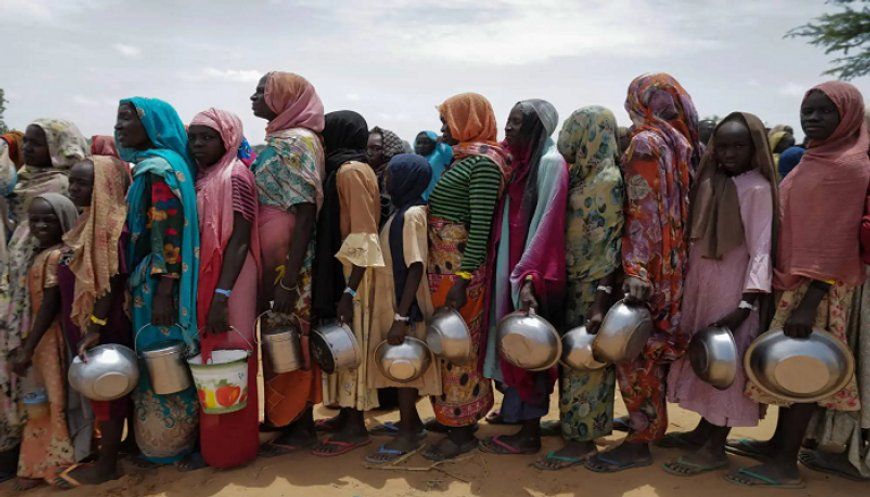
Takayas are not merely filling a void, but rather acting as complete agents that redefine who has the right and legitimacy to provide relief. Source: News Sources
Moreover, the rise of the takayas as a parallel model reveals a deeper crisis within the traditional humanitarian system itself: a crisis of access, trust, and flexibility. If local initiatives are capable of reaching places where major institutions fail, this reflects not only their efficiency, but also the shortcomings of the global structure that is presumed to be more capable and organized.
From this perspective, the takayas should not be viewed as a “final” alternative, but rather as a critical mirror reflecting the limits of the existing system, and at the same time as a living laboratory for different possibilities of re-imagining humanitarian action. The fundamental question therefore does not stop at whether we are witnessing a local moment in relief work, but extends to how roles, resources, and legitimacy are to be redistributed between the local and the international. Will the takayas be able to impose themselves as equal partners within a reshaped system, or will they be absorbed into the same structures that have long marginalized them? Within this space between recognition and containment lies the future not only of the takayas, but of humanitarian action in the post-crisis world.
The Global Meaning of Takayas
Transforming this article from a strong descriptive text into an enduring intellectual contribution requires moving it beyond the limits of the Sudanese case toward a broader horizon of comparison and analysis. The takayas no longer appear merely as a local phenomenon, but as an entry point for rethinking the very nature of humanitarian action itself. Connecting the Sudanese experience with other conflict contexts such as Yemen and Syria is not intended to equate different experiences, but rather to reveal recurring patterns of bottom-up responses, where community networks emerge to fill the gaps left simultaneously by the state and the international system.
In Yemen, for example, community initiatives emerged to distribute food outside official channels amid complicated access conditions, while in Syria local relief networks developed inside besieged areas, relying on precise contextual knowledge and their ability to maneuver under bombardment and siege. These comparisons do not weaken the specificity of the takayas; rather, they position them within a “global archive” of community resilience experiences, while highlighting what the Sudanese case contributes in terms of the density of horizontal organization and the breadth of its scope.
Within this framework, it becomes necessary to introduce an analytical concept capable of encompassing this experience without reducing it, such as describing the takayas as an emergency community survival system; that is, an informal, flexible, and socially rooted structure that produces mechanisms of protection and survival outside the institutions of the state and the market. This concept does not merely describe what the takayas do, but places them in direct confrontation with traditional conceptions of humanitarian work that separate the responder from the beneficiary. Here, this binary collapses in favor of a model in which the community becomes both actor and recipient at the same time.
Through this framing, the Sudanese experience contributes to advancing the global discussion toward reassessing concepts such as neutrality, efficiency, and legitimacy, from within the lived experience of collective survival.
However, the strength of this intellectual contribution also remains dependent on the solidity of its reference framework. Including links to reliable reports and relying on multiple sources that combine international and local perspectives adds credibility to the text, but also places it in dialogue with a broader body of knowledge production. Reports from organizations such as the United Nations Office for the Coordination of Humanitarian Affairs or Human Rights Watch can provide a general framework and quantitative analyses, while data issued by Emergency Response Rooms or local initiatives contribute precise knowledge from within the field, knowledge that is often absent from international reports.
In all of this, the takayas can be viewed as local mechanisms for managing food crises amid the collapse of economic, social, and security structures.
