All the photos are by the author.
As the date for returning to universities in Khartoum approaches, students are experiencing a state of anticipation mixed with anxiety. Their minds are crowded with questions about their academic future and their daily lives. Returning is no longer simply a matter of resuming classes and lectures; it has become an event that requires preparation and adaptation to a new reality imposed by the prolonged crisis in the country.
Students will find themselves facing a university environment fundamentally different from the one they knew before the war. Many buildings have been damaged or destroyed, a significant number of faculty members are absent due to displacement or migration, and administrative support and basic services have declined.
Despite these hardships, students show a strong desire to reclaim their academic lives and to defend their right to education and a sense of belonging, fully aware that the return will not be easy or free of obstacles, and that the current situation places urgent responsibilities on university administrations and decision-makers to meet essential demands that form the foundation of a post-war academic environment.
Since the outbreak of the war in April 2023 between the Sudanese Armed Forces (SAF) and the Rapid Support Forces (RSF), university education in Khartoum and many other areas, especially those within active conflict zones, has come to a halt.
The country has witnessed an unprecedented humanitarian crisis, with more than ten million people internally displaced and four million refugees outside the country. Over 10,400 schools have been closed due to the conflict, leaving around 19 million children out of school, with more than 90% of school-age children deprived of formal education. Preliminary reports also indicate that more than six universities have either suffered severe damage, had several of their buildings completely destroyed, been directly targeted, or, at the very least, looted.
Enrollment in public universities and a number of private universities was also completely suspended during the war, leading to a total halt in the educational process. According to a study conducted in early 2025, more than 64% of academics and 52% of students were affected by displacement, with a large number relocating outside Sudan. Students also endured severe psychological pressure, as the study showed that over 75.3% experienced high levels of psychological stress.
The damage caused by the war was not limited to buildings alone. On the very first day of the conflict, more than 100 students were trapped inside the buildings of the University of Khartoum for several days without food. This ordeal ended with the death of one of the besieged students, who was buried inside the university grounds.
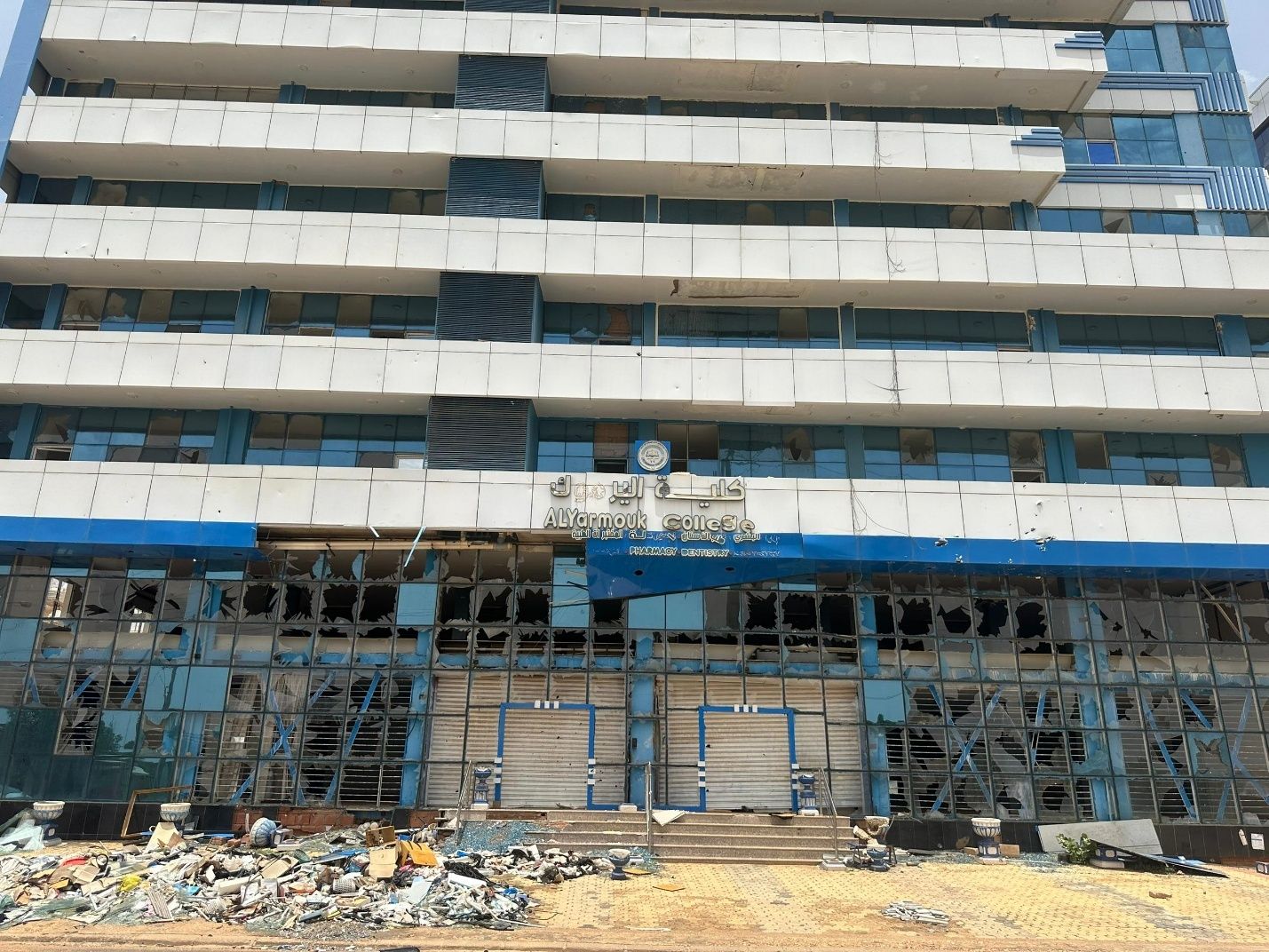
The destruction inflicted on Yarmouk University College, Khartoum, May 2025
Under these circumstances, students’ expectations must rise, and a set of demands needs to take root, demands that are essential to ensuring a successful and equitable return to education. This return is not solely about academic matters or physical infrastructure; rather, it must come with a long list of requirements that will be key to rescuing students’ academic trajectories and safeguarding their futures.
Below are the most important expectations students should have of their universities.
First: Academically
Over the past two years, universities have continued to teach most courses, especially scientific ones, with little to no practical content, either due to security pressures or limited resources. The result will be a very clear gap in graduates’ skills, particularly in disciplines that rely heavily on hands-on practice and experimentation, such as medicine, engineering, and applied sciences. Despite this, the educational process has proceeded as if everything were normal, as though the absence of laboratories, hospitals, and training sites did not undermine the very essence of these disciplines.
This raises a pressing question: if it is possible to graduate and obtain a degree without completing the practical component, was that component truly essential, or was it merely a formality all along? And if it was essential, why was it removed without the degrees being issued?
Answering this question requires a careful evaluation of the importance of these courses and a determination of whether they are truly core to the relevant disciplines or whether more effective alternatives can be developed. The ultimate goal is to ensure that curricula reflect labor market needs and equip graduates with real, practical skills required in actual work environments.
Following this, universities must compensate students, or even recent graduates, through intensive practical training, even if that requires adding an extra semester or partnering with external institutions to bridge this practical skills gap.
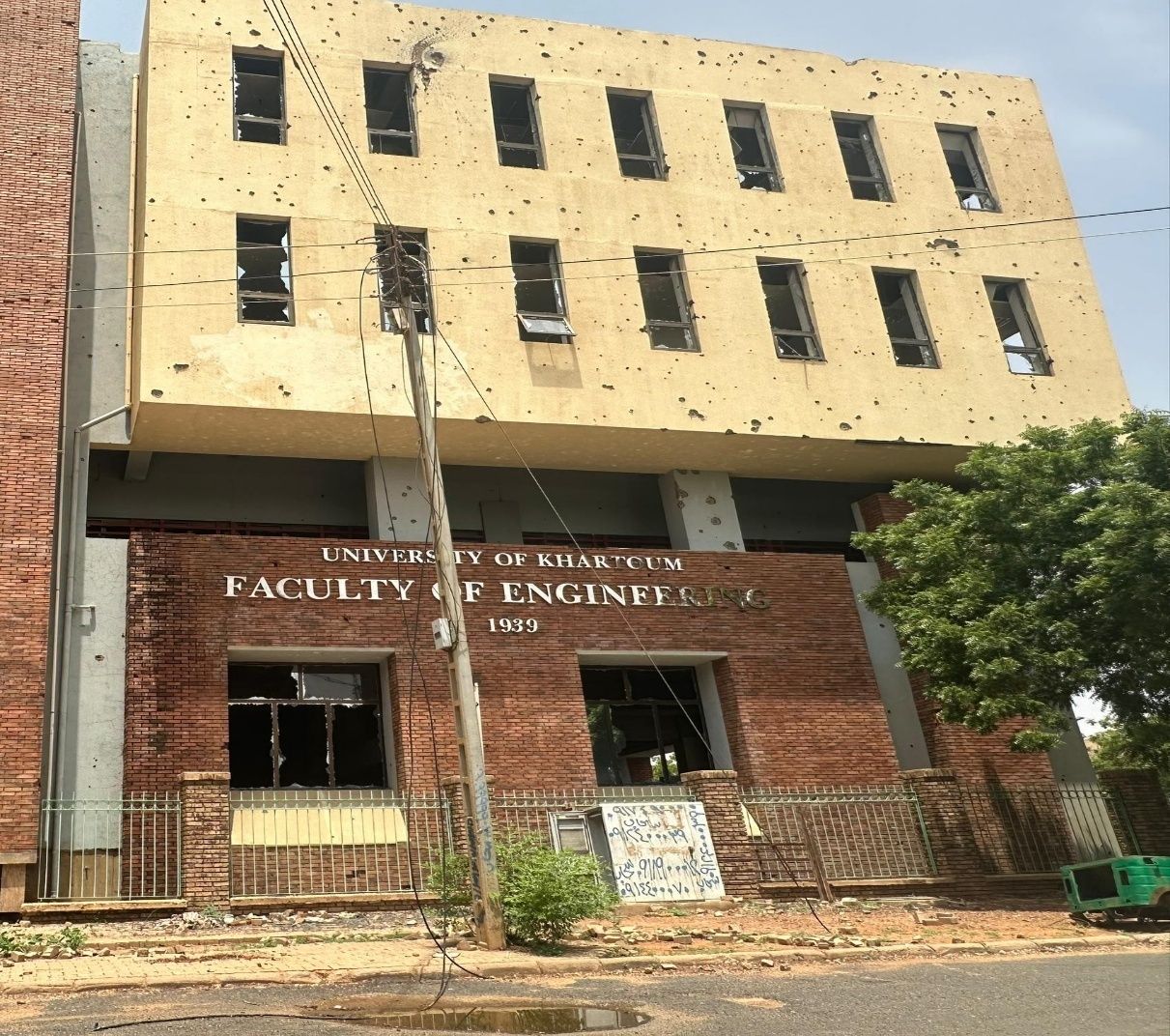
Faculty of Engineering - University of Khartoum, Khartoum, May 2025
Beyond the immediate academic challenges, the specter of continued conflict in Sudan looms large, especially in a country historically marked by recurring wars and instability. Even with cautious optimism about stability in the capital, the risks persist.
Should fighting resume in Khartoum, it becomes essential for students to possess internationally recognized academic documents that would allow them, if necessary, to continue their education or apply for postgraduate studies or employment abroad. This need is made even more urgent by the fact that a large number of students have partially or completely lost their academic records in recent years as a result of destruction and displacement.
These realities make the preservation and archiving of academic data a top priority, not for the purposes of accountability or punishment, but to prevent the repetition of such a catastrophe. This must include secure local and international backup systems.
Following that, universities, in coordination with the Ministry of Higher Education, can work toward issuing alternative documents that are recognized both locally and internationally.
These would function similarly to what UNESCO has introduced under the name “Qualifications Passport”, a document resembling a passport, but granted to refugee and displaced students to provide international recognition of their academic qualifications even in the absence of original records.
Adopting such mechanisms in Sudan would not be a mere administrative step, but a strategic move to protect the academic paths of an entire generation of students. It would help transform higher education from a system fragile in the face of crises into a safety net capable of withstanding conflict and displacement, while opening doors to opportunities both inside and outside the country.
In addition, the centralized admission system based on unified secondary school examinations is no longer suited to the demands of the new reality, particularly given the wide disparities among states and localities in terms of security conditions and educational infrastructure, and the overall complexity of the post-war educational landscape. Accordingly, there is a growing need to explore more flexible admission mechanisms.
These may include maintaining the centralized system and national examinations with adjustments that ensure fairness and account for exceptional circumstances; granting universities the authority to conduct their own entrance exams; or simplifying registration and admission procedures for students affected by war and displacement, in a way that guarantees equal opportunities for all.
Finally, with regard to the academic dimension, the concept of multi-campus universities is a policy that should be adopted in the near future. This model is based on a main university overseeing academic and administrative branches in different cities and states, with unified curricula and academic standards and centrally distributed resources.
One prominent example is the University of Aleppo in Syria, which, during the conflict, distinguished itself by operating branches in areas controlled by the government and others in opposition-held areas. For instance, while the main campus in Aleppo city remained under government control, branches operated in Idlib and northern Aleppo countryside under opposition control, as well as other branches in Hasakah and Raqqa, where control varied among conflict parties. This geographical spread across opposing sides of the conflict enabled the university to continue providing education by redistributing students and staff.
In Sudan, a similar model could be adopted, whereby major universities such as the University of Khartoum establish effective branches in multiple states. This would allow greater flexibility in accommodating students during crises, distribute pressure on facilities, and reduce the impact of localized conflicts on the continuity of education. Indeed, regional universities located relatively far from combat zones became the only refuge for sustaining the educational process during the war.
Additional expected benefits include promoting balanced regional development, expanding access to higher education for students in peripheral areas, reducing transportation and housing costs, and maintaining a unified standard for degrees and educational outcomes.
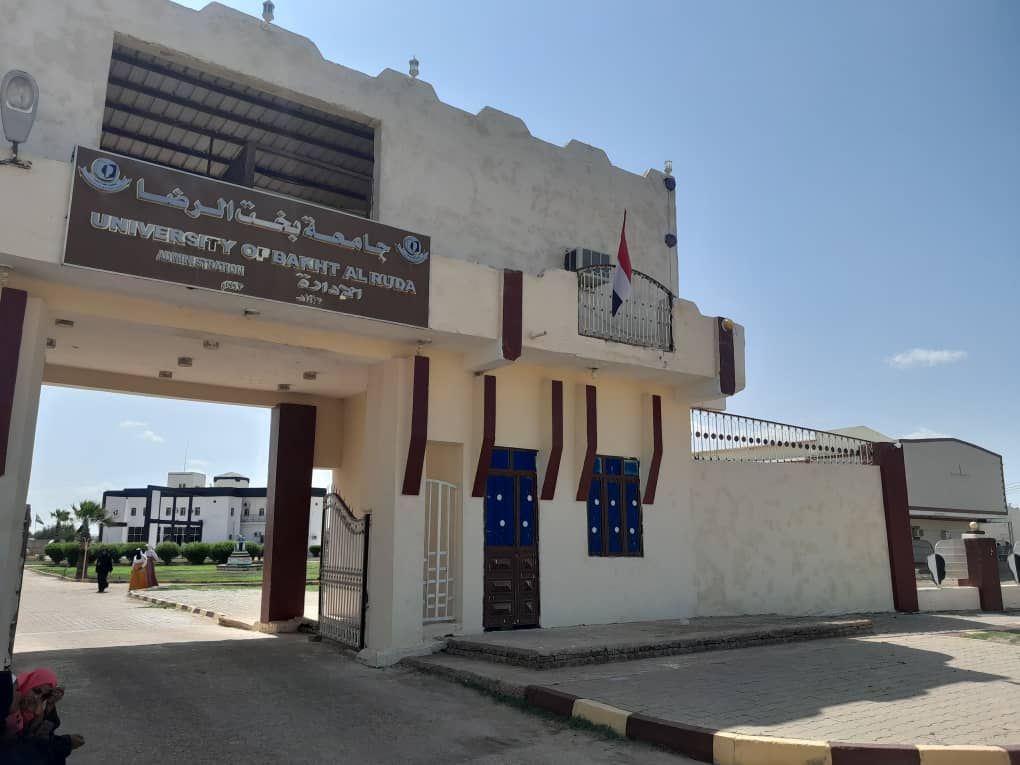
Bakht Al-Ruda University, one of the regional universities that continued after the war, White Nile, April 2025
The war period has also highlighted the importance of e-learning, despite its limited effectiveness and quality during the crisis. To overcome these shortcomings, universities are expected to move toward adopting professional e-learning systems that allow lectures to be archived and made available in recorded form, and that include interactive platforms for academic communication between students and faculty members, alongside proper training for academic staff to use these technologies efficiently.
The Sudan Open University stands as an example of digital flexibility, as it operates numerous learning centers inside and outside the country and relies on Moodle systems, recorded lectures, and education delivered through radio and television. In the most recent academic year, it also launched digital final examinations in 35 centers inside and outside Sudan, using digital infrastructure.
Second: Administrative and policy-related issues
Before students return to their universities in Khartoum, there will be an urgent need to rehabilitate student housing and service facilities, many of which suffered neglect or damage during the war. The university experience cannot be complete without a safe and healthy residential environment that ensures students’ psychological and physical stability. This requires equipping dormitories with essential services such as water and electricity, along with clear guarantees from universities regarding the quality and continuity of these services.
In addition, the success of this return also depends on the availability of a sufficient number of faculty members capable of covering academic courses and compensating for learning losses, ensuring that the return represents genuine progress rather than a merely symbolic return to classroom seats.
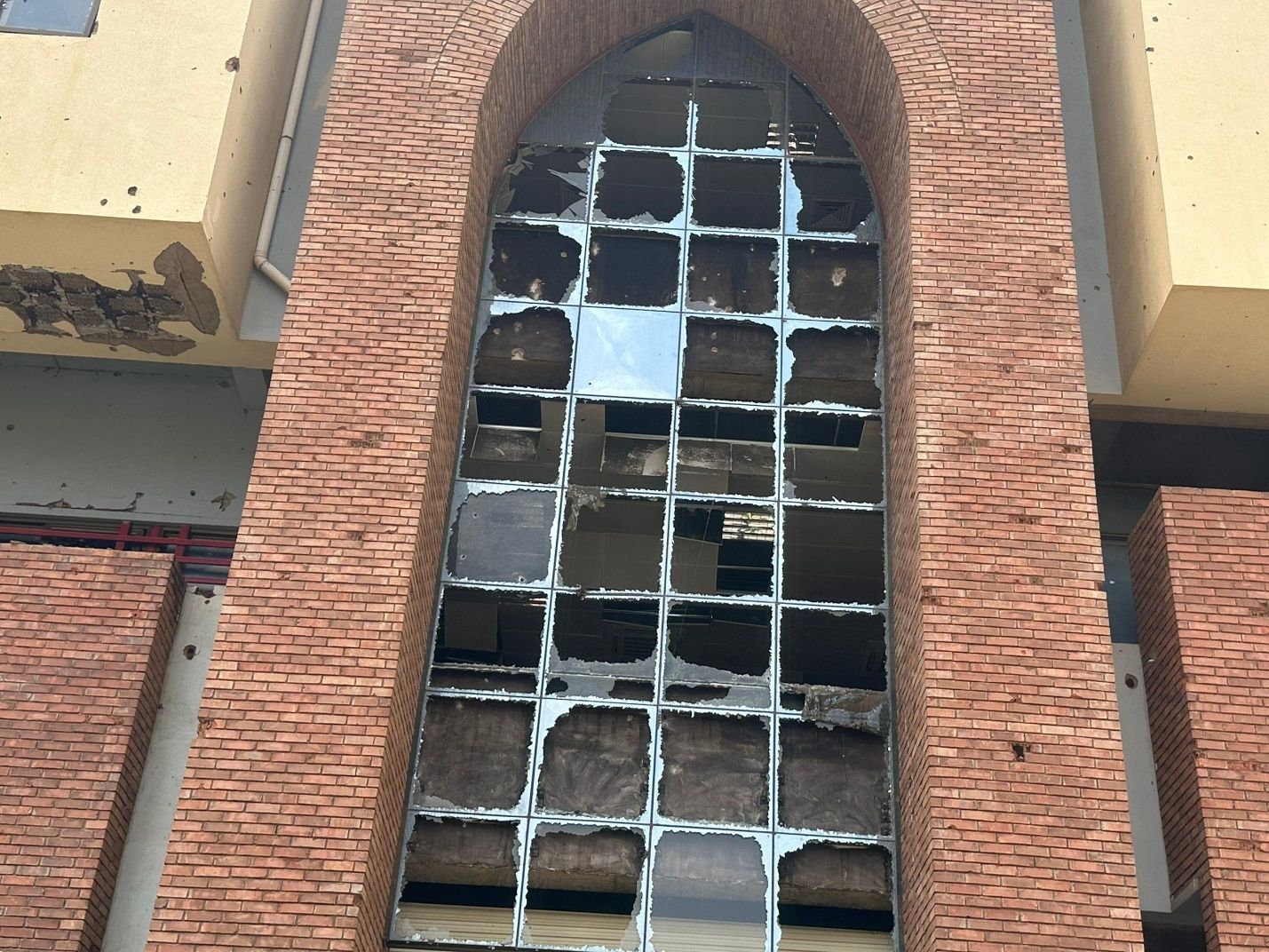
The destruction inflicted on one of the libraries of the University of Khartoum, May 2025
Alongside all this, students remain haunted by the fear of additional fees being imposed. There is widespread concern that the return to universities could turn into a financial or academic burden, especially if compensatory costs are charged for the period of suspension. For this reason, it is essential that university administrations announce clear policies that protect students’ right to graduate without unjustified additional costs or requirements, and that they establish transparent grievance and appeal mechanisms.
Moreover, the resumption of studies will not be equal for everyone. Some students will be delayed in returning, while others were unable to participate in e-learning or sit for examinations during the war. Such cases require exceptions and tailored solutions, such as flexible timelines, alternative assessments, or specific exemptions from certain attendance or fee requirements.
In this context, university administrations and faculty members will be expected to exercise a high degree of flexibility in assessment, while still upholding academic quality standards, so that empathy for exceptional circumstances does not turn into a compromise of the required academic level.
During the initial phase of returning to Khartoum, a blended learning model, combining online education with in-person, on-campus instruction, can be adopted. This approach would take into account the circumstances of students who are currently unable to return to campus, while ensuring the continuity of their academic progress without interruption.
In conclusion, none of these expectations can be realized unless students are confident that their demands are being met and that the return is fair to all, without exceptions or discrimination. This is why student and trade union activism is more important today than ever, as it remains the most effective tool to ensure that decisions regarding the return are driven by students’ interests rather than political pressure.
At the same time, the primary duty of professors and lecturers is to stand by their students and ensure that their academic and humanitarian demands are fulfilled, without yielding to university administrations or political authorities that may seek to exploit the resumption of studies for political gains at the expense of universities’ actual readiness.
If, however, universities and their administrations commit to these expectations, the return could become a comprehensive reform process. It could even turn into an opportunity for deep, structural reform of higher education in Sudan, marking the beginning of a more flexible system that is genuinely responsive to students’ needs.