Introductory context
Ad-Damazin, the capital of Sudan’s Blue Nile Region, lies in southeastern Sudan near the international border with the Ethiopian highlands to the east, while South Sudan borders the region to the south and west. This makes the area surrounding Ad-Damazin a strategically and commercially vital zone of contact with neighboring countries.
The city, whose main present-day features developed relatively recently in the 1960s as a camp for workers and engineers during the construction of the Roseires Dam, located 16 km away, emerged within a dense forest environment known in local linguistic heritage as “Amazinq.” Thanks to its unique geographic position within the fertile savanna belt, Ad-Damazin enjoys a relatively mild and rainy climate, making it a major hub for the production of gum Arabic and tropical fruits such as mangoes and lemons.
Yet this distinctive urban and ecological center faces harsh realities. Waves of armed conflict predating the current war have already contributed to the collapse of essential service networks and disrupted food supply chains, leaving residents to confront soaring prices and forcing them to draw on their inherited knowledge of the land to develop local survival strategies that restore their lost food security.
While artillery continues to redraw the region’s geographic boundaries with iron and fire, Zainab Ghazali has been redrawing the boundaries of her home courtyard in Ad-Damazin's popular market neighborhood, not with barbed wire but with lemon and mango trees. What began as a simple economic activity or rural pastime has become an act of resistance and a smart survival strategy in response to a conflict that has severely eroded people’s purchasing power.
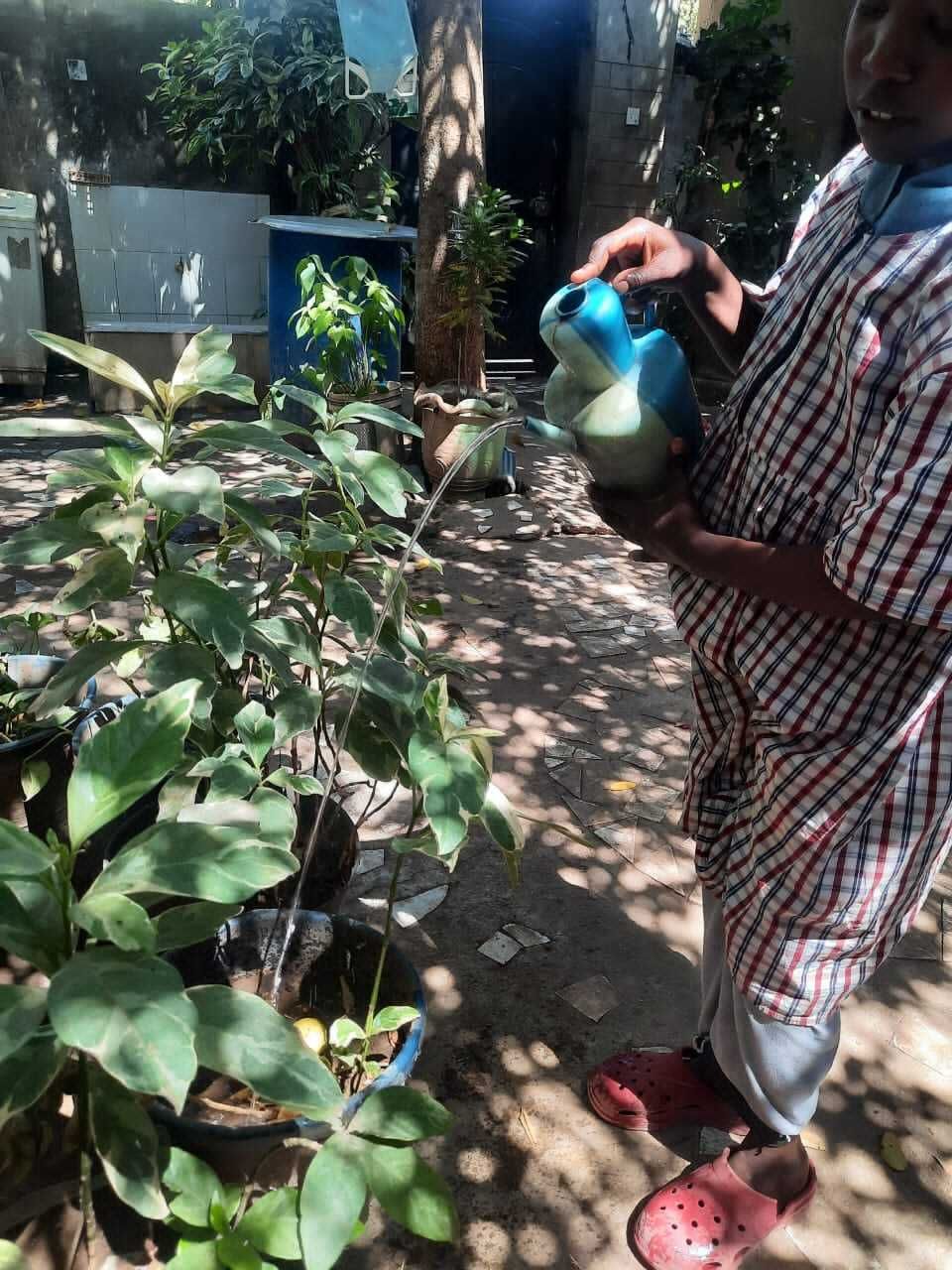
Zainab's younger brother waters small mango seedlings in their yard, holding a water jug - Source: Photo by Zainab 2026
Under the intermittent shadows cast by the Blue Nile across land exhausted by conflict, Zainab stands watching over her seedlings, gently picking ripe mangoes and lemons. They pulse with a life far greater than the small courtyard they occupy. This scene was born from years of prolonged war in the region, even before the current conflict, as people’s relationship with their surrounding environment began to change. For Zainab, the trees are not merely a source of food, they are a lung through which hope breathes between bursts of gunfire.
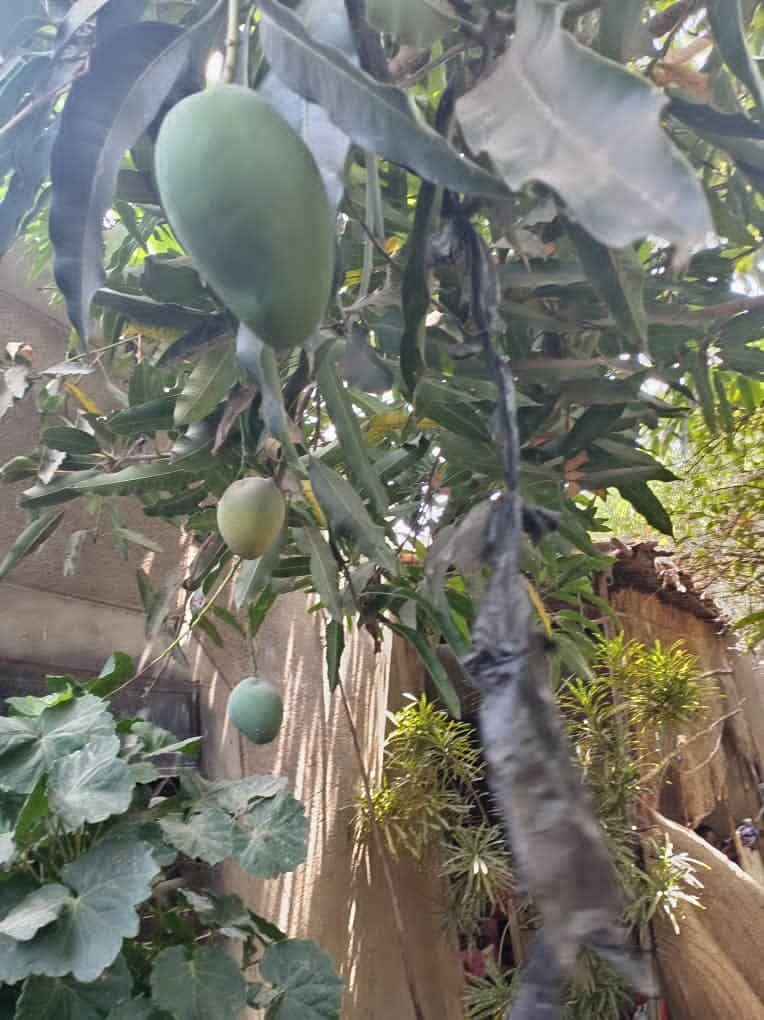
A close-up shot of mangoes on the branches of a tree at Zainab's house in Damazin, showing details of the agricultural produce - Photo by: Zainab 2026
“Before the war, this land was just an ordinary space that we cultivated casually,” Zainab whispers, adding, “But today, it has become our lifeline during difficult times. The disruption of supplies, especially amid the war, and the difficult roads that become flooded during the rainy season have made these fruits essential for helping us get by. Beneath their shade, we found refuge when the electricity went out and the heat became unbearable.”
Necessity has transformed the courtyard into a daily emergency plan, helping to compensate for the absence of essential state services. Zainab began home gardening ten years ago with a single mango seedling, but more recently, she has added new seedlings to cope with the realities of the present.
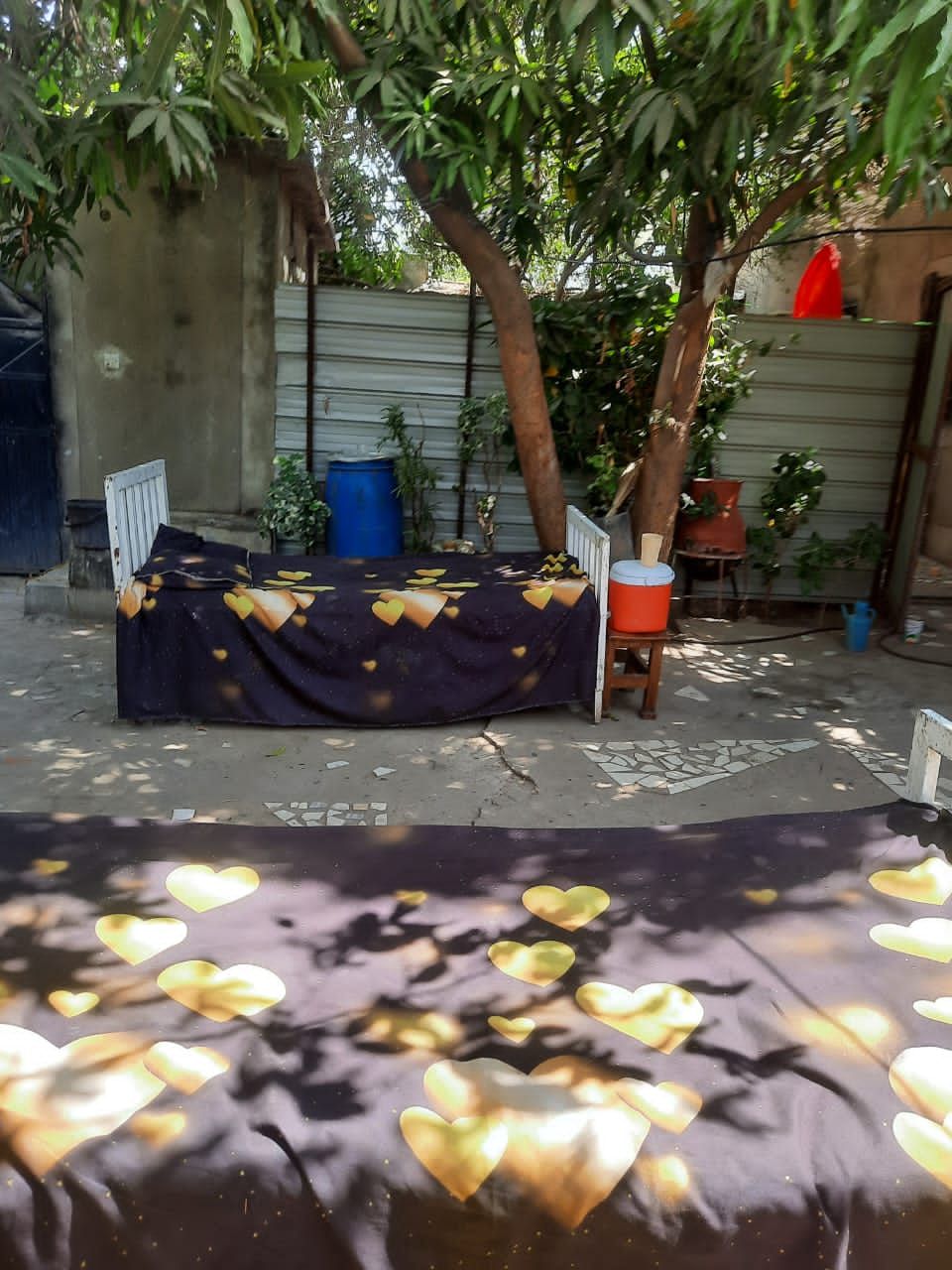
Two beds are made up under the shade of trees inside Zainab's courtyard, along with a water jug and a cooler, and sunlight filters through the tree branches. - Photo by: Zainab 2026
Under the guillotine of conflict: How is war devouring the region's lungs?
Behind the walls of Zainab’s home, the entire region is facing a silent environmental catastrophe. The war that has drained human lives has spared neither stone nor tree. Although the riverine ecosystems of the Blue Nile were already fragile before the conflict due to desertification, ongoing erosion of natural riverbanks caused by widespread tree cutting, and particularly the degradation of riverbanks around the Roseires Dam, the armed conflict has acted as an “accelerator” of this collapse. This on-the-ground deterioration echoes warnings from the United Nations Environment Programme (UNEP), which has noted that armed conflicts accelerate biodiversity loss, making ecosystem restoration a process that can take decades.
With environmental governance institutions retreating and oversight largely absent, vegetation cover has come under unprecedented pressure through three devastating pathways:
Forced logging: Forests have become the only available source of energy, particularly firewood and charcoal, as cooking gas becomes increasingly scarce and expensive.
Displacement and pastoral pressure: The mass displacement of people and livestock has led to uncontrolled and excessive grazing, depleting the land’s capacity to regenerate.
Infrastructure erosion: The neglect of contour bunds and traditional water-harvesting structures has left the soil vulnerable to erosion with every flood.
In this context, Al-Rashid Abdel Majid, head of the Sudanese Society for Environmental Protection in the Blue Nile, says: “Before the war, there were official efforts, despite their limitations, to protect forests. But the conflict created an administrative vacuum that allowed resources to be exploited without regulation, directly affecting the balance of water and soil.” The tragedy of this vacuum is evident in areas such as Al-Azara, east of Roseires, where the cutting of Al-Nour Forest has reduced local agricultural land by 40%, transforming productive land into barren areas, according to Al-Rashid.
Memory meets the challenges of the present
Faced with the harsh reality, farmers did not wait for solutions from outside. Instead, they drew on their inherited traditional knowledge as a final line of defense. These local practices rely on tools that have proven effective, from flexible seasonal farming that responds to rainfall patterns to traditional water-harvesting techniques such as “barricade”, which direct water into the soil rather than allowing it to wash away the surface.
This instinctive environmental awareness is also evident in Zainab’s experience with bees. After initially trying to drive them away, she realized that they were partners in production. Zainab says: “We realized that the presence of bees meant better pollination for our crops, so we let them share the space with us, and our trees produced more abundant fruit.” This harmony demonstrates how local knowledge can evolve and adapt to emerging challenges.
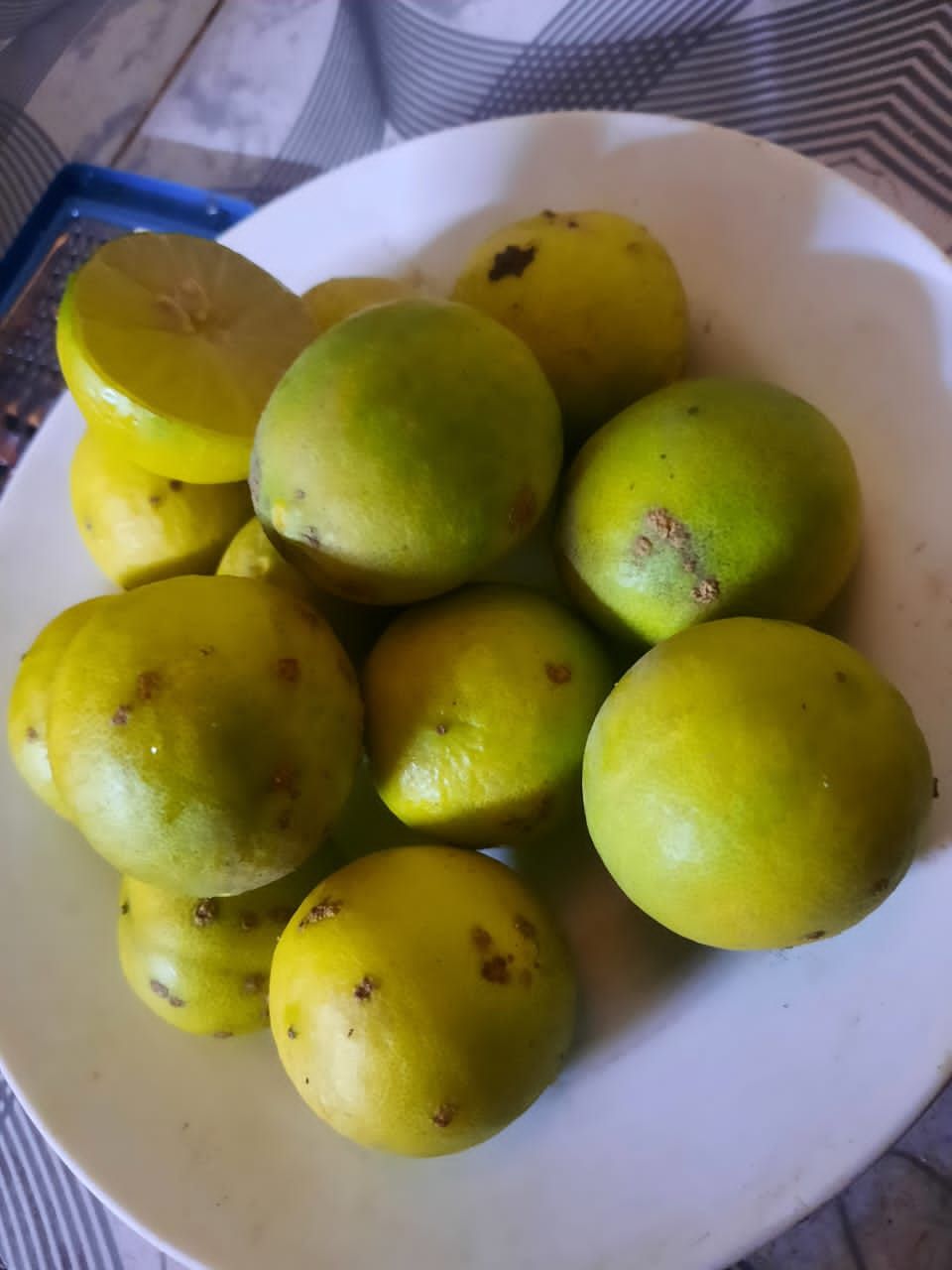
Fresh lemons picked directly from the tree for household consumption in Zainab’s garden. Photo by: Zainab
Residents did not stop at planting seeds. They also recycled kitchen waste and livestock manure to produce locally made organic fertilizer (compost), which they applied to seedlings and trees, as Zainab and Sami did. This helped them overcome the disruption of imported chemical fertilizer supplies through a closed agricultural cycle that restores soil fertility without additional financial costs.
The Mini-Ecosystem as a strategic choice
Zainab’s experience did not stop at her doorstep. It became an inspiring model for her neighbors, and residents soon began exchanging knowledge and experiences about home gardening, creating a small network of community resilience in the Popular Market neighborhood.
After seeing “Zainab’s Oasis,” Sami Al-Aqib, a neighborhood resident, decided to build his own food system. He planted a diverse range of fruits, including lemons, mangoes, guavas, pomegranates, and bananas, alongside a coop for raising pigeons and chickens. He also experimented with rare and tropical seedlings such as papaya and cardamom.
This mini-ecosystem provides a degree of independence from essential needs such as fruit purchased from markets strained by high prices and uncertainty. More importantly, it represents a tangible form of food security built within the walls of the home.
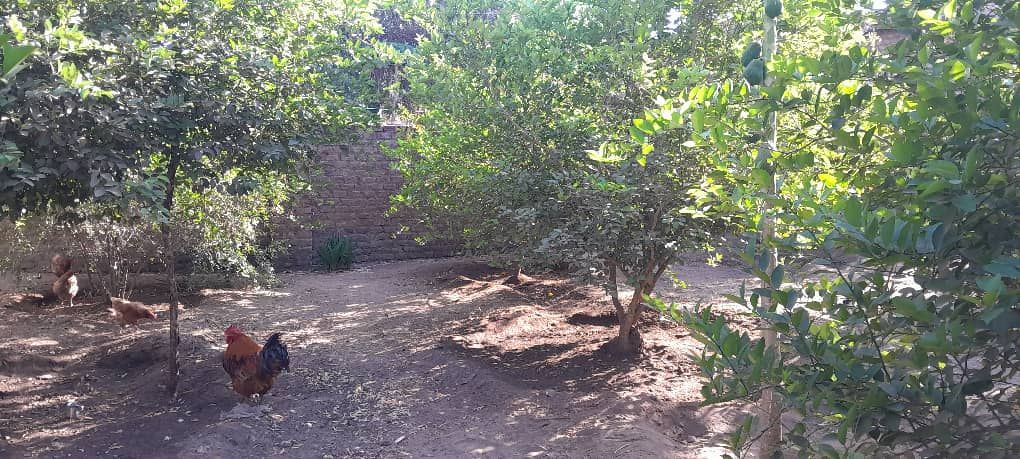
Wide shot showing the cohesion and integration of the ecosystem in Sami’s courtyard, featuring pomegranate and lemon trees and chickens beneath the shade of the trees. Photo by: Sami Al-Aqib
This approach aligns with reports from the Food and Agriculture Organization of the United Nations (FAO), which indicate that conflict-related disruptions to supply chains have reduced the availability of agricultural inputs and driven up their prices, further constraining agricultural production in Sudan. For Sami, his home garden now provides the equivalent of 40% of his family’s basic food needs, according to Sami.
Amid runaway inflation, which has driven astronomical increases in the prices of essential vegetables and fruits, with prices reportedly tripling over the past three years according to residents and Zainab, these fruits have shifted from a luxury to a form of hard currency.
The produce from a single lemon tree in Zainab’s courtyard is equivalent to the cost of a weekly basket of vegetables that would otherwise consume half of the family’s limited income. The garden has therefore become a kind of “food bank,” shielded from the effects of currency depreciation, particularly after the US dollar exchange rate reached approximately 5,000 Sudanese pounds on the parallel market in June 2026.
Neighbors have also begun exchanging surplus mangoes for lemons, creating a network of social solidarity that resembles an informal form of “green diplomacy,” helping to repair some of the social fabric torn apart by the war.
From home gardens to urban greening: The bridge to Roseires
This “green trench,” a term describing a front of resilience and resistance to the absence of state services through greenery and tree planting, did not remain behind the walls of individual home gardens in Ad-Damazin. It expanded into a visible line of defense along the streets of the neighboring city of Roseires, 16 kilometers away.
Inspired by similar individual efforts within homes, the initiative there grew into a collective movement focused on planting mango trees along the city’s main roads.
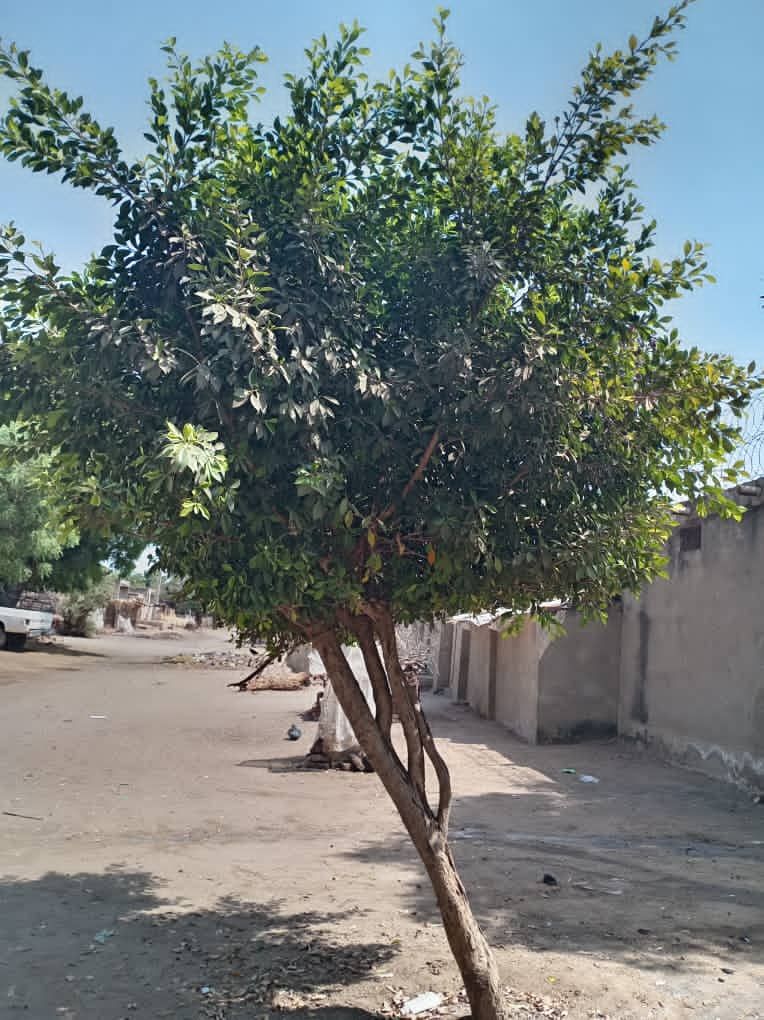
View outside Zainab’s home showing the road stretching into the distance, with trees lining both sides, illustrating the idea of extending tree-planting efforts along the roads. Photo by: Zainab’, 2026.
However, this shared green front faced a logistical threat to the lifeline that sustains its survival and continuity. Ihab Sisibo, one of the initiative’s members, explains: “Weak coordination among the relevant authorities, including electricity and water departments and security agencies, as well as the need to convince residents of the initiative’s value, made progress slow.” This was compounded by the security situation and limited resources. Work was temporarily suspended due to shortages of protective cages and seedlings, as well as interference from some residents who misunderstood the project’s objectives.
Any prolonged halt could result in the loss of many trees, increasing pressure on the local environment and contributing to higher temperatures through soil erosion and the removal of neem trees lining the roads. This underscores that the success of environmental initiatives ultimately depends on the collective efforts of the entire community, rather than on individual fieldwork alone.
Farming on the edge: Hashim’s grievance with the Nile
Eighteen kilometers from the Roseires Dam, the battle takes a different form on Hashim Mohamed’s farm. There, Hashim faces the loss of agricultural land due to changes in the river’s course and hydraulic erosion resulting from the raising of the Roseires Dam.
The autumn floods of 2025 were particularly severe. Rather than bringing the fertile “silt,” the water retained behind the dam caused severe riverbank erosion and altered the natural flow of the river, washing away farmland and violently uprooting trees. This phenomenon has been scientifically documented in studies examining the impacts of riverine ecosystems and hydraulic changes in waterways.
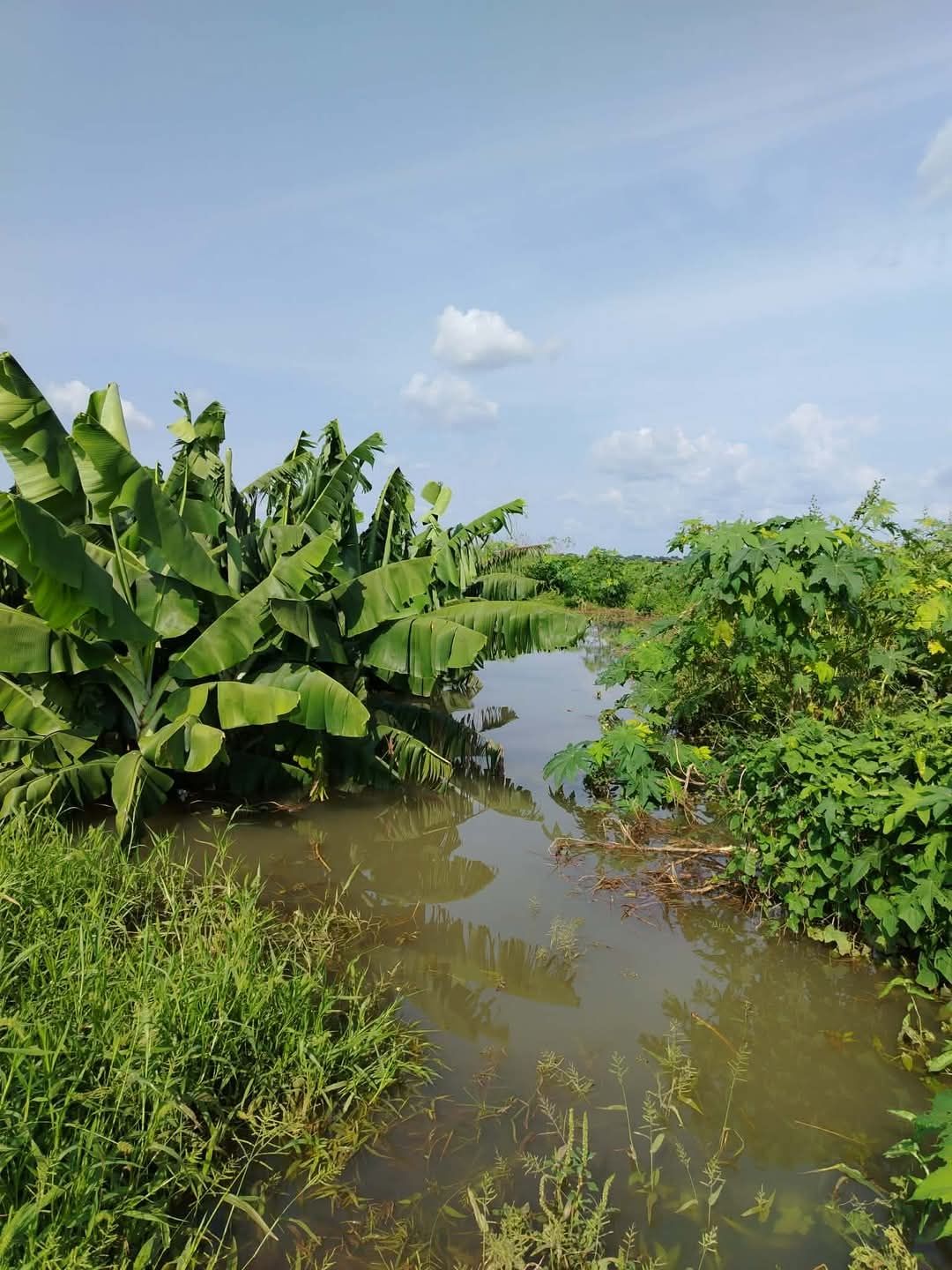
Banana trees on Hashim’s farm completely submerged following the severe 2025 floods and the rise in the level of retained water. Photo by: Hashim’.
Today, with the rainy season just around the corner, Hashim is trying to reclaim meters of land swallowed by the river in a quiet battle against erosion, no less fierce than the conflicts on the ground. This struggle comes amid disrupted export routes and the collapse of the banana trade, which once extended as far as Saudi Arabia. Hashim points to a spot now lying close to the Blue Nile and says bitterly:
“That was where the boundary of my farm stood years ago. Today, the river has swallowed the banana trees and washed away the fertile silt, leaving behind barren trenches.”
The intersection of war conditions with the absence of government riverbank erosion-control and terras operations has allowed the river to encroach by several meters into agricultural land each year. This erosion, compounded by the absence of machinery once used to clear irrigation channels, has left farmers facing the forces of nature alone, turning investment in permanent crops such as bananas into a risky gamble. What Hashim is experiencing reflects what the Stockholm International Peace Research Institute (SIPRI) describes as “dual environmental vulnerability,” in which armed conflict and environmental change reinforce one another.
Life takes deep root
Agricultural engineer Muawiya Ibrahim estimates that areas where community-led agricultural initiatives have been implemented have seen partial recovery from vegetation loss, reaching as much as 20%. Despite its modest scale, this figure carries significant meaning: protecting the environment in the Blue Nile has become a quiet act of resistance and an essential necessity for survival.
Residents’ success in transforming home courtyards into self-sufficient production units during times of crisis offers an important lesson for international institutions: the need to move from the traditional “logic of relief” toward “food sovereignty” by localizing agricultural inputs and supporting local knowledge.
The experience of the “Green Trench” demonstrates that environmental resilience can be a decisive tool for survival, and that when human determination joins forces with nature, it can create hope. Seeds planted consciously during wartime may be the ones that yield dignity and peace when the guns fall silent. It is a reminder that investing in people and the land is the surest way to reduce the future cost of recovery, and that a single mango seedling planted in a courtyard in Ad-Damazin may endure longer and prove stronger than promises left hanging in the air.